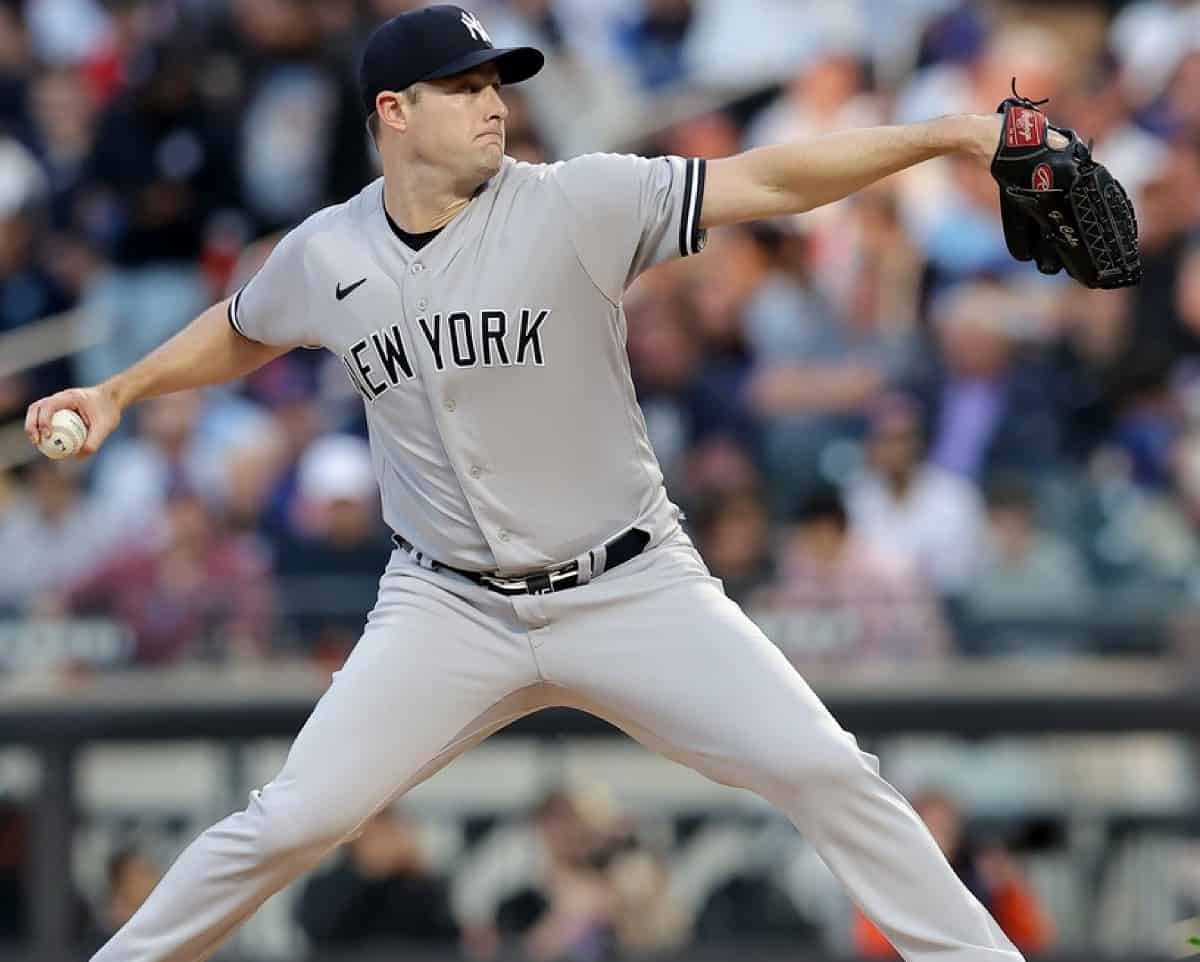
ARLINGTON, Texas — The New York Yankees made a bold postgame decision Monday night by optioning reliever Jake Bird to Triple-A Scranton/Wilkes-Barre just days after acquiring him. Bird had surrendered a walk-off three-run homer to Texas Rangers third baseman Josh Jung in the bottom of the 10th, capping an 8-5 loss that extended New York’s second-half unraveling.
The move may signal accountability on the surface. But in reality, it underscores a deeper problem inside the Bronx clubhouse: the Yankees keep treating symptoms while ignoring the disease.
Bird’s short-lived Yankees tenure lasted only three appearances, during which he posted an alarming 27.00 ERA. But his struggles were hardly a surprise. He entered the trade deadline already in freefall, with a 24.43 ERA over his last 10 games with the Rockies. Despite these glaring red flags, the Yankees sent away prospects Roc Riggio and Ben Shields to get him.
What followed was almost predictable.
While Bird’s struggles were glaring, the Yankees’ problems run deeper. The bullpen is unraveling. The defense is shaky. The rotation is inconsistent. And leadership — from players and staff — has yet to steady the ship.
Trade deadline gamble backfires instantly
Bird’s Yankees debut began with a grand slam allowed to Kyle Stowers during a brutal 13-12 walk-off loss in Miami. Four days later, he was again tagged in a high-leverage spot, this time giving up the fatal blow to Jung.
The team’s bullpen, once considered a strength, has completely collapsed. Since the start of July, Yankees relievers have posted a 6.13 ERA — second-worst in the majors behind only Colorado. In August, the mark has ballooned to 6.75. It’s a crisis that no deadline acquisition has solved — and may, in fact, have worsened.
Bird, David Bednar, and Camilo Doval— all new additions — gave up nine runs in 2.1 innings in the Miami disaster alone. That single game captured everything wrong with the Yankees’ current approach: short-term bandages applied to long-term wounds.
Boone stands by Bird, shifts blame toward fatigue
Manager Aaron Boone tried to spin Bird’s demotion as a reset rather than a punishment.
“We still think really highly of him,” Boone told Talkin’ Yanks. “Hopefully, this gives him a bit of a reset. Get him more structured outings.”
Boone acknowledged Bird had been overused before joining New York. “He’d been struggling a little bit before he got to us,” Boone added. “We think he’s not only going to help us this year but moving forward.”
That optimism hasn’t matched results. Bird gave up six earned runs in just two innings as a Yankee. It raises a fair question: what did the Yankees see in him to begin with? More importantly — who’s being held accountable for acquiring a clearly broken pitcher and using him in clutch innings?
Devin Williams still gets the ball, despite same struggles
While Bird was the one demoted, closer Devin Williams continues to toe the rubber — despite similarly worrying trends. On Monday, Williams gave up a game-tying solo home run to Joc Pederson, who entered the game hitting below .130.
It was his sixth earned run in seven outings. His season ERA has ballooned to 5.10 — a steep fall from the All-Star form he once showed in Milwaukee.
Boone, however, defended Williams. “We’ve got really good guys down there, Devin included,” he said after the game.
Yet, the contrast is obvious. Bird, in pinstripes for barely a week, was the sacrificial lamb. Williams, in a prolonged slump, remains in the late-inning role.
Judge returns, but systemic cracks remain
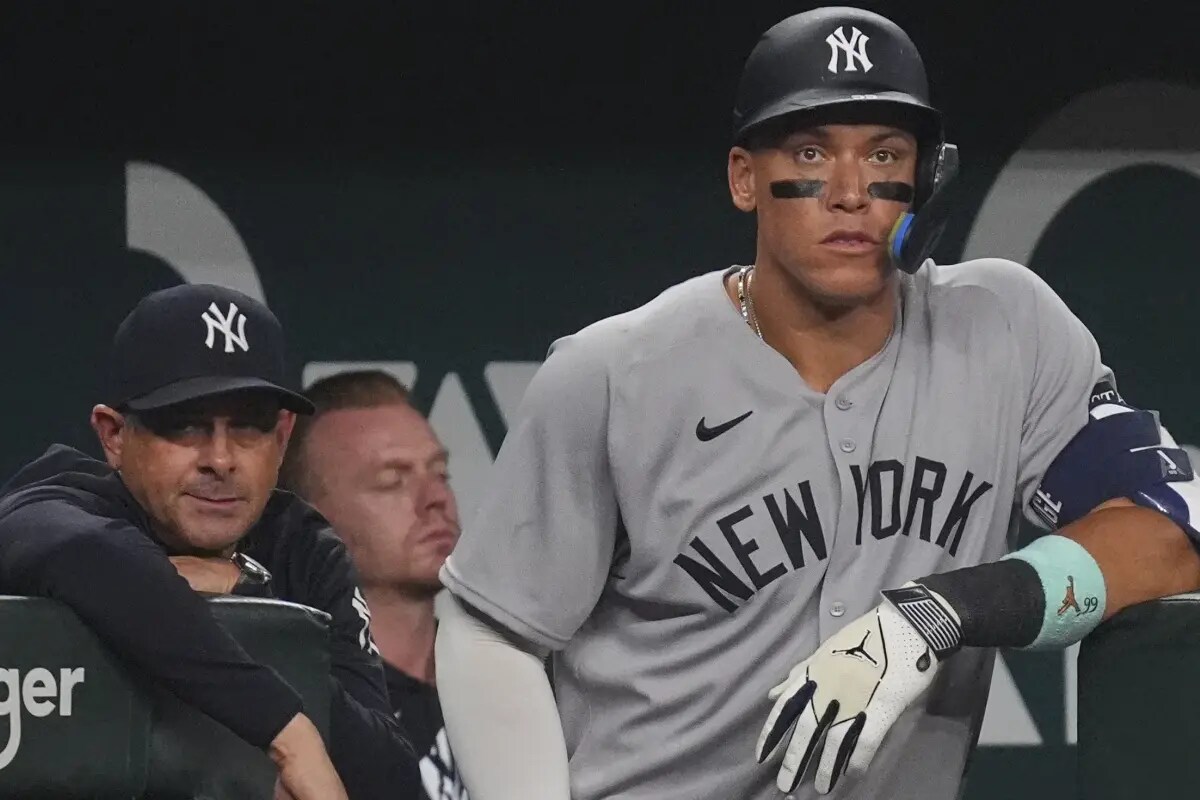
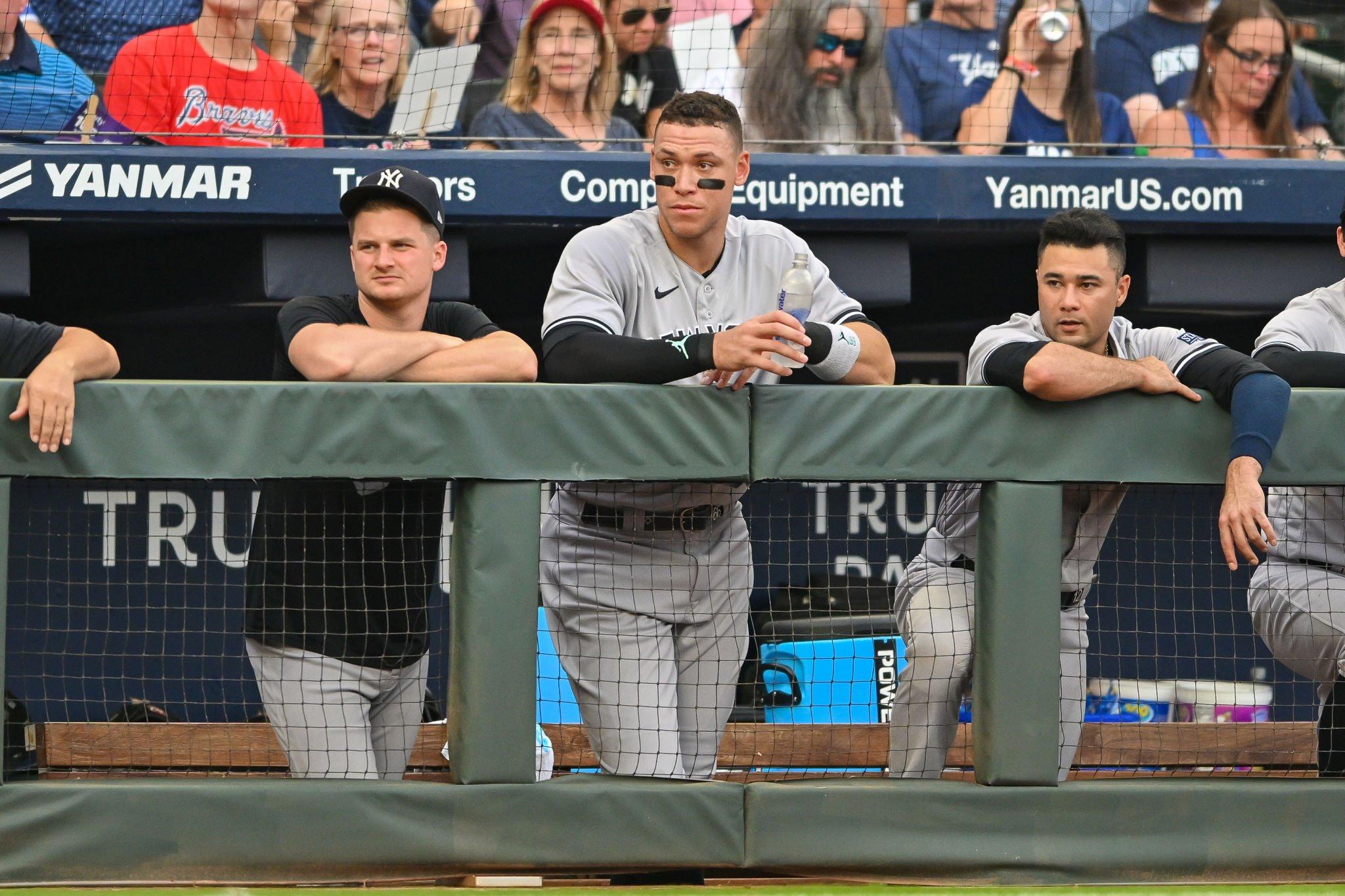
The Yankees activated Aaron Judge on Tuesday after an eight-game absence due to a left hamstring injury. He returned as the designated hitter. His presence brings back power, leadership, and some optimism — but it also exposes how little else has been going right.
The Yankees are now 60-53, sitting third in the AL East and 5.5 games behind division leader Toronto. They cling to the second Wild Card, just 1.5 games ahead of the same Texas Rangers who just walked them off.
Giancarlo Stanton, now alternating DH duties with Judge, remains limited due to his own elbow issue. If Judge can’t play the field soon, their lineup flexibility — and defensive alignment — becomes a problem again.
Wells’ cold bat and mental lapses worsen lineup woes
Catcher Austin Wells was expected to be a key part of the 2025 offense. After slugging 13 home runs and finishing third in AL Rookie of the Year voting last season, his sophomore slump has hit hard.
From June 16 to August 3, Wells is batting just .180 with a .557 OPS — second-worst among all MLB catchers with at least 100 plate appearances in that stretch. His wRC+ is a brutal 51. He’s gone 3-for-34 in his last 10 games and hasn’t recorded a multi-hit game since before the All-Star break.
Worse, his mental errors are piling up. In a game against the Rays, Wells forgot how many outs there were and got doubled off on a bunt — killing a rally. The Yankees won the game, but the moment summed up a season filled with preventable mistakes.
Volpe’s defense regresses sharply
Anthony Volpe, the reigning AL Gold Glove shortstop, has taken a big step back defensively. He leads MLB with 16 errors and ranks 23rd out of 25 qualified shortstops in Outs Above Average, per FanGraphs.
While some metrics like Defensive Runs Saved are kinder, the eye test and recent breakdowns are telling. His bat hasn’t done enough to compensate either. The Yankees may soon be forced to consider Jose Caballero or another stopgap if Volpe’s glove continues to falter.

Defensive lapses and base-running blunders haunt the Yankees
The Yankees’ defensive and mental mistakes go beyond Volpe and Wells. Jasson Domínguez has struggled in left field. Jazz Chisholm Jr. was doubled off first on an infield popup. Ben Rice has shown discomfort at first base.
Despite acquiring Ryan McMahon at the deadline to solidify third base, the infield still lacks cohesion. McMahon has been reliable both defensively and offensively since arriving, but he alone can’t fix a defense that cost them a World Series in 2024 — and may do so again.
Leadership, not scapegoating, needed
The Yankees front office added seven players at the trade deadline: four position players and three relievers. But instead of rallying the team, the moves have exposed underlying dysfunction. The organization responded by reshuffling names — but not strategy.
“Bird’s demotion looks like a reaction,” said one anonymous player postgame. “But not the kind that fixes anything.”
Indeed, Boone’s handling of the bullpen and defense has drawn sharp criticism. Yet the managerial staff, including Boone himself, continues to avoid serious consequences.
The Yankees are falling apart on fundamentals — base running, situational defense, and execution in high-leverage spots. And until those issues are addressed at a cultural level, no trade acquisition or roster move will make a lasting difference.
Ruthless decisions or missed playoffs?
The American League playoff race is unforgiving. Toronto has surged. Boston is closing in. And Texas — after beating New York on back-to-back nights — is now within striking distance.
According to Baseball Reference, the Yankees have a 74.8% chance to reach the postseason, but just 6.3% odds to win it all. That margin shrinks with every mental lapse and bullpen blowup.
Bird’s demotion may check a box on the accountability list. But it doesn’t address the bigger problems: poor evaluation, mental mistakes, defensive collapses, and a manager who seems unwilling to make hard calls on veterans.
The Yankees cracked the whip — but it landed in the wrong place. And unless they start fixing what truly matters, October baseball may be slipping out of reach.
What do you think? Leave your comment below.