NEW YORK — Nine seasons of winning baseball have not brought the Yankees another championship. The latest October disappointment has reopened an argument that regular-season success alone cannot settle: What kind of voice can turn talent into better postseason execution?
The question is particularly pointed after New York’s 2026 American League Division Series ended in a sweep by Tampa Bay. Defensive lapses and missed opportunities put the focus back on the standards inside a clubhouse that has repeatedly reached October without winning the final series.
Aaron Boone has led the Yankees through injuries, roster changes and nine demanding seasons. Players have praised his communication and support. Former Yankees manager Joe Girardi also defended his work after the latest elimination, emphasizing how Boone adjusted to a season that demanded more from the pitching staff.
That record creates a real tension for the Yankees. Stability has value, especially in New York. But a different leadership approach might be attractive to critics who want the Yankees to put more daily emphasis on preparation, fundamentals and performance under pressure.
A different combination already exists within Yankees
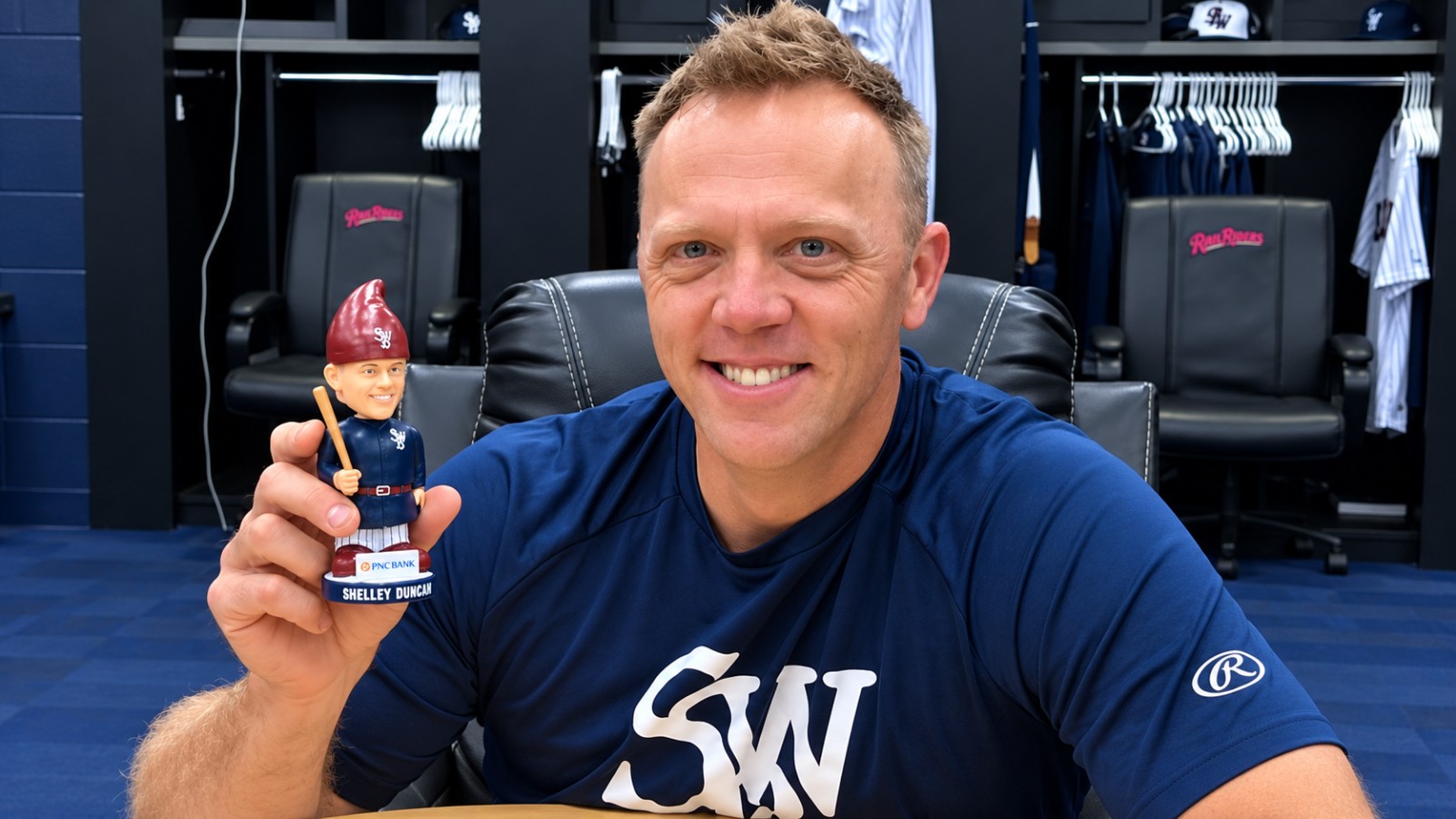
Shelley Duncan, the manager of Triple-A Scranton/Wilkes-Barre, offers an unusual résumé for that discussion. The former Yankees outfielder has won championships as a minor league manager, worked in a big league dugout and served in an MLB analytics role.
Duncan was named the 2025 International League Manager of the Year. He returned for a fourth season managing Scranton/Wilkes-Barre in 2026 after the organization credited him with 249 victories across his first three seasons.
That background separates Duncan from candidates identified primarily with old-school intensity. He worked as Toronto’s major league field coordinator and joined the Chicago White Sox as an analytics coordinator in late 2020. His jobs required connecting information, coaching plans and the people asked to carry them out.
Nothing publicly establishes Duncan as an official candidate to replace Boone. His experience nonetheless provides a measurable alternative for evaluating how the Yankees develop future managers.
Two versions of accountability
Duncan has framed the minor leagues as a place to develop major league skills while also teaching players to compete together. He has emphasized fitness, fundamentals, preparation and the pressure that comes with chasing a shared goal.
In a Yankees Magazine interview, he connected that process directly to what a player needs after promotion.
“Development exceeds everything, but when a player gets to the big leagues, he has to have that championship mindset,” Duncan said.
Boone’s approach has leaned on emotional steadiness. He has described the importance of players knowing what they can expect from him, whether they are succeeding or struggling. His public support for players does not mean he never challenges them privately.
Explaining his leadership philosophy in a 2024 Yankees Magazine interview, Boone stressed consistency.
“I knew who they were day in and day out,” Boone said.
The distinction is not that one manager cares about winning and the other does not. Duncan’s record makes teaching and competition central to his public identity; Boone’s is built around predictable communication over the full major league season.
Why analytics experience changes comparison
Duncan’s analytics background makes him more than a symbolic answer to fans seeking a harder edge. The Yankees already rely on data in player development, pitching plans and roster decisions. An incoming manager who could translate that information for players would not necessarily have to dismantle those systems.
His time as a field coordinator also exposed him to the demands on coaches and players in the major leagues. Duncan has said he learned that a manager must understand what assistants need and how pressure reaches players and their families.
There is a meaningful organizational contrast. Boone inherited a major league roster after working in broadcasting, without previous managing experience. Duncan would arrive with years of minor league managing and firsthand experience inside multiple baseball operations departments. Neither background guarantees better bullpen decisions or cleaner defense in October.
The Yankees also have evidence of productive coaching already in place. Their pitching operation helped produce a major league-best 3.23 ERA in 2026. Any argument for a managerial change must explain how to preserve successful systems, not simply replace the person answering postgame questions.
The unresolved question for New York
Duncan has made his ambition clear. In the Yankees Magazine profile, he identified becoming a major league manager as his ultimate career goal. But he also stressed that relationships and family considerations matter more than any job title.
The leap remains considerable. Triple-A managers develop prospects amid frequent roster movement. MLB managers must deal daily with high-priced veterans, national scrutiny and postseason decisions, often while facing pressure to win immediately.
Boone is expected to return for the final year of his contract in 2027, and there has been no announced Yankees search for a replacement. Duncan remains an internal developmental leader, not a confirmed successor.
For now, his résumé illustrates the choice behind the debate: whether the Yankees would eventually favor a familiar, steady major league hand or a manager who combines modern analytical work with a record of teaching players to win.
What do you think? Leave your comment below.