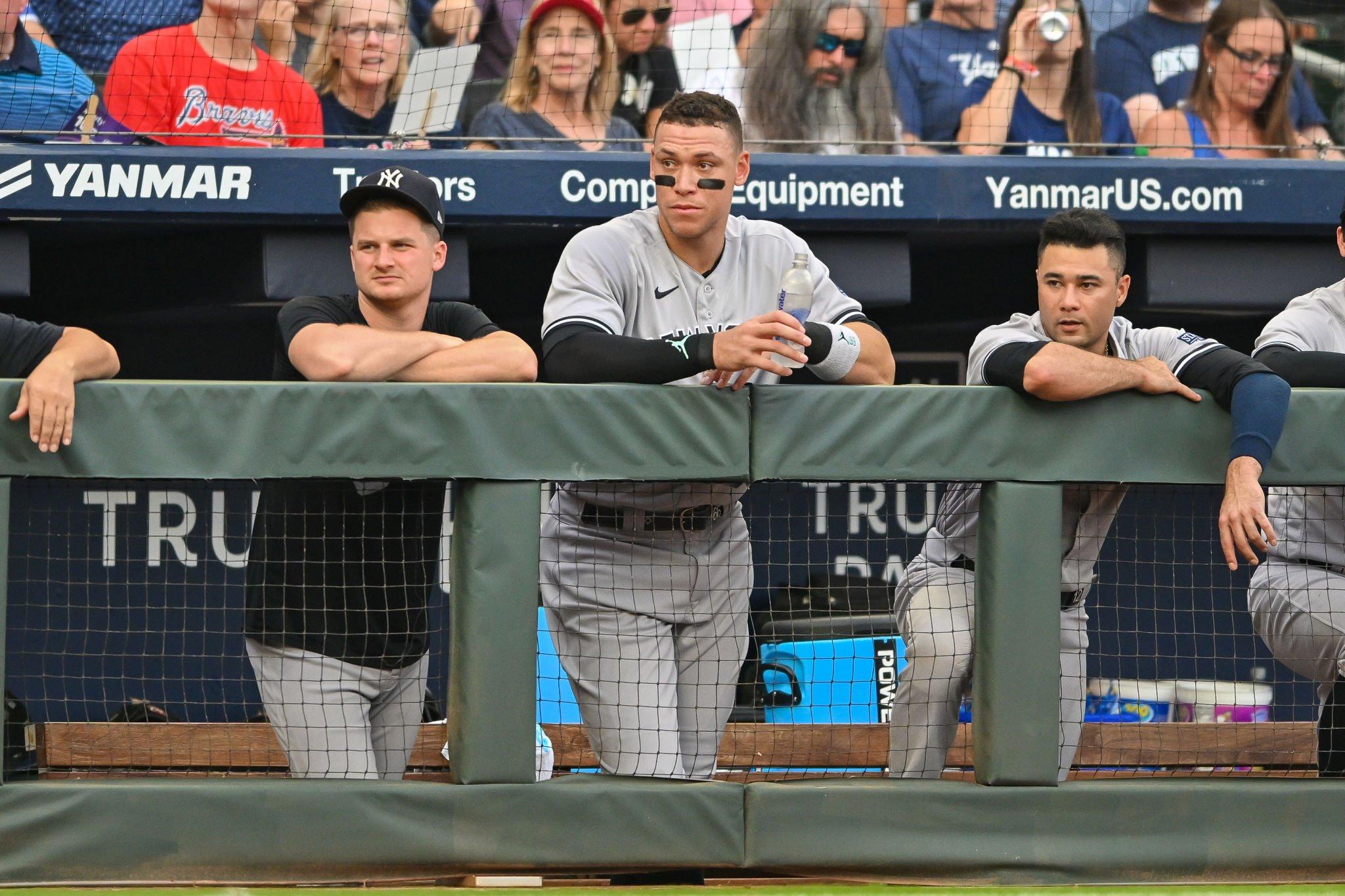
BRONX, N.Y. — The Yankees’ bullpen problem is already visible three weeks into the season. David Bednar has been inconsistent as closer. Camilo Doval and Fernando Cruz have both hit rough patches. Jake Bird was optioned to Triple-A after a difficult early stretch. Manager Aaron Boone has been candid about what the relief corps is missing.
Now the question is what the Yankees will trade to fix it. According to ESPN MLB insider David Schoenfield’s early-season deadline preview, the answer may be sitting in Double-A Somerset: 2024 first-round pick Ben Hess.
The Yankees selected Hess 26th overall two years ago and paid him $2.747 million to sign. He is 6-foot-5 and 255 pounds, has struck out batters at a 33 percent rate across two minor league levels and held hitters to a .177 average in 2025. He is ranked fifth in the Yankees’ system by Prospects Live. He is not a throwaway piece. He could be traded this summer.
Schoenfield names Hess as Yankees’ top trade chip
In his ESPN preview, Schoenfield addressed Yankees fans calling for additions at third base, shortstop and center field. His position was direct: the bullpen is the priority, and Hess is the asset to address it.
“Yes, yes… Yankees fans want a new third baseman… a new shortstop… a new center fielder… relax. The offense will pick up,” Schoenfield wrote. “Maybe one of those positions will need addressing, but the bullpen still looks like the spot most likely to need help, although the Yankees can move a couple of starters there once Carlos Rodon and Gerrit Cole return.”
On Hess specifically, he explained why a top prospect with strong numbers could still be moved.
“Hess, the team’s first-round pick in 2024 out of Alabama, is in Double-A after holding batters to a .177 average in 2025, but he’s behind Carlos Lagrange and Elmer Rodriguez in the pecking order,” Schoenfield wrote.
That is the entire logic. Hess is good enough to attract serious interest from contending teams. But with two pitching prospects ranked ahead of him, his path to the Bronx rotation is blocked. His trade value in some respects exceeds his organizational value right now.
The main news: what Hess brings to any deal
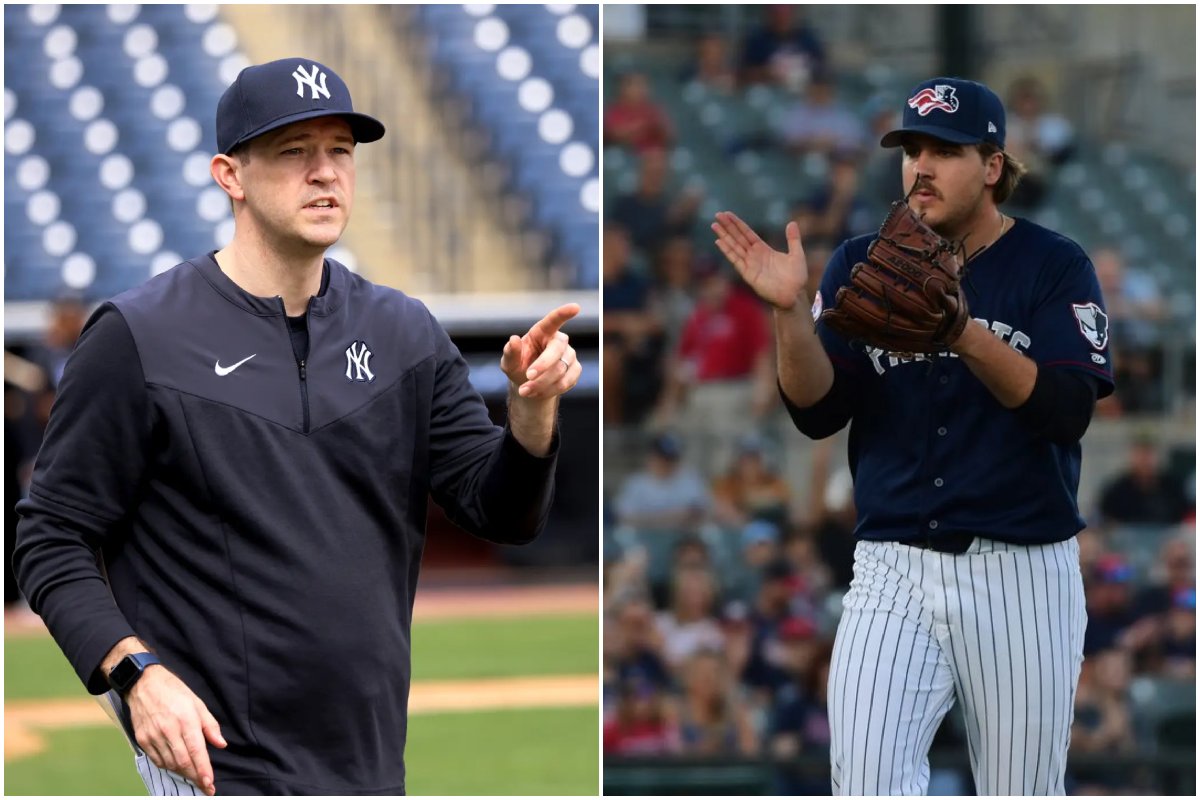
The scouting profile justifies the interest. His fastball parks between 92 and 96 mph, touches 98-99 in some outings, and plays above its radar reading because of his frame and extension. His sweeper, converted from a tighter slider after signing, sits around 80 mph with strong horizontal movement. His mid-70s curveball generates depth from a low arm slot. Both breaking balls grade as plus pitches.
MLB Pipeline draws a comparison to Lance Lynn, the two-time All-Star whose profile — big frame, power fastball, multiple above-average offerings — matches what Hess is developing toward.
In 2025, Hess made 22 appearances across High-A Hudson Valley and Double-A Somerset, throwing 103.1 innings with a 3.22 ERA, a 2.50 FIP and 139 strikeouts. His walk rate improved from 4.46 per nine in High-A to 3.19 in Double-A. He entered 2026 with two Double-A starts (1-0, 3.52 ERA) before landing on the injured list. His MLB ETA is 2027 per Pipeline.
The rotation math makes a trade easier to justify
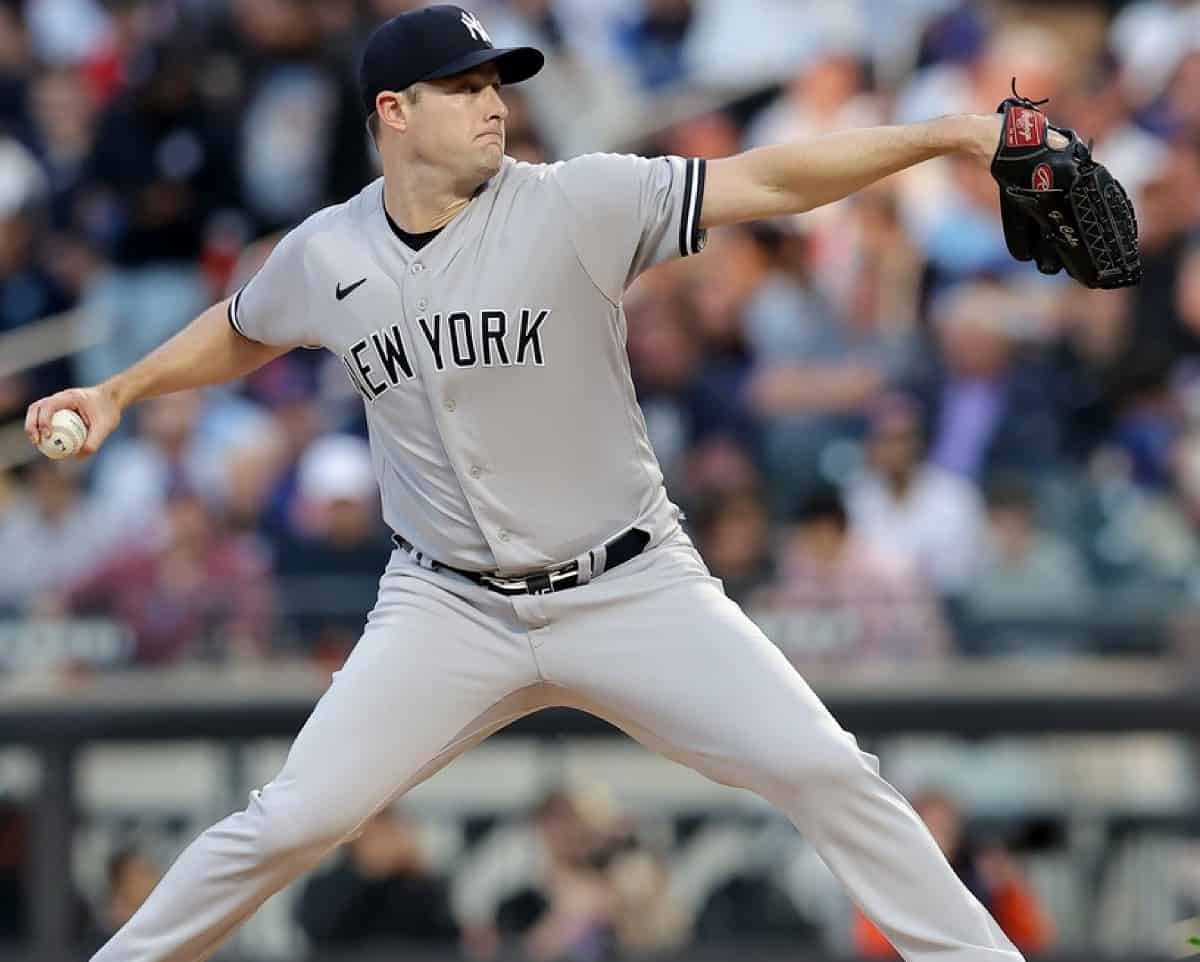
The secondary driver is simple: when Cole and Rodon return, there will be no spot for Hess in the 2026 rotation. Cole recently reached 96 mph in a Double-A rehab outing and is progressing. Rodon is not far behind. When both are healthy, the Yankees will carry Fried, Schlittler, Warren, Weathers and Gil as their five starters. A Double-A arm does not fit.
Trading Hess for a proven late-inning reliever solves two problems at once. It patches the bullpen and clears organizational congestion in the pitching pipeline, giving Carlos Lagrange and Rodriguez cleaner paths forward.
Boone addressed the bullpen’s competition for roles directly when asked about the group’s inconsistency.
“There’s opportunity for these guys to continue to grab roles,” Boone said. “Hopefully, some real key people emerge for us.”
No one has emerged yet. The Yankees are 13-9 and tied for first place in the AL East, but a bullpen that blows late leads in September or October can undo everything built in the first half. The Yankees addressed this at last year’s deadline and helped their World Series run. The need has surfaced earlier this time.
Whether Hess actually gets moved depends on how the next two months unfold. If the bullpen stabilizes, the urgency fades. If it continues to struggle through the nine-game road trip against Boston, Houston and Arlington, the conversation around Hess accelerates quickly.
What do you think? Should the Yankees trade him?