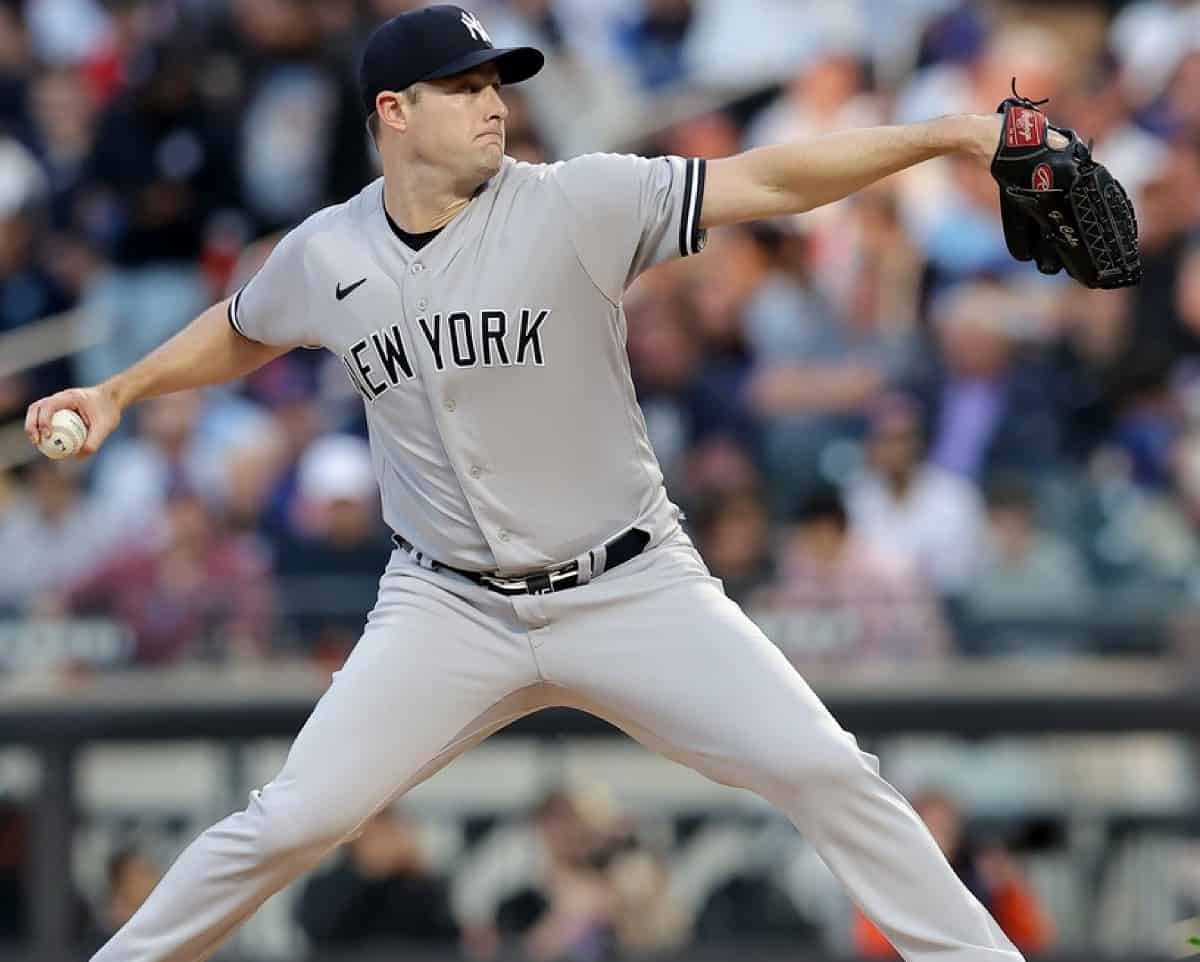
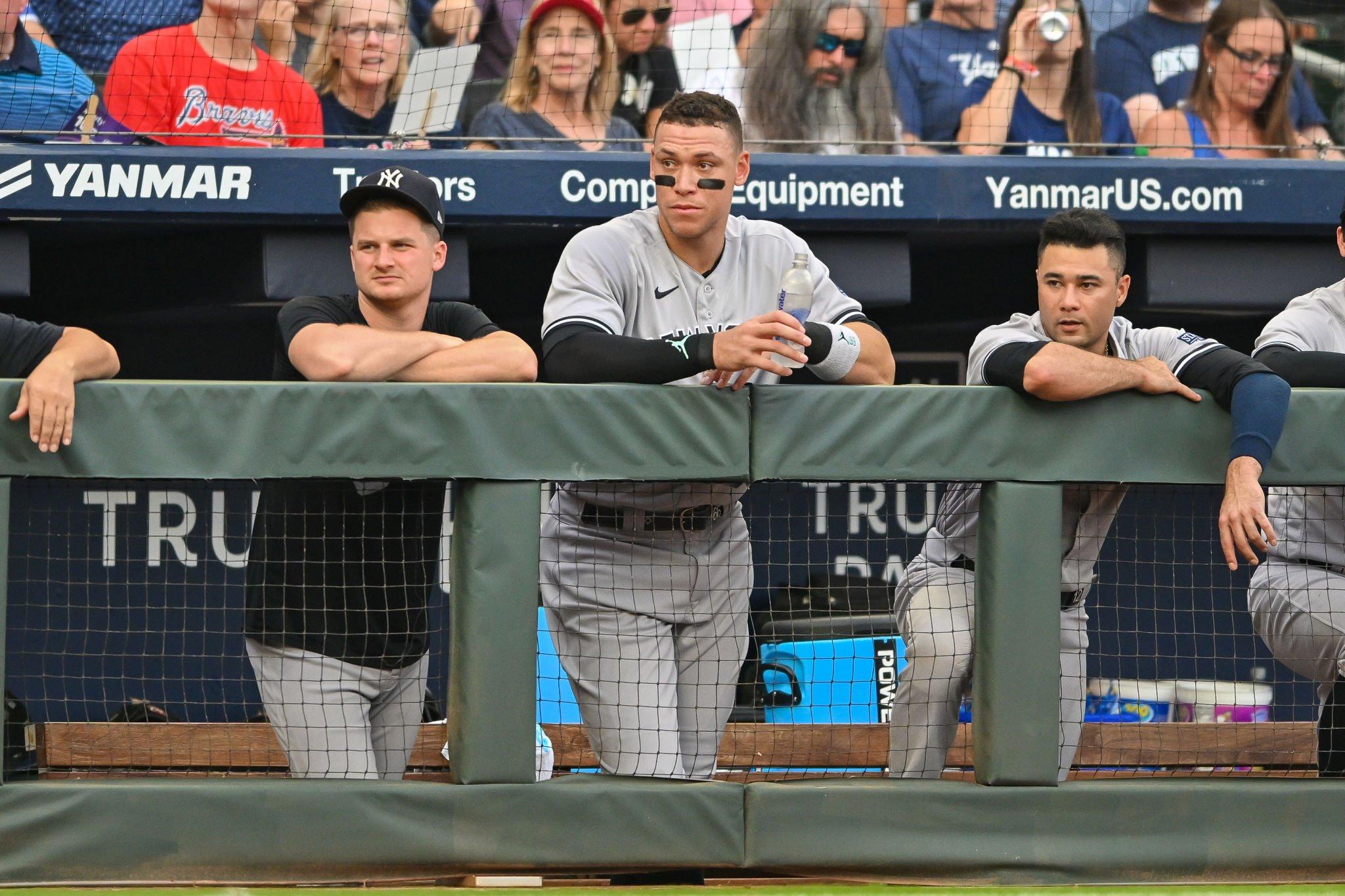
NEW YORK — The New York Yankees generated $728 million in revenue during 2024, ranking second only to the Los Angeles Dodgers in baseball. Yet the storied franchise reinvested merely 49.7% of those earnings into player payroll and luxury tax obligations.
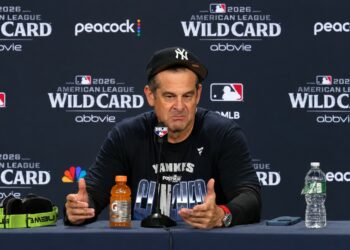
This stunning gap between revenue and spending has ignited fresh criticism of owner Hal Steinbrenner and the front office. While championship expectations remain sky-high in the Bronx, the organization’s financial priorities appear focused elsewhere.
According to analysis by Stephen Parello of Yanksgoyard, the disparity places the Yankees at No. 11 league-wide in payroll-to-revenue ratio. The team ranks third in its own division, trailing both Toronto and Baltimore in spending commitment relative to earnings.
Financial priorities under scrutiny
The Dodgers pulled in $752 million last season but allocated $549 million toward payroll and tax penalties. That represents 73% of their revenue flowing directly into the on-field product. The Mets reinvested an eye-popping 90% of their earnings.
The Yankees’ $362 million commitment pales by comparison. The franchise sits comfortably in profitable territory while competitors push financial boundaries to contend.
“The Yankees are unbelievably third in their own division, let alone the entire league,” Parello wrote.
Even mid-market clubs are outpacing the Yankees in spending commitment. Kansas City ranks ninth in the ratio at 54.8%, while the perpetually troubled Angels organization under Arte Moreno checks in at No. 8 with 55.6%.
Steinbrenner has repeatedly suggested the club operates near financial limits. He described payroll levels as “unsustainable” in 2024 and has indicated reluctance to exceed $300 million in spending. The revenue figures paint a different picture entirely.
Inefficiency compounds the problem
The Yankees don’t simply spend conservatively. They spend poorly.
Dead money continues haunting the books. The organization still owes $15 million to released infielder DJ LeMahieu in 2026. Previous mistakes with Josh Donaldson and Aaron Hicks cost tens of millions for players not wearing pinstripes.
Marcus Stroman’s contract paralyzed decision-making last winter. The front office seemingly forgot teams need starting third basemen while fretting over pitcher salaries.
The 2026 arbitration class includes multiple non-tender candidates who will drain resources without contributing meaningful value. Mark Leiter Jr., Clarke Schmidt, Camilo Doval, Jake Cousins, Ian Hamilton, Scott Effross, Jake Bird and Oswaldo Cabrera all face uncertain futures.
“Obviously, baseball is a business, but for a team that is so concerned with the bottom line, they sure do make a lot of bad financial decisions,” Parello noted.
The strategy of extending contracts to lower luxury tax hits backfires repeatedly. Spreading costs across additional years reduces immediate penalties but creates long-term albatrosses. The preference for controllable assets in trades produces similar results when those players underperform.
Championship window closing

The urgency should be palpable. Aaron Judge remains superhuman at 33, posting 10.1 wins above replacement despite missing time in 2025. But Father Time remains undefeated. Judge turns 34 in April.
Key contributors exist firmly in their 30s. Giancarlo Stanton, Gerrit Cole, Max Fried and Carlos Rodón all face natural decline curves. The championship window won’t stay open indefinitely.
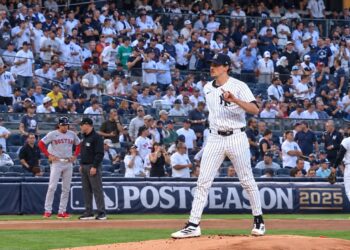
More than 15 years have passed since the last parade down Broadway. The 2025 season brought another disappointment. Despite a strong 35-22 start through May and a 5.5-game lead in the American League East, a summer swoon allowed Toronto to seize the division. The teams finished with identical records, but the Blue Jays claimed the tiebreaker. Toronto then eliminated the Yankees in the ALDS.
The franchise hasn’t suffered a losing season since 1992. Playoff appearances came in 26 of the past 31 years. But Bronx standards demand championships, not participation.
Roster questions loom
The 2026 outlook presents numerous challenges. Cody Bellinger will opt out of his contract, taking a $5 million buyout. Paul Goldschmidt, Devin Williams, Trent Grisham, Luke Weaver, Amed Rosario, Ryan Yarbrough, Austin Slater and Paul Blackburn all hit free agency.
Guaranteed contracts total $184 million assuming Tim Hill’s option gets picked up. Future commitments reach $715 million. But that baseline includes Judge’s $240 million deal through 2031, Max Fried’s $196 million through 2032, and Cole’s $108 million through 2028.
The rotation should rebound with improved health. Cole underwent Tommy John surgery in spring training. Luis Gil battled a lat strain. Both figure prominently in 2026 plans.
The outfield needs attention. The bullpen requires reinforcement. The infield might need upgrades depending on personnel decisions.
Eight arbitration-eligible players face non-tender consideration. Jazz Chisholm Jr. projects at $10.2 million. David Bednar sits at $9 million. Camilo Doval commands $6.6 million despite uncertain value.
Fan frustration grows
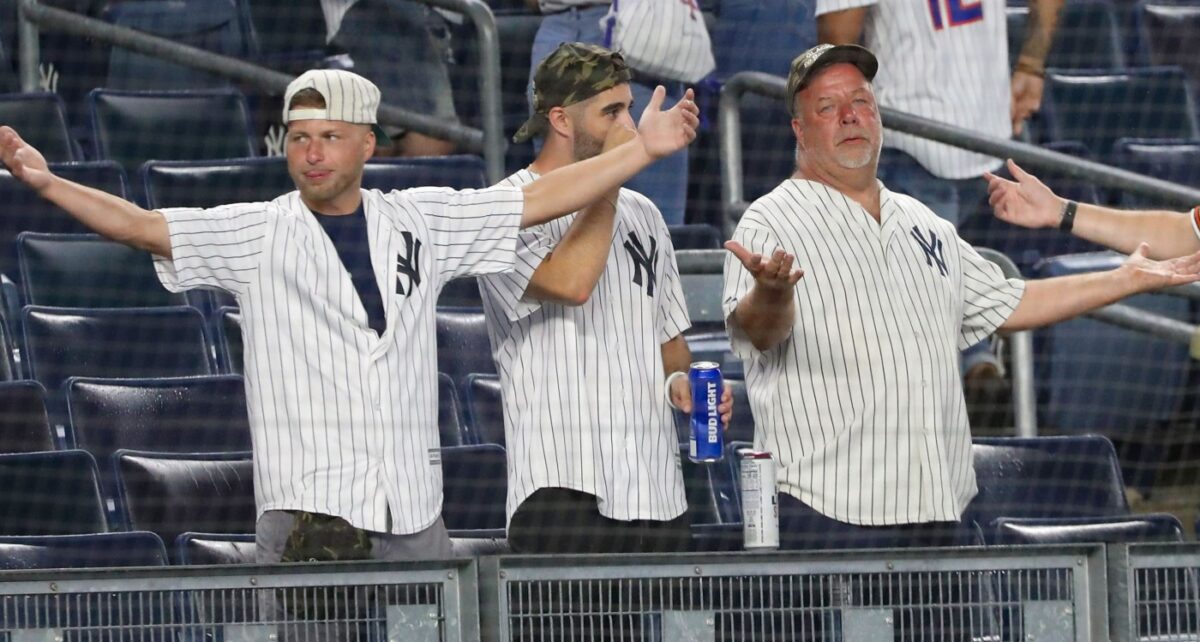
Ticket prices at Yankee Stadium rank among baseball’s highest. Concession costs continue climbing. Merchandise sales generate massive revenue streams. Yet fans hear repeatedly about budget constraints preventing roster improvements.
The 2025 payroll reached $294 million, placing third behind the Dodgers and Mets. The organization barely edged Philadelphia for that spot. By historical standards, the Yankees once dominated spending charts. Those days appear finished under current ownership philosophy.
Greg Joyce of The New York Post reported Steinbrenner feels comfortable around $300 million. The revenue data suggests the organization could comfortably exceed that threshold by $100 million or more while maintaining healthy profit margins.
Steinbrenner might be correct that championships don’t require $400 million payrolls. But that logic only holds if resources get deployed efficiently. The Yankees consistently fail that test.
Parello’s analysis exposes the fundamental disconnect. The franchise generates elite-level revenue while spending like an upper-middle-class operation. Competitors leverage their financial advantages aggressively. The Yankees hoard cash.
“He can clearly afford a payroll well above that $300 million threshold, and to a certain extent, owes it to the fans who pay exorbitant prices to support the team year in and year out,” Parello wrote.
The championship drought extends annually. Judge’s prime years slip away. Cole and Fried age inevitably. Yet the front office preaches fiscal restraint while profits accumulate.
Baseball remains a business. But the Yankees’ approach increasingly resembles a betrayal of the fanbase that made the franchise baseball’s most valuable. Revenue flows in. Championships don’t flow out. That equation defines modern Yankees baseball under Steinbrenner’s leadership.
The organization must either commit resources matching its revenue or explain honestly why profits matter more than parades. The current middle ground satisfies nobody except accountants.
What do you think? Leave your comment below.