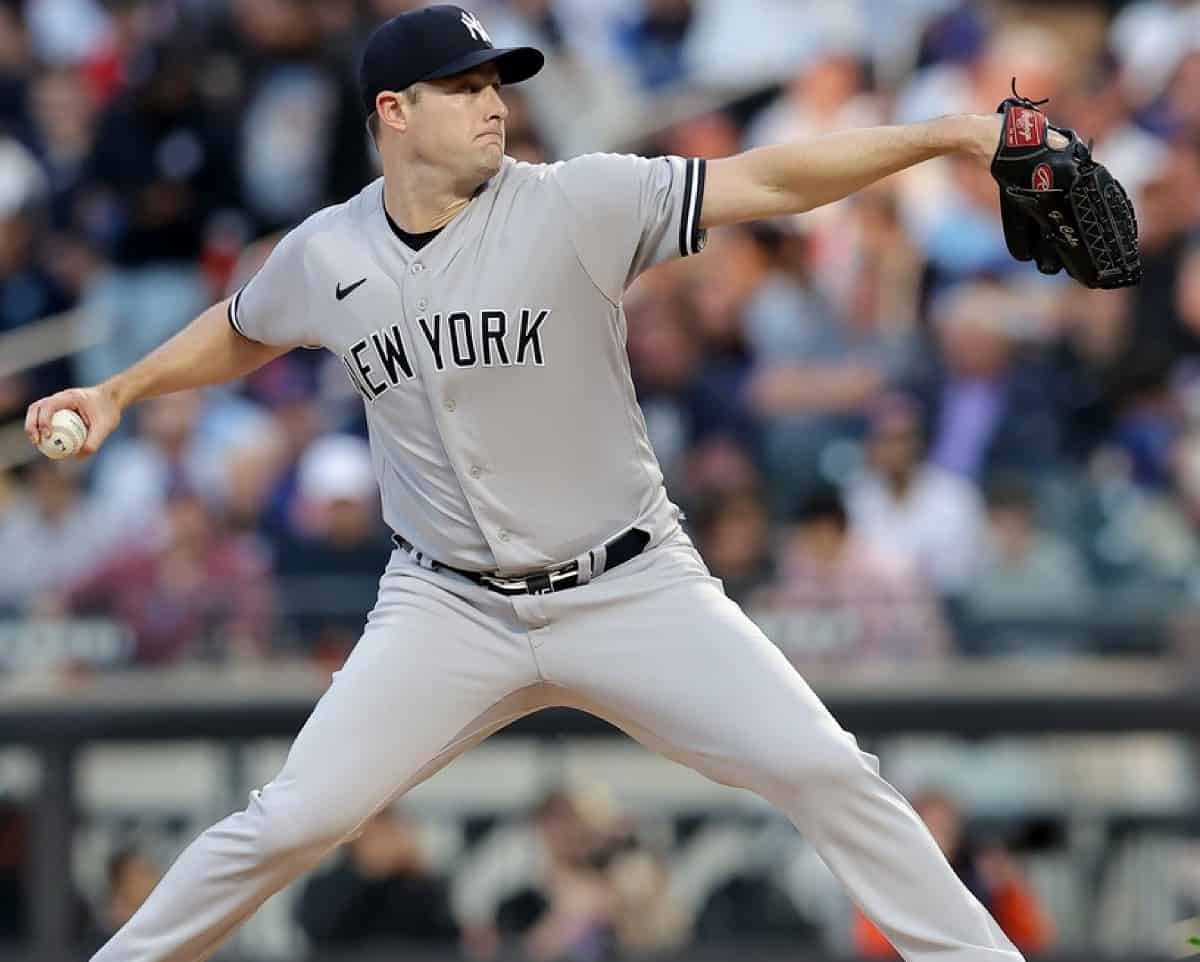
NEW YORK — A pitcher surrenders 14 hits in a single game. He walks eight batters. He even hits one. That adds up to 24 baserunners in 13 innings. Any modern manager would have yanked his starter long before the damage got that bad.
What are the odds that pitcher walks away victorious?
Near impossible in today’s game. Yet one Yankees hurler accomplished exactly that feat nearly a century ago, producing the most bewildering winning performance in franchise history.
But this was on Sept. 8, 1932. The Yankees traveled to Detroit for a doubleheader. The contest was a makeup game from an Aug. 2 rainout.
Manager Joe McCarthy handed the ball to his right-hander George Pipgras for the opening game. What followed continues to defy every rule of pitching logic
Pipgras earned the strangest winning decision in New York Yankees history. His pitching line remains a shock for conventional baseball wisdom even after nine decades.
How a nightmare outing turned into a win
Pipgras found trouble early. He worked around two singles in the first inning. Then the second frame went completely sideways.
The first four Tigers batters reached base. Billy Rhiel knocked in a run with a single. Harry Davis followed with another hit that drove home two more. Detroit jumped out to a 3-0 lead before most fans had settled into their seats.
Pipgras battled. He kept throwing. His manager, Joe McCarthy, let him stay on the hill despite the carnage.
The Yankees starter didn’t record a single clean inning until the fifth. Every frame before that featured at least one Tiger on base. In most cases, several were stranded out there.
An unlikely hero fills in for the Bambino
Babe Ruth wasn’t in the lineup that day. The slugger was dealing with appendicitis at the time. His absence opened a spot for Samuel Byrd, a reserve outfielder known around the clubhouse as “Babe Ruth’s Legs.”
Byrd earned that nickname because he often came in as a defensive replacement or pinch runner for the aging Ruth. The backup spent his Yankees career in the shadow of the greatest hitter baseball had ever seen.
But on this afternoon in Detroit, Byrd became the star.
He led off the third with a home run, cutting the Tigers’ lead to 3-1. He singled home another run in the fourth. Then in the sixth, Byrd crushed a two-run shot that gave the Yankees their first lead of the game.
Three hits. Three runs batted in. Two of them homers. All from the guy usually reserved for late-inning substitution duty.
Detroit ties it up in the ninth
Pipgras carried that slim advantage into the final frame. He was 90 feet away from completing one of the ugliest wins imaginable. Then Earl Webb took him deep for a game-tying blast.
The contest headed to extra innings. Both teams traded zeroes. Pipgras kept escaping jams that would have ended most pitchers’ afternoons several innings earlier.
The Tigers loaded the bases in the 13th. One hit would have ended it. Instead, Pipgras induced Gee Walker to ground out. The threat vanished.
The Yankees finally break through
Lou Gehrig led off the top of the 14th with a single. Tony Lazzeri bunted him over to second. Bill Dickey came through with an RBI hit that scored Gehrig and gave the Yankees the lead again.
Dickey advanced to second on the throw home. Frankie Crosetti added another run with a single. New York grabbed a 6-4 edge.
McCarthy sent up a pinch hitter for Pipgras at that point. The starter’s day was done. Reliever Wilcy Moore came on for the bottom of the 14th.
Moore allowed two singles but held firm. Davis grounded out to end the marathon.
A stat line for the ages
Pipgras finished with 13 innings of work. The final numbers boggle the mind.
He surrendered 14 hits, walked eight batters, and plunked one. A total of 24 baserunners reached safely against him. He faced 59 batters overall. That means 41 percent of the hitters he encountered got on base.
Yet only four runs crossed home plate against him. The Tigers went just 3-for-19 with runners in scoring position. They stranded 18 men on the bases.
Pipgras earned the winning decision because he was still the pitcher of record when the Yankees took the lead for good.
Twenty-four baserunners allowed remains the most by any Yankees pitcher who also earned a victory. No one in pinstripes has come close since.
The man they called the Danish Viking

George William Pipgras was born on December 20, 1899, in Ida Grove, Iowa. He served in World War I with the 25th Army Engineers before pursuing professional baseball. The Yankees acquired him from the Boston Red Sox, and he made his major league debut in 1923.
Pipgras spent two seasons in the minors before earning a rotation spot with the legendary 1927 Yankees. That squad is still considered by many to be the greatest team ever assembled. He posted a 10-3 record and won Game 2 of the World Series against the Pittsburgh Pirates.
The following year, Pipgras led the American League with 24 wins. No right-handed Yankees pitcher has won more games in a single season since 1928. He captured three World Series titles with New York in 1927, 1928, and 1932.
Why this Yankees record will never fall
Modern baseball doesn’t allow pitchers to stay in games long enough to accumulate this kind of damage. A starter who gives up five hits in the first two innings would get pulled before lunch.
Analytics departments track pitch counts obsessively now. Bullpens are built to handle late-game situations. No manager would let his starter face 59 batters under any circumstances.
Pipgras finished the 1932 season with a 16-7 record. He went on to pitch in the World Series that October and beat the Chicago Cubs in Game 3. That was the contest featuring Ruth’s legendary “called shot” home run.
The Yankees right-hander later became an American League umpire after his playing career ended. He worked behind the plate from 1938 to 1946.
But nothing else Pipgras did matched the absurdity of September 8, 1932. It stands as the most improbable winning performance in Yankees pitching history.
What do you think? Leave your comment below.