NEW YORK — The New York Yankees are keeping the same manager and general manager after another October disappointment. That continuity has revived a familiar question around the club: How much of what happens in the dugout belongs to the manager, and how much comes from upstairs?
Aaron Boone is returning for a 10th season. Brian Cashman is staying for his 30th as general manager. The Yankees reached the playoffs again in 2026 but exited after three straight losses to the Tampa Bay Rays in the American League Division Series.
The Yankees’ decision to preserve that partnership followed a 93-win season and another championship-free October. It also comes as other MLB clubs are testing different definitions of what a manager should do.
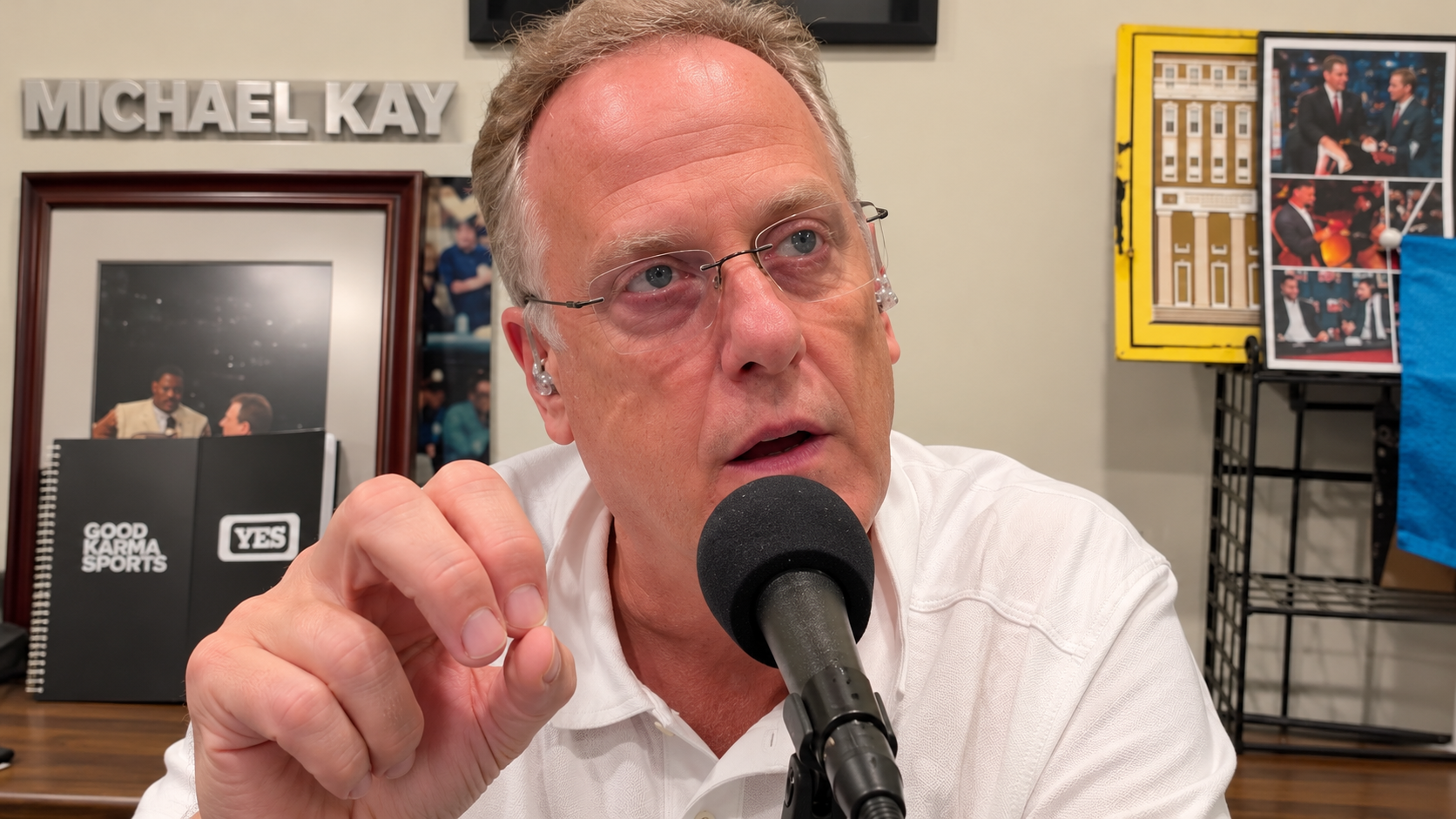
A new hire in Seattle prompted Yankees broadcaster Michael Kay to revisit that debate on ESPN New York. His remarks went beyond one manager’s résumé and raised the broader issue of who truly makes decisions in an analytics-driven organization.
Seattle hire fuels Kay’s criticism of front-office influence
The Mariners hired 36-year-old Jason Kanzler on Nov. 3 to replace Dan Wilson. Kanzler had never managed at any level but spent the previous three seasons as the Chicago Cubs’ director of player development. He also coached in the Houston Astros’ major league system and played professionally in the minors.
Kay discussed the appointment after referring to a social media argument by former major leaguer John Vander Wal that managers increasingly carry out organizational orders rather than control the game themselves.
He then suggested a provocative test for front offices that believe deeply in their own data: Hire an analyst without a playing background and allow that person to run the dugout directly, rather than relying on a former player to translate the decisions.
Kay argued that analytically driven executives could bypass conventional candidates entirely.
“They would just forego hiring a manager with any kind of big league experience as a player,” Kay said.
Kay described the evolving role in stark terms on the program.
“The manager is a middle manager that’s going to carry out the orders of the front office,” Kay said.
Kay said such an arrangement would expose exactly where strategic authority sits.
“There would be no obfuscation about it,” Kay said.
The point was about MLB’s wider trend, not an assertion that Kanzler lacks baseball experience. Kanzler played in the Twins’ minor league system and coached for the Astros before overseeing the Cubs’ development program.
Boone and Cashman embody a long-running Yankees question
Kay specifically brought up Boone’s route to the Yankees’ job. Boone played in the majors and worked as a broadcaster before Cashman hired him after the 2017 season, despite no previous managerial experience.
“Aaron Boone never managed,” Kay said while discussing how teams identify managerial candidates.
He also pointed to the playing background that distinguished Boone from the purely analytical candidate Kay was imagining.
“He was a broadcaster after being a player,” Kay said. “But still there was that strong connection as a baseball player.”
The Yankees’ setup has persisted through nine seasons of regular-season success and repeated postseason frustration. Boone’s teams have made the playoffs eight times and reached the 2024 World Series, but the franchise has not won a championship since 2009.
Cashman remains responsible for acquiring players and setting organizational direction. Boone handles the daily clubhouse, lineup and in-game duties. The unresolved public question is how the Yankees divide strategic authority between their coaches, analytics staff and front office when decisions become controversial.
Kay did not say he had evidence that Cashman dictates Boone’s in-game moves. His criticism focused on the gap between the traditional picture of an independent field manager and a modern structure in which organizations build their strategies collectively.
Kay questioned whether clubs fully trust their models enough to make that separation visible.
“Let’s see if anybody has that much faith in the numbers to hire that sort of person,” Kay said.
A revealing contrast in how clubs defend their managers
Seattle’s own description of its selection complicates the suggestion that hiring a first-time manager necessarily means seeking obedience. President of baseball operations Jerry Dipoto said the Mariners wanted a candidate capable of challenging the organization. The club also publicly praised Kanzler’s communication and leadership.
For the Yankees, the contrast is less about experience than accountability. Their leadership recently reaffirmed its support for Boone after another early playoff exit. Cashman also said he had agreed in principle to a new contract.
Owner Hal Steinbrenner defended Boone’s performance and pointed to the offense as a major reason the Yankees failed in October. That assessment kept both men in place despite a 17-season World Series title drought.
The Yankees‘ 2027 campaign therefore begins with unusually clear continuity at the top. The same two decision-makers will be asked to deliver a different postseason result, while Kay’s remarks sharpen the debate over where responsibility begins and ends.
The next test is already set
Kanzler will enter his first MLB managerial season with Seattle in 2027. Boone will enter the final guaranteed year of his Yankees contract, and Cashman will begin his third decade leading New York’s baseball operations.
Kay’s argument leaves a pointed question hanging over the Yankees’ familiar leadership tandem: If the front office and manager share the decision-making process, how should the club assign responsibility when its October plans fail?
What do you think? Leave your comment below.