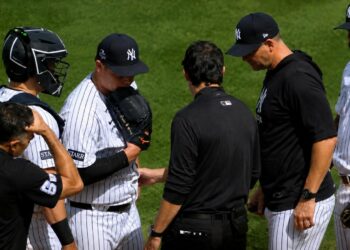
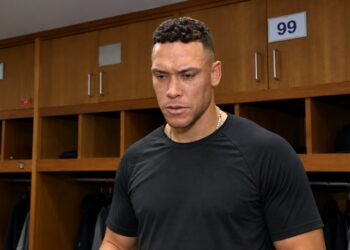
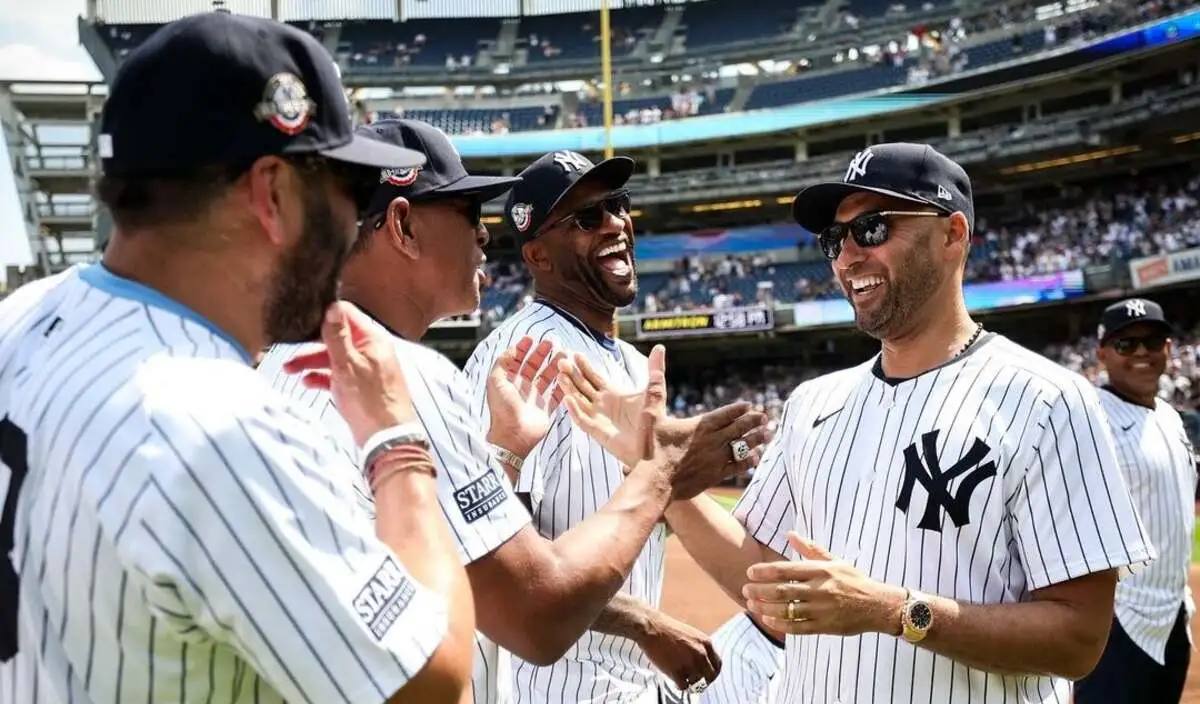
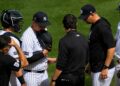
NEW YORK – The New York Yankees’ world tilted on its axis last week. The sight of Aaron Judge, their captain and offensive engine, exiting a game clutching his side sent immediate shockwaves through the Bronx. Initial fears were severe. Team officials grimly assessed the possibility of a significant elbow injury, potentially requiring surgery and a months-long absence.
In that panicked vacuum, the Yankees’ front office, facing a critical trade deadline and a tightening AL East race, reportedly scrambled with stunning urgency. Sources confirm to multiple outlets that both Cody Bellinger and Paul Goldschmidt were placed firmly on the club’s trade table as bet to buy potential Aaron Judge replacements – a move that could have drastically altered the franchise’s trajectory.
The injury that sparked panic

Judge, the reigning AL MVP frontrunner, suffered the injury last Tuesday night against the Rays. Initial reports were vague but ominous. The specter of losing Judge, batting .342 with 37 homers and 85 RBIs, for an extended period was unthinkable for a team built around his production. Fear of surgery was real within the organization.
“There was genuine concern it could be season-altering,” a source close to the situation told Newsweek. “The front office felt immediate, immense pressure to act.”
With the July 31th trade deadline looming, the Yankees shifted into crisis mode. Losing Judge without a major replacement would likely doom their World Series aspirations. The internal directive became clear: find a high-impact bat, immediately, regardless of cost.
The panic fallout: Swap Bellinger and Goldschmidt


According to reporting from USA Today’s Bob Nightengale and others within the industry, the Yankees’ were ready to sell off two key veterans Bellinger and Goldschmidt to secure a high-octane replacement for Judge.
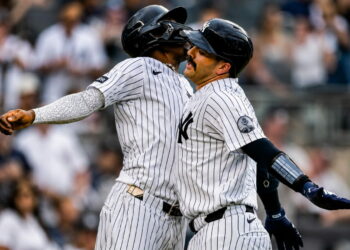
Since joining the Yankees, Cody Bellinger has been a game-changer. The former MVP is hitting over .282 with 20 home runs and more than 61 RBIs in 98 games, quickly becoming one of New York’s most reliable bats. His left-handed power has brought much-needed balance to the lineup, while his versatility in center field and first base has helped offset key injuries.
Bellinger’s clutch hitting, including a homer against the Rays, has fueled multiple comeback wins. With Aaron Judge limited to DH duties, Bellinger’s resurgence has been vital to keeping the Yankees in the playoff hunt. He is viewed as the one who can fill the Soto-sized gap in the Yankees’ lineup, and trading him could be suicidal for the team.
Paul Goldschmidt has delivered a steady, veteran presence for the Yankees in 2025. Batting around .283 with 8 home runs and 38 RBIs, he’s provided consistent middle-of-the-order production and solid defense at first base. While his power numbers have dipped slightly from his prime, Goldschmidt remains productive in clutch situations, especially with runners in scoring position. After a slow start, he’s found better rhythm since June, adding timely hits and veteran leadership to a lineup battling injuries. His plate discipline and defensive reliability continue to make him a valuable asset as the Yankees push for a postseason spot in the AL.
However, the panicked Yankees were ready to swap both ex-MVPs to get an Aaron Judge replacement.
“Make no mistake, the Yankees were in full panic mode,” Nightengale reported over the weekend. “They were exploring every avenue to replace Judge’s bat, and that meant looking at the very top of the market, regardless of the prospect cost.”
Staggering ramifications of a panic-stricken Yankees deal
If the Yankees let both Cody Bellinger and Paul Goldschmidt walk mid-season, the consequences could ripple through the roster. Bellinger has emerged as one of the team’s most dynamic contributors since his arrival this season. His left-handed power, elite defense in center field and first base, and baserunning instincts have added balance and versatility to a team stretched thin by injuries. Letting him go would not only cost the Yankees one of their hottest bats but also remove a key positional solution amid uncertain future for Judge.
Goldschmidt, while no longer the MVP force of old, has still delivered for the Yankees. He remains a stabilizing veteran presence and a reliable defender at first base. Without him, the Yankees may need to rush prospects like Ben Rice or explore another short-term fix.
Losing both veterans would strip the lineup of nearly 30 homers, 100+ RBIs, and leadership in high-pressure moments.
A collective sigh of relief in the Bronx
Then came the reprieve. Further imaging and evaluation revealed Judge’s injury, while painful, was less severe than initially feared. Diagnosis: a moderate oblique strain requiring rest and rehab, but no surgery. Judge was placed on the 10-day Injured List, with a realistic target return date in mid-to-late August.
The collective exhale from Yankee Stadium to the front office was audible. The frantic selling of Bellinger and Goldschmidt ceased almost immediately. The organization pivoted back to its original, more measured deadline strategy: seeking complementary bullpen arms and perhaps bench depth, not giving up key assets.
Lesson learned: The fragility of contention
This 48-hour saga offers a stark reminder of the razor-thin margins in baseball contention and the immense pressure on the Yankees. Judge is not just their best player; he is the irreplaceable cornerstone. His brief, albeit scary, absence exposed the terrifying vulnerability beneath the Bombers’ powerful facade.
While the Yankees dodged a bullet this time, the incident highlights the ongoing challenge. Relying so heavily on one superstar carries inherent risk. The near-panic trade pursuit underscores just how desperate the situation felt internally.
Aaron Judge is expected back in pinstripes well before the postseason and push the team fortune forward in the company of Bellinger and Goldschmidt. The Yankees’ prospect pool remains intact, for now. But the memory of those tense hours, when the unthinkable seemed imminent and the franchise nearly mortgaged significant future assets in a moment of crisis, will linger. It serves as a potent lesson in the high-stakes world of the New York Yankees, where the line between championship contention and disaster is often defined by the health of one man.
What do you think? Leave your comment below.