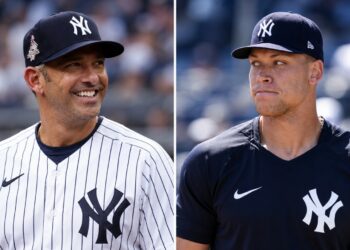
NEW YORK — The distance between the Yankees and one of their most accomplished former players traces back to a season that ended with a difficult separation, not a farewell celebration.
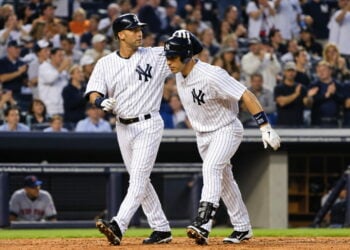
Fifteen years after Jorge Posada last wore pinstripes, his relationship with the organization remains complicated. His No. 20 hangs in Monument Park, and his place alongside Derek Jeter, Mariano Rivera and Andy Pettitte in the club’s celebrated Core Four is secure. Yet the closing months of his playing career have never entirely faded from the conversation.
The Yankees honored Posada by retiring his number in August 2015. He has also appeared at alumni gatherings, including Old-Timers’ Day, recognizing his five World Series rings.
The former catcher was one of the franchise’s defining voices during its championship years. Now 56, he has also worked away from the Bronx, including a front-office role with Miami and a coaching assignment with Italy at the 2026 World Baseball Classic.
That history gives his words weight. New York’s latest postseason ended with an AL Division Series sweep by Tampa Bay, and questions about standards and accountability have continued into the offseason. Posada’s experience adds another dimension: how the organization relates to someone who helped set those standards.
The source of that discomfort goes back to a public confrontation in 2011 that began with a lineup change against Boston and eventually exposed a deeper disagreement over Posada’s role. The consequences endured.
The trouble began with a fundamental change in job description. After years behind the plate, Posada entered 2011 primarily as a designated hitter while Russell Martin took over catching duties.
On May 14, with Posada batting .165, manager Joe Girardi placed him ninth in the order for a home game against the Red Sox. He initially accepted the demotion publicly, then asked Girardi to remove him from the lineup before first pitch.
Posada says visits to Yankees no longer feel welcoming
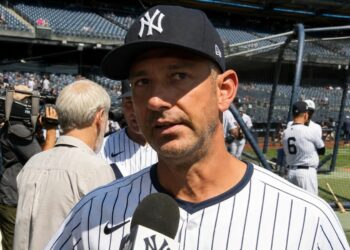
Asked on the Oct. 27 episode of The Show podcast whether he would consider helping the Yankees, Posada disclosed that he believes the club does not want him involved.
“I mean, I could, but I don’t think they want me there, to tell you the truth,” Posada said.
He described the same uncomfortable feeling during visits to the team, including spring training.
“I don’t feel welcome when I go there, you know? Even in spring training, I don’t feel like — I’m just like, I don’t know, I don’t feel welcome. I don’t feel like they want me there, so I don’t go,” Posada said.
Posada connected those feelings to the end of his Yankees career, while acknowledging his own part in how that season unfolded.
“My last season of my career was a really tough one when it comes to handling everything on my part and also the Yankees toward Jorge Posada,” he said. “So it’s tough to go back and feel that again.”
Former Yankees reliever Joba Chamberlain, his teammate from 2007 through 2011, responded publicly to the disclosure.
“Says a lot coming from him, just saying,” Chamberlain wrote on X.
What happened between Posada and Yankees in 2011
Posada later cited a stiff back and a need to clear his head. Cashman publicly said the request had not been presented to the Yankees as an injury issue. The episode unfolded in full view of reporters while New York lost 6-0 to Boston at Yankee Stadium.
Posada apologized the next day. The team moved on without a suspension, but the dispute exposed friction about communication and the treatment of a longtime veteran whose role was shrinking.
The situation did not end with that May confrontation. By August, Posada had lost regular designated hitter duties as his offense continued to struggle. On Aug. 13, after returning to the lineup against Tampa Bay, he hit a grand slam and drove in six runs, a flash of his old power.
He finished 2011 hitting .235 with 14 home runs and 44 RBIs, then retired in January 2012. The contrast between his monumental Yankees career and that final season helps explain why the events still resonate.
The honors and the unresolved distance
Posada’s account highlights a distinction between formal recognition and an ongoing working relationship. The Yankees retired his number four years after his last game, and the former catcher has appeared at team events. Neither has erased the discomfort he described this week.
The contrast is particularly striking because Posada has not called for sweeping changes at the top. He backed manager Aaron Boone and general manager Brian Cashman while arguing that players need firmer day-to-day accountability.
“It’s not on Boonie, it’s not on Cash,” Posada said.
His proposed adjustment centers on a coach willing to challenge players over lapses before they become postseason mistakes. Posada indicated that his own direct manner could create friction in such a role.
“I’m going to express the way I feel and … if something’s wrong, I’m going to tell you,” Posada said.
Posada’s criticism of the team’s edge also predates this interview. In August 2025, he urged the Yankees to play with more urgency and a greater competitive edge. His latest comments now place those concerns alongside a personal account of distance from the franchise.
The Yankees enter the offseason with Boone remaining as manager, while a former championship cornerstone is publicly questioning whether there is room for him around the organization. The dispute that began in 2011 has become part of the team’s present-day conversation again.
What do you think? Leave your comment below.