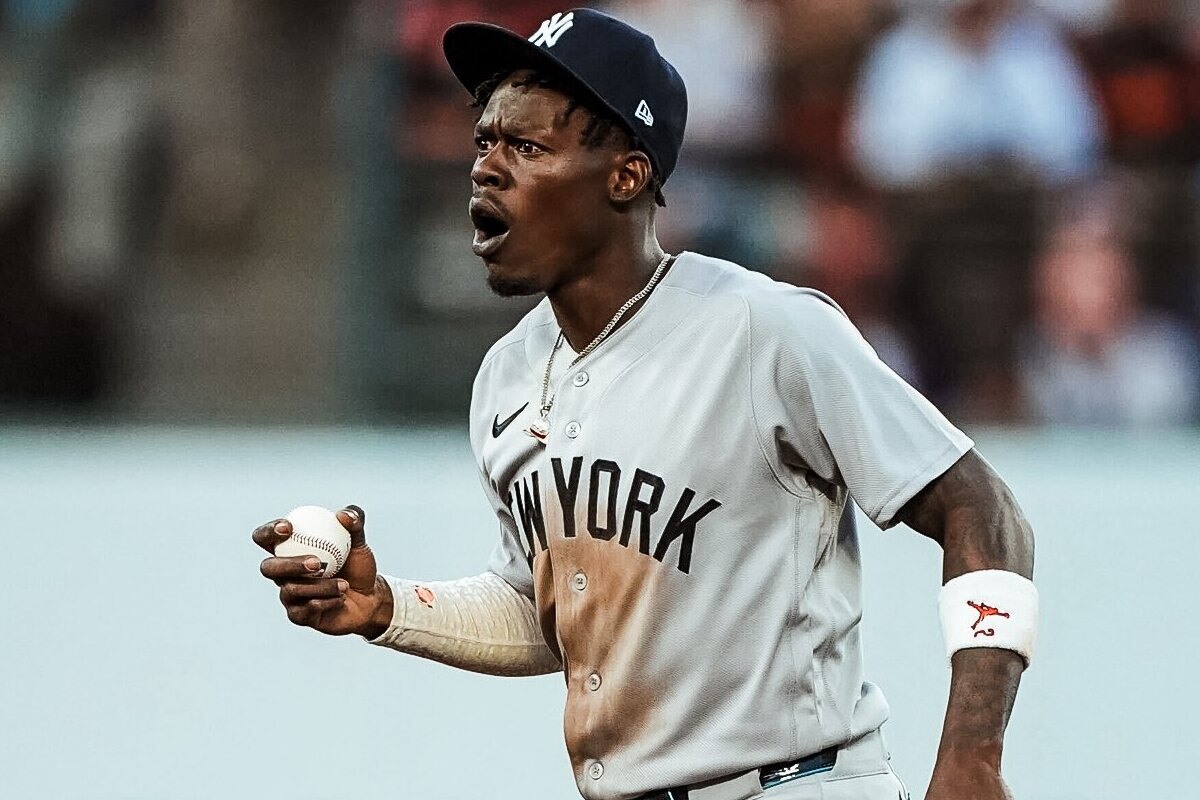
NEW YORK — Jazz Chisholm entered 2026 with an ambitious plan. He talked openly about chasing 50 home runs and 50 stolen bases. That combination would have put him in elite company. It also would have positioned him for $35 to $40 million per year. Chisholm is heading to free agency after his final Yankees season. The stage was set.
Through 38 Yankees games in 2026, the stage looks very different.
Chisholm is hitting .203 with a .326 slugging percentage, four home runs and 13 RBIs for the Yankees. His 11 stolen bases are the one bright spot in an offensive line that has otherwise been below expectations. And according to the advanced metrics, the surface numbers might actually be underselling how significant the problem is.
The numbers below the surface
Analyst Alexander Wilson broke down Chisholm’s underlying performance and the picture he painted was pointed.
“The surface stats are bad. The advanced metrics are worse,” Wilson wrote. “Chisholm ranks in the 30th percentile in hard-hit rate, 35th in barrel rate, and 37th in average exit velocity this season. He’s whiffing on 30.5% of his swings and ranks in the 26th percentile in strikeout rate. Those numbers place Chisholm among the least productive offensive players in the sport. Not just below average. Genuinely among the worst.”
The wRC+ figure captures the Yankees problem cleanly. At 74, Chisholm has been 26 percent worse than the average MLB hitter in 2026. That is not a slump number. That is not a slump number. It reflects significant performance decline from a player who went 30-30 with an .813 OPS in 2025.
Bat speed is the real story
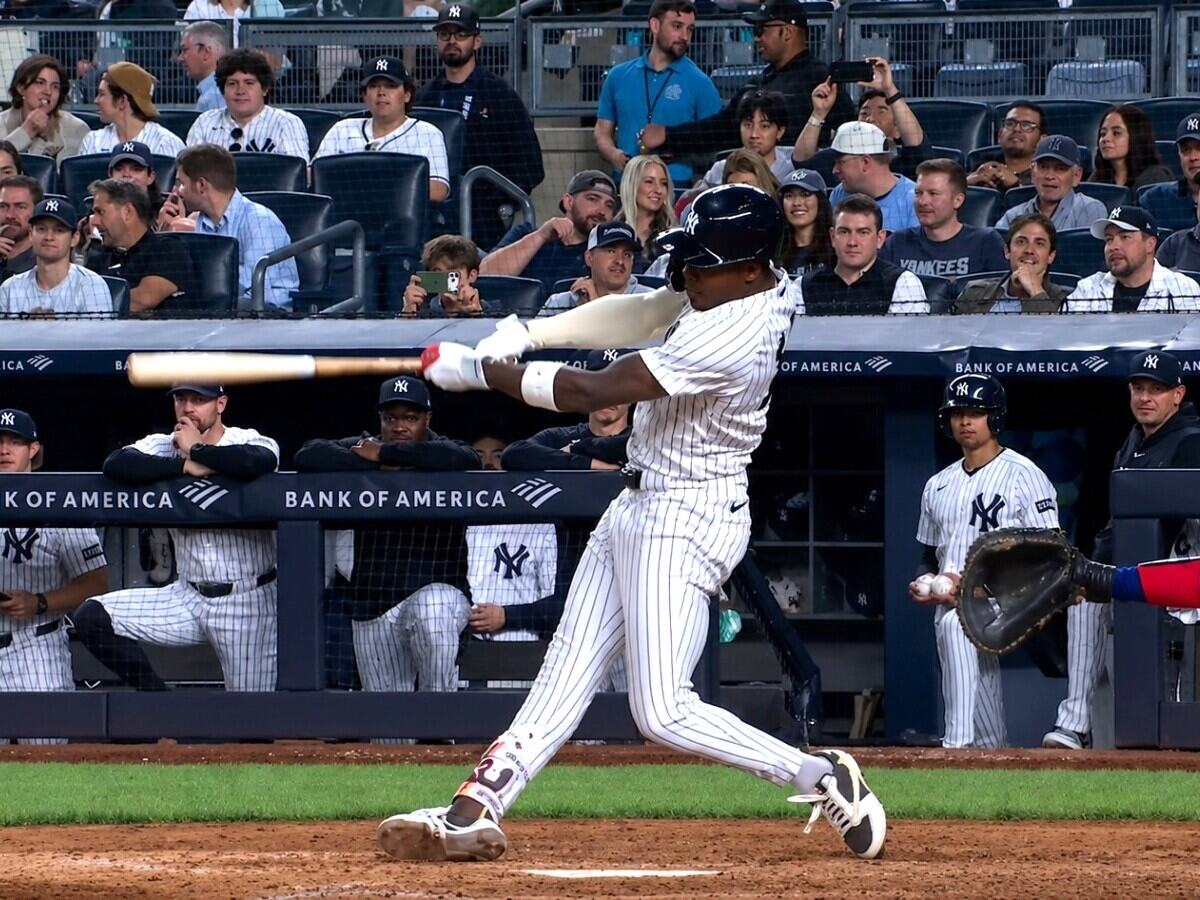
The advanced metrics point toward one root cause. Bat speed is down. And that is driving the power outage.
In 2025 with the Yankees, Chisholm ranked among the best hitters in baseball in barrel percentage and posted above-average bat speed. That combination was the engine behind his 31 home runs and 31 stolen bases. The 30-30 season was not a statistical anomaly or a product of luck. He was generating genuinely elite contact quality and converting it efficiently.
This year for the Yankees, the bat speed has declined noticeably. When bat speed drops, hitters get late on fastballs. They foul off pitches they used to drive. Power disappears first because it depends on getting to the ball early. That is exactly what is happening with Chisholm right now. At his current home run pace, he is tracking toward 17 for the full season. He hit 31 last year. That gap does not reflect a cold stretch. It reflects a measurable change in how the ball is coming off his bat.
The Yankees defensive numbers have compounded the offensive problems. Chisholm has posted minus-4 defensive runs saved in 2026 for the Yankees. That represents a drop from a player whose speed and athleticism had previously made him a plus defender.
The contract pressure that may be working against him
The timing of this Yankees performance matters as much as the performance itself. Chisholm is playing for the largest contract of his life. He arrived in spring training publicly targeting $350 million, a number that even a strong year would have made difficult to reach. A season like this one puts that figure far out of reach.
But analysis suggested the self-imposed pressure may be part of the problem. A player chasing a historic contract and a historically rare milestone carries a lot of weight into every at-bat. When the results do not come, the weight compounds.
The Yankees front office dynamics are directly relevant here. Brian Cashman has a documented record of letting infielders walk when contract demands and production do not align. Gleyber Torres was a productive Yankees second baseman for years. When the money did not match the organizational valuation, the Yankees let him go and moved on. Chisholm is currently producing considerably below Torres’ level while seeking considerably more money. The math is difficult to make work.
What the Yankees may do if Chisholm walks
If Chisholm departs after 2026, the Yankees have more options than they are often given credit for.
Jose Caballero has been the team’s best infielder not named Ben Rice this season. He is slashing above average at shortstop and playing solid defense. Moving Caballero to second base and sliding another piece in at short is a viable path.
Anthony Volpe, currently at Triple-A, is a natural shortstop. If George Lombard Jr. develops into the player the Yankees believe he can be, Volpe moving to second base is a real possibility. His athleticism translates, and shortstop carries durability concerns for his shoulder.
Lombard himself is the most obvious Yankees long-term answer at a premium infield position. But the organization views him as a shortstop or third baseman, where his range and defensive tools have the greatest impact. Using him to patch a second base vacancy created by Chisholm’s departure would represent a misuse of their best prospect.
None of those decisions need to be made now. The Yankees are 26-14 and lead the AL East. Chisholm is not going anywhere mid-season. But November is being shaped by April and May. Right now, what is happening is not encouraging.
The bat speed is down. The barrel rate is down. The exit velocity is down. The defense has dipped. And the contract Chisholm is pitching with every swing is slipping further from reach with each unproductive week.
What do you think? Will he be able to recover?