NEW YORK — The Yankees have an expensive roster, a captain who wants more and another October failure to explain. The uneasy part of that equation is not whether New York intends to compete. It is whether the club’s definition of a full commitment matches Aaron Judge’s.
Judge made his position clear after the Yankees were swept by Tampa Bay in the American League Division Series. He wanted the front office to address the roster’s weaknesses rather than rely on another season of largely familiar personnel. The appeal came after another year in which a winning regular season failed to produce a championship.
The Yankees’ 2026 payroll was the largest in franchise history. Yet spending did not protect a lineup that struggled for long stretches or prevent Judge from watching the postseason from the sidelines. A broken rib kept him out for much of the summer, and a calf strain after his return ended his attempt to participate in October.
For the Yankees, the dispute is about how success should be measured. Ownership can point to contracts and competitive-balance tax bills. Players can point to holes that remain and postseason results that have not changed. The Yankees have gone 17 seasons without a World Series title.
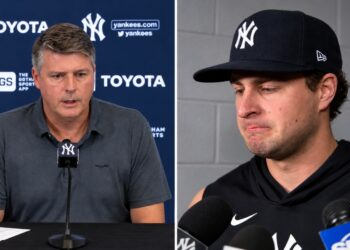
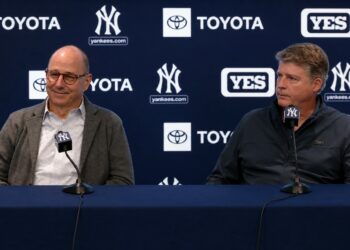
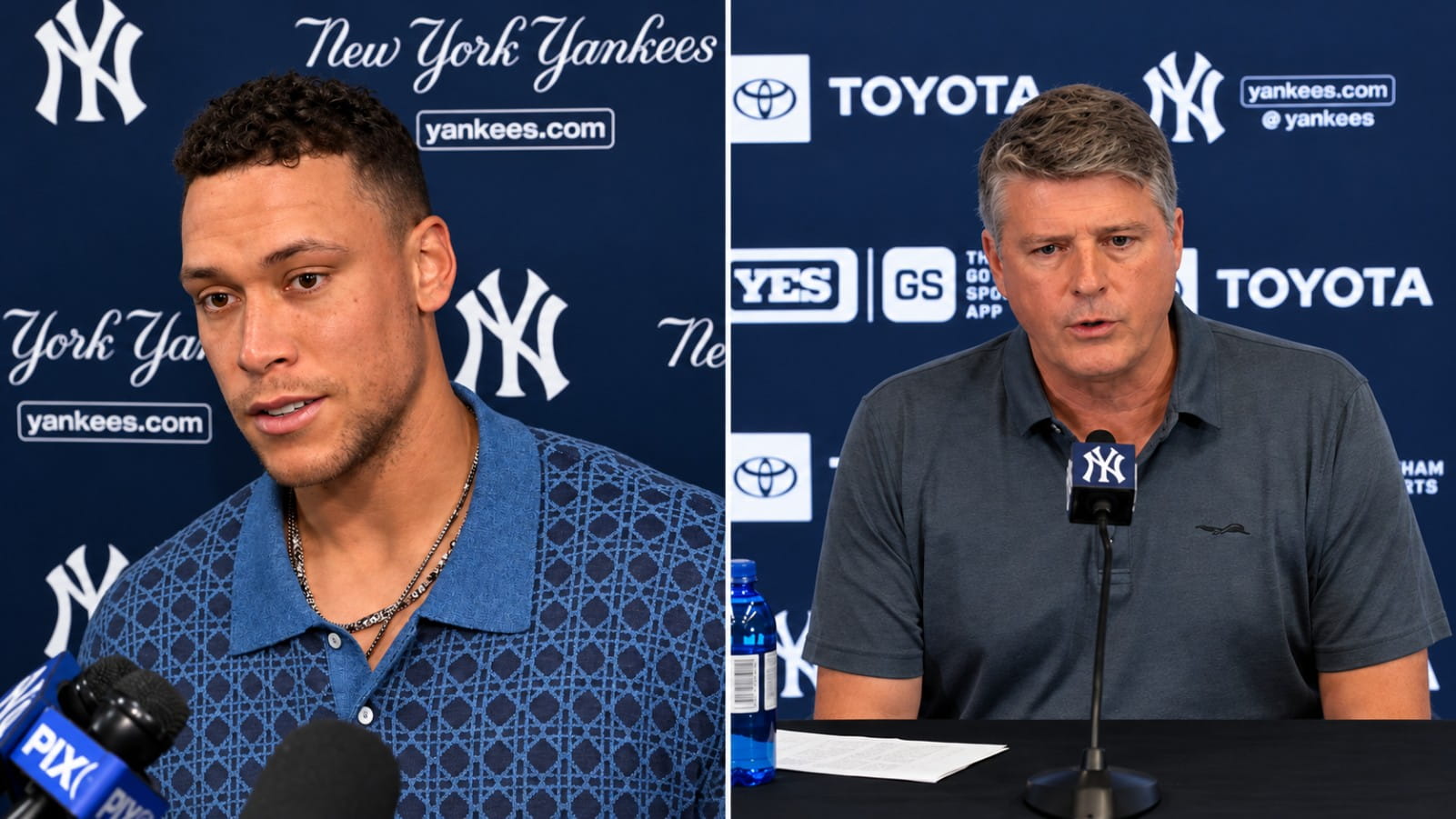
Reports suggested some executives disliked Judge’s remarks. The question facing owner Hal Steinbrenner during Wednesday’s end-of-season media briefing was how he would respond to the club’s most influential player.
Steinbrenner takes a shot at Judge with a reminder
Steinbrenner said Oct. 21 that Judge’s demand did not upset him. He defended the Yankees’ commitment to winning and pointed specifically to the decision to bring Cody Bellinger back on a five-year, $162.5 million deal.
The owner said he considered the 2026 Yankees capable of winning the World Series, despite their elimination by the Rays.
“We did that this year. We had the highest payroll in the history of the organization,” Steinbrenner said. ” We got to a point later in the offseason where we still felt we weren’t good enough. So we went out and signed Bellinger to a huge contract.”
He then turned the conversation from what the captain expects of ownership to what ownership expects from the clubhouse. The shift gave his answer a sharper edge than a simple defense of the payroll.
“And by the way, I have expectations of my players. I expect them to obey the rules, to work hard, listen to their coaches and the trainers and the strength guys,” Steinbrenner said.
Steinbrenner also described relationships as a two-way street. He did not identify Judge as a player who had broken rules or ignored instructions. The timing nonetheless placed his statement about player obligations directly alongside Judge’s public demand for more from the organization.
“Expectations are a good thing,” the Yankees owner said. “Any relationship in life is a two-way street, and part of that is having expectations of each other.”
Judge framed his challenge around championships, not simply spending
Judge’s comments followed the Yankees’ 4-3 loss to Tampa Bay in Game 3 of the ALDS. He said he wanted the team to fill weaknesses in the roster and personnel as aggressively as necessary.
“It’s tough to say,” Judge said when asked whether the Yankees had gone all in enough during his tenure.
He acknowledged that signing or trading for every available star was unrealistic. His objection was to treating annual contention as sufficient when the franchise standard is a championship.
That distinction matters to the owner’s rebuttal. Cot’s Contracts placed the Yankees’ 2026 luxury-tax payroll at approximately $341.8 million, third behind the Dodgers and Mets. Payroll alone does not establish whether every need was addressed.
Bellinger’s return helped preserve an established lineup. It did not represent a wholesale change after the Yankees’ 2025 division series exit. Judge had also supported retaining much of the group earlier, making his October demand a challenge to the outcome as much as to the roster-building approach.
A health dispute gives owner’s wording added weight
The reference to trainers drew attention because Judge’s 2026 injuries had already created friction over how quickly he could return. He pushed to avoid a minor league rehabilitation assignment after the rib injury, played seven games and then suffered the calf strain that kept him out of both postseason rounds.
General manager Brian Cashman said Wednesday that the Yankees had no regrets about excluding Judge from the playoff roster because the captain was not physically ready. Cashman also said Judge’s follow-up rib examination was encouraging, with another specialist consultation planned.
There is no established medical link between skipping the rehab assignment and suffering the calf strain. Nor did Steinbrenner say his remarks about listening to trainers were aimed at Judge’s injury decisions. That remains an interpretation, not a confirmed accusation.
The narrower, documented point is still significant: Steinbrenner chose to answer a demand about ownership’s obligations by publicly emphasizing reciprocal obligations for players.
Owner and captain have already discussed offseason decisions
Steinbrenner said he and Judge held a lengthy, productive conversation Tuesday, a day before the briefing. The Yankees owner characterized their relationship positively and said the captain would participate in discussions about decisions coming immediately after the World Series and later in the offseason.
Those decisions could affect an offense Steinbrenner criticized for extended stretches of inconsistent run production. With Trent Grisham and Jazz Chisholm Jr. eligible for free agency, the next version of the Yankees could look different even without a broad front-office shake-up.
For now, the Yankees have a public disagreement over what it means to go all in, not evidence of a rupture between their owner and captain. Steinbrenner says the club already made that investment. Judge says the standard remains winning the championship that continues to elude them.
What do you think? Leave your comment below.