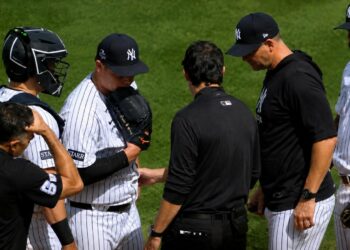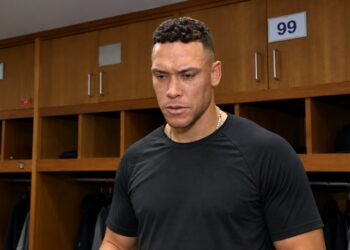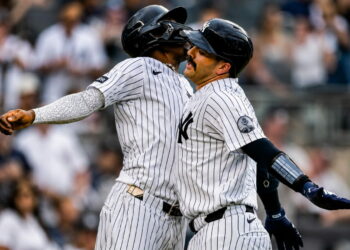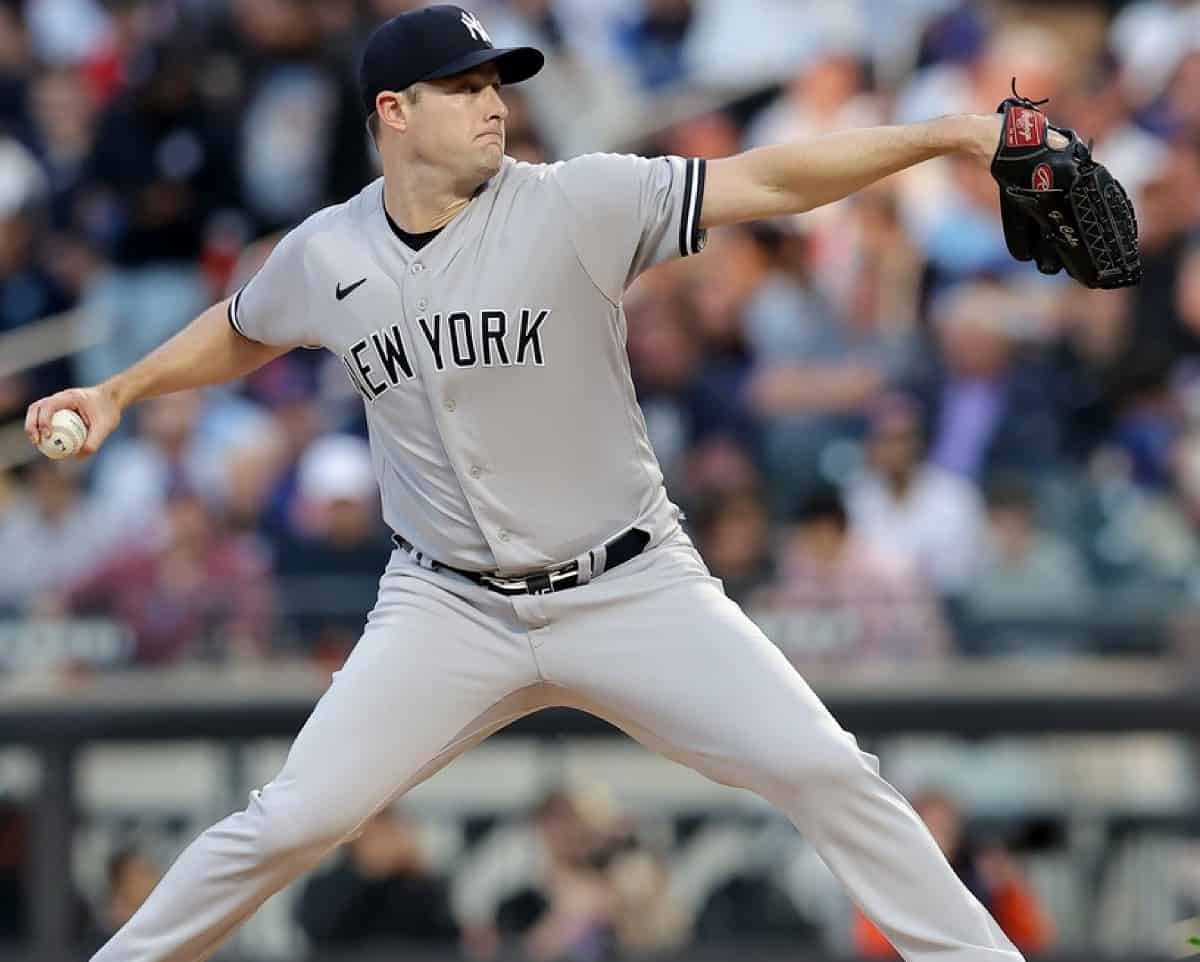
NEW YORK — David Bednar walked off the mound at Citi Field on Sunday with the kind of look that does not need words. He had just blown a three-run lead in the bottom of the ninth inning. Tyrone Taylor’s three-run homer tied the game. Carson Benge walked it off an inning later. Mets 7, Yankees 6.
Bednar’s collapse was the headline. The deeper story is what he revealed about a decision the Yankees made last winter and have spent every month since hoping would not come back to hurt them.
The Yankees did not add a second closer this offseason. Fans saw it coming. Analysts wrote about it. Brian Cashman built a bullpen anyway, adding several relievers but skipping the one role that needed protection. Sunday at Citi Field made that decision impossible to ignore.
How Bednar fell apart in the ninth
Bednar entered the ninth with a 6-3 Yankees lead. Benge and Bichette singled. He recovered to get Juan Soto on a fielder’s choice and strike out Vientos. One out from a Subway Series win. On the first pitch to Tyrone Taylor, a curveball hung over the plate. Taylor pulled it 404 feet inside the left field foul pole. Tie game.
Boone described the mistake plainly.
“It was just a classic hanging breaking ball,” Boone said.
Bednar did not duck from the moment afterward. He addressed it directly.
“I’ve had a lot of success with that pitch. I trust my stuff,” Bednar said. “But overall, it’s unacceptable, especially in that spot. It’s just very frustrating.”
Taylor’s home run was just the second Bednar had given up all season. Brice Turang’s walk-off shot in Milwaukee on May 10 was the other. Both came on a curveball. Both were game-winners. Two pitches, two losses on the road trip the Yankees just finished 2-7.
The numbers behind Bednar’s slow slide

Sunday was not an isolated event. Bednar has been pitching on a tightrope for weeks, and the data backs it up. His ERA after Sunday sits at 4.95 across 20 appearances. His 1.55 WHIP is well above his career average of 1.18. He has blown two saves in 12 chances, just one fewer blown save than he had across the entirety of last season.
Two splits explain the trouble. Leadoff batters are hitting .313 against Bednar with a .421 OBP. Two-strike batters are hitting .308 with a .756 OPS. He has allowed at least one base runner in 15 of his 20 appearances and gave up a run in Friday’s ninth before Sunday’s meltdown. The Yankees closer is in the middle of his roughest stretch since arriving from Pittsburgh.
There is one positive signal. Bednar’s fastball touched 96.3 mph Sunday, up from his 95.8 mph season average. Last season he sat at 97.1 mph. The velocity may be slowly returning. But velocity alone does not fix command, and command has been the problem.
Bednar acknowledged the issue.
“Just not putting guys away early,” Bednar said. “Overall, that’s unacceptable, but especially in that spot, it’s just very frustrating.”
The Statcast case that Bednar is better than the line
Before piling on the closer, the underlying data deserves a look. Bednar has been victimized by sequencing more than by his stuff. His Baseball Savant page tells a different story than his actual ERA.
Bednar’s xERA sits at 2.42, nearly a run and a half lower than his actual Yankees ERA of 4.95. That is one of the largest expected-versus-actual gaps among any qualified closer in baseball. He ranks in the 98th percentile in chase rate, the 94th percentile in barrel rate and the 96th percentile in ground ball rate. He is generating swings outside the zone, limiting hard contact and keeping the ball on the ground at elite levels.
None of that helps when the curveball hangs at the worst possible moment. The Turang walk-off in Milwaukee and the Taylor walk-off in Queens both came on the same pitch. Closers are judged on saves and blown saves, not Statcast percentiles. Bednar has now lost the Yankees two games in eight days because of poor execution on individual pitches with everything else trending in his favor.
That is the frustration at the heart of his Yankees season. The process has been good. The results have not followed.
The Cashman offseason call that put the Yankees here
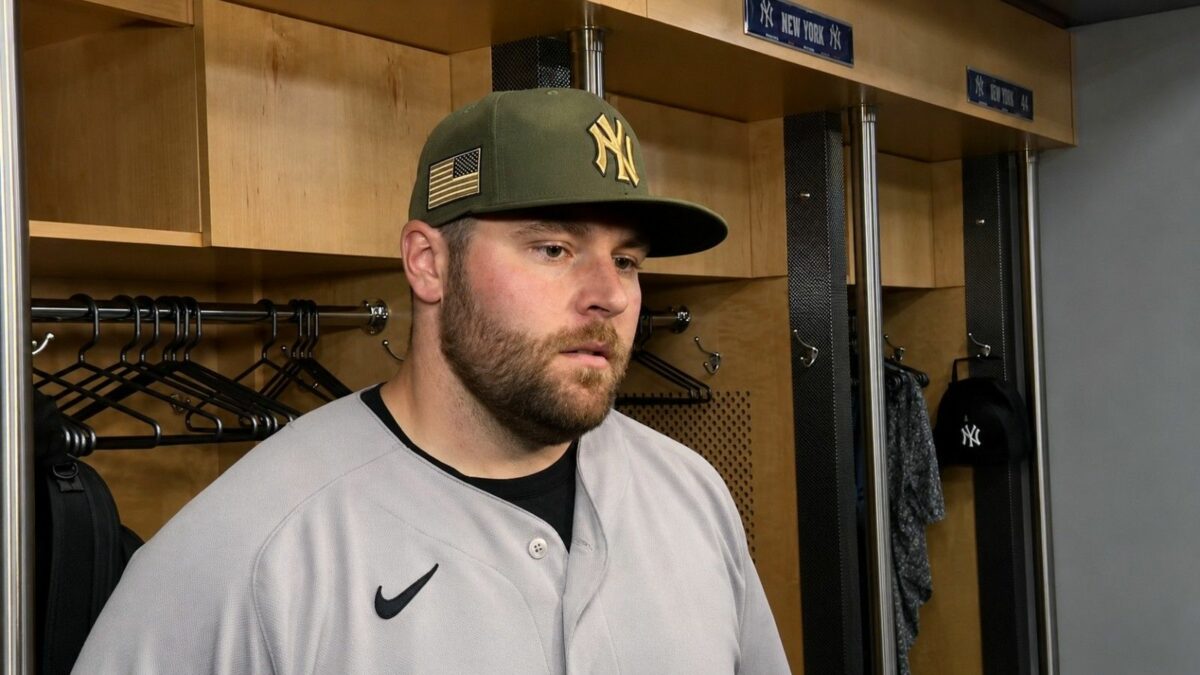
Last summer’s Bednar acquisition from Pittsburgh worked. After the July 31 deadline trade, he posted a 2.19 ERA across 19 Yankees appearances with 10 saves and one earned run in five postseason outings. The Yankees thought they had stabilized a closer role that had wobbled with Devin Williams.
This past offseason was the moment to insulate that stability. Yankees fans called for a second high-leverage arm capable of closing if Bednar faltered. The shopping list was visible to anyone paying attention. Cashman responded by adding bullpen depth, including Camilo Doval, but did not bring in a true second closer.
Doval was supposed to be the answer if anything went wrong. The former San Francisco Giants closer has not been. He carries a 5.90 ERA across 20 appearances with three blown saves. He has not earned the trust to handle the ninth when Bednar cannot.
Paul Blackburn was the second of Cashman’s offseason bullpen additions for the Yankees. He has been used primarily as an opener, including a May 7 outing against the Texas Rangers. His season-high outing was 43 pitches on April 26, and 36 pitches in relief after Max Fried exited his Wednesday start in Baltimore. He has not been stretched out to handle bulk innings and has not been entrusted with high-leverage spots.
Ryan Yarbrough was Cashman’s third winter bullpen pickup for the Yankees. He has worked as a long man and bulk reliever. His season-high pitch count was 55 on the Wednesday Fried exited the game. Prior to that, his Yankees high was 38 pitches and his next highest was 37. None of his three offseason bullpen additions have produced the kind of high-leverage stability the Yankees need behind Bednar.
That leaves Fernando Cruz (2.37 ERA, 22 appearances) as the most likely inheritor of save opportunities. Cruz has not been a closer at the major league level. Asking him to take over now would be asking him to fill a job no Yankees front office made sure was protected.
That is the mistake. Cashman built a bullpen with depth in the seventh and eighth innings. He did not invest in a proven backup for the ninth. The thinking was understandable. Bednar had been excellent down the stretch in 2025. Why duplicate the role?
The answer is what Yankees fans saw Sunday. Closers struggle. Velocity dips. Command betrays. A team built to win the AL East cannot rely on one arm to close every game from April through October without a real Plan B.
What the Yankees do now
Boone said the Yankees would discuss adding a fresh bullpen arm before Monday’s homestand opener against Toronto. That is short-term tinkering. The longer-term question is whether Cashman will use the Aug. 3 trade deadline to correct his winter mistake.
The Yankees added multiple relievers at last year’s deadline. They likely need to do the same. A true second closer would help most.
Bednar may pull himself out of this slump. The fastball is trending up. He has been here before and recovered. The Yankees have no choice but to keep running him out in the ninth right now, because the alternatives are not really alternatives.
Boone said. “We just had a terrible road trip where we certainly had some tough ones.”
The bullpen problem Cashman did not solve in the offseason looms large over every Yankees game.
What do you think?