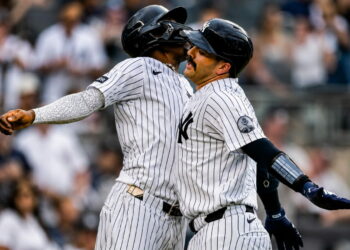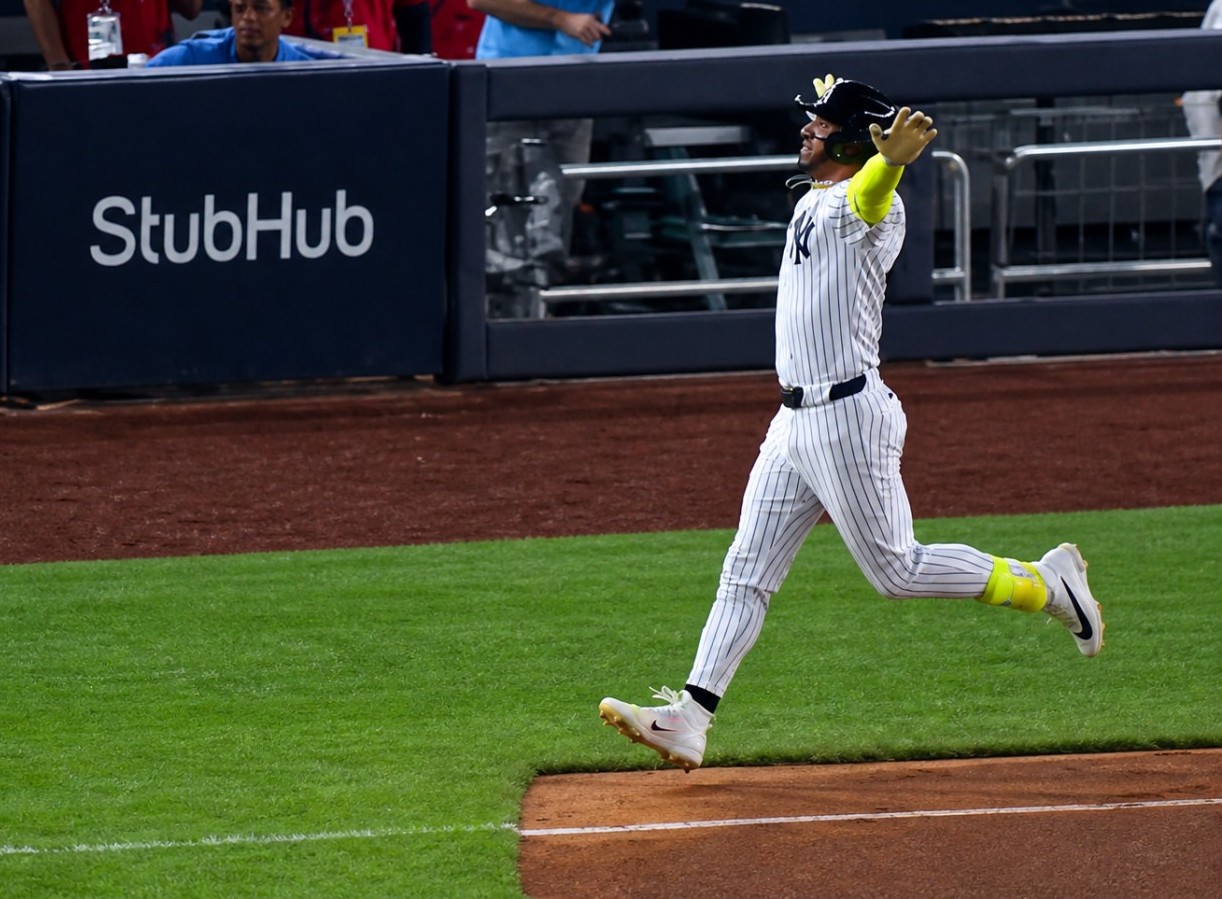
NEW YORK — Jose Caballero does not care about exit velocity. He said so himself. He is trying to win battles, one at-bat at a time, and the results have been strong enough to push a three-year Yankees starter to Triple-A.
The metrics, however, are telling a different story. And if those numbers prove predictive, the Yankees’ infield picture could look very different before this season ends.
What Caballero has done and what the data warns
Caballero’s recent stretch has been genuinely impressive. Over his last 22 games through May 5, he hit .316 with an .896 OPS, four home runs and eight stolen bases. He started the year at .150/.384 OPS with no home runs in his first 12 games. The turnaround has been the engine behind the Yankees’ 25-11 start.
His defense has been strong. His baserunning has added value. His clutch hits helped turn several close games into comfortable Yankees victories.
But the underlying numbers at Baseball Savant raise a clear warning. Caballero’s average exit velocity of 83.7 mph ranked in the third percentile. His hard-hit rate of 29.3 percent was in the 11th percentile. His chase rate of 33.2 percent ranked in the 28th percentile. His expected weighted on-base average of .266 placed him in the seventh percentile. Those four numbers describe a hitter significantly overperforming his contact quality. Regression is the statistical expectation.
Caballero on winning the battle his own way
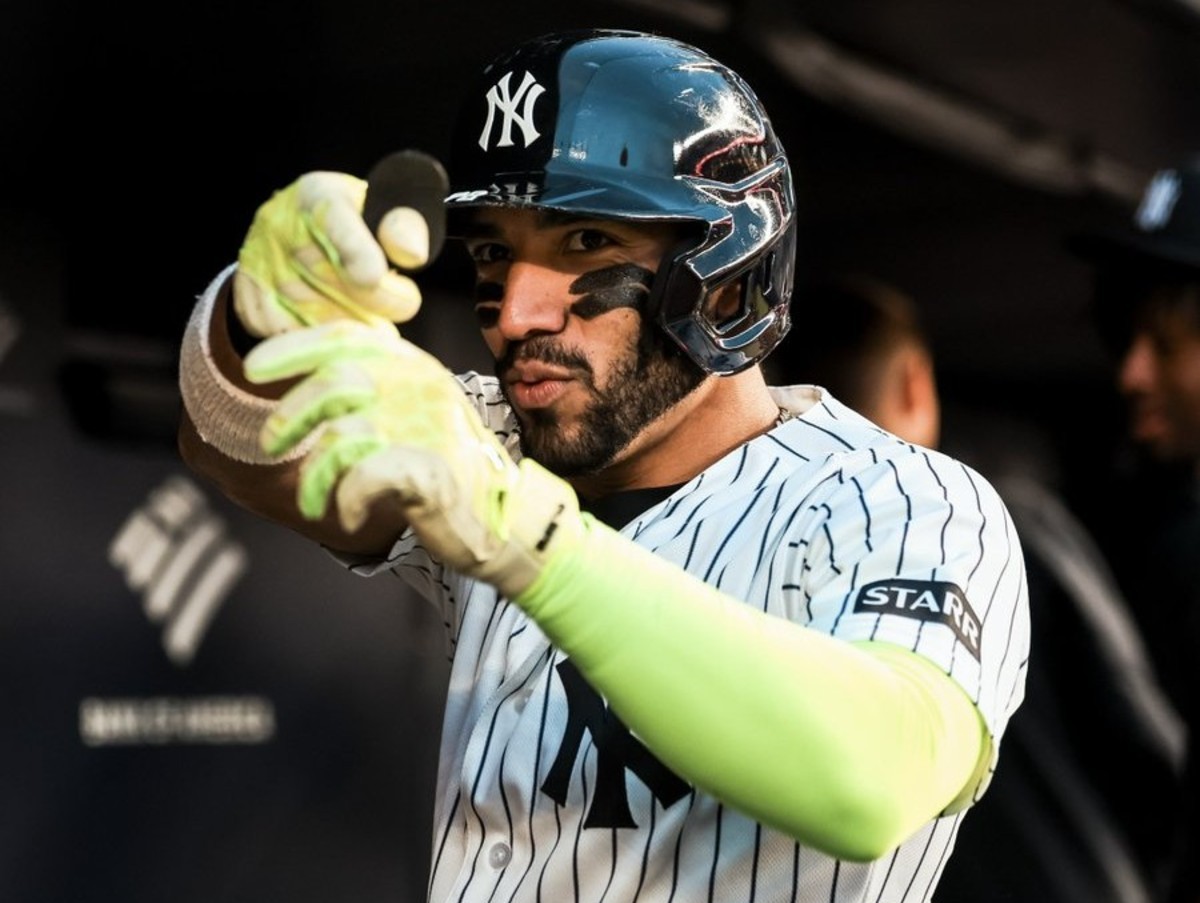
Caballero was asked Tuesday how he thinks about his approach at the plate, given that the traditional underlying metrics do not reflect his surface results. His answer was clear and unapologetic.
“I’m trying to win a battle, man,” Caballero said. “It doesn’t matter how I win it, I want to win the battle. Every at-bat for me is a battle. I’m just trying to be on base, make some damage and help my team.”
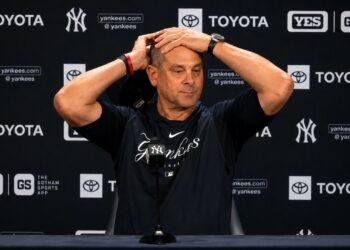
Manager Aaron Boone was then asked directly whether he believes Caballero can sustain this production against what the Statcast numbers suggest. His answer was measured, offering neither a firm endorsement nor a clear warning.
“Maybe,” Boone said. “Look, I think he’s a player. He’s a gamer. You like him up there when the chips are on the table. He’s a hustler, in a good way. He likes the action. He likes, ‘Give me the ball.'”
The main news: what Caballero’s metrics mean for the infield
Here is the central question the Yankees are navigating. If Caballero’s surface production continues, the infield stays as it is. He plays short. Volpe stays in Scranton. But if regression arrives, which the data strongly suggests it will, the Yankees need answers. And those answers will reshape the infield beyond just Volpe’s return.
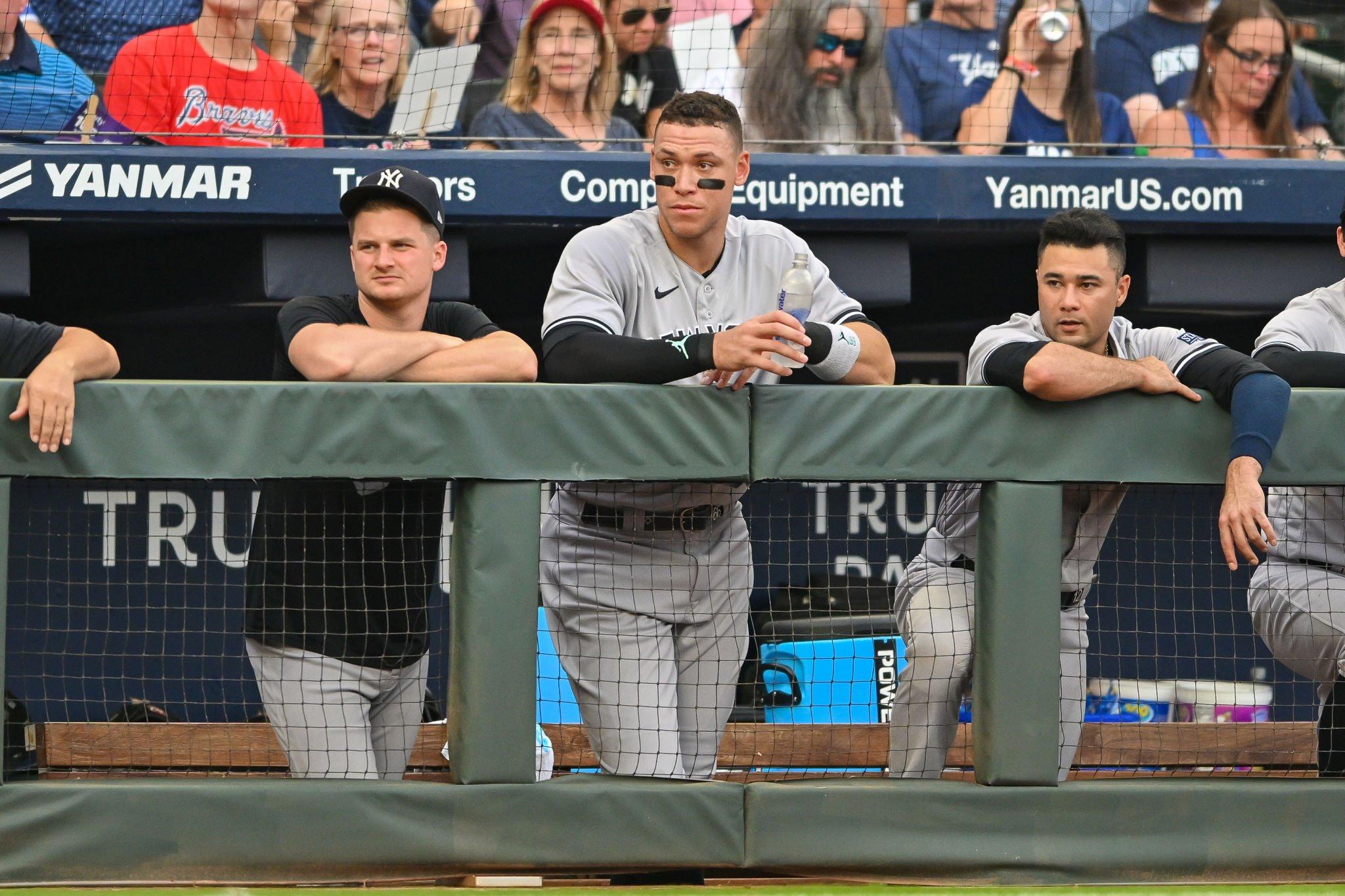
Aaron Judge, speaking after the game, laid out the situation with unusual candor. He was asked about Volpe’s future with the club and the Yankees captain’s answer addressed both the short term and the bigger picture.
“That was tough,” Judge said. “Anthony’s my guy. I know he’s gonna be more motivated than ever to come back here. The team’s been doing well. Caballero at shortstop’s been doing just an amazing job, defensively and offensively. So, you know, it’s kind of tough position to be put in for the Yankees. How are you going to change things up?”
Then Judge added the line that crystallizes where things stand for the infield.
“If it’s even him as a utility guy, anything, just to get himself back up here,” Judge said of Volpe. “Because besides what he can do on the field, he’s a big part in this clubhouse, in this dugout.”
Boone was blunt about Volpe’s situation when asked whether the organization’s view of him as a starter had changed.
“There’s things out of his control,” Boone said. “There’s no guarantees of anything. The bottom line is things have to happen, not necessarily all on his end, to open up a spot.”
How the infield math adds up — and changes by the year
The current picture has Caballero at shortstop. Volpe is at Triple-A Scranton working alongside top Yankees prospect George Lombard Jr., promoted from Double-A Somerset last week. Boone said Lombard will play third and second base in addition to shortstop during this stretch. The Yankees’ analytics staff and scouts widely view Lombard as the franchise’s long-term shortstop. That has not changed regardless of what Caballero does.
Jazz Chisholm is the current Yankees second baseman. He becomes a free agent after 2026. His public asking price is $35 million per year. The gap between that number and what the Yankees will pay is significant. Most indicators point toward Chisholm leaving.
Ryan McMahon is under Yankees contract through 2027. He has been one of the team’s hottest hitters over the past three weeks. His deal guarantees him an infield spot for at least another full season.
If Chisholm leaves, if Lombard arrives in 2027, and if Volpe develops into a versatile Yankees infielder, the picture could look substantially different within two seasons. Volpe at second, Lombard at short, McMahon at third represents a realistic 2027 Yankees lineup. But it all starts with Caballero’s next 120 games. If the metrics win, the reshaping happens sooner.
What do you think?