NEW YORK — Kyle Tucker just landed a contract that makes three-time MVP Aaron Judge look like a bargain hunter at a garage sale. The math does not add up. Or does it?
Tucker signed a four-year, $240 million deal with the Los Angeles Dodgers last week. His average annual value sits at $60 million. That figure sets a new record for any non-two-way player in MLB history.
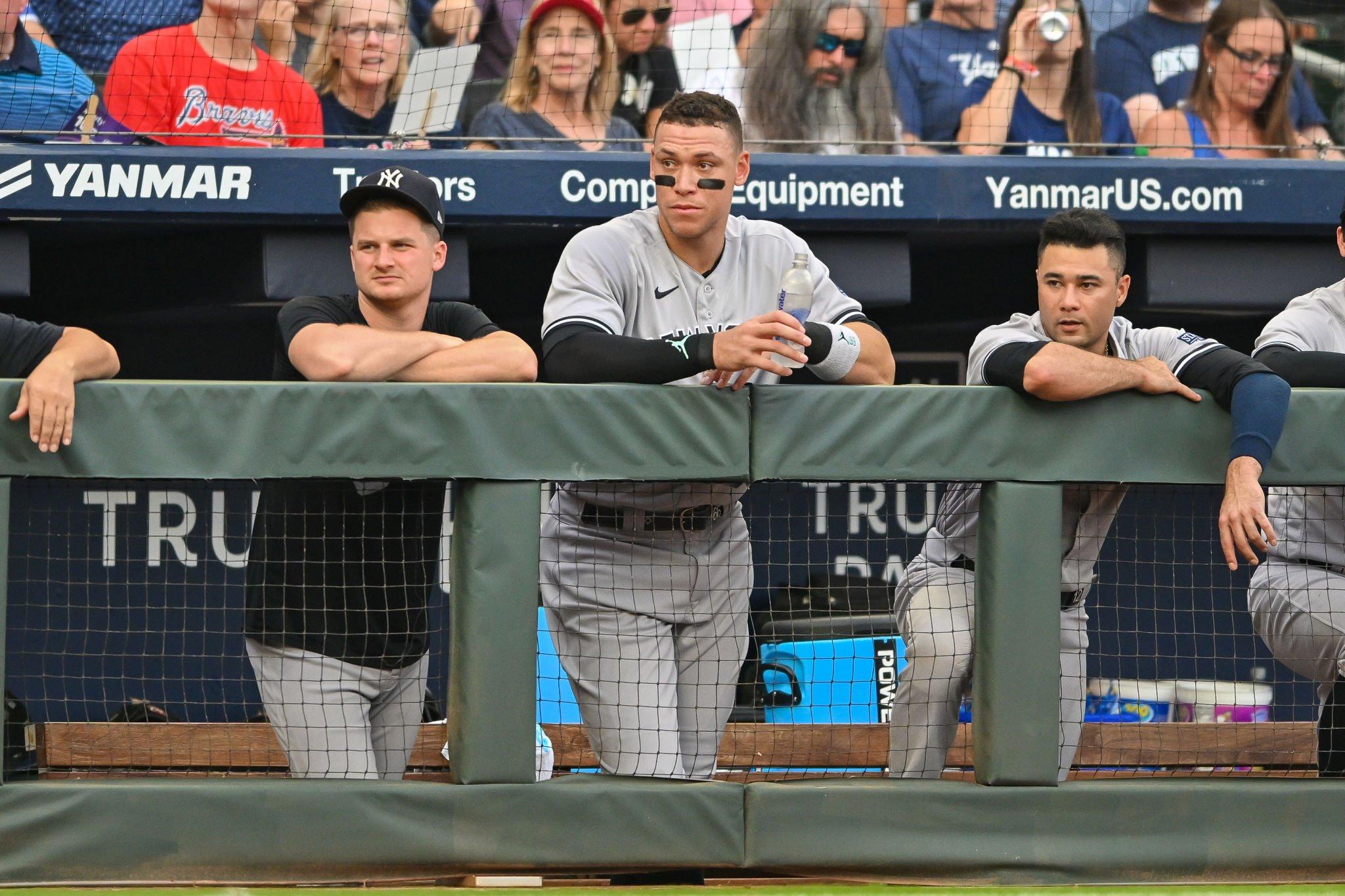
Meanwhile, Yankees captain Judge earns $40 million per season on his nine-year, $360 million contract. He signed that deal before the 2023 season after breaking the American League home run record.
The difference? Tucker makes $20 million more per year than a player who just won his third MVP award.
But FanGraphs’ dollar-value model puts Aaron Judge’s 2025 production at roughly $81 million in on-field value, while Kyle Tucker’s season checked in around $36 million under the same metric. This has fuelled a new debate over the MLB’s warped money.
Tucker’s credentials pale next to Judge

The numbers paint a stark picture. Judge owns three MVP trophies. Tucker has zero. His best MVP finish came in 2023 when he placed fifth in American League voting.
Judge hit .331 with 53 home runs and 114 RBIs in 2025. He won his first batting title and earned AL Player of the Month honors four times. Tucker batted .266 with 22 home runs and 73 RBIs while dealing with injuries.
Tucker has never cracked 30 homers in a season. Judge has hit at least 50 home runs four times. He became only the fourth player in history to achieve that mark, joining Babe Ruth, Sammy Sosa, and Mark McGwire.
Yet somehow Tucker commands $20 million more annually.
Yankees fans cry foul over warped salary numbers
Social media erupted after the Tucker deal. Yankees fans felt vindicated in their belief that Judge remains criminally underpaid. One prominent account summed it up bluntly: “Aaron Judge is VERY UNDERPAID.”
Tucker also earns $9 million more per season than Juan Soto, who received a 15-year, $765 million contract from the Mets last year. Soto has five top-six MVP finishes. He makes just $51 million annually.
Tucker out-earns two-time NL MVP Bryce Harper by roughly $35 million per year. Harper signed his deal with the Phillies back in 2019. The market has exploded since then.
The Dodgers paid for prime years only
Here is where the logic starts to make sense. Sports Illustrated’s Tom Verducci offered this perspective on the deal.
“Yes, Shohei Ohtani is making $70 million per year, Juan Soto is making $51 million and Aaron Judge $40 million. But those are all long-term deals that pay those players through ages 38, 39 and 39, respectively,” Verducci wrote. “The Dodgers just set a new market for buying only prime years. They paid $60 million a year without having to worry about a decline phase.”
Tucker turns 29 on Saturday. His contract runs only four years with opt-outs after years two and three. He could hit free agency again at 31 or 32 while still in his prime.
Judge signed his deal before turning 31. His contract carries him through age 39. The Yankees are paying for prime years and decline years together.
The advanced metrics tell a different story
Tucker excels at controlling the strike zone. He ranked in the 98th percentile in chase rate in 2025. He also finished in the 96th percentile in walk rate and 85th percentile in strikeout rate.
Those numbers matter to front offices. Teams value players who walk often and rarely strike out. Tucker checks both boxes at elite levels.
But Judge still dominates those same metrics. He ranked in the 100th percentile in batting run value and expected weighted on-base average. His raw power remains unmatched in baseball.
The Yankees captain represents generational talent. Tucker represents very good talent. The gap in pay seems upside down.
| Player | WAR (2025) | OPS+ | wRC+ | HR | Defensive value | Salary 2026 | Cost per WAR (2025) | Batting RV %ile | xwOBA %ile | Chase %ile | Walk %ile | K %ile |
| Aaron Judge | 10.1 | 204 | 204 | 53 | Above-avg RF | $40M | $4.0M | 100 | 100 | 84 | 100 | 36 |
| Juan Soto | 6.2 | 164 | 165 | 38 | Avg / below-avg OF | $61M | $9.8M | 99 | 100 | 100 | 100 | 62 |
| Kyle Tucker | 5.8 | 155 | 156 | 34 | Plus RF | $60M | $10.3M | 90 | 93 | 98 | 96 | 85 |
Market timing explains almost everything

Theo Wenner for Rolling Stone
Judge signed his deal in December 2022. The market looked different then. His $40 million AAV set the record for position players at that time.
Since then, salaries have skyrocketed. The collective bargaining agreement expires after 2026. Teams are spending aggressively before a potential lockout freezes transactions.
Tucker also benefited from a weak free agent class. He was clearly the top position player available. The Mets offered him a four-year, $220 million deal. The Dodgers went higher.
Judge faced competition from the Padres, Giants, and others in 2022. Tucker basically watched teams bid against each other with limited alternatives.
Judge remains the best value in baseball
The Tucker deal proves one thing. The Yankees got an absolute steal with Judge. He produces MVP-caliber seasons at a fraction of what he would command today.
If Judge hit free agency now? He would shatter records. His combination of power, plate discipline, and durability has no equal. A short-term deal at Tucker-level AAV would be the floor, not the ceiling.
The Yankees locked up a three-time MVP at a discount. The Dodgers paid a premium for a very good player. Both teams got what they wanted.
Baseball economics can seem absurd. A $20 million annual gap between these two players proves it. But in a sport where timing is everything, the Yankees timed the Judge deal perfectly.
What do you think? Leave your comment below.