| The final standing | Lost the World Series to the Cincinnati Reds |
| Regular-season record | 97-62 (.610) |
| Post-season record | 3-6 |
| Divisional rank | 1st |
| ALDS record and opponent | – |
| AL rank | 1st |
| ALCS record and opponent | Won 3-2 vs Kansas City Royals |
| World Series record and opponent | Lost 0-4 vs Cincinnati Reds |
| Manager | Billy Martin |
| Captain | Thurman Munson |
| Top batter | Home run: Graig Nettles (32), Thurman Munson, Chris Chambliss, Oscar Gamble (17), Roy White (14) BA: Mickey Rivers (.312), Thurman Munson (.302), Chris Chambliss (.293) Runs: Roy White (104), Mickey Rivers (95), Graig Nettles (88) RBI: Thurman Munson (105), Chris Chambliss (96), Graig Nettles (93) |
| Top pitcher/ (W-L, ERA) | Ed Figueroa: 19-10, 3.02 Dock Ellis: 17-8, 3.19 |
| Attendance record | 2,012,434 (1st of 12) |
1976 New York Yankees season: Summary
In the glittering summer of 1976, the New York Yankees embarked on a season that would be etched into the annals of baseball history—a tale of resurgence and rekindled glory under the stewardship of the dynamic duo, George Steinbrenner and Billy Martin. The season kicked off with a symbolic return to the hallowed grounds of Yankee Stadium, where legends like DiMaggio and Mantle once roamed. In a nostalgic dance with the past, Joe DiMaggio, Mickey Mantle, Whitey Ford, and others graced the field, ushering in a new era for the Yankees. The Yankees, now led by the newly appointed team captain Thurman Munson, were on a mission to reclaim their former greatness.
The team started with a thunderous 10-3 record in April, including a triumphant West Coast swing through California and Oakland. May witnessed a clash for the ages against the Boston Red Sox, marked by a bench-clearing brawl that resonated through baseball lore. Graig Nettles’ clash with Carlton Fisk became a defining moment, an exclamation point on the fierce rivalry. By mid-June, the Yankees had built a formidable 7-game lead, and as the trading deadline loomed, strategic moves were made to fortify their postseason aspirations. A 10-player deal with Baltimore brought Ken Holtzman and Doyle Alexander into the fold. Another attempt to acquire all-star pitcher Vida Blue, however, was thwarted by Commissioner Bowie Kuhn, adding a touch of drama to an already intense season.
July brought the All-Star Game, where six Yankees showcased their talent. Thurman Munson, elected to start, led the charge along with Chris Chambliss, Catfish Hunter, Willie Randolph, Mickey Rivers, and Sparky Lyle. By the end of July, the Yankees’ lead had ballooned to an imposing 14½ games. The team’s relentless pursuit of victory continued through August, culminating in a memorable 19-inning marathon against Minnesota. September saw the Yankees clinching the division title, marking their first postseason appearance since 1964. The Bronx Bombers were back, and the city buzzed with anticipation.
Under the strategic leadership of George Steinbrenner and the fiery coaching of Billy Martin, the Yankees underwent a transformation. Steinbrenner’s financial might earned them the moniker “The Best Team Money Can Buy,” a tag that would echo through the decades. However, the 1976 Yankees were not defined solely by wealth; they were forged through smart trades and calculated moves.
The departure of pitcher Doc Medich to the Pittsburgh Pirates yielded Dock Ellis, a formidable force in the Yankees’ pitching arsenal. Willie Randolph, acquired in the same deal, added defensive prowess and baserunning finesse. A significant trade with California sent Bobby Bonds packing but brought Ed Figueroa and Mickey Rivers to the Yankees. Figueroa’s 19-win season and Rivers’ .312 batting average proved pivotal. Despite some trades not meeting expectations, the Yankees emerged stronger in 1976. Figueroa and Ellis anchored the pitching staff, with Catfish Hunter as the nominal ace. Sparky Lyle dominated the bullpen, saving 23 games, while Dick Tidrow provided reliable support. The offense, ranked second in the AL, showcased power and speed, led by Graig Nettles, Chris Chambliss, and the fleet-footed trio of Randolph, Rivers, and Roy White.
As the regular season concluded, the Yankees boasted an impressive 97-62 record, finishing 10½ games ahead of the Baltimore Orioles. October ushered in a new chapter as the Yankees made their inaugural appearance in the American League Championship Series. A thrilling encounter with the Kansas City Royals culminated in Chris Chambliss’s iconic walk-off home run, securing the Yankees’ place in the World Series. However, the championship dream faced a formidable challenge from the Cincinnati Reds, the reigning champions. Despite the Yankees’ valiant efforts, the Reds swept the World Series, leaving a bitter taste in their mouths. Steinbrenner’s response was swift and typical, venting his frustration at Billy Martin.
Yet the 1976 season was more than a final outcome; it was a statement. The Yankees were back, their legacy restored. The disappointments of ’76 paved the way for the triumphs of ’77 and ’78, as the Bronx Bombers embarked on a journey that would define a baseball era.
Chris Chambliss’ iconic walk-off and 1976 New York Yankees’ return to glory
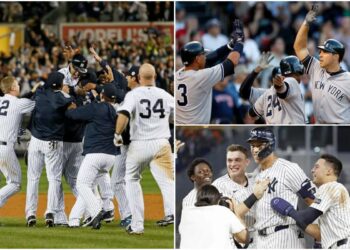
On the crisp night of October 14, 1976, Yankee Stadium transformed into a cauldron of anticipation and chaos. The air crackled with the fervor of a city longing for baseball glory, and the Yankees, after a twelve-year hiatus, were on the cusp of a historic return to the Fall Classic. Chris Chambliss, standing at the precipice of Yankee immortality, stepped up to the plate in the decisive Game 5 of the 1976 American League Championship Series (ALCS) against the Kansas City Royals. Little did he know that his swing would echo through time as one of the most iconic moments in the Yankees’ history.
Before Chambliss could etch his name into the annals of baseball legend, the game itself had to weather the storm of the city’s fervor. Debris thrown onto the field by an exuberant crowd prompted a delay as the Yankee Stadium field crew scrambled to clear the accumulated chaos. The atmosphere was a microcosm of the city’s energy in the mid-’70s—a testament to the electrifying, sometimes frenzied, spirit of New York. And then, with the weight of a city on his shoulders, Chambliss swung his bat and connected with destiny. The crack of the bat heralded a walk-off home run, sending the ball soaring into the night sky and propelling the Yankees into the World Series after a twelve-year drought.
The ensuing scene at Yankee Stadium was nothing short of pandemonium. Fans, unable to contain their euphoria, flooded the field in a tidal wave of exuberance. Chambliss, attempting to complete his triumphant run around the bases, found himself mobbed by the ecstatic crowd. The Bronx was alive with a frenetic energy – an embodiment of the city’s resilience and the Yankees’ triumphant return. As Chambliss navigated the chaotic path from first base to home, he was knocked down multiple times by the exuberant fans. In the aftermath, the field resembled a surreal collage of artifacts – an empty bottle of Hiram Walker peach-flavored brandy lay where home plate once stood, a testament to the unbridled celebration.
It took Chambliss a surreal 45 minutes to touch some dirt in the vicinity of home plate, making the Yankees the American League champions. The victory was not without its peculiarities – home plate had vanished in the sea of revelry. The bases, too, had been claimed by the exuberant crowd, leaving behind only remnants of a wild celebration. Underneath the stadium, a surreal scene unfolded as ballplayers were passed like buckets in a fire brigade to the safety of the clubhouse, pushed along by special policemen. The chaos even extended to the retrieval of the aspirin kit, a seemingly mundane detail in the grand spectacle of victory.
In the aftermath, the field bore witness to the aftermath of a celebration so intense that it transcended the boundaries of normalcy. Empty glass cases, frisbees, and countless shreds of paper covered the ground, creating a mosaic of jubilation and unrestrained joy. Chris Chambliss, the hero of the night, returned to the field to officially complete the winning run, but the home plate was gone, a poignant symbol of the unforgettable mayhem that had unfolded. The 1976 ALCS walk-off home run was not just a baseball moment; it was a snapshot of a city’s unbridled passion, a chaotic masterpiece etched in the moonlit canvas of Yankee Stadium.
Mayhem in the Bronx: 1976 New York Yankees’ explosive Red Sox brawl
In the vibrant tapestry of the 1976 baseball season, a dramatic chapter unfolded on a spring night at Yankee Stadium that would forever be etched in the rivalry between the New York Yankees and the Boston Red Sox. The air was thick with anticipation as the two baseball powerhouses clashed, and what transpired transcended the realm of a typical regular-season game.
The tension reached a boiling point in the bottom of the sixth inning. With the Yankees holding a precarious 1-0 lead, the game took an unexpected turn when Lou Piniella, fueled by a fierce determination to score, collided with Red Sox catcher Carlton Fisk at home plate. The collision set off a powder keg of emotions, resulting in a bench-clearing brawl that turned the field into a chaotic battleground.
Amid the flying fists and the tumult of players grappling with each other, the initial brawl seemed to have subsided. However, as the baseball gods would have it, a new chapter of chaos unfolded. Red Sox pitcher Bill “Spaceman” Lee and Yankees third baseman Graig Nettles engaged in a war of words that reignited the fiery conflict. Amid the verbal sparring, fists flew again, propelling the brawl into a new, more intense phase.
The aftermath was as bitter as the clash itself. Bill Lee, the charismatic and sometimes eccentric Red Sox pitcher, emerged from the fracas with a separated left shoulder. His season was abruptly interrupted, and the consequences would cast a shadow over the remainder of his career. The injury proved to be a turning point for Lee, and his level of performance never quite reached the pinnacle it once had.
Despite the victorious outcome for the Yankees in the brawl-marred game, the incident left scars on both teams. The Yankees would go on to clinch the pennant that season, but the bitter taste of the brawl lingered. The Red Sox, though victorious in the skirmish, paid a heavy price, losing not only the game but also their enigmatic pitcher for a significant portion of the season.
As the dust settled on that tumultuous night, it was evident that the Yankees and Red Sox had added another storied chapter to their fierce rivalry. The intensity of the brawl, the injuries sustained, and the subsequent shifts in performance all contributed to the lasting legacy of this unforgettable clash in the heart of the Bronx, encapsulating the raw emotion and unpredictable nature of baseball’s most celebrated rivalries.
1976 New York Yankees in videos
1976 New York Yankees: ALCS
ALCS vs Royals (3-2)
(Home: 2-1; Away: 1-1)
| Game | Date | Score | Location | Time | Attendance |
| 1 | October 9 | New York Yankees – 4, Kansas City Royals – 1 | Royals Stadium | 2:09 | 41,077 |
| 2 | October 10 | New York Yankees – 3, Kansas City Royals – 7 | Royals Stadium | 2:45 | 41,091 |
| 3 | October 12 | Kansas City Royals – 3, New York Yankees – 5 | Yankee Stadium | 3:00 | 56,808 |
| 4 | October 13 | Kansas City Royals – 7, New York Yankees – 4 | Yankee Stadium | 2:50 | 56,355 |
| 5 | October 14 | Kansas City Royals – 6, New York Yankees – 7 | Yankee Stadium | 3:13 | 56,821 |
1976 New York Yankees: World Series
World Series vs Reds (0-4)
(Home: 0-2; Away: 0-2)
| Game | Date | Score | Location | Time | Attendance |
| 1 | October 16 | New York Yankees – 1, Cincinnati Reds – 5 | Riverfront Stadium | 2:10 | 54,826 |
| 2 | October 17 | New York Yankees – 3, Cincinnati Reds – 4 | Riverfront Stadium | 2:33 | 54,816 |
| 3 | October 19 | Cincinnati Reds – 6, New York Yankees – 2 | Yankee Stadium | 2:40 | 56,667 |
| 4 | October 21† | Cincinnati Reds – 7, New York Yankees – 2 | Yankee Stadium | 2:36 | 56,700 |
1976 New York Yankees: Roster
| Name | Age | B | T | Ht | Wt | DoB | Yrs | G | GS | WAR | Salary |
| Doyle Alexander | 25 | R | R | 6′ 3″ | 190 | Sep 4, 1950 | 6 | 19 | 19 | 1 | |
| Sandy Alomar | 32 | B | R | 5′ 9″ | 140 | Oct 19, 1943 | 13 | 67 | 41 | -0.1 | |
| Juan Bernhardt | 22 | R | R | 5′ 11″ | 160 | Aug 31, 1953 | 1st | 10 | 6 | -0.4 | |
| Ron Blomberg | 27 | L | R | 6′ 1″ | 195 | Aug 23, 1948 | 7 | 1 | 0 | 0 | |
| Ken Brett | 27 | L | L | 6′ 0″ | 190 | Sep 18, 1948 | 9 | 2 | 0 | 0.1 | |
| Chris Chambliss | 27 | L | R | 6′ 1″ | 195 | Dec 26, 1948 | 6 | 156 | 155 | 4.1 | |
| Rich Coggins | 25 | L | L | 5′ 8″ | 170 | Dec 7, 1950 | 5 | 7 | 1 | 0.1 | |
| Rick Dempsey | 26 | R | R | 6′ 0″ | 190 | Sep 13, 1949 | 8 | 21 | 9 | -0.1 | |
| Kerry Dineen | 23 | L | L | 5′ 11″ | 165 | Jul 1, 1952 | 2 | 4 | 2 | 0.1 | |
| Dock Ellis | 31 | B | R | 6′ 3″ | 205 | Mar 11, 1945 | 9 | 32 | 32 | 1.3 | $80,000 |
| Ed Figueroa | 27 | R | R | 6′ 1″ | 190 | Oct 14, 1948 | 3 | 34 | 34 | 2.1 | |
| Oscar Gamble | 26 | L | R | 5′ 11″ | 160 | Dec 20, 1949 | 8 | 110 | 88 | 2.8 | $75,000 |
| Ron Guidry | 25 | L | L | 5′ 11″ | 161 | Aug 28, 1950 | 2 | 7 | 0 | -0.4 | |
| Fran Healy | 29 | R | R | 6′ 5″ | 220 | Sep 6, 1946 | 7 | 46 | 32 | 0.7 | |
| Elrod Hendricks | 35 | L | R | 6′ 1″ | 175 | Dec 22, 1940 | 9 | 26 | 11 | 0.2 | |
| Ken Holtzman | 30 | R | L | 6′ 2″ | 175 | Nov 3, 1945 | 12 | 21 | 21 | -0.7 | |
| Catfish Hunter HOF | 30 | R | R | 6′ 0″ | 190 | Apr 8, 1946 | 12 | 36 | 36 | 1.4 | $640,000 |
| Grant Jackson | 33 | B | L | 6′ 0″ | 180 | Sep 28, 1942 | 12 | 21 | 2 | 1.9 | |
| Mickey Klutts | 21 | R | R | 5′ 11″ | 170 | Sep 20, 1954 | 1st | 2 | 2 | 0 | |
| Gene Locklear | 26 | L | R | 5′ 10″ | 165 | Jul 19, 1949 | 4 | 13 | 8 | -0.3 | |
| Sparky Lyle | 31 | L | L | 6′ 1″ | 182 | Jul 22, 1944 | 10 | 64 | 0 | 1.2 | |
| Elliott Maddox | 28 | R | R | 5′ 11″ | 180 | Dec 21, 1947 | 7 | 18 | 15 | -0.4 | |
| Tippy Martinez | 26 | L | L | 5′ 10″ | 180 | May 31, 1950 | 3 | 11 | 0 | 0.9 | |
| Jim Mason | 25 | L | R | 6′ 2″ | 185 | Aug 14, 1950 | 6 | 93 | 70 | 0.6 | |
| Carlos May | 28 | L | R | 5′ 11″ | 200 | May 17, 1948 | 9 | 87 | 73 | 1.4 | |
| Rudy May | 31 | L | L | 6′ 2″ | 205 | Jul 18, 1944 | 9 | 11 | 11 | -0.1 | |
| Thurman Munson | 29 | R | R | 5′ 11″ | 190 | Jun 7, 1947 | 8 | 152 | 148 | 5.3 | |
| Larry Murray | 23 | B | R | 5′ 11″ | 179 | Apr 1, 1953 | 3 | 8 | 1 | -0.1 | |
| Graig Nettles | 31 | L | R | 6′ 0″ | 180 | Aug 20, 1944 | 10 | 158 | 156 | 8 | $120,000 |
| Dave Pagan | 26 | R | R | 6′ 2″ | 175 | Sep 15, 1949 | 4 | 7 | 2 | 0.5 | |
| Lou Piniella | 32 | R | R | 6′ 0″ | 182 | Aug 28, 1943 | 10 | 100 | 79 | 1.2 | |
| Willie Randolph | 21 | R | R | 5′ 11″ | 165 | Jul 6, 1954 | 2 | 125 | 122 | 5 | $23,000 |
| Mickey Rivers | 27 | L | L | 5′ 10″ | 165 | Oct 30, 1948 | 7 | 137 | 131 | 6.4 | |
| Fred Stanley | 28 | R | R | 5′ 10″ | 165 | Aug 13, 1947 | 8 | 110 | 87 | 1.3 | |
| Dick Tidrow | 29 | R | R | 6′ 4″ | 210 | May 14, 1947 | 5 | 47 | 2 | 1.4 | |
| Cesar Tovar | 35 | R | R | 5′ 9″ | 155 | Jul 3, 1940 | 12 | 13 | 11 | -0.3 | |
| Otto Velez | 25 | R | R | 6′ 0″ | 170 | Nov 29, 1950 | 4 | 49 | 27 | 0.9 | |
| Roy White | 32 | B | R | 5′ 10″ | 160 | Dec 27, 1943 | 12 | 156 | 156 | 5.5 | $90,000 |
| Terry Whitfield | 23 | L | R | 6′ 1″ | 197 | Jan 12, 1953 | 3 | 1 | 0 | 0 | |
| Jim York | 28 | R | R | 6′ 3″ | 200 | Aug 27, 1947 | 7 | 3 | 0 | -0.3 |
1976 New York Yankees: Player additions, transactions, and trades
November 1975
- November 22: Traded Pat Dobson to the Cleveland Indians. Received Oscar Gamble.
December 1975
- December 8: Drafted Tom Robson from the Texas Rangers in the 1975 minor league draft.
- December 11: Traded Doc Medich to the Pittsburgh Pirates. Received Ken Brett, Dock Ellis, and Willie Randolph. Also, traded Bobby Bonds to the California Angels. Received Ed Figueroa and Mickey Rivers.
January 1976
- January 7: Drafted John Fulgham in the 1st round (15th pick) of the 1976 amateur draft (January), but did not sign the player.
- January 8: Purchased Jim York from the Houston Astros.
- January 23: Traded Gerry Pirtle to the Chicago Cubs. Received Rick Stelmaszek.
- January 27: Released Walt Williams.
February 1976
- February 20: Ed Herrmann’s player rights sold to the California Angels.
- February 24: Signed Tommy Davis as a free agent.
March 1976
- March 29: Released Ed Brinkman.
April 1976
- April 6: Released Tommy Davis.
- April 10: Signed Larry McCall as a free agent.
May 1976
- May 16: Traded Larry Gura to the Kansas City Royals. Received Fran Healy.
- May 18: Traded Ken Brett and Rich Coggins to the Chicago White Sox. Received Carlos May.
June 1976
- June 8: Drafted Pat Tabler in the 1st round (16th pick) of the 1976 amateur draft. Drafted Roger Slagle in the 1st round (19th pick) of the 1976 amateur draft (June Secondary). Drafted Ted Wilborn in the 4th round of the 1976 amateur draft. Drafted Chris Welsh in the 24th round of the 1976 amateur draft but did not sign the player.
- June 15: Purchased Vida Blue from the Oakland Athletics. Traded Rick Dempsey, Tippy Martinez, Rudy May, Scott McGregor, and Dave Pagan to the Baltimore Orioles. Received Doyle Alexander, Jimmy Freeman, Elrod Hendricks, Ken Holtzman, and Grant Jackson.
- June 18: Previous purchase of Vida Blue from the Oakland Athletics voided and player returned.
July 1976
- July 10: Traded a player to be named later to the San Diego Padres. Received Gene Locklear. The New York Yankees sent Rick Sawyer (July 31, 1976) to the San Diego Padres to complete the trade.
August 1976
- Released Jim York. (Date given is approximate. Exact date is uncertain.)
- August 31: Signed Rafael Santana as an amateur free agent.
September 1976
- September 1: Signed Cesar Tovar as a free agent.
1976 New York Yankees: Player debuts
- Juan Bernhardt – 07-10-1976 – 22 years old
- Mickey Klutts – 07-07-1976 – 21 years old
1976 New York Yankees stats (batting)
| Pos | Name | Age | G | PA | AB | R | H | 2B | 3B | HR | RBI | SB | CS | BB | SO | BA |
| C | Thurman Munson | 29 | 152 | 665 | 616 | 79 | 186 | 27 | 1 | 17 | 105 | 14 | 11 | 29 | 38 | 0.302 |
| 1B | Chris Chambliss | 27 | 156 | 676 | 641 | 79 | 188 | 32 | 6 | 17 | 96 | 1 | 0 | 27 | 80 | 0.293 |
| 2B | Willie Randolph | 21 | 125 | 500 | 430 | 59 | 115 | 15 | 4 | 1 | 40 | 37 | 12 | 58 | 39 | 0.267 |
| SS | Fred Stanley | 28 | 110 | 306 | 260 | 32 | 62 | 2 | 2 | 1 | 20 | 1 | 0 | 34 | 29 | 0.238 |
| 3B | Graig Nettles | 31 | 158 | 657 | 583 | 88 | 148 | 29 | 2 | 32 | 93 | 11 | 6 | 62 | 94 | 0.254 |
| LF | Roy White | 32 | 156 | 728 | 626 | 104 | 179 | 29 | 3 | 14 | 65 | 31 | 13 | 83 | 52 | 0.286 |
| CF | Mickey Rivers | 27 | 137 | 613 | 590 | 95 | 184 | 31 | 8 | 8 | 67 | 43 | 7 | 13 | 51 | 0.312 |
| RF | Oscar Gamble | 26 | 110 | 384 | 340 | 43 | 79 | 13 | 1 | 17 | 57 | 5 | 3 | 38 | 38 | 0.232 |
| DH | Carlos May | 28 | 87 | 333 | 288 | 38 | 80 | 11 | 2 | 3 | 40 | 1 | 1 | 34 | 32 | 0.278 |
| DH | Lou Piniella | 32 | 100 | 351 | 327 | 36 | 92 | 16 | 6 | 3 | 38 | 0 | 1 | 18 | 34 | 0.281 |
| SS | Jim Mason | 25 | 93 | 236 | 217 | 17 | 39 | 7 | 1 | 1 | 14 | 0 | 0 | 9 | 37 | 0.18 |
| 2B | Sandy Alomar | 32 | 67 | 178 | 163 | 20 | 39 | 4 | 0 | 1 | 10 | 12 | 7 | 13 | 12 | 0.239 |
| C | Fran Healy | 29 | 46 | 129 | 120 | 10 | 32 | 3 | 0 | 0 | 9 | 3 | 1 | 9 | 17 | 0.267 |
| UT | Otto Velez | 25 | 49 | 117 | 94 | 11 | 25 | 6 | 0 | 2 | 10 | 0 | 0 | 23 | 26 | 0.266 |
| C | Elrod Hendricks | 35 | 26 | 57 | 53 | 6 | 12 | 1 | 0 | 3 | 5 | 0 | 0 | 3 | 10 | 0.226 |
| OF | Elliott Maddox | 28 | 18 | 51 | 46 | 4 | 10 | 2 | 0 | 0 | 3 | 0 | 1 | 4 | 3 | 0.217 |
| UT | Rick Dempsey | 26 | 21 | 48 | 42 | 1 | 5 | 0 | 0 | 0 | 2 | 0 | 0 | 5 | 4 | 0.119 |
| DH | Cesar Tovar | 35 | 13 | 45 | 39 | 2 | 6 | 1 | 0 | 0 | 2 | 0 | 1 | 4 | 3 | 0.154 |
| DH | Gene Locklear | 26 | 13 | 34 | 32 | 2 | 7 | 1 | 0 | 0 | 1 | 0 | 0 | 2 | 7 | 0.219 |
| UT | Juan Bernhardt | 22 | 10 | 21 | 21 | 1 | 4 | 1 | 0 | 0 | 1 | 0 | 0 | 0 | 4 | 0.19 |
| OF | Larry Murray | 23 | 8 | 11 | 10 | 2 | 1 | 0 | 0 | 0 | 1 | 2 | 0 | 1 | 2 | 0.1 |
| OF | Kerry Dineen | 23 | 4 | 8 | 7 | 0 | 2 | 0 | 0 | 0 | 1 | 1 | 1 | 1 | 2 | 0.286 |
| OF | Rich Coggins | 25 | 7 | 4 | 4 | 1 | 1 | 0 | 0 | 0 | 1 | 1 | 0 | 0 | 1 | 0.25 |
| SS | Mickey Klutts | 21 | 2 | 3 | 3 | 0 | 0 | 0 | 0 | 0 | 0 | 0 | 0 | 0 | 1 | 0 |
| DH | Ron Blomberg | 27 | 1 | 2 | 2 | 0 | 0 | 0 | 0 | 0 | 0 | 0 | 0 | 0 | 0 | 0 |
| LF | Terry Whitfield | 23 | 1 | 0 | 0 | 0 | 0 | 0 | 0 | 0 | 0 | 0 | 0 | 0 | 0 | |
| Team Totals | 28.3 | 159 | 6158 | 5555 | 730 | 1496 | 231 | 36 | 120 | 681 | 163 | 65 | 470 | 616 | 0.269 | |
| Rank in 12 AL teams | 2 | 2 | 2 | 3 | 8 | 2 | 3 | 6 | 11 | 1 | 2 |
1976 New York Yankees stats (pitching)
| Pos | Name | Age | W | L | W-L% | ERA | G | GS | GF | CG | SHO | SV | IP | H | R | ER |
| SP | Catfish Hunter | 30 | 17 | 15 | 0.531 | 3.53 | 36 | 36 | 0 | 21 | 2 | 0 | 298.2 | 268 | 126 | 117 |
| SP | Ed Figueroa | 27 | 19 | 10 | 0.655 | 3.02 | 34 | 34 | 0 | 14 | 4 | 0 | 256.2 | 237 | 101 | 86 |
| SP | Dock Ellis | 31 | 17 | 8 | 0.68 | 3.19 | 32 | 32 | 0 | 8 | 1 | 0 | 211.2 | 195 | 83 | 75 |
| SP | Ken Holtzman | 30 | 9 | 7 | 0.563 | 4.17 | 21 | 21 | 0 | 10 | 2 | 0 | 149 | 165 | 74 | 69 |
| SP | Doyle Alexander | 25 | 10 | 5 | 0.667 | 3.29 | 19 | 19 | 0 | 5 | 2 | 0 | 136.2 | 114 | 54 | 50 |
| SP | Rudy May | 31 | 4 | 3 | 0.571 | 3.57 | 11 | 11 | 0 | 2 | 1 | 0 | 68 | 49 | 32 | 27 |
| CL | Sparky Lyle | 31 | 7 | 8 | 0.467 | 2.26 | 64 | 0 | 58 | 0 | 0 | 23 | 103.2 | 82 | 33 | 26 |
| RP | Dick Tidrow | 29 | 4 | 5 | 0.444 | 2.63 | 47 | 2 | 24 | 0 | 0 | 10 | 92.1 | 80 | 29 | 27 |
| RP | Grant Jackson | 33 | 6 | 0 | 1 | 1.69 | 21 | 2 | 8 | 1 | 1 | 1 | 58.2 | 38 | 11 | 11 |
| RP | Tippy Martinez | 26 | 2 | 0 | 1 | 1.93 | 11 | 0 | 3 | 0 | 0 | 2 | 28 | 18 | 6 | 6 |
| RP | Dave Pagan | 26 | 1 | 1 | 0.5 | 2.28 | 7 | 2 | 1 | 1 | 0 | 0 | 23.2 | 18 | 7 | 6 |
| Ron Guidry | 25 | 0 | 0 | 5.63 | 7 | 0 | 1 | 0 | 0 | 0 | 16 | 20 | 12 | 10 | ||
| Jim York | 28 | 1 | 0 | 1 | 5.59 | 3 | 0 | 1 | 0 | 0 | 0 | 9.2 | 14 | 7 | 6 | |
| Ken Brett | 27 | 0 | 0 | 0 | 2 | 0 | 1 | 0 | 0 | 1 | 2.1 | 2 | 0 | 0 | ||
| Team Totals | 29.1 | 97 | 62 | 0.61 | 3.19 | 159 | 159 | 97 | 62 | 13 | 37 | 1455 | 1300 | 575 | 516 | |
| Rank in 12 AL teams | 1 | 12 | 1 | 3 | 3 | 2 | 8 | 1 | 1 | 1 |
1976 New York Yankees: Record vs. opponents/ Team splits
| Opponent (Games) | Won | Lost | WP |
| Baltimore Orioles (18) | 5 | 13 | 0.278 |
| Boston Red Sox (18) | 11 | 7 | 0.611 |
| California Angels (12) | 7 | 5 | 0.583 |
| Chicago White Sox (12) | 11 | 1 | 0.917 |
| Cleveland Indians (16) | 12 | 4 | 0.750 |
| Detroit Tigers (17) | 8 | 9 | 0.471 |
| Kansas City Royals (12) | 5 | 7 | 0.417 |
| Milwaukee Brewers (18) | 13 | 5 | 0.722 |
| Minnesota Twins (12) | 10 | 2 | 0.833 |
| Oakland Athletics (12) | 6 | 6 | 0.500 |
| Texas Rangers (12) | 9 | 3 | 0.750 |
1976 New York Yankees: Monthly record
| Month (Games) | Won | Lost | WP |
| April (13) | 10 | 3 | 0.769 |
| May (28) | 16 | 12 | 0.571 |
| June (28) | 17 | 11 | 0.607 |
| July (30) | 18 | 12 | 0.600 |
| August (29) | 18 | 11 | 0.621 |
| September (29) | 16 | 13 | 0.552 |
| October (2) | 2 | 0 | 1.000 |
1976 New York Yankees All-Stars
- Thurman Munson
- Catfish Hunter
- Sparky Lyle
- Chris Chambliss
- Willie Randolph
- Mickey River
1976 New York Yankees: Awards and honors
AL MVP
Thurman Munson
Home Run Champion
Graig Nettles led the American League with 32 home runs.
AL Manager of the Year
Billy Martin (Associated Press)
Other Achievements
- Mickey Rivers finished 3rd in AL MVP Voting.
- Chris Chambliss finished 5th in AL MVP Voting.
- Ed Figueroa finished 4th in AL Cy Young Voting.
1976 New York Yankees: Destiny’s stepping stone
The aftermath of the 1976 season for the New York Yankees was a mix of triumph, reflection, and a determined pursuit of sustained excellence. The season had been a pivotal turning point for a franchise that had languished in the shadows during the mismanaged years under CBS ownership from 1965 through 1972.
Under the stewardship of the ambitious and assertive owner, George Steinbrenner, the Yankees experienced a remarkable resurgence. Steinbrenner, who had made promises to restore the team to greatness, delivered on his commitment. The fans responded in kind, with attendance surpassing 2 million for the first time since 1950. The 1976 Yankees became a symbol of the franchise’s return to prominence.
Thurman Munson, the team captain, played a pivotal role in this resurgence and etched his name in Yankees history. Munson not only won the American League MVP, hitting an impressive .302 with 105 RBIs, but he also became the first and, to date, the only Yankee player to win both the MVP and the Rookie of the Year award while wearing the iconic pinstripes.
The World Series loss to the Cincinnati Reds, while a disappointment, fueled Steinbrenner’s relentless pursuit of excellence. The owner, unwilling to rest on past achievements, seized the opportunity presented by the Seitz decision, which rendered the reserve clause obsolete. This marked the beginning of a new era in baseball with the advent of free agency. Steinbrenner, always eager to make bold moves, took advantage of this shift and ushered in the big salary era of sports by signing Reggie Jackson to a groundbreaking five-year contract worth just under $3 million.
The addition of Reggie Jackson for the 1977 season signaled Steinbrenner’s commitment to pushing the Yankees to new heights. The move was strategic, aiming to propel the team over the top and secure the elusive championship. It set the stage for a period of sustained success that would define the Yankees in the late 1970s and early 1980s.
Despite the World Series loss in 1976, the season marked a triumphant return of prominence to the Yankees organization. It laid the foundation for a remarkable stretch of success, including three consecutive American League titles, five division titles, four league championships, and two World Series titles over the next six seasons. The 1976 Yankees, with their blend of star power, resilience, and commitment to excellence, became a symbol of the franchise’s resurgence and set the stage for a new era of dominance in the world of baseball.
How do you rate the 1976 New York Yankees?