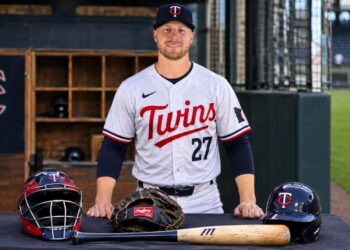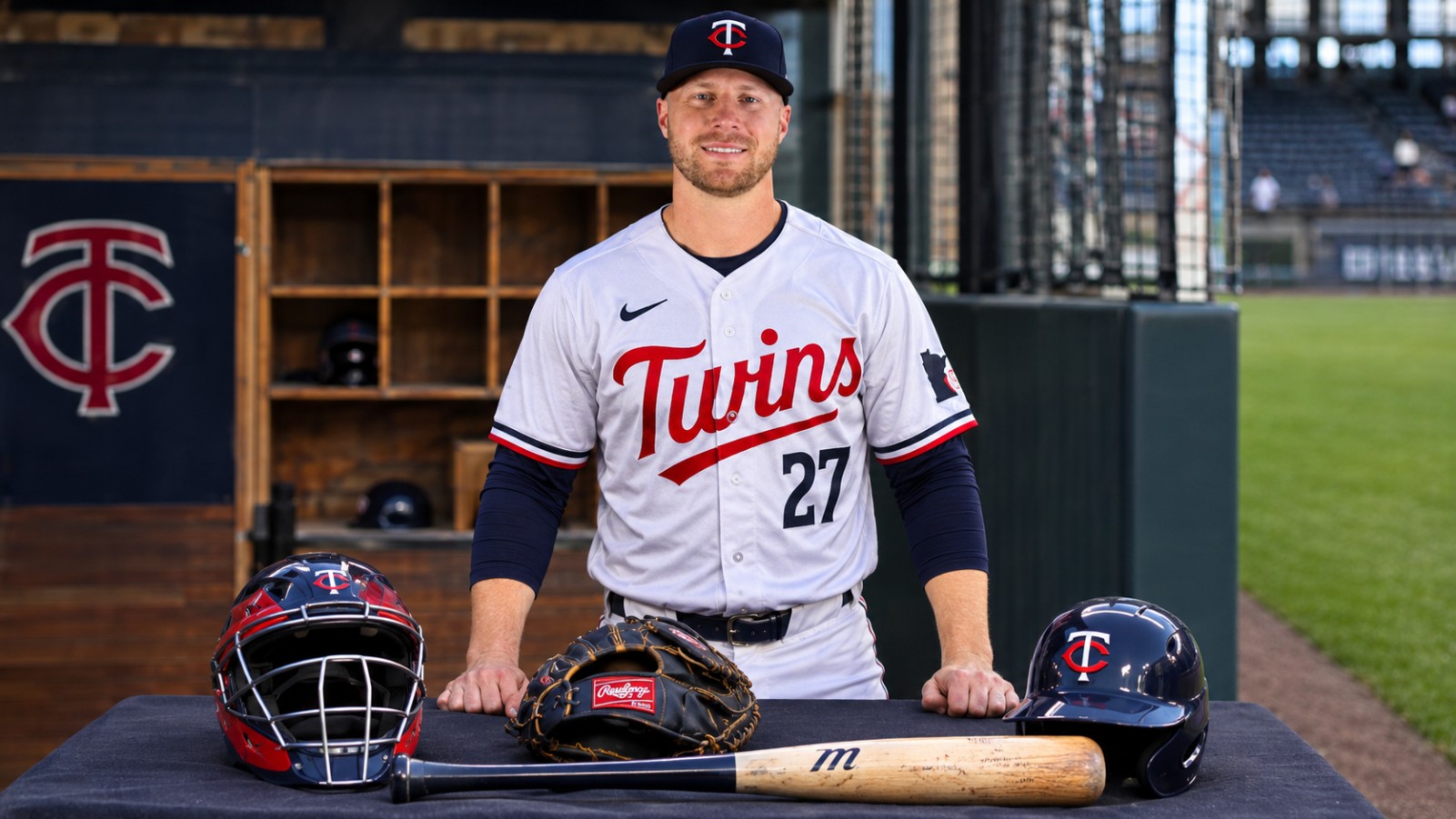
NEW YORK — Ryan Jeffers’ agent Scott Boras has already met with Twins officials during the general managers meetings. Minnesota earlier gave the catcher a one-year, $23.15 million qualifying offer, but Jeffers is expected to decline it to seek a multiyear contract.
Latest reports suggest the Yankees and Mets as the leading possible landing spots for Jeffers. According Minnesota insider Charley Walters, the in-demand catcher could sign a three-year contract worth about $17 million annually with either of New York teams. That would put the total near $51 million, matching ESPN’s separate projection. Neither figure represents an agreed deal.
“It still looks as if the New York Mets or New York Yankees will be the landing spot for Twins free agent catcher Ryan Jeffers with a three-year deal in the $17 million per season range,” Walters wrote.
Jeffers, 29, hit .256 with 14 home runs, 56 RBIs and an .814 OPS in 92 games in 2026. A fractured hamate bone in his left hand cost him nearly two months. His offensive line remained significantly stronger than the production the Yankees received from Wells.
Other estimates underline how unsettled his market remains. MLB Trade Rumors projected four years and $75 million, while separate forecasts clustered between $45 million and $48 million over three seasons.
Yankees-Mets free agency battle for Jeffers raises stakes
The Yankees face a familiar New York rival for Jeffers. The Mets have emerged alongside the Yankees as a possible destination, raising the prospect of a cross-town contest for a catcher projected to earn $51 million over three seasons.
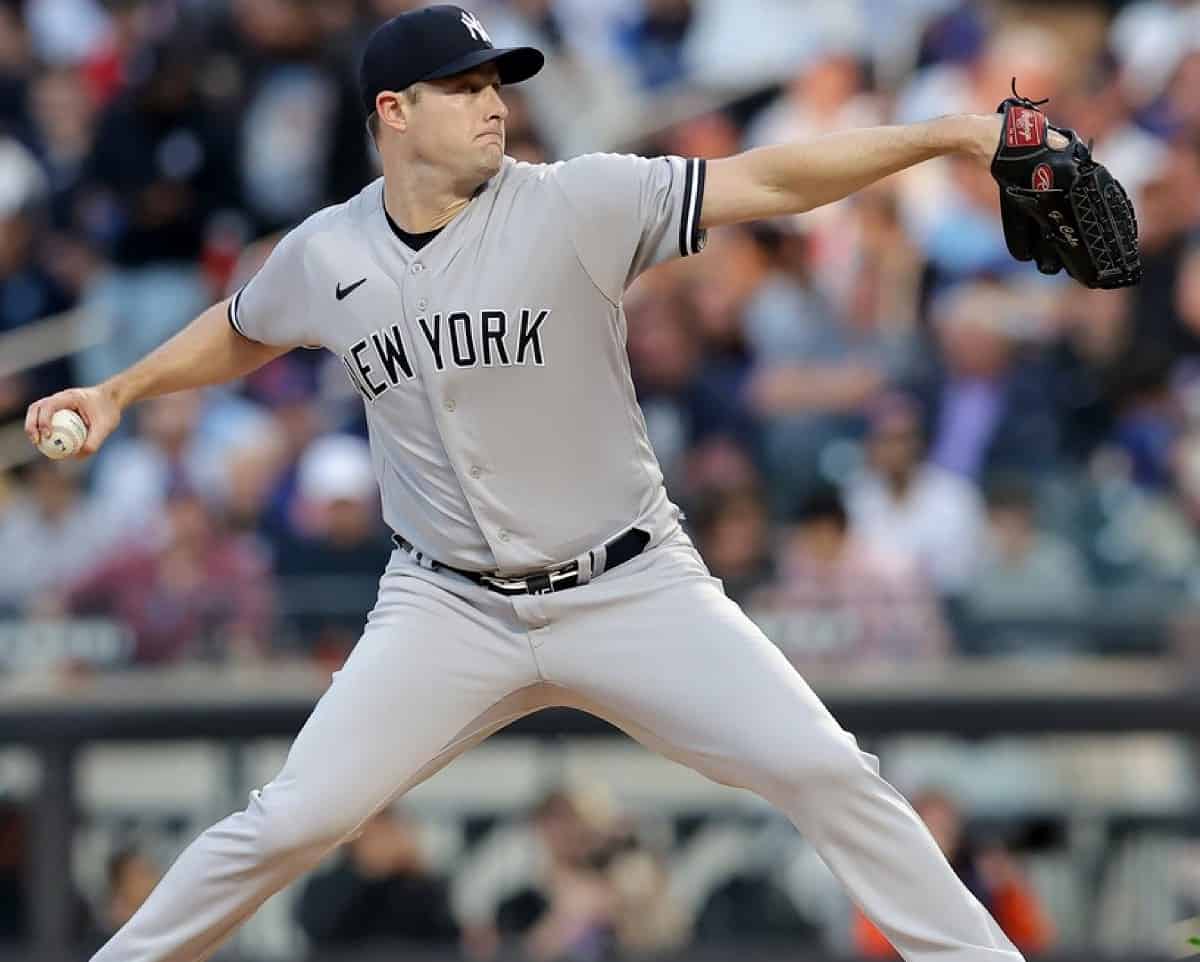
Their needs differ. The Yankees want a right-handed complement to Austin Wells, who hit .186 with a .624 OPS. The Mets have Francisco Alvarez under team control through 2029 and Luis Torrens signed through 2028. A Jeffers signing would complicate the Mets’ existing catching arrangement.
Scott Boras also has Minnesota in the picture. The Twins have discussed a long-term reunion, and Jeffers’ qualifying offer would carry draft compensation for either New York club. Neither the Yankees nor Mets has announced an agreement.
Boras and Twins keep a reunion on the table
The Twins are not treating Jeffers’ expected qualifying-offer rejection as the end of their negotiations. General manager Jeremy Zoll said the club had already contacted Boras about a longer agreement.
“We have made clear that we’d love to have him back, not just in a [qualifying offer] scenario, but in other scenarios too,” Zoll said at the general managers meetings.
Boras has emphasized the scarcity of a productive right-handed bat at catcher, a position where teams often accept weaker offense in exchange for receiving and defense.
“A right-handed bat at catcher, it’s kind of a constellation of talent,” Boras said.
The agent’s challenge is clear. He can present Jeffers as more than a traditional backup, but a Yankees offer would need to account for an existing starter, rather than an unoccupied position.
The 190-point OPS gap changes Yankees calculation
A comparison of final 2026 MLB regular-season statistics reveals a 190-point OPS advantage for Jeffers over Wells: .814 to .624. Jeffers also produced 14 homers in 92 games, the same total Wells hit in 122 games. That is a meaningful difference in offensive output, although games played and defensive duties limit one-to-one conclusions.
Wells batted .186 with 32 RBIs in 2026. The Yankees value his left-handed bat, receiving and work with the pitching staff, which is why Jeffers could be used alongside him rather than automatically replacing him.
An everyday-sized salary for Jeffers would create a deployment question. A two-catcher rotation could shield each hitter from unfavorable matchups. Additional appearances at designated hitter are conceivable, but those at-bats are also needed elsewhere on the Yankees roster.
The two contracts would be dramatically different. Wells is entering his first arbitration year; his projected salary is around $2.5 million. At $17 million per season, Jeffers would cost roughly 6.8 times as much before any associated draft penalties.
For a Yankees club trying to improve its lineup while also addressing pitching needs, that premium raises a sharper question than whether Jeffers can hit: how much additional offense can New York buy without limiting its flexibility elsewhere?
Qualifying offer creates a second acquisition cost
If Jeffers rejects Minnesota’s qualifying offer and signs with the Yankees, the club could forfeit draft selections and international signing money under MLB’s qualifying-offer rules. The precise penalty is governed by the club’s applicable competitive-balance-tax classification.
That makes the Jeffers pursuit different from a simple free-agent bidding contest. New York would be purchasing a lineup upgrade while potentially giving up future acquisition resources, even though Wells remains under club control.
The Mets are a rival in the projected market, and the Twins still want a reunion. As of the latest reporting, there is no announced agreement with any team. Jeffers’ qualifying-offer decision is due Nov. 17, with Boras continuing to evaluate his options.
What do you think? Leave your comment below.