TAMPA, Fla. — The criticism has been relentless all winter. Run it back. The two words have trailed the Yankees since the offseason began, lobbed by frustrated fans and skeptical analysts who watched the Blue Jays, Orioles and Red Sox all make splashy upgrades while the Bronx Bombers largely stood pat.
No Kyle Tucker. No Framber Valdez. No Bo Bichette. Luke Weaver and Devin Williams left for the Mets. The biggest Yankees move was re-signing Cody Bellinger on a five-year deal and trading for starter Ryan Weathers.
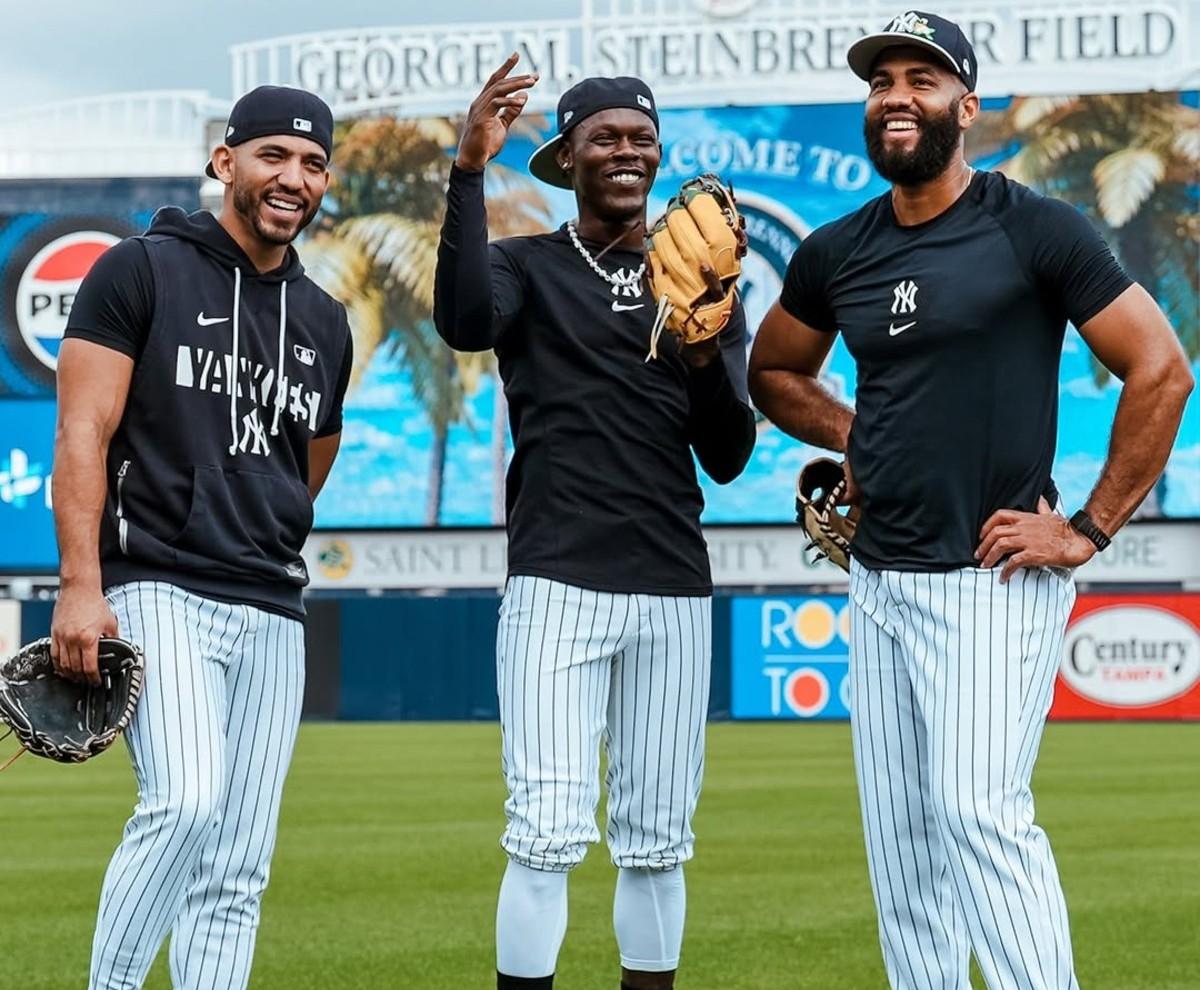
For a franchise that has not won a World Series since 2009, it felt like a white flag to much of the fanbase. But as position players reported to George M. Steinbrenner Field on Saturday and the full roster picture came into focus, a different Yankees narrative is emerging. One the front office has been pushing all along.
A Yankees lineup built unlike anything in the Judge era
For the better part of a decade, the Yankees offense carried the same identity. Right-handed heavy. Home run dependent. Slow on the bases. Shallow on the bench. Names like Joey Gallo, Luke Voit, Gary Sanchez and Josh Donaldson embodied the Three-True Outcome approach that defined the roster from 2018 through the early 2020s. The team routinely fielded some of the worst baserunning units in baseball during that stretch.
That identity has been steadily dismantled. And the 2026 version of this roster represents the most complete offensive group the Yankees have assembled since their last championship.
The shift began after the Gallo experiment collapsed. The front office pivoted toward contact-oriented hitters, better defenders and athletic players who could impact the game beyond the batter’s box. The 2025 deadline accelerated the transformation. Caballero led the majors with 49 stolen bases. McMahon was a four-time Gold Glove finalist in Colorado. Rosario offered a right-handed bat with proven platoon splits.
Now those additions are permanent. And the result is something this franchise has not had in years: the ability to construct entirely different lineups depending on the opposing pitcher.
Against right-handers, the Yankees can roll out a lineup with seven left-handed bats. Austin Wells catches. Ben Rice plays first. McMahon mans third. Oswaldo Cabrera slides in at shortstop with Volpe out. Bellinger, Trent Grisham and Judge cover the outfield. Giancarlo Stanton handles designated hitter. Jazz Chisholm Jr. anchors second base in either configuration.
Against southpaws, the entire complexion changes. Goldschmidt takes over at first base, where he posted a .336/.411/.570 slash line against lefties last season. Rosario slides in at third, Caballero handles shortstop and Rice shifts behind the plate. The lineup suddenly features five right-handed bats without sacrificing quality at any position.
The bench depth is equally notable. Whoever is not starting between Cabrera, Caballero, Rosario and Goldschmidt becomes a pinch-hitting, pinch-running or defensive replacement option in late innings. Jasson Dominguez and Spencer Jones both carry elite speed and wait in the outfield pipeline if injuries arise.
It is the first time in the Judge era that the Yankees can realistically option a player who would start on most non-contending teams. That is a stark departure from the shallow benches and one-dimensional lineups that plagued past rosters.
Cashman fires back at the run-it-back label
Yankees GM Brian Cashman has not taken the criticism quietly. When he introduced Bellinger’s new contract in late January, Cashman turned the press conference into a full-throated defense of his roster strategy.
“I disagree it’s the same team running it back,” Cashman said. “I’ve been openly willing to challenge anybody that we don’t have a championship-caliber roster and team.”
His core argument centers on timing. The 2025 trade deadline delivered Ryan McMahon, David Bednar, Camilo Doval, Jake Bird, and Jose Caballero. Those players spent half a season adjusting to new surroundings, a new manager and the intensity of the pennant race in the Bronx. Now they arrive at Yankees camp with established roles, a full spring training and no transition period.
“We added a lot of weapons at the deadline and they’re all finding their proper slots and how to be utilized and deployed,” Cashman said. “One series, make or break, is not going to define what we think our capabilities are.”
Yankees getting back stars that no trade could replicate
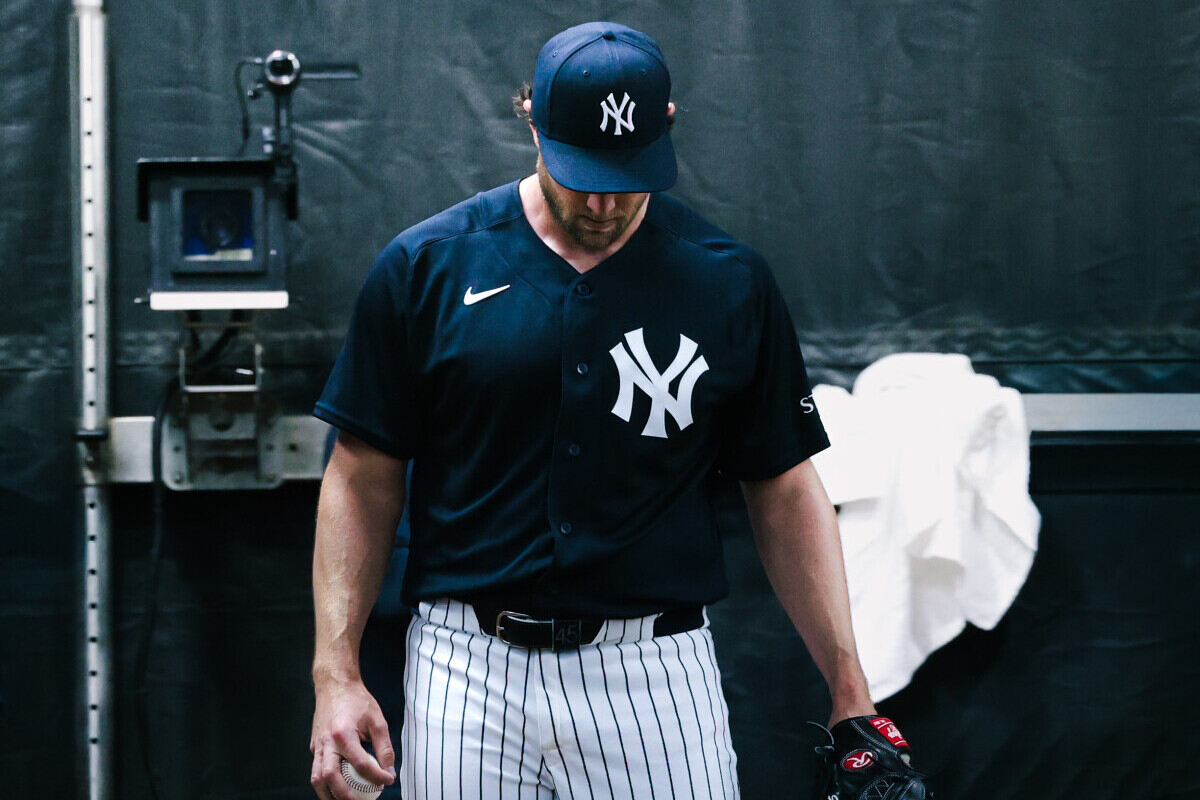
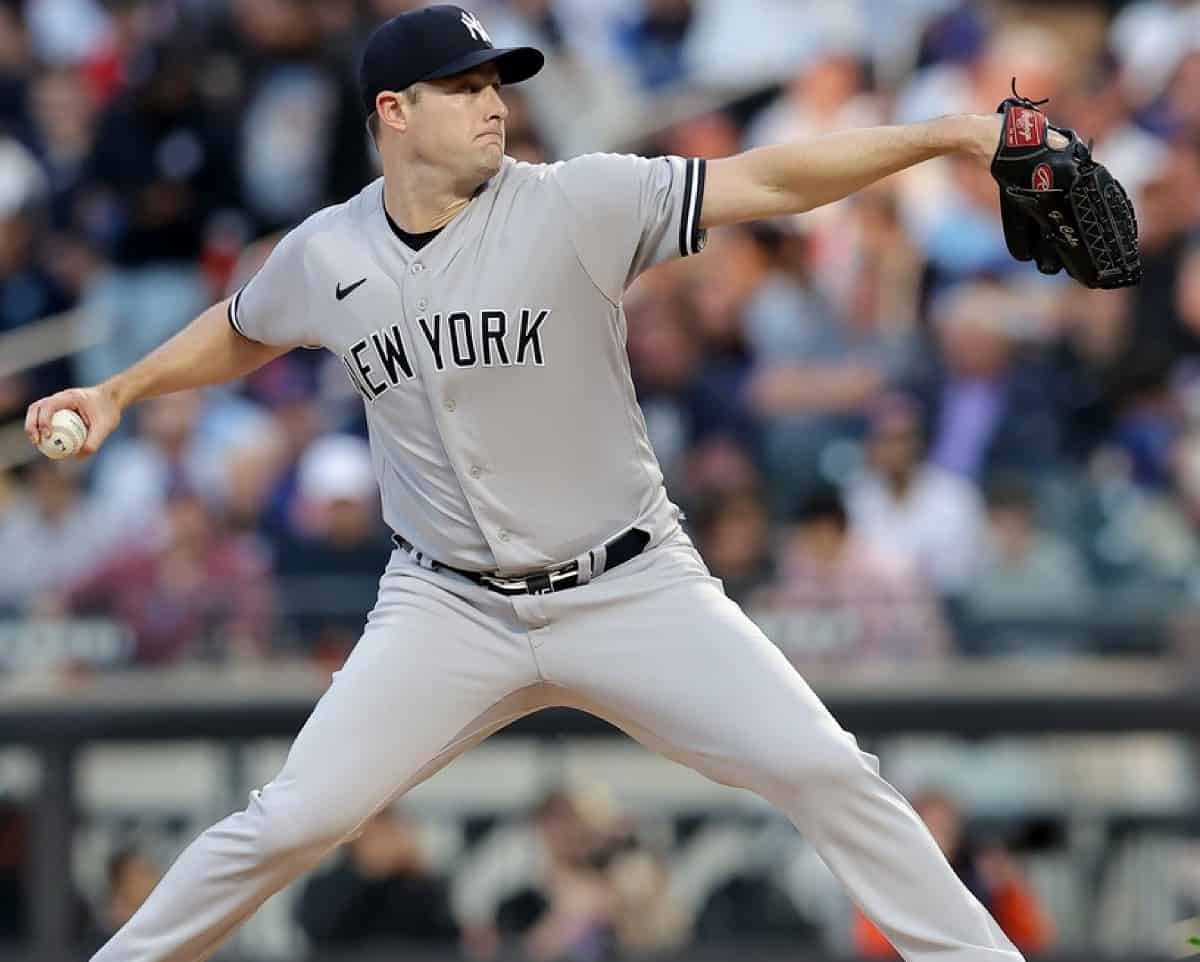
Here is what makes the run-it-back framing misleading. The 2025 Yankees played the entire season without Gerrit Cole. Their ace missed every start after undergoing Tommy John surgery. He is now targeting a return in May or June. If Cole delivers even 20 starts near his 2023 Cy Young level, the rotation transforms.
Carlos Rodon is ahead of schedule in his recovery from elbow surgery to remove loose bodies and shave a bone spur. He has thrown five bullpen sessions, received two PRP injections and is targeting late April or early May. Clarke Schmidt is working back from Tommy John and projects as a second-half addition.
That is a Cy Young winner, a front-line starter, and a versatile arm all returning to a Yankees team that won 94 games, scored the most runs in baseball with 849 and reached the ALDS without them for most or all of the season.
No offseason acquisition could match that kind of talent injection. And Cashman knows it.
“It’s going to be a little bit of a different mix, a little different feel,” he said. “Everything’s different. It’s a different year, and we’re looking for a different result, meaning a better result.”
Boone bets on roster continuity and versatility
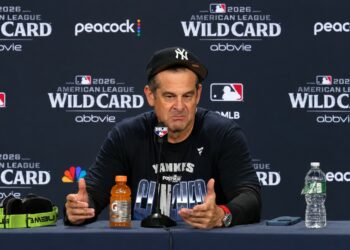
Manager Aaron Boone has framed the continuity as a tactical advantage. He has said the 2025 Yankees team felt as strong as any group he has managed in eight years. The ALDS loss to Toronto stung, but Boone insists one bad series does not erase what the roster showed over 162 games.
“We got beat up in the division round. It didn’t go our way,” Boone said. “But that doesn’t mean it’s not going to go our way the next time. We think we’re really good.”
The lineup versatility supports his confidence. The Yankees can now field a configuration with seven left-handed bats against right-handed starters and a separate look with five right-handed bats against southpaws. Caballero, McMahon, Amed Rosario, Oswaldo Cabrera and Paul Goldschmidt give Boone positional flexibility he has rarely enjoyed.
Goldschmidt re-signed on a $4 million deal and slashed .336/.411/.570 against left-handed pitching last season. Ben Rice produced 26 home runs and ranked in the top 10 in hard-hit percentage at 56.1 percent. Between them, the Yankees have a first base platoon that covers both sides of the plate effectively.
“We’re going into the season with a lot of those guys in place, so I feel like our roster flexibility is better,” Boone said. “It’s no guarantee, but I’m really excited to go to battle with this group.”
The WBC factor and the risk that remains
The Yankees continuity also carries a unique wrinkle this spring. With the World Baseball Classic set to begin March 5, at least 16 members of the Yankees organization are headed to international duty. Aaron Judge will captain Team USA. Bednar, Doval, Jazz Chisholm Jr. and Austin Wells are all participating.
Boone has acknowledged the injury risk but pointed to the familiarity factor as a cushion. Players who have already spent time together do not need as much spring ramp-up time. The shared foundation could minimize the disruption of losing key players for two weeks.
Still, the gYankees amble carries real danger. Counting on three pitchers coming back from major surgeries is bold. The bullpen lost two key arms to the Mets. The AL East is considered the toughest division in baseball after the Blue Jays won the pennant and the Red Sox added Valdez.
Bellinger captured the locker room’s collective Yankees stance when he spoke after signing.
“It might not be what everyone wants to hear, but I really do love the group that we had,” Bellinger said. “We all played for each other, and on top of that, we have some important pieces coming back.”
The Yankees are betting that the 2025 team was better than its October exit suggested. They are banking on health, familiarity and a lineup depth they have not had since the last time they lifted the Commissioner’s Trophy 17 years ago. Come October, the Yankees will either prove the critics wrong or face a reckoning that no amount of running it back can fix.
What do you think? Leave your comment below.