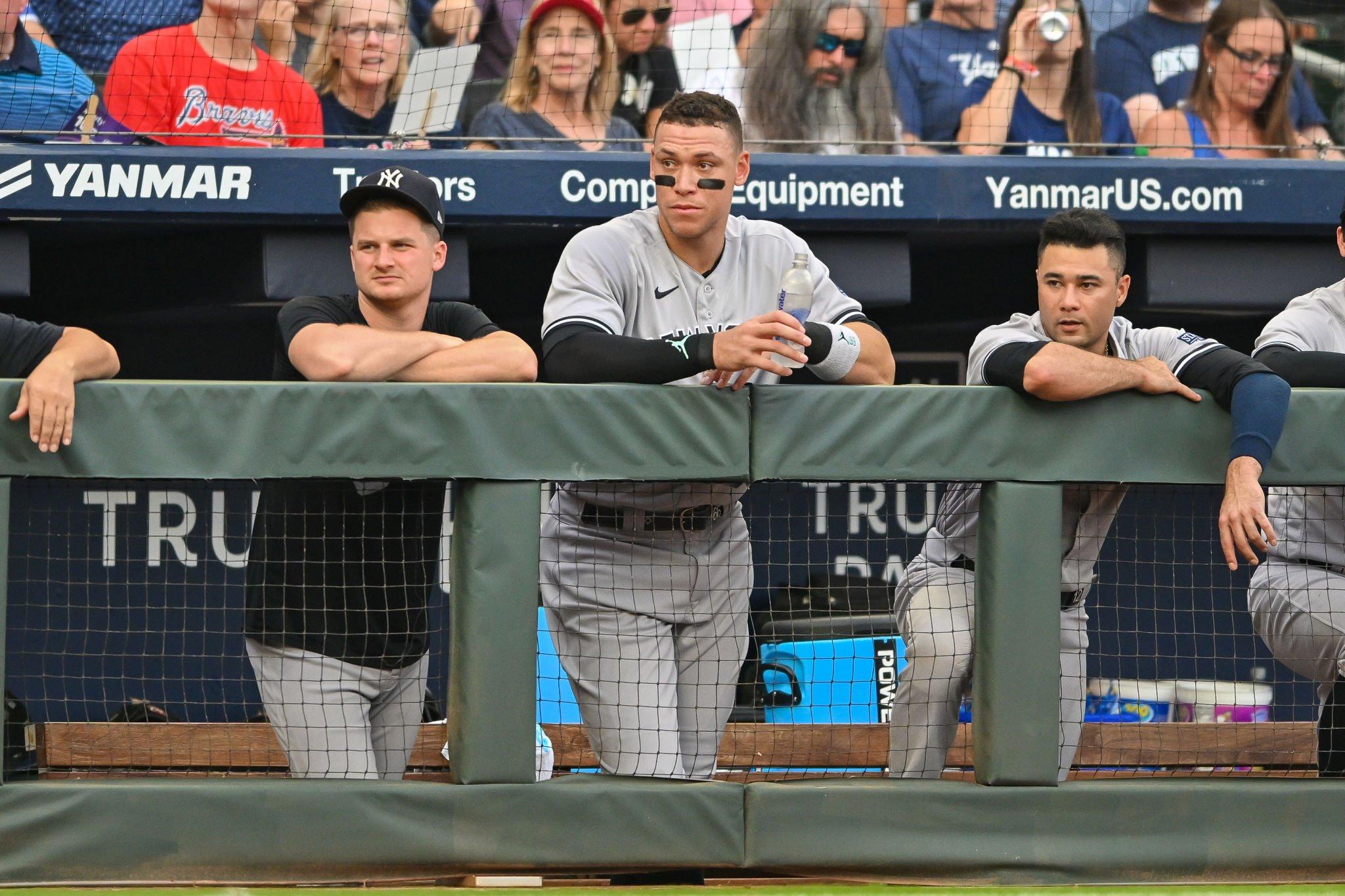
BOSTON — Jose Caballero has been doing this for a while. He waits. He stares at the ground. He lets the pitch clock wind down to its last seconds before finally looking up at the pitcher.
Most times, no one notices until a free ball gets called. The Yankees second baseman has turned the tactic into a quiet edge.
Tuesday night at Fenway Park, it stopped being quiet. And by the end of the game, Caballero was the most talked-about player in baseball for all the wrong reasons.
The tactic that has worked before
Under MLB’s pitch clock rules, a batter must be alert and facing the pitcher with at least eight seconds left on the timer. Caballero had found the outer edge of that rule and used it regularly.
The approach is simple. The Yankees shortstop delays, eyes down, until the very last moment. The pitcher, trying to stay on the clock, starts his delivery before the batter is technically set. The result: an automatic ball.
It is not cheating. It is gamesmanship, and Caballero had made it work. Last September against these same Red Sox, he drew a bases-loaded walk using the tactic in a game New York led 4-1. A free run extended. A pitcher rattled. The Yankees benefited.
The tactic is not unique to Caballero either. Former ace Max Scherzer used the mirror version from the pitcher’s side, pressing batters to the eight-second mark and forcing them to rush. The clock is a weapon for those willing to use it.
Tuesday: When the gamble blew up at Fenway

In the sixth inning, with the Yankees holding a 3-0 lead, bases loaded and two outs, Caballero came to the plate against Red Sox reliever Jack Anderson. He went to work immediately.
The Yankees shortstop stared down at the ground, waiting until the eight-second mark before snapping his attention to Anderson. It worked twice in a row. Anderson, caught off rhythm, was tagged with clock violations on back-to-back pitches. Automatic balls. The count shifted in Caballero’s favor.
Plate umpire Austin Jones stepped in and explained the rules to both players. Anderson regrouped. He came back and struck Caballero out anyway, finishing the at-bat with a sharp fastball.
Then came the ninth inning. The Yankees were ahead 4-0. Caballero faced left-hander Tyler Samaniego, a rookie making his early-season impression. He Yankees star tried the clock tactic again.
This time, it was Caballero who blinked first. He was a second late getting set. The umpire called an automatic strike. It was his third strike. The at-bat was over before it started. Fenway Park erupted.
On the night, Caballero went 1-for-4 with no runs scored. He won two clock violations and gave one back at the worst possible time.
Jomboy, social media and the backlash
Jomboy Media, which breaks down in-game rules and moments for a large baseball audience, posted a breakdown of the at-bat that spread quickly across social media. The site framed it clearly: Caballero had been catching pitchers by waiting until the last second to look up, and then burned himself by trying the same thing one too many times.
The reaction online was fast and sharp. Fans who had watched Caballero work the rule for months took the reversal as an opening.
“Embarrassing. Get up and swing the bat, don’t play games,” one fan wrote on X.
Others were more direct. One post read: “Never been so happy to see a hitter rung up. Caballero wants to play little games instead of batting.”
A third fan noted: “He gets warned for this nearly every game.”
The sharpest reaction came from a comment that captured the mood of many watching: “Loser stuff.”
Manager Aaron Boone was seen moving toward the umpire after the automatic strike was called on Caballero. That did not help the optics. Fans noticed that Boone had been willing to let the clock game play out when it benefited the Yankees, but stepped in to dispute it when it did not.
A history of clock warfare
Caballero’s relationship with pitch-clock confrontations predates his time with the Yankees. In 2023, a similar slow-to-the-box approach drew a very different response from then-Yankees ace Gerrit Cole.
Cole was so frustrated with Caballero’s timing games during a game against Seattle that he fired a 97 mph fastball well above the batter’s head. The pitch hit the backstop. Cole struck the shortstop out on the very next pitch, then turned to the Mariners’ dugout and wagged his finger.
Fans on social media noted that history Wednesday.
“Surprised pitcher didn’t throw at Caballero,” one post read. “If he keeps it up, a pitcher will eventually throw one at him.”
The Yankees won Tuesday’s game 4-1 and took an early lead in the Boston series. Caballero’s antics did not cost the team the result. But the sequence put a spotlight on the line between clever tactics and overreach, and on what happens when the clock runs out on the wrong player.
What do you think? Leave your comment below.