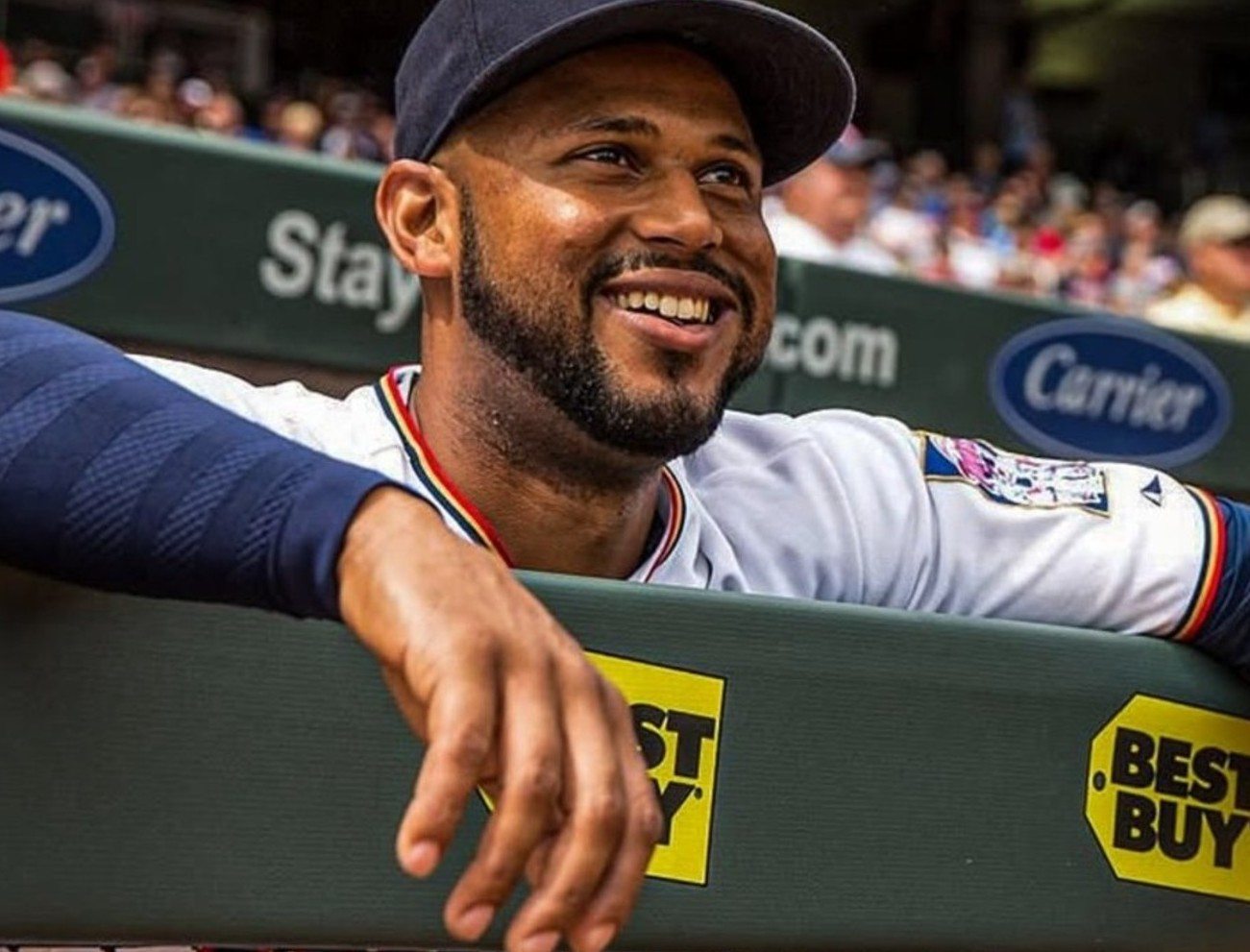
NEW YORK — The New York Yankees can finally breathe easier. After years of paying Aaron Hicks to not wear pinstripes, the franchise has almost erased his contract from its books. Hicks earned $10.8 million from the Yankees in 2025 despite never taking the field. He retired after a short 18-game run with the Los Angeles Angels in 2024.
The Yankees still owe Hicks $1 million in deferred money for 2026, a figure that now feels like pocket change compared to the weight his deal once carried. For a team constantly balancing its payroll near the luxury tax line, even minor relief matters.
General manager Brian Cashman and his front office now have roughly $70 million of flexibility before hitting the $300 million payroll mark. In a sport where every dollar counts toward roster construction, that figure represents a meaningful cushion. The question is whether the Yankees will use it wisely.
The hidden cost of arbitration
While one bad contract has ended, another problem is taking shape. Arbitration projections for 2026 reveal a growing list of players earning salaries without contributing on the field. The Yankees are expected to pay nearly $11.5 million next season to six players who will not provide any on-field value.
Mark Leiter Jr. leads that group at $3 million. Clarke Schmidt follows at $4.9 million, though his case is different. Schmidt would be a valuable piece if healthy, but he is recovering from Tommy John surgery and may miss all of 2026.
Scott Effross is projected at $800,000, Jake Bird at $1 million, Ian Hamilton at $941,000, and Jake Cousins at $841,000. None are expected to make an impact for the Yankees next year.
Camilo Doval adds another $6.6 million in salary after a shaky 2025 campaign that left his long-term value uncertain. Oswald Cabrera projects to make $1.2 million, and Anthony Volpe enters his first arbitration year at about $3.9 million.
The Yankees will also pay $16 million to players no longer on the roster. DJ LeMahieu still accounts for $15 million of that total, while Hicks will collect his final $1 million payment.
In total, non-contributors and departed players combine for about $27.5 million in payroll waste — roughly equal to one year of Max Fried’s salary.
| Player | Projected 2026 Salary |
| Jazz Chisholm Jr. | $10.2 million |
| David Bednar | $9.0 million |
| Mark Leiter Jr. | $3.0 million |
| Clarke Schmidt | $4.9 million |
| Camilo Doval | $6.6 million |
| Jake Cousins | $841,000 |
| Ian Hamilton | $941,000 |
| Luis Gil | $2.1 million |
| Scott Effross | $800,000 |
| Jake Bird | $1.0 million |
| Oswaldo Cabrera | $1.2 million |
| Fernando Cruz | $1.3 million |
| Anthony Volpe | $3.9 million |
| Jose Caballero | $1.9 million |
Source: MLB Trade Rumors arbitration projections (2026).
The Steinbrenner paradox
Owner Hal Steinbrenner has repeatedly questioned whether spending $300 million is necessary to win championships. Unlike his father, who viewed the Yankees as a symbol of dominance, the younger Steinbrenner approaches them like a corporation. The front office operates with a mandate to maximize value while avoiding major luxury tax penalties.
That philosophy has shaped roster decisions, but not always for the better. The Yankees often extend player contracts beyond their productive years to reduce annual cap hits. They prefer players under team control through arbitration over short-term rentals. They accumulate fringe players whose salaries rise faster than their value.
Fried’s contract is a perfect example. The Yankees signed him to an eight-year, $218 million deal. At the same time, Corbin Burnes signed a six-year deal with Arizona despite being younger and equally effective. The extra years on Fried’s deal lowered his annual luxury tax number but created long-term risk.
That approach backfires more often than it succeeds. The Yankees entered 2025 without a true third baseman, only to trade for an average player at the deadline who carries two more years of control at $16 million per season.

Big spenders, bad investments
Smaller-market clubs often trade arbitration-eligible players to cut payroll. Cashman has become one of their most frequent buyers. The Yankees have occasionally benefited from this strategy, but the results are mixed.
Jazz Chisholm Jr. represents one of the few success stories. He is projected to make $10.2 million in arbitration next season and has delivered steady value as a versatile everyday player. David Bednar, projected at $9 million, has also paid off, giving the Yankees a reliable closer.
Yet for every success story, there are multiple disappointments. Players like Effross and Bird never developed into key contributors despite rising arbitration salaries. The Yankees keep paying them because they control their contracts, creating dead money that limits flexibility.
Acquiring a rental player at the trade deadline might cost more in prospects but usually provides more immediate value. Instead, the Yankees often cling to the illusion of “team control,” a philosophy that has led to an expensive bullpen of underperformers.
Money on the table, money down the drain
The Yankees’ financial reset gives Cashman a chance to reshape the roster with purpose. Large contracts already occupy key spaces — Aaron Judge at $40 million per year and Gerrit Cole at $36 million. With $70 million in available room, the Yankees can add impact players without crossing critical tax lines.
That flexibility could bring a top free agent or multiple role players to strengthen depth. It offers the kind of breathing room the Yankees have rarely enjoyed in recent years. Still, history shows that spending does not always equal winning in the Bronx.
This offseason carries unusual pressure. The team must win now but also transition toward a younger core. The Yankees have spent the past few years caught between eras — hanging on to aging veterans while introducing new talent. The front office now has an opportunity to balance both.
After years of paying players who contributed little, the Yankees can finally redirect funds toward production. But whether Cashman and Steinbrenner will seize that chance remains uncertain.
The Hicks contract is finally gone, yet the underlying issues persist. Unless the Yankees change how they approach arbitration and roster construction, they risk repeating the same mistakes. Dead weight, regardless of name or salary figure, continues to weigh down one of baseball’s richest teams.
As of now, the Yankees already have $166.2 million committed for 2026. Adding an estimated $47.7 million in arbitration salaries brings the total close to $214 million before any new signings. The luxury tax threshold will rise again, but so will New York’s spending on players who fail to deliver.
Steinbrenner wants to operate the Yankees as a model business. Yet paying millions to injured or ineffective players contradicts that claim. Efficiency is not achieved through waste.
For years, the Yankees have tried to save money while chasing control and value. In the process, they have created the same financial traps they sought to avoid. The next step requires more than cap space — it requires a change in philosophy. The team can no longer afford to outspend its mistakes.
What do you think? Leave your comment below.