ORLANDO, Fla. — The Winter Meetings were supposed to provide clarity. Four days of executives huddling in hotel lobbies, agents working cell phones, reporters tracking every conversation.
The Yankees left town Wednesday with nothing. No Cody Bellinger reunion. No trade acquisitions. No bullpen reinforcements. Just frustration and excuses about why nothing happened.
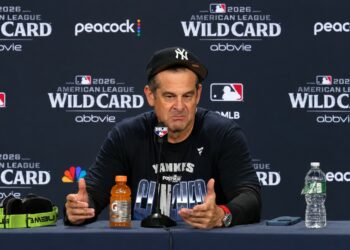
General manager Brian Cashman tried spinning the stalemate as normal offseason business. His words betrayed a different reality.
The glacial speed excuse

Cashman used one phrase repeatedly when explaining the Yankees’ empty-handed departure from Orlando. Glacial speed.
“This market seems to be at glacial speed,” Cashman said Wednesday. “We’re just staying engaged, trying to match up with some things, but it’s been tough so far.”
Tough is putting it mildly. The Yankees entered the Winter Meetings with Bellinger atop their wish list. They left without progress toward bringing him back.
“I don’t like the asks coming our way, and I guess the opposing teams don’t like what I’m trying to pull from them on the trade stuff,” Cashman admitted. “We do have some conversations that possibly could lead somewhere, but clearly if we had something, we would have done it.”
That last sentence speaks volumes. If they could have done something, anything, they would have. The inability to close any deal reveals how far apart the Yankees are from market reality.
Bellinger hostage to Boras complication
Scott Boras made his presence felt Tuesday with a theatrical poem listing teams interested in Bellinger. Yankees, Reds, Mets, Dodgers, Phillies, Giants, Blue Jays and Angels all received mentions.
Whether seven or eight teams are actually pursuing Bellinger is irrelevant. Boras created the perception of widespread competition. That perception drives prices higher.
Yankees president Randy Levine praised Boras during the meetings, calling him “a professional” who is “really good at advocating for his clients.”
“I respect his ability, and I know he respects ours, too,” Levine said. “We’ve done a lot of deals together.”
But respect doesn’t guarantee reunion. Athletics executive Billy Beane offered a telling assessment of negotiating with Boras.
“The game doesn’t allow me to know if Scott was telling the truth or not, so my policy was to take everything he said at face value,” Beane said. “Scott Boras is not a dick, he’s never unprofessional. He’s just a really smart lawyer.”
Smart lawyers don’t give discounts. Smart lawyers extract maximum value. The Yankees are learning that lesson again.
The January warning
Another executive with extensive Boras experience delivered bad news for impatient Yankees fans. The Bellinger negotiations will drag deep into winter.
“This thing is going into January,” the executive predicted. “Boras is in no hurry.”
January means Christmas passes without resolution. New Year arrives with questions unanswered. Spring training camps open with roster holes still unfilled.
The timing creates problems beyond just waiting. Every day the Yankees spend focused on Bellinger is a day they’re not pursuing alternatives. If Bellinger ultimately signs elsewhere, the backup options may have already found new teams.
Manager Aaron Boone tried providing reassurance Wednesday despite the lack of action.
“I think it’s important to know that this isn’t the end of the winter,” Boone said. “We’ve got two months until Spring Training. Whatever happens between now and then, I think we’re going to be really good.”
Think. Not know. Think.
The competitive pressure mounts
While the Yankees waited in Orlando, division rivals improved their rosters. The Toronto Blue Jays landed Dylan Cease on a seven-year, $210 million contract. The Baltimore Orioles signed Pete Alonso after he left the Mets.
The Dodgers grabbed Edwin Diaz to bolster an already dominant bullpen. These moves happened while the Yankees stood still.
Cashman acknowledged the changing landscape when asked about Diaz.
“He’s a hell of a pitcher, glad he didn’t land in the American League somewhere,” Cashman said.
But Alonso did land in the AL East. Another threat added to an already challenging division.
The payroll reality
Underneath all the negotiating tactics and timeline concerns sits the fundamental issue. Money.
Owner Hal Steinbrenner said last month it would be “ideal” if the Yankees lowered their 2025 payroll of $319 million. That statement set parameters for everything that followed.
Cashman insisted Wednesday that ownership hasn’t imposed a firm payroll cap. He mentioned exploring “challenge trades” where significant talent moves in both directions.
“Fans don’t really care about those details,” Cashman said. “They want what they want. Ultimately, what we both want is to have a team that’s going to rack up the win totals to push themselves into the postseason and win it all.”
Want and achieve are different things. The Yankees want improvements without spending freely. The market wants payment reflecting player value.
That gap explains why nothing happened at the Winter Meetings.
The nightmare scenario develops


The worst outcome for the Yankees is becoming increasingly possible. They could lose Bellinger to another team and fail to secure quality replacements.
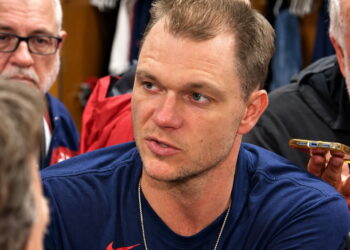
Jasson Dominguez would become the default left fielder if Bellinger leaves. Dominguez is 22 and struggled in limited 2025 action. He’s not ready to replace proven production.
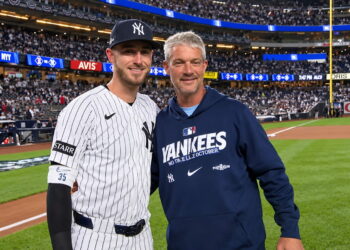
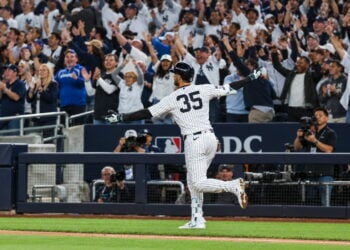
Spencer Jones hit 35 home runs in the minors. He’s also untested at the MLB level and comes with significant strikeout concerns.
Neither prospect provides the certainty Bellinger offers. Neither eliminates the lineup’s left-handed imbalance. Neither changes the Yankees from pretender to contender.
Cashman addressed the prospect fallback plan when asked if the Yankees can afford to wait on Bellinger.
“I don’t know if it’s ‘afford’ to wait,” Cashman said. “I think we’re opportunistic. We like our players. But there’s players outside of our current control system that we also like, and may very well like more and better because there’s a lot more certainty there.”
Certainty costs money. The Yankees don’t want to pay it.
What insiders really think
Multiple sources expressed skepticism about the Yankees’ ability to retain Bellinger despite the public optimism. Some front office members believe it’s a lost cause, especially if the Dodgers enter serious bidding.
The optimists think the market won’t be as fertile as Boras expects. A potential lockout looming in 2027 could make teams cautious about long-term commitments.
If Bellinger leaves for a six-year, $180 million contract that the Yankees refuse to pay, angry fans will have their choice of villains.
Steinbrenner for being too cheap. Bellinger for choosing money over fit. Boras for extracting maximum value at the Yankees’ expense.
The human element matters too. Bellinger is from Arizona and still has a home in Phoenix. Choosing the Dodgers means staying home during spring training. That’s two extra months for the Bellinger family in their own beds.
Those considerations don’t appear in spreadsheets or contract proposals. They influence decisions anyway.
What happens next
The Yankees return to New York without the progress they needed. Bellinger remains unsigned. The bullpen needs filling. The rotation lacks depth with Gerrit Cole and Carlos Rodon starting 2026 on the injured list.
Cashman promised more activity ahead despite the fruitless meetings.
“We have a strong team,” Cashman said. “The job is to make it better and make it stronger. But saying it and doing it are two different things. We’re trying to pull that off, and it takes time.”
Time is running out. Patience has limits. Fans who watched Juan Soto leave for the Mets and Devin Williams follow him across town are running out of understanding.
The Winter Meetings exposed the gap between Yankees ambitions and Yankees actions. The Bellinger chase has taken an ugly turn toward disappointment.
January approaches with resolution nowhere in sight. The glacial speed Cashman complained about reflects his own organization’s unwillingness to meet market demands.
Baseball doesn’t reward patience when competitors are acting decisively. The Yankees are learning that lesson the hard way.
What do you think? Leave your comment below.