NEW YORK — The number that should worry the Yankees is not six. It is the math that comes after six.
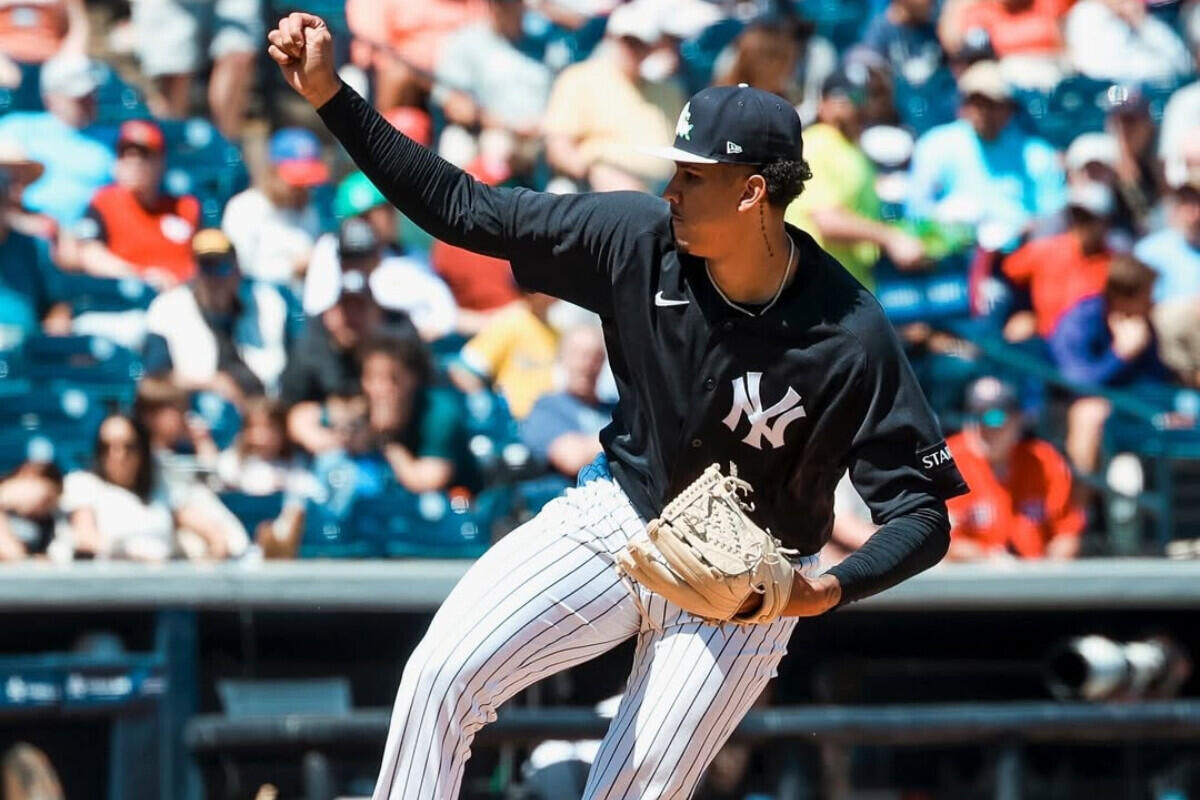
Carlos Lagrange, the hardest-throwing arm in the Yankees farm system, will not pick up a baseball for roughly six weeks. That is the part the club put in writing. The part it did not spell out is what a shoulder capsule shutdown usually costs a pitcher once the calendar and the rehab work are stacked end to end.
A six-week no-throw window alone runs deep into August. Attach the standard ramp-up and rehab that follow a capsular injury, and the timeline drifts toward the season’s final days. For a 23-year-old the Yankees had penciled in as a late-summer bullpen weapon, the quiet reality is harsher than the headline figure suggests.
That gap between the announced timeline and the likely one is where this story lives. The Yankees are not calling Lagrange’s season over. The recovery arc for this specific injury tends to do that on its own.
What the six-week label leaves out
Lagrange was diagnosed with a capsular sprain of the right shoulder, the throwing shoulder for the righty. He was placed on the seven-day injured list at Triple-A Scranton/Wilkes-Barre before an MRI confirmed the damage. The club then set the no-throw window at approximately six weeks.
The Yankees problem is that a shutdown period is only the first leg of the trip. Pitchers recovering from capsule shoulder issues typically need weeks of no throwing, then a graduated build-back before facing hitters again. Line those phases up from early July and the finish moves well past the middle of August. By the time Lagrange could be game-ready, September and its expanded rosters are the earliest realistic target, and even that assumes a clean rehab.
The shoulder capsule sits deep in the joint. It is the soft tissue envelope that holds the ball of the arm in its socket. When it is strained, teams tread carefully, because pushing a pitcher back too fast can turn a sprain into something structural. That caution is exactly why the honest read on Lagrange’s 2026 is closer to finished than to paused.
What a capsular sprain actually is
A capsular sprain is a strain of the shoulder capsule, the sleeve of soft tissue that wraps the joint and holds the ball of the upper arm inside its socket. Ligaments in that sleeve keep the shoulder stable through the violent range of motion a pitcher demands on every throw. When they are overstretched, the joint loses some of its anchor.
For a thrower, that location is what raises the stakes. The capsule takes enormous force during the arm’s late cocking and follow-through, the phases where a fastball is generated. A sprain there is not a muscle that simply rests and rebuilds. It is connective tissue that has to calm down, then be reloaded slowly so the joint does not give again.
The injury exists on a scale. A mild capsular sprain can settle with rest and a careful throwing progression. A severe one, or a case that lingers, can bleed into the offseason and occasionally point toward surgery. Teams rarely rush it, because a shoulder that is pushed back too soon can turn a sprain into a tear. That built-in caution is why a six-week no-throw label so often stretches into something longer.
Boone stops short of blaming the bullpen switch
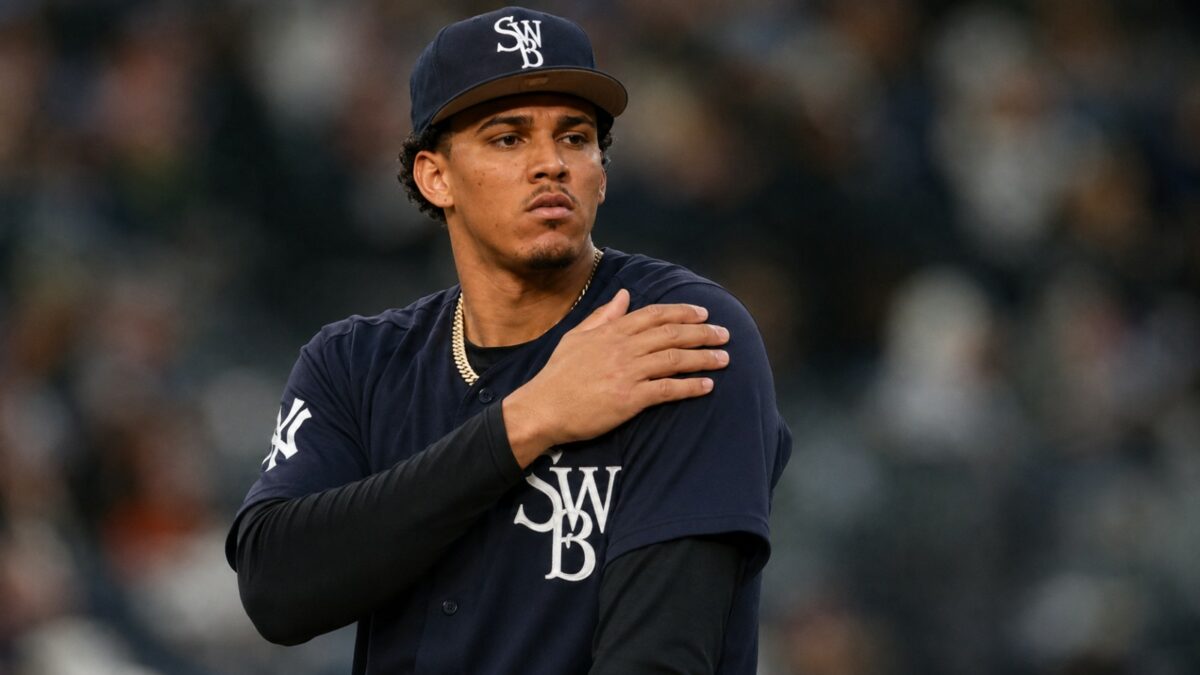
Lagrange started the year in the Triple-A rotation. The Yankees moved him to relief in early June, hoping the shorter workload would clear a faster path to the Bronx. The injury landed weeks into that experiment, and the obvious question followed. Did the role change break him?
Yankees manager Aaron Boone was asked directly whether the switch to relief, and the new routines that came with it, may have caused the shoulder problem. He would not draw a straight line.
“I think it’s impossible to answer that for sure,” Boone said. “We were pretty disciplined and methodical with how we took him into that role. I feel like we were careful with it, but you never know for certain.”
Boone also acknowledged the injury reshaped the Yankees’ near-term thinking. He said it altered the team’s plans, at least in the short term. For a front office that had counted on an internal arm arriving before the deadline, the short term is the part that stings first.
A high-octane arm the Yankees can no longer bank on
Lagrange is not a depth piece the Yankees can shrug off. He stands 6-foot-7, sits in the high 90s and has flashed triple digits, and his slider grades as a genuine out pitch. That profile is why the organization saw a possible high-leverage reliever inside its own system rather than a name it would have to trade for.
The numbers back the intrigue. At Triple-A this season he struck out 83 batters across 63.1 innings and carried a 4.55 ERA, with the strikeouts always outrunning the walks. After moving to the bullpen the Yankees rookie allowed only three earned runs over his first six relief outings and picked up his first minor league save, a stretch that made the promotion feel close.
Then came a June 28 appearance that unraveled fast. The Yankees rookie recorded just two outs and surrendered five runs, by far his roughest outing of the year. It is not confirmed that the shoulder gave out during that game, but the timing and the sudden loss of command line up with an arm that was no longer right.
There is a second cost buried in the diagnosis. Lagrange projected as a trade chip, the kind of controllable, high-velocity prospect a contender could flip for a proven reliever or an everyday bat. A hurt shoulder erases that leverage. Dealing him now would mean selling at the bottom, which the Yankees will not do, so an internal solution and a deadline asset vanish in the same stroke.
The injury lands on an already thinned-out staff
The timing could hardly be worse for a pitching group missing pieces at every level. Carlos Rodon went to the injured list with elbow inflammation, though the Yankees exhaled when tests ruled out a torn ligament. Max Fried is working back from a left elbow bone bruise. Clarke Schmidt is rehabbing from Tommy John surgery, and Luis Gil remains sidelined.
The Yankees bullpen, meanwhile, has leaned on arms that have not fully earned trust. Right-handers Camilo Doval and Jake Bird, both brought in to stabilize the group, have been uneven, and the unit has lacked the swing-and-miss punch a healthy Lagrange would have supplied. That absence is the practical reason his shoulder matters beyond one prospect’s development.
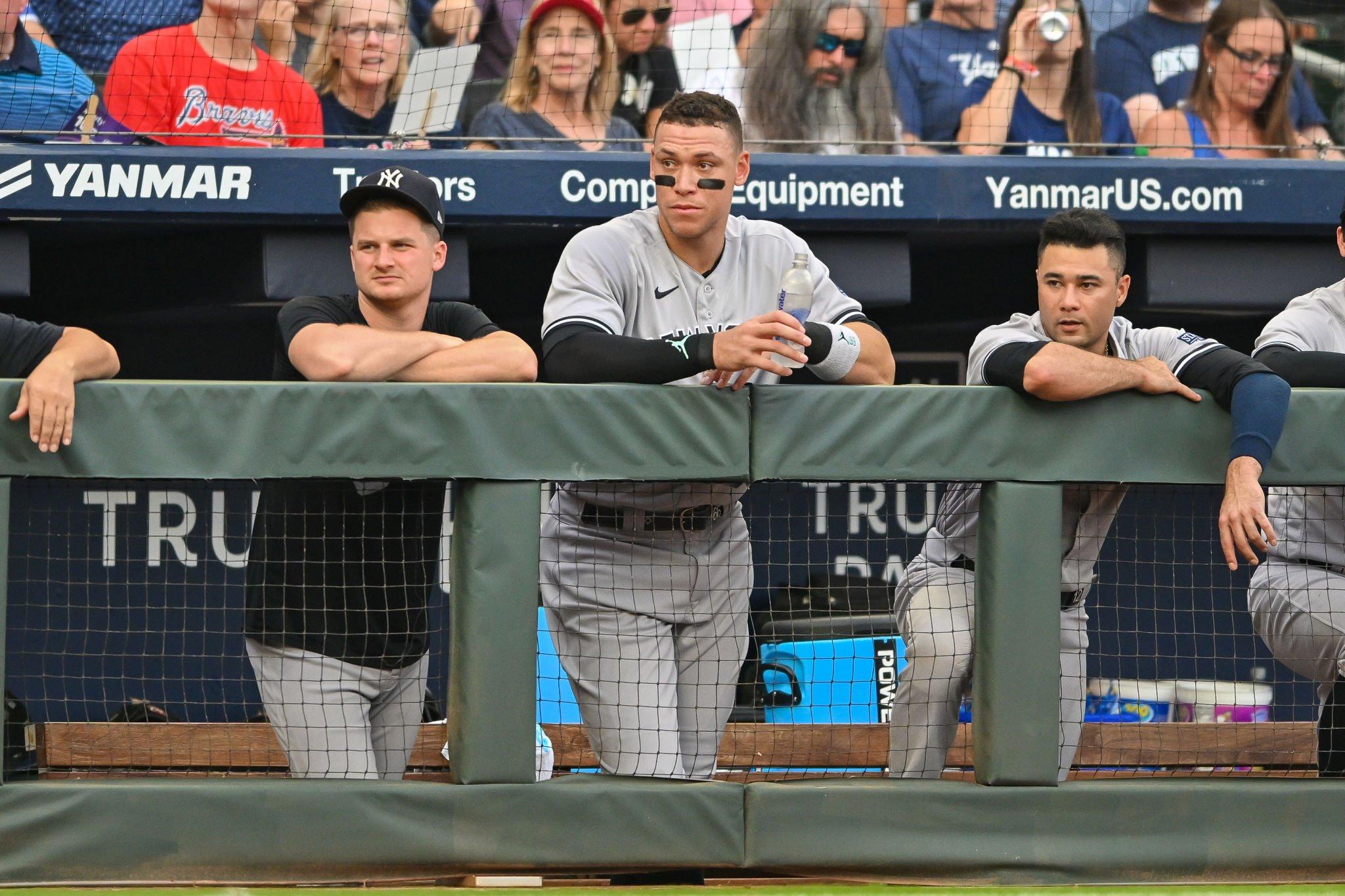
With the Aug. 3 deadline approaching, the front office now has to shop for relief help it once hoped to promote from within. The list of sidelined names, from Aaron Judge to the arms above, keeps the margin for error thin as the Yankees fight to hold their place in the American League race.
For now, the club’s public stance is a six-week pause. The recovery pattern for a shoulder capsule sprain tells a longer story, and everything about how carefully the Yankees are handling their prized flamethrower suggests they already know it. The realistic hope is a September cameo, not a summer rescue, and even that is far from promised.
What do you think? Leave your comment below.