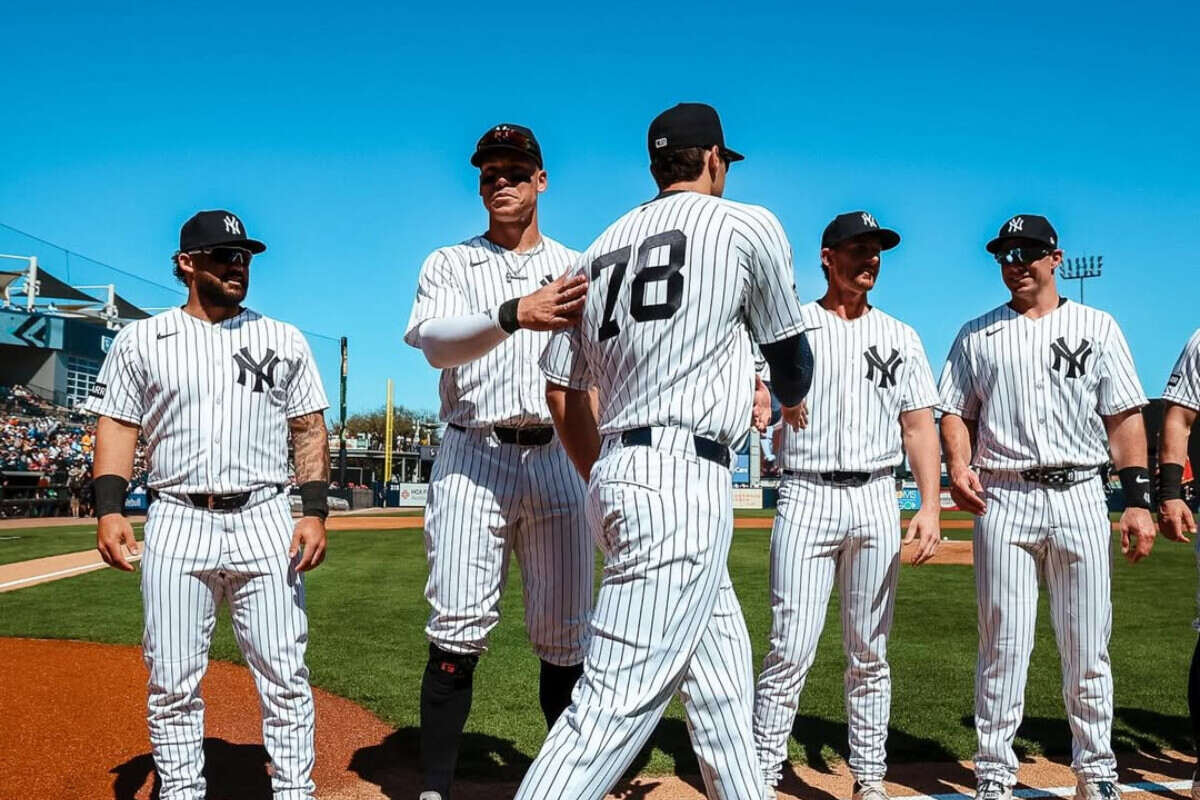
NEW YORK — Spencer Jones had been waiting for this phone call for nearly four years. The 25th overall pick in the 2022 draft out of Vanderbilt University signed for $2,880,800. He spent season after season tinkering with his mechanics. But Jones watched roster spots stay occupied by players he was waiting to replace.
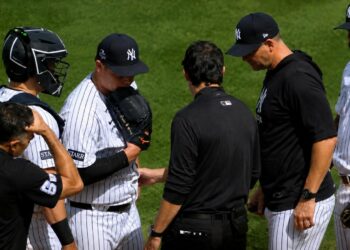
Finally, The Yankees organization finally made the call after their 9-2 win over Texas. Jasson Dominguez crashed into the wall Thursday, suffered a low-grade left shoulder AC joint sprain and landed on the injured list. Jones is heading to Milwaukee. His major league debut is coming.
Jones, who turns 25 next week, is ranked No. 6 in the Yankees organization by MLB Pipeline and No. 7 by The Athletic’s Keith Law. His debut could arrive Friday against hard-throwing righty Jacob Misiorowski.
The power he brings is historic. But there are shadows that cause faers. May in Milwaukee is where both realities collide.
Power and numbers that made the case
Spencer Jones ranks among the most productive hitters in the International League this season. The full picture goes beyond the headline numbers. Across 33 games for the Scranton/Wilkes-Barre RailRiders, the Yankees prospect has posted a .958 OPS with 11 home runs and 41 RBIs. He has stolen seven bases in nine attempts. Over two full Triple-A seasons, he has hit .269 with 30 home runs, 89 RBIs and 26 stolen bases in 100 games.
Last week he hit a Yankees-prospect-record-turning 117.4 mph exit velocity homer off former Toronto Blue Jays starter Jose Berrios. That batted-ball speed would rank third-hardest among all MLB batted balls in 2026. The raw contact quality, when he makes contact, is not a minor league trait that disappears at the big-league level. It is generational.
Former Triple-A teammate Max Schuemann made his own Yankees debut Thursday in the win over Texas. Asked what Jones’ power looks like from inside a dugout, he kept it short. He kept his answer short: “It is special,” Schuemann said.
The power-speed combination that sets Jones apart
Raw power is the headliner, but Jones is not just a slugger. He brings a power-speed combination that is rare at any level, let alone in the Yankees system. At 6-foot-7 and 240 pounds, he is built like a corner outfielder. Yet he moves like a center fielder. He has been used as one at the minor league level.
His seven stolen bases in nine attempts this season reflect a baserunning instinct that most players his size simply do not possess. Over his two-year Yankees Triple-A career, he has 26 stolen bases in 100 games. His speed grades as above-average by scouts, a tool that compounds the damage his power already creates. He can beat out infield hits. He can go first to third. He can take a base the moment a pitcher loses focus.
Jones grades as an above-average center fielder at the minor league level. His range and route-running have improved each season. In the Yankees outfield mix, he could play center while Judge slides to designated hitter. That flexibility option did not exist before Thursday.
The stat that kept the Yankees hesitating
Before Dominguez’s injury made the Yankees decision for them, the club had real reason to wait. Jones’ production in Triple-A had been outstanding for months. The hesitation was not about the results. It was about one number that sits in a category of its own.
Jones’ zone contact rate sat at 67.1 percent in Triple-A earlier this season, per FanGraphs. That number quietly explained every Yankees delay in calling him up.
The Athletic’s Chris Kirschner placed that figure in its full historical context, writing: “Jones’ issues remain the same. The power is otherworldly, but he’s still not making enough contact. Per FanGraphs, Jones’ zone contact rate would be the worst for any MLB player since tracking began. His mark comes from Triple-A, not the big leagues.”
The zone contact figure improved to 71.1 percent by the time of the call-up. That is still the second-worst mark among all current MLB players. Only Chicago White Sox rookie Munetaka Murakami has posted a lower number. The Yankees have been watching Murakami’s early-season production closely. They hope Jones can follow the same model: overwhelming power compensating for contact deficits.
The strikeout history adds weight. Jones struck out 200 times across the minor league system in 2024. He struck out 179 times in 438 at-bats in 2025 between Double-A Somerset and Triple-A Scranton. Through 33 games at Triple-A this season, he has already fanned 46 times in 120 at-bats. His 2026 strikeout rate at Triple-A sits at 38 percent. That is the rate Jones is bringing to the majors. Pitchers there will test his contact issues more aggressively and precisely than anything he faced in the minors.
His Yankees prospect ranking has reflected the concern. Once a top-100 prospect by Baseball America, his pedigree has slid. He has fallen to No. 3 among the Yankees’ own top prospects, behind George Lombard Jr. and Carlos Lagrange, driven entirely by the contact questions that have followed him through the system.
Manager Aaron Boone spoke to reporters about Jones’ recent Triple-A form before the announcement was official. He offered a clear read on the timing.
“I feel like the last three or four weeks, he’s been having a lot of consistent at-bats,” Boone said. “The power has been there, less swing-and-miss, which is some of the things we were seeing a little bit in spring training. The signs have been encouraging.”
The Ohtani swing and what it was built to fix
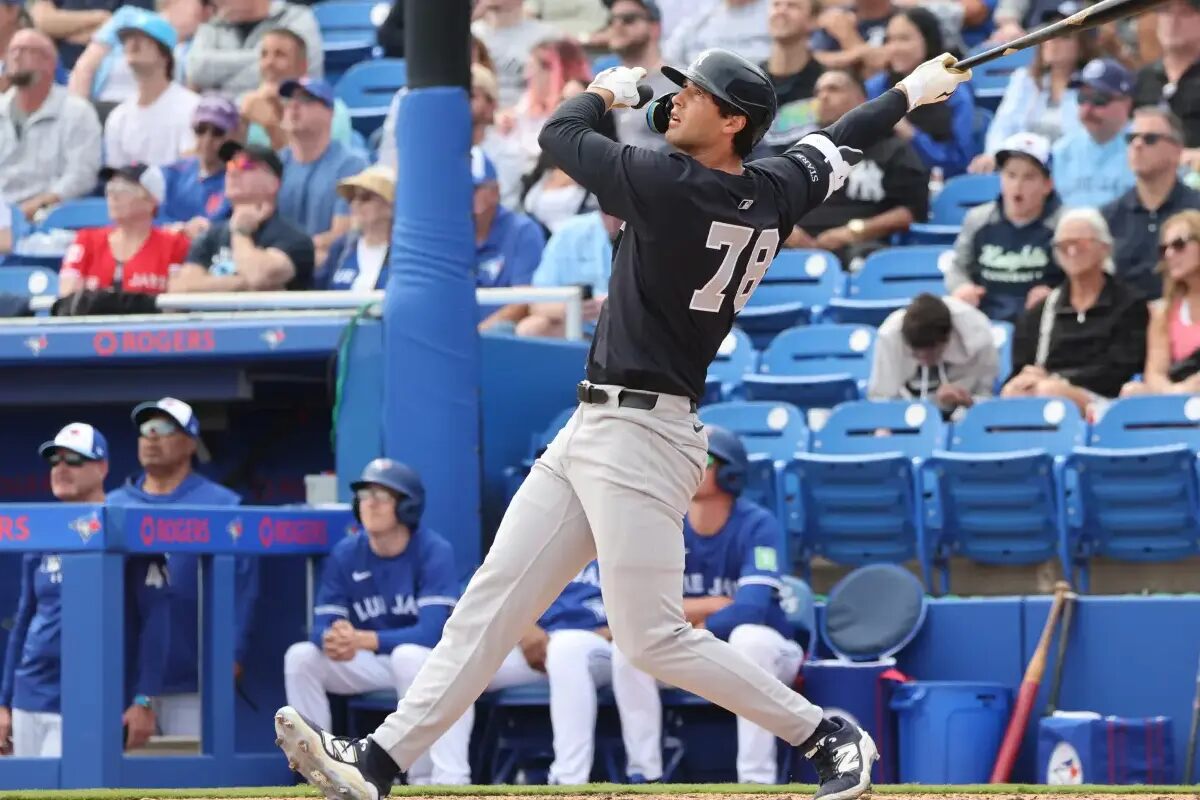
Jones spent the offseason attacking the contact problem that had stalled his Yankees timeline. He rebuilt his mechanics around Shohei Ohtani’s swing, focusing on the lower half. He replaced his high leg kick with an exaggerated toe tap. The goal was a shorter, quicker load. Getting hands through the zone faster on elevated fastballs was the target.
The concept was straightforward. Most of Jones’ whiff problems throughout his Yankees minor league career have come on high heaters. A shorter leg kick means less timing requirement, which means less exposure to pitchers who can beat him up in the zone. Jones spoke about the inspiration during Yankees spring training.
The Triple-A results on the change have been mixed. His whiff rate actually rose slightly from 41.5 percent in 2025 to 43.8 percent this season according to Prospect Savant. But his overall strikeout percentage dropped a few points year over year. The Yankees view that as a meaningful directional step, even if the absolute numbers remain concerning.
His role with the Yankees going forward
The Yankees have options for how to deploy him. He can play the outfield, serve as DH when the lineup calls for it, or platoon against right-handed pitching only. The Yankees have options on how to protect him early. Boone has multiple levers to pull based on how Jones performs in his first at-bats.
“Spencer Jones deserved his Yankees chance — even if there are concerning questions to answer…………. Jones, a rare power/speed dynamo, brings big-time tools to a team more tooled-up than an Ace Hardware megastore,” John Heyman of The Post wrote. “The promotion also is justice, which is important, too. Jones, who turns 25 next week, already spent nearly as much time in Scranton as Michael Scott on “The Office.”
The Yankees drafted Jones in 2022 knowing the strikeout problem existed. They believed the power and speed package was worth the wait. Three and a half years later, the power has been everything they hoped. The contact rate has not moved as much as they needed. Whether those two competing truths can coexist in a Yankees major league lineup is the question that gets answered now. Milwaukee is where it starts.
What do you think? Leave your comment below.