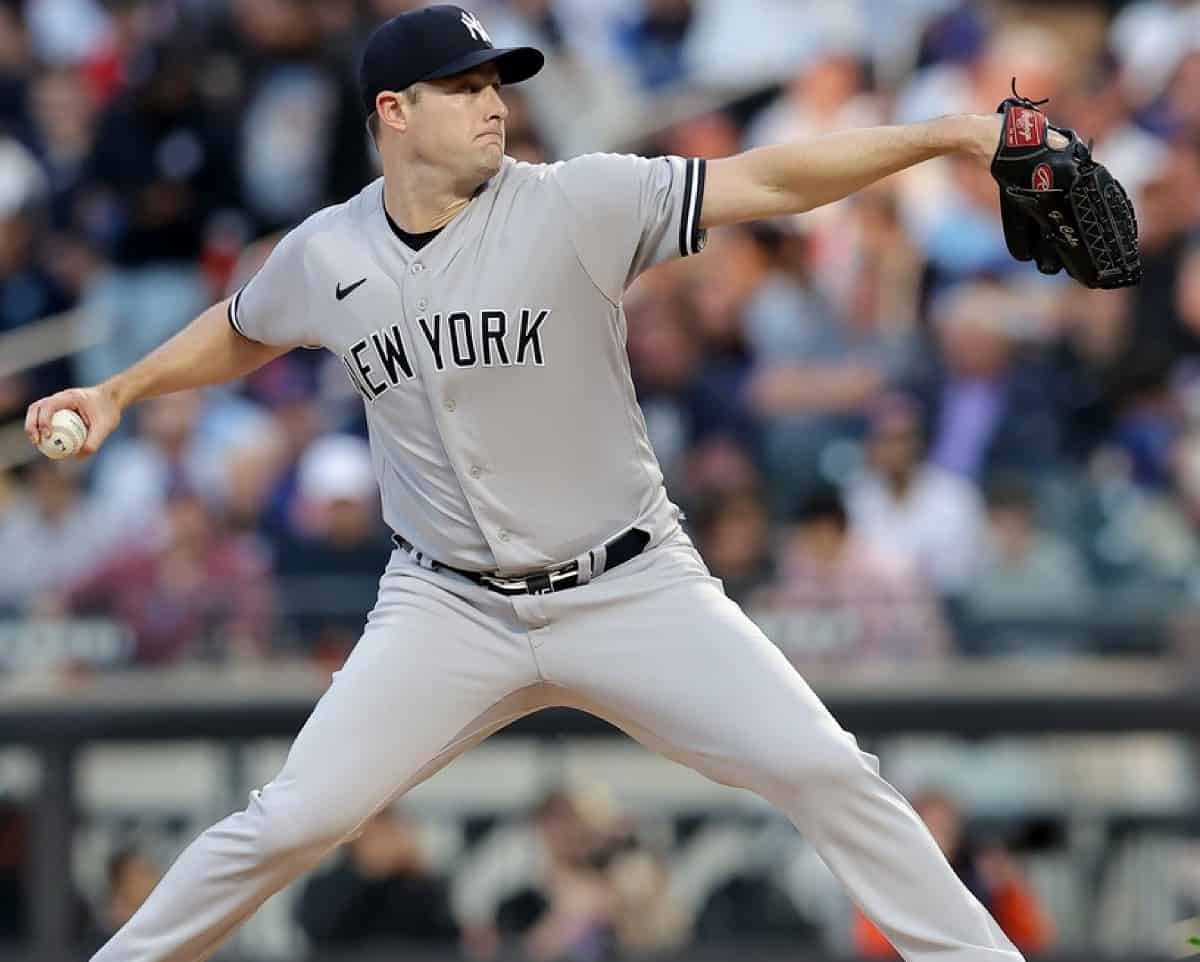
NEW YORK — Six weeks from the trade deadline, the Yankees need their prospect capital to look its best. One of the arms they would lean on to land help is doing the opposite.
The right-hander New York drafted 26th overall in 2024, has stumbled through a rough stretch at Double-A Somerset. The same pitcher who flashed electric stuff in spring training cannot find the strike zone, and the timing could hardly be worse.
Over eight starts this season, he owns a 4.12 ERA and a 1.63 WHIP, walking 5.5 batters per nine innings. The control problems have left him unable to work deep into games, a red flag for a player the Yankees hoped to either develop into a starter or dangle as a deadline asset.
That matters because the Yankees enter the summer with clear needs and a farm system they would rather not gut. A slide complicates both paths, weakening his trade value while raising fresh questions about his big-league future.
A spring riser hits a wall
Ben Hess entered the year as one of three pitching prospects who drew attention in camp, alongside Carlos Lagrange and Elmer Rodriguez. Lagrange impressed enough to be in line for a bullpen call-up, and Rodriguez has already made multiple starts for New York.
Hess looked like he might join them. He flashed the kind of stuff in camp that put a 2026 big-league debut on the table, and the Yankees had reason to dream on a power arm moving quickly through the system.
Instead, he has gone backward. He has not thrown even 20 innings despite his eight starts, a function of how quickly his outings unravel.
The lack of length stands out most. Hess went five innings in his season opener and has not finished four since. He failed to complete two innings three times and has reached the third inning just once after that first start.
The numbers behind the slide

The walk rate is the core problem. Hess has issued free passes at a 5.5 per nine clip and allowed 20 hits across his 19 2/3 innings, a combination that keeps traffic on the bases and runs his pitch count up early.
There is still raw ability in the profile. Hess has piled up 28 strikeouts in that limited workload, evidence that the stuff plays when he is around the zone. The issue is getting there consistently.
The decline is sharper against his own track record. Last season, the 23-year-old posted a 3.22 ERA and a 1.07 WHIP between Single-A and Double-A while averaging 12.1 strikeouts per nine innings. His control wobbled even then, at 4.0 walks per nine, but nowhere near this year’s rate.
The regression is a real concern rather than noise, noting that the 6-foot-5, 255-pound right-hander has been a disappointment relative to his spring promise.
The outlet also urged patience, pointing out that Hess remains very green and that the Yankees owe him time to develop. The hope, by that read, is that the rough opening months prove a blip rather than a trend for an arm the organization still believes in.
Why the timing stings for the Yankees
The slump arrives as the Yankees weigh how to use their prospects before Aug. 3. The club has been tied to bullpen and catching upgrades, and any meaningful addition likely costs young talent. Hess profiled as a name other teams would want.
His value rests almost entirely on projection, and projection is fragile. A high-walk pitcher who cannot pitch past the fourth inning is a harder sell to rival front offices than the arm scouts saw overpowering hitters in March.
The broader picture adds to the unease. Both Lagrange and Rodriguez have battled their own command issues this season, leaving the Yankees with a cluster of high-upside arms who share the same flaw at the same moment. That overlap thins the depth New York might otherwise market or promote.
An uncertain path forward
There is still time for Hess to steady himself. He is young, the talent is not in dispute, and a clean run of starts would restore much of what the rough opening months have cost him. The Yankees have every reason to be patient with a recent first-round pick.
A bullpen move could eventually make sense if the starts keep falling apart, though that fix runs into the same wall. A reliever who walks hitters is a risky option to summon with runners already on base, so the control must improve regardless of role.
For now, Hess remains at Somerset, searching for the strike zone and the innings that come with it. The Yankees, 46-30 and atop the American League East, can afford to wait on the player. Whether they can afford to wait on the trade chip is the question the deadline will soon force.
What do you think? Leave your comment below.