NEW YORK — The Yankees have an immediate shortstop question and a familiar problem in their efforts to solve it. A proven replacement would cost more than a one-year salary, and their most coveted young players could become the price of doing business.
New York finished its season with another ALDS loss, extending a World Series championship drought that now stretches 17 seasons. Aaron Boone is returning for 2027, and Brian Cashman faces pressure to improve a lineup that stalled against Tampa Bay.
Anthony Volpe remains part of the infield picture after an unsettled 2026. George Lombard Jr. has reached the majors, giving the Yankees another young option with considerable upside. The choice between development and an immediate upgrade carries consequences well beyond Opening Day.
A thin market for established shortstops makes trades especially appealing. But the strongest candidates also tend to have contracts nearing expiration, leaving acquiring clubs to weigh a significant prospect cost against limited control.
Houston’s infield surplus opens the discussion
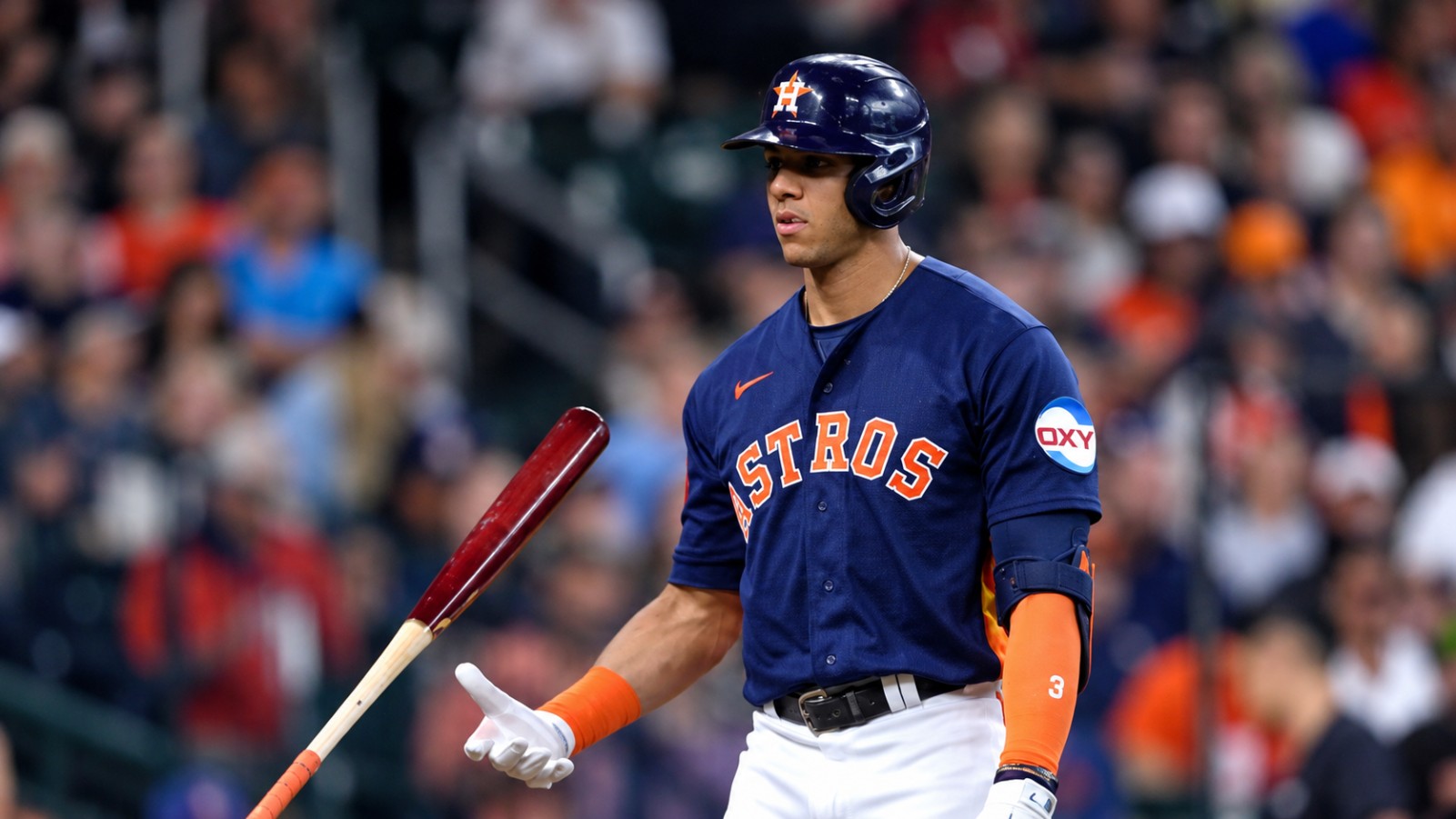
That calculation has pushed Houston Astros shortstop Jeremy Pena into the Yankees conversation. A recent trade proposal identifies the 2022 World Series MVP as a potential fit and suggests that any serious Yankees package could begin with Lombard.
Pena hit .277 with 22 home runs, 56 RBIs and an .802 OPS in 112 games during 2026. He added 12 stolen bases after injuries interrupted his season, including hamstring and calf problems. His productivity makes him one of Houston’s more valuable everyday players.
The 29-year-old is eligible for free agency after the 2027 season. He earned $9.475 million in 2026 and is due another arbitration salary for his final season of club control. That puts Houston at a decision point: pursue a long-term agreement or consider the value of a trade return.
Houston has other movable infield pieces. Isaac Paredes produced 25 home runs and a .806 OPS in 2026, while Christian Walker remains under contract for 2027. Both have surfaced in discussions about how the Astros could address their pitching needs.
Why Pena would be harder to pry loose than other Astros
Houston’s most pressing need is another reliable starter behind Hunter Brown. Its leadership changes after the season add uncertainty to the roster strategy, but a pitching upgrade would not automatically require the Astros to move their starting shortstop.
Pena is a central part of an offense that led the majors with 226 home runs yet sometimes struggled to turn that power into consistent scoring. Houston finished with a .315 on-base percentage, and its shortage of baserunning pressure made versatile hitters valuable.
Pena’s defensive record also requires a closer look. He won a Gold Glove as a rookie and was credited with eight Outs Above Average in 2025. Statcast’s 2026 season data shows a negative figure, while another season summary lists 13 errors. His glove remains a selling point, but his most recent defensive metrics are less convincing than his reputation.
In practical terms, trading Pena would create another premium-position vacancy for Houston. Moving a corner infielder such as Paredes or Walker could give the Astros more room to reshape the roster without replacing a productive shortstop.
The Lombard price could reshape Yankees’ decision
The Yankees can offer an appealing mix of young position players and pitching. Lombard is the name that changes the calculation because he could develop into a long-term shortstop himself. Spending that asset on one guaranteed season of Pena means New York would be betting heavily on a subsequent extension.
Scott Boras represents Pena, an added consideration for any acquiring club exploring a new contract. Atlanta has also been identified as a potential suitor because its own shortstop plans remain unsettled. More than one serious bidder would strengthen Houston’s negotiating position.
A Yankees offer built primarily around pitching would align more directly with Houston’s roster need. New York has rotation depth to evaluate, including pitchers who could become trade assets as veterans regain health. But the Astros would have to value that return above the stability Pena gives their lineup.
There is also a difference between improving at shortstop and improving the entire Yankees roster. Trading Lombard and additional young talent would concentrate resources at one position when the club must consider third base, bullpen depth and its longer-term payroll commitments.
What would make a Yankees deal realistic?
Three developments would strengthen New York’s position: Houston deciding an extension is unlikely, the Astros prioritizing controllable starting pitching, and the Yankees presenting an offer that does not leave them short of future infield options. None is guaranteed by the trade proposals alone.
Pena’s remaining control makes a deal possible, but his offense, premium position and value to Houston make him a difficult acquisition. The Yankees have the financial capacity to pursue a long-term arrangement; the larger obstacle is convincing the Astros to surrender him rather than trade a different infielder.
For now, Pena represents an expensive, high-upside option in New York’s search for a more dependable lineup. Houston’s next front-office decisions, not the existence of a Yankees trade proposal, will determine whether that possibility advances.
What do you think? Leave your comment below.