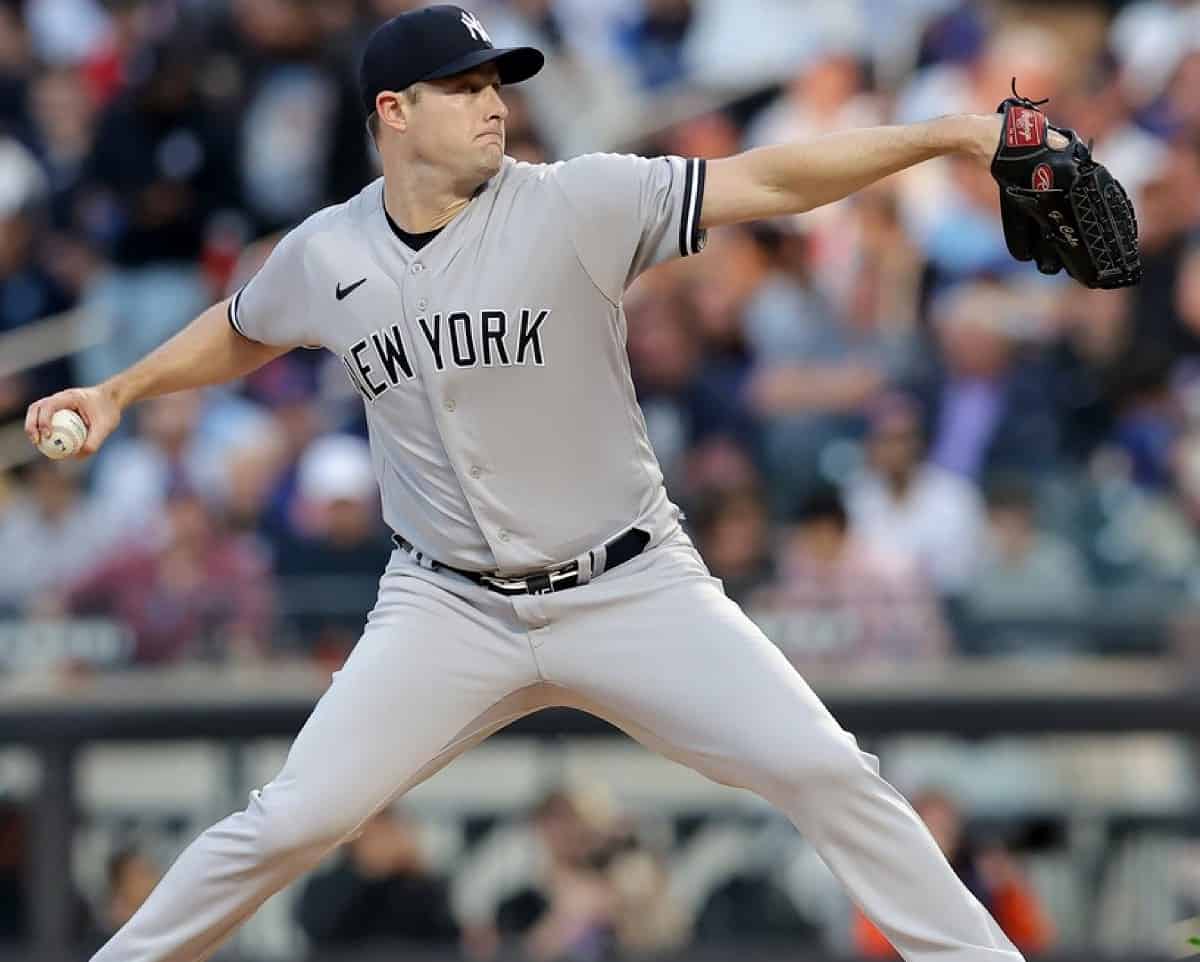
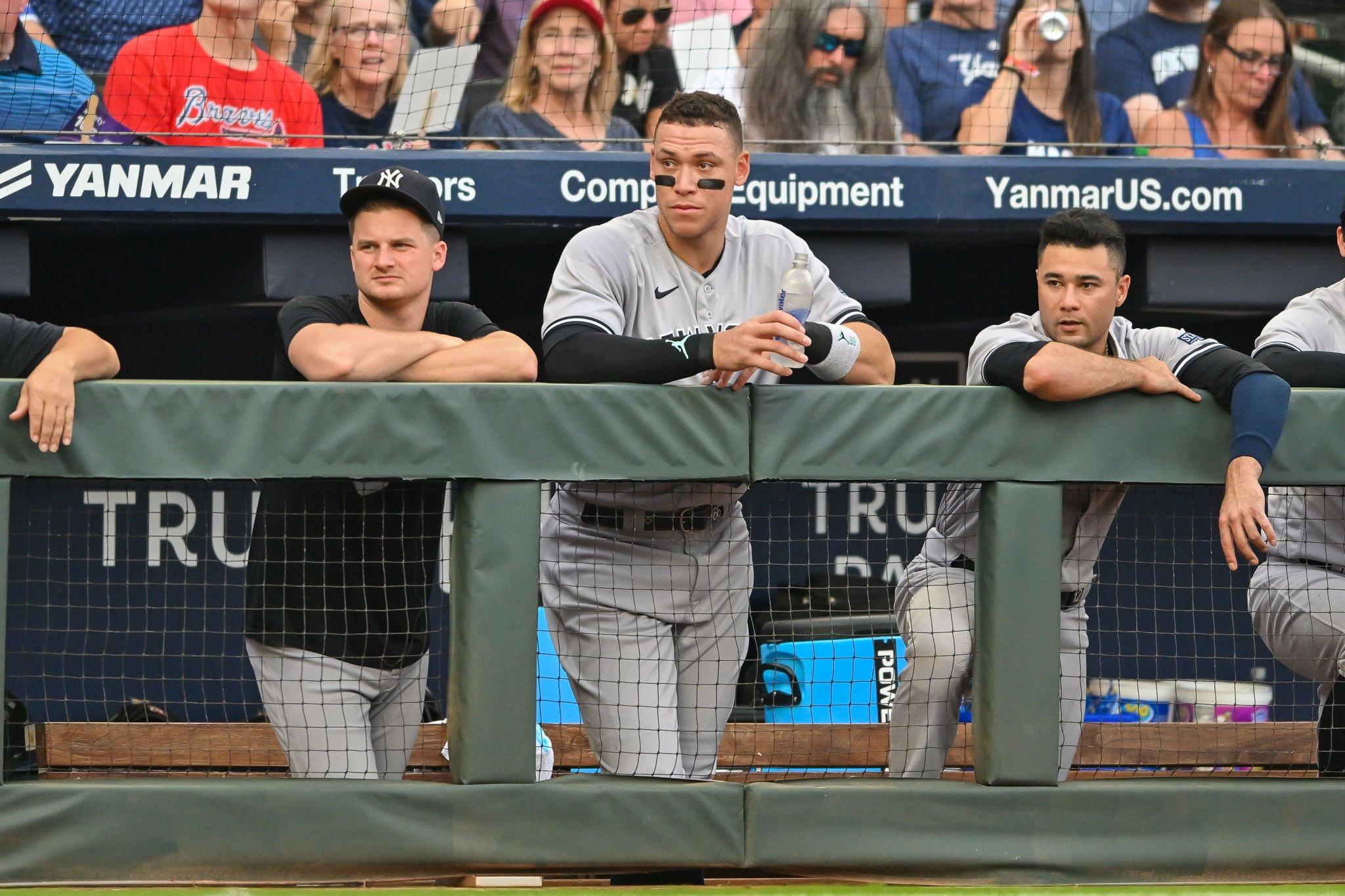
NEW YORK — Cam Schlittler and Ben Rice emerged as two of the New York Yankees’ most important young players in 2026. They provided production that would cost substantially more on the open market and gave the Yankees a homegrown foundation around Aaron Judge.
That advantage will not last indefinitely. Rising stars eventually command significant contracts, and the Yankees are approaching another major financial decision with baseball’s collective bargaining agreement set to expire Dec. 1.
The issue is particularly sensitive after the Yankees were swept by Tampa Bay in the ALDS. Another championship window depends not only on finding new talent but also on keeping the talent already in the organization.
Steinbrenner’s support for a salary cap has therefore brought a different possibility into focus: the Yankees could develop a new franchise ace and a middle-of-the-order hitter, then find themselves constrained when it is time to pay both.
Sherman’s warning puts Schlittler, Rice at center of debate
New York Post columnist Joel Sherman raised the uncomfortable scenario while discussing Steinbrenner’s interest in MLB adopting a hard salary cap. The concern is that an owner accustomed to large payrolls might welcome a rule that prevents him from authorizing another enormous contract.
Sherman captured that possibility in a pointed assessment of the owner’s position.
“In some ways, I think Hal might want the salary cap so he just can’t do it,” Sherman said.
For the Yankees, the potential consequence is personal. Schlittler has developed into one of the team’s most valuable pitchers. Rice has established himself as a powerful young bat. Both are affordable now because they remain early in their major-league careers.
Their future earnings could bear little resemblance to their current salaries. Sherman explored the possibility of Schlittler eventually entering the market for a contract worth $300 million or more. That is a projection of his earning potential, not an agreed valuation.
A salary ceiling would force the Yankees to fit deals of that size alongside commitments to Judge, Gerrit Cole and other expensive veterans. The risk is not simply that another club could offer more. It is that New York might no longer have the payroll flexibility to respond.
Steinbrenner’s silence leaves a costly question hanging
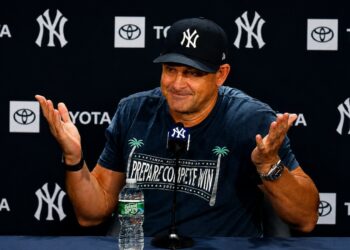
Steinbrenner’s Oct. 21 Zoom news conference offered little clarity on how a cap would affect the Yankees’ own roster. He declined to discuss labor proposals in detail as the World Series approached.
The owner explained why he wanted the conversation deferred.
“Listen, guys, we’re two days away from the World Series. This, in my mind, is a time to celebrate the game,” Steinbrenner said.
He then reiterated his involvement in the owners’ negotiating effort.
“Now’s not the time I’m going to start labor conversations. It just is not,” Steinbrenner said.
Steinbrenner serves on MLB’s labor policy committee. His support for a cap matters because the Yankees have traditionally used their financial reach to retain stars and repair roster weaknesses. Under a hard ceiling, every major extension would require trade-offs elsewhere.
The Yankees entered 2026 carrying one of baseball’s largest payrolls. They have also relied on the luxury-tax system, which permits spending above a threshold in exchange for financial penalties. A hard cap would represent a more restrictive approach.
Two homegrown stars could force Yankees’ toughest choice
Schlittler’s emergence offers New York something particularly difficult to replace: a premium starting pitcher developed in its own system. He has become a major part of the rotation and one of the leading reasons the Yankees can envision another postseason run.
Rice provides a different kind of value. His offensive production allows the Yankees to build around a young hitter while paying veteran salaries elsewhere. Together, they help the club balance an expensive roster.
That balance changes if both become candidates for lucrative extensions. A club operating under a strict ceiling may have to choose between paying its emerging stars, retaining expensive veterans and filling holes through free agency.
The difference from earlier Yankees eras is significant. New York once could keep a homegrown centerpiece and still pursue outside upgrades with fewer structural limits. A hard cap could make retaining multiple stars a choice with a visible cost in other positions.
Next labor agreement could decide how much New York can keep
The current collective bargaining agreement expires Dec. 1. Owners and players remain divided over a cap, making the next set of payroll rules central to long-range roster planning.
Schlittler and Rice remain Yankees building blocks. The fear concerns what happens when those low-cost years end and both seek the type of financial security their performance could justify.
Sherman’s warning has shifted attention from whether New York can afford its stars today to whether Steinbrenner will preserve the means to keep them tomorrow. That decision could define more than another winter. It could determine how long the Yankees’ newest core stays together.
What do you think? Leave your comment below.