


NEW YORK — The bombshell hit the baseball world like a thunderclap.
The Yankees are entering a crucial offseason after falling to the Toronto Blue Jays in the ALDS, a year after losing the World Series to the high-spending Los Angeles Dodgers.
With nine players entering free agency and glaring roster holes, the organization now faces mounting pressure to rebuild for contention. Yet, ownership’s recent directive has moved in the opposite direction.
Baseball’s most valuable franchise, worth nearly $8 billion, appears to be tightening its financial belt while rivals spend aggressively. Across town, Mets owner Steve Cohen has built a payroll of $323 million and secured Juan Soto with a staggering $765 million contract. The Dodgers’ ongoing investment strategy continues to pay dividends, earning them consecutive World Series titles. For the Yankees, the optics could not be worse.
A November 10 New York Post report revealed that managing partner Hal Steinbrenner wanted his front office to reduce the 2026 payroll below $300 million—a striking shift that arrived at the most critical moment.
The directive, which trims spending from the $304 million payroll in 2025, has triggered widespread frustration among fans still waiting for their first championship since 2009.
Despite record-setting revenue, Steinbrenner’s insistence on cuts has reignited the debate over priorities. The Yankees brought in $728 million in revenue in 2024, the second-highest in Major League Baseball, yet their payroll-to-revenue ratio ranks only 11th.
Financial mandate creates immediate roster problems
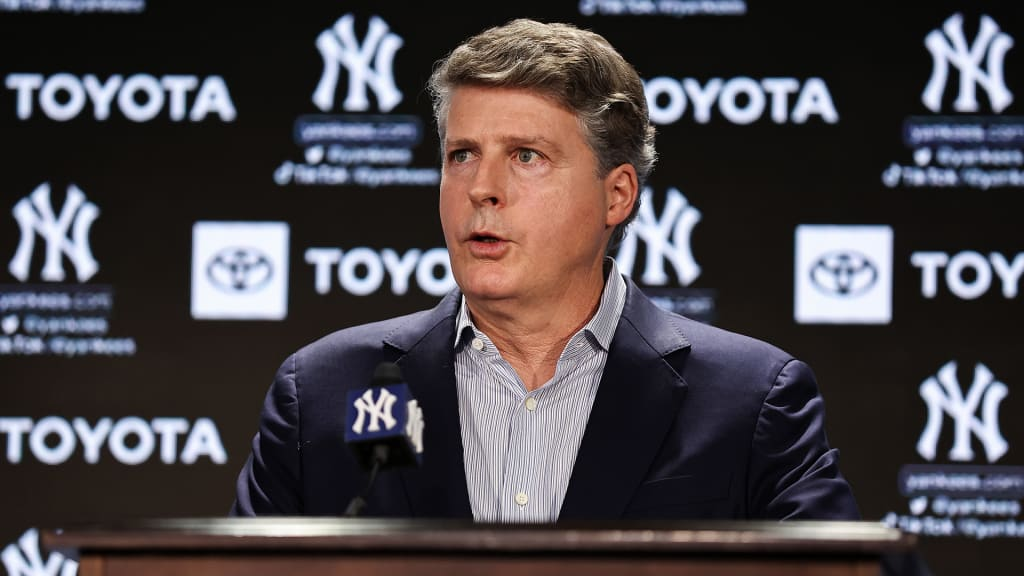
“Hal Steinbrenner wants to bring the payroll down below $300 million, and the Yankees have prioritized reuniting with Cody Bellinger, still might have Trent Grisham on the books at $20.25 million if he accepts the qualifying offer and he is not subsequently traded, must address the bullpen and want to add a righty-hitting catcher and perhaps a versatile position player,” Sherman wrote in the New York Post.
The Yankees have about $263 million already committed for 2026, leaving roughly $37 million of flexibility before hitting Steinbrenner’s ceiling. That figure must cover a roster in need of bullpen reinforcements, outfield depth, and a new first baseman.
General manager Brian Cashman faces a daunting challenge. The front office also hopes to bring back Cody Bellinger, who opted out of his $25 million deal after slugging 29 home runs in 2025.
“The Steinbrenner math might not work for all of that, plus a significant starter,” claimed Sherman. Each signing carries added weight due to luxury tax implications, which multiply costs well beyond contract value.
Revenue figures expose uncomfortable truth
In 2024, the Yankees generated $728 million in revenue, second only to the Dodgers. However, their payroll-to-revenue ratio stood at 49.7 percent—below divisional rivals Toronto and Baltimore. Meanwhile, Mets owner Steve Cohen allocated 73 percent of his team’s income toward payroll and taxes.
Even smaller-market clubs like the Kansas City Royals and Los Angeles Angels ranked ahead of New York in spending commitment relative to earnings. The disparity has become a focal point for critics of the franchise now valued at $7.55 billion.
Former catcher A.J. Pierzynski didn’t hold back on Foul Territory. “If it’s so hard and you’re not making any money, sell the damn team, Hal,” he said. “George would roll over in his grave right now.”
Luxury tax calculations complicate every decision
In 2024, the Yankees paid $62.5 million in luxury tax penalties—their highest single-season total under Hal Steinbrenner. As repeat offenders, the club faces escalating tax rates that punish continued spending.
Teams exceeding the luxury tax thresholds face a 50 percent base rate on overages, which jumps to 110 percent for payrolls above $301 million. That means every dollar spent beyond that limit effectively costs $2.10. Even with a $300 million budget, the Yankees would exceed the base threshold by about $56 million.
Major contracts held by Aaron Judge, Giancarlo Stanton, Gerrit Cole, Carlos Rodón, and Max Fried already total $147.3 million annually through at least 2027, leaving limited room for additions without incurring heavy penalties.
Bellinger decision highlights budget constraints
Cody Bellinger remains the Yankees’ top offseason target. The 30-year-old produced a 5.0 WAR in 2025—his best since his 2019 MVP campaign—while offering defensive flexibility across the outfield and first base.
ESPN projects Bellinger will seek a six-year, $165 million contract, with bidding from the Mets, Dodgers, and Phillies possibly pushing it closer to $200 million. The Yankees would have to outbid wealthier opponents willing to ignore the tax ceiling.
Jeff Passan of ESPN called re-signing Bellinger the “perfect move” for New York, citing his left-handed power and defensive fit for Yankee Stadium. But signing him could consume most of their available budget.
Meanwhile, Trent Grisham received a $22.025 million qualifying offer on November 6. After hitting a career-high 34 home runs in 2025, many believe he will accept the one-year deal, given his inconsistent track record.
If Grisham stays, center field is secured but spending flexibility vanishes. If he declines, the Yankees could target free agent Kyle Tucker, whose expected 11-year, $418 million price tag is out of reach under Steinbrenner’s limit.
ALDS elimination intensifies championship drought anxiety

The Blue Jays eliminated the Yankees in four games in the 2025 ALDS, extending the Bronx club’s title drought to 16 years—the third longest in team history.
Despite Aaron Judge’s dominant series, going 7-for-11, Toronto’s depth and strategy proved superior.
“The ending’s the worst, right?” said manager Aaron Boone after Game 4. “Especially when you know you have a really good group of guys that came together so well at the right time. They beat us this series, simple as that.”
Both clubs finished with identical 94–68 records. Toronto won the AL East via a tiebreaker, with only a $10 million payroll gap between the two rosters. Critics argue that trimming payroll now undermines any effort to bridge the competitive gap.
Steinbrenner, however, reportedly views the outcome as proof that large payrolls alone don’t ensure championships.
Ownership philosophy breaks from Steinbrenner tradition
Hal Steinbrenner’s approach to team building stands in contrast to his father’s legendary aggressiveness. George Steinbrenner led MLB in payroll every season from 1995 to 2013, embodying the Yankees’ “whatever it takes” philosophy.
“Should I really need a $300 million plus payroll to win a championship?” Hal asked during a February 2025 YES Network interview. His focus on sustainability and player development reflects a clear philosophical shift.
In 2018, the Yankees purposely reduced payroll to avoid tax penalties and foster homegrown talent. The strategy delivered competitive teams but failed to produce championships.
Hal later explained, “There are banks and partners and lenders that I have to deal with,” highlighting a corporate tone that differs sharply from his father’s.
The contrast is amplified by Cohen’s Mets, who spent $323 million in 2025 to lure Soto after the Yankees’ $760 million bid fell short. Cohen’s aggressive model mirrors that of the Dodgers, whose payroll nears $400 million when all obligations are considered.
Media and fans demand accountability
The backlash among fans and media has been fierce. Peter Brody of Pinstripe Alley summarized the frustration: “Imagine your favorite team made it back to the World Series for the first time in 15 years. Now imagine that team two months later cutting payroll rather than do that little bit more to boost their chances of making a return trip.”
Analysts have criticized what they call a “crying poor” narrative. Despite earning the second-highest revenue in baseball, the Yankees spend a smaller share of income on players than most contenders.
Ken Rosenthal of The Athletic challenged Steinbrenner’s justification directly: “Open your books, prove you can’t sustain it, because I don’t believe that for a second.”
Former players and reporters frequently invoke George Steinbrenner’s relentless drive as a contrast. Pierzynski’s sharp rebuke—calling for Hal to sell the team—echoed across social media, resonating with fans nostalgic for the old Yankees standard.
Critical offseason puts Yankees at competitive crossroads
Sixteen years without a title has exposed deep cracks in the Yankees’ structure. Steinbrenner insists that spending efficiency will eventually yield results, but critics say financial restraint has cost the team postseason success.
Aaron Judge turns 33 in 2026, and Gerrit Cole is entering his mid-30s. The Yankees’ championship window is narrowing.
Whether Steinbrenner’s business-first mindset can coexist with the Yankees’ historic demand for excellence remains to be seen. The 2026 season will reveal whether the team’s financial caution fuels another October disappointment—or finally ends a 16-year drought.
What do you think? Leave your comment below.
















I would assume the “other” minority owners have no say at all in the payroll numbers. They may be making money on their investments, but it seems to be Hals word is the only one that matters. And the fans still spend but suffer.