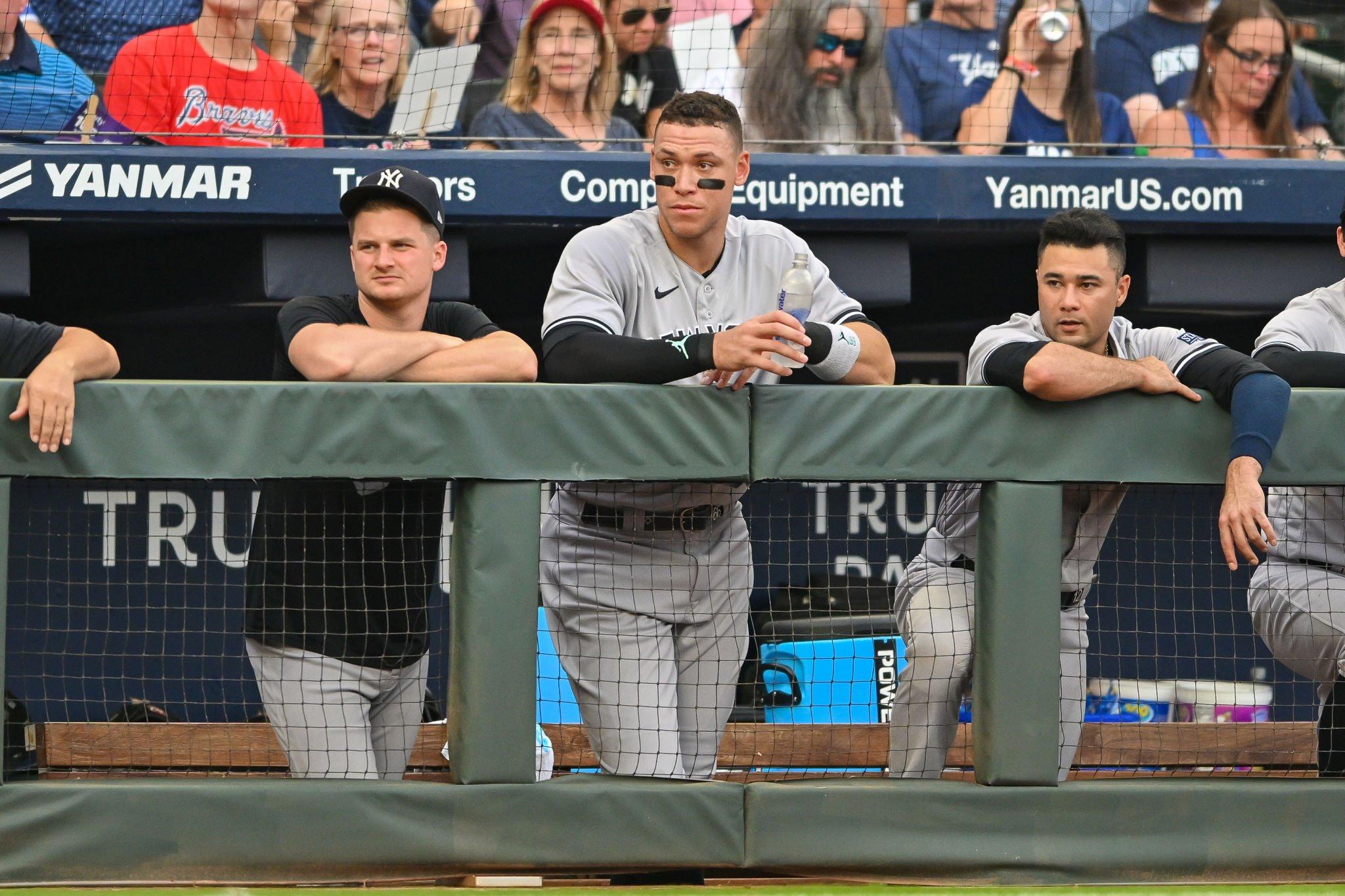
New York — The New York Yankees made their first major move of the offseason Thursday by extending a $22.025 million qualifying offer to center fielder Trent Grisham. The decision provides a revealing glimpse into the team’s strategic direction as they enter a crucial winter filled with roster questions and competing priorities.
Grisham, who recorded career bests with 34 home runs and 74 RBIs in 2025, now faces a key choice before the November 18 deadline. The one-year qualifying offer represents a significant jump from his $5 million salary last season. If Grisham declines and signs elsewhere, the Yankees would receive a compensatory draft pick following the fourth round of the 2026 MLB Draft.
The Bellinger connection runs deep

Grisham was the only Yankees player to receive a qualifying offer, underscoring how selectively the front office is approaching its roster construction. Cody Bellinger, who opted out of his contract to explore free agency, was ineligible for the offer after receiving one from the Chicago Cubs two years ago. That distinction changes the market landscape for both outfielders.
The Yankees’ decision to tender Grisham a qualifying offer while allowing Bellinger to test the open market suggests a calculated hedge. With Bellinger expected to draw heavy attention from high-spending contenders like the Mets, Dodgers and Phillies, the Yankees appear to be protecting themselves against losing out on both center fielders.
“Everyone’s trajectory is not like this,” manager Aaron Boone said during the season, gesturing an upward curve with his hand. “It’s a hard game. Hitting in the big leagues is hard. There’s countless examples of guys finding themselves, really figuring it out a little bit, especially offensively, as their career unfolds.”
Numbers tell only part of the story
Grisham’s 2025 campaign marked a resurgence at the plate. He finished with a .235 batting average, .348 on-base percentage, and .464 slugging percentage for an .812 OPS. His 34 home runs ranked among the top three among MLB center fielders. The power jump came from swing adjustments that allowed him to pull the ball in the air more frequently than in past seasons.
Defensively, however, the numbers told a more complicated story. Once considered an elite glove in center field, Grisham’s defensive run value dropped from +7 in 2023 to +3 in 2024 and then down to -3 in 2025. His defensive runs saved (DRS) metrics declined from 10 in 2022 to negative-11 this season, signaling clear regression.
The defensive drop, paired with a sprint speed that fell to the 32nd percentile, raises questions about his long-term ability to handle center field. Teams assessing his market value will need to decide whether he remains a true center fielder or fits better as a corner outfielder moving forward.
Market dynamics favor acceptance
Beyond Bellinger and Grisham, the free agent center field market offers limited depth. Harrison Bader, Cedric Mullins, Lane Thomas and Willi Castro headline the next tier of available players. That lack of options gives Grisham leverage if he tests free agency — but the qualifying offer complicates his outlook.
Teams exceeding the luxury tax threshold would need to forfeit their second- and fifth-highest draft picks and $1 million from their international bonus pool to sign him. Revenue-sharing clubs would lose their third-highest draft selection. Those penalties tend to depress market demand for players tied to qualifying offers, often making acceptance the smarter short-term move.
“I think consistent at-bats help any player,” Grisham said during the season. “I would put most of it to the mental work that I’ve put in.”
Prospect pipeline affects Yankees calculations
The Yankees’ internal outfield depth plays a major role in their approach. At present, Aaron Judge and Jasson Domínguez are projected starters, with top prospect Spencer Jones waiting in the wings. Jones must be added to the 40-man roster this winter to avoid exposure to the Rule 5 Draft.
Domínguez impressed in brief stints but remains largely untested as an everyday player. The Yankees have also indicated they view him as better suited for a corner outfield role rather than center field. Jones offers exciting upside but still needs more seasoning before he can handle full-time MLB duties.
That uncertainty makes retaining either Grisham or Bellinger vital. Extending the qualifying offer gives the Yankees leverage in talks while ensuring they retain at least one experienced option if their pursuit of Bellinger stalls.
Postseason struggles complicate evaluation

Grisham’s playoff showing presented a mixed picture. He went just 4-for-29 with 10 strikeouts and no RBIs in seven postseason games, good for a .138 average. The cold stretch stood in sharp contrast to his regular season success and likely influenced the team’s cautious approach.
Front offices now must determine whether Grisham’s 2025 breakout represents a genuine step forward or a statistical outlier. His career .218 average across 766 major league games suggests volatility, though his underlying numbers — including barrel rate, exit velocity and expected weighted on-base average — indicate genuine improvement.
Financial flexibility remains paramount
The Yankees have consistently favored short-term financial flexibility over long-term commitments. Offering Grisham a one-year deal at $22 million aligns with that philosophy. It allows the club to address an immediate need while maintaining payroll flexibility for other upgrades.
The team also made a smaller move Thursday, adding right-hander Kervin Castro to the 40-man roster. Castro, who posted a 1.53 ERA over 35 appearances for Triple-A Scranton/Wilkes-Barre, bolsters bullpen depth as the front office prepares for more transactions.
If Grisham accepts the qualifying offer, he would provide stability in center field while the Yankees continue developing their young outfielders. If he declines, the club gains a valuable compensatory draft pick — a useful asset for a team that has traded away prospects in recent deals.
Trade market alternatives exist
If both Grisham and Bellinger sign elsewhere, the Yankees could explore the trade market for outfield help. The White Sox exercised Luis Robert Jr.’s $20 million option, but his availability remains uncertain after two injury-plagued seasons. The Red Sox’s Jarren Duran and the Diamondbacks’ Alek Thomas could also emerge as trade targets.
Each option comes with drawbacks. Robert’s salary and health record present risk, Duran would require significant prospect capital from a division rival, and Thomas has yet to prove himself as an everyday hitter. These factors make the Yankees’ decision to extend Grisham’s qualifying offer appear both prudent and strategic.
The decision’s ripple effects
Grisham’s choice will shape much of the Yankees’ offseason planning. If he accepts, the team gains cost certainty at a key position, freeing resources to address other needs like starting pitching, second base, and bullpen reinforcements. If he declines, the Yankees will have to pivot quickly to avoid being left without a proven center fielder.
With the qualifying offer deadline set for November 18, Grisham has less than two weeks to decide. His decision will serve as the first major domino of the Yankees’ winter strategy — one that could influence their spending, roster construction, and pursuit of marquee free agents like Bellinger.
For now, the Yankees have made their play. Whether Grisham accepts or moves on, his decision will reveal how far the front office is willing to go to maintain control of the outfield picture heading into 2026.
What do you think? Leave your comment below.