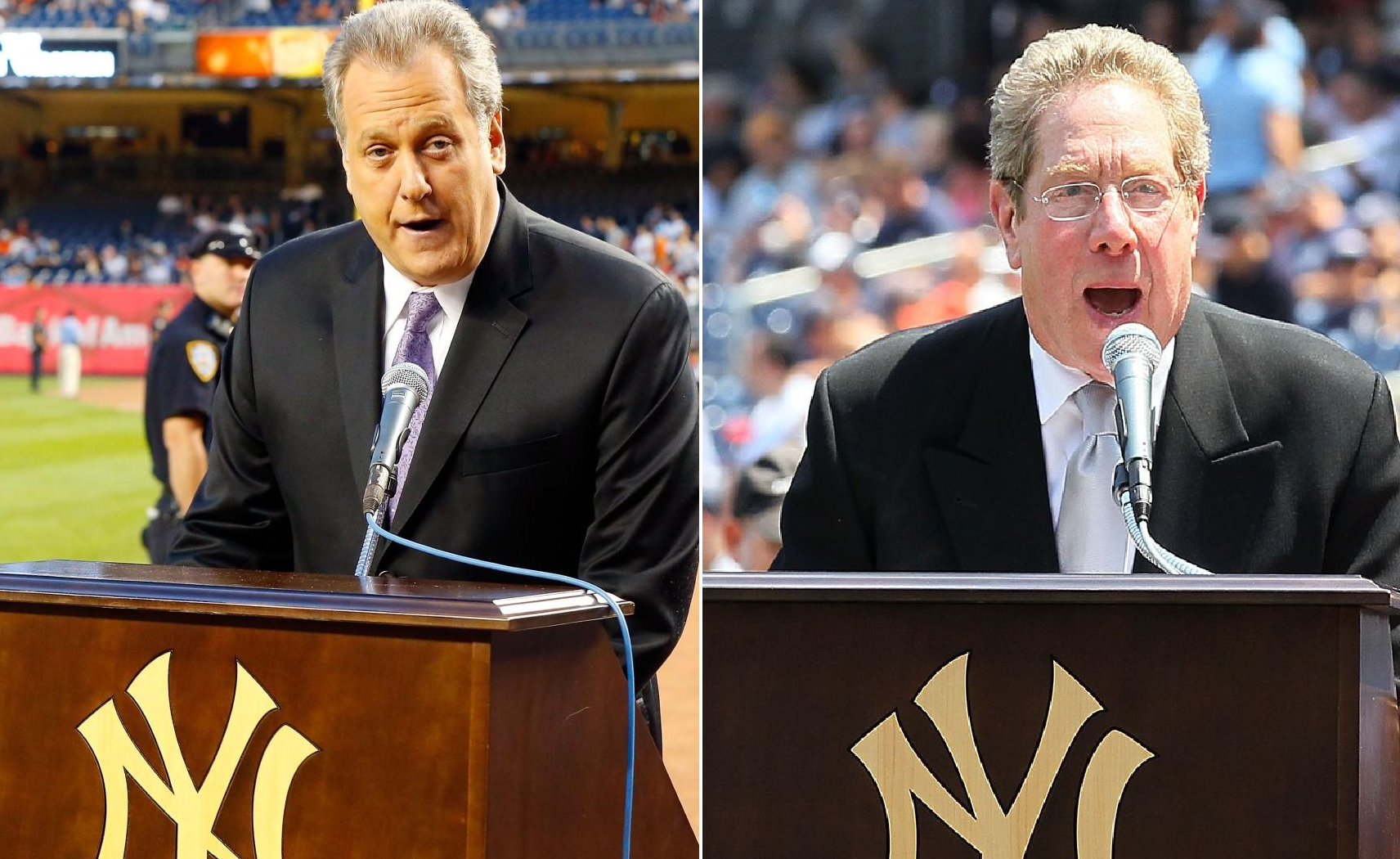
NEW YORK — Hall of Fame columnist Mike Lupica raised a pointed question about Hal Steinbrenner’s reluctance to change the Yankees’ leadership before the team’s annual postseason reckoning. Two days later, the owner’s response has given that criticism renewed significance.
The Yankees have now completed 17 consecutive seasons without winning the World Series. Their latest campaign ended Oct. 7 with a three-game American League Division Series sweep by the Tampa Bay Rays.
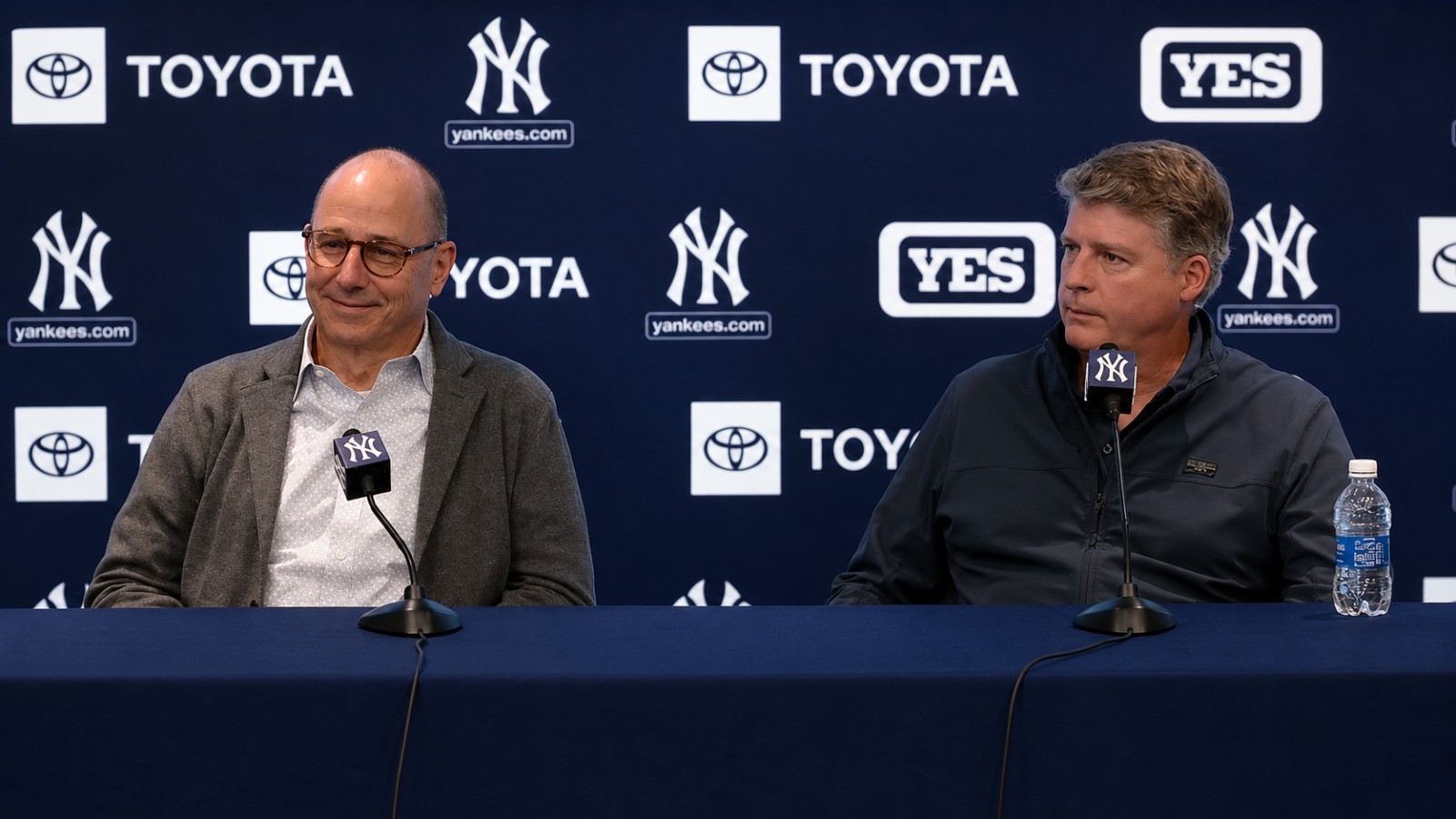
Despite another disappointing October, Steinbrenner’s Oct. 21 Zoom appearance produced no major leadership shake-up. Manager Aaron Boone will return for his 10th season in 2027, while general manager Brian Cashman is nearing a new contract.
Steinbrenner instead directed much of his criticism toward the players, particularly an offense that collapsed against Tampa Bay.
The decisions put Lupica’s earlier criticism in sharper focus. The veteran columnist questioned whether the Yankees owner had become too attached to organizational continuity, even as the franchise repeatedly fell short of its championship expectations.
Lupica’s question puts ownership in the crosshairs
Before Wednesday’s briefing, Lupica delivered a cutting assessment of the Yankees’ leadership situation on X.
“Does Hal Steinbrenner have a phobia for anything else besides change?”
The question challenged the owner’s continued confidence in the people responsible for constructing and managing a team that has not delivered a championship since 2009.
The remark targeted an apparent organizational reflex: retain the people in charge and trust a modified version of the same approach to produce a different ending. The accusation was not that Steinbrenner refuses to spend. It was that his willingness to fund a contender has not been matched by a willingness to rethink who builds and directs it.
That distinction matters. The Yankees rank among baseball’s major spenders, but the Rays eliminated them in three straight games. New York’s wealth and regular-season success did not stop Tampa Bay from exploiting defensive mistakes, limiting the lineup and ending the season at Yankee Stadium.
Steinbrenner addressed that issue directly during his postseason review.
The Yankees owner said he evaluated Boone’s performance and concluded that the manager had done his job effectively despite the team’s abrupt elimination.
“I think the answer is yes,” Steinbrenner said when explaining whether Boone had managed the Yankees well. “I’m not going to make a change to make a change.”
That assessment effectively settled Boone’s immediate future.
Cashman’s position also emerged secure. The general manager, who has led the Yankees’ baseball operations since 1998, said the sides had reached an agreement on a new contract, with only minor details remaining.
The developments leave the Yankees preparing for another season under the same leadership structure Lupica questioned.
A manager returns, but larger decision belongs to Steinbrenner
Boone has compiled a 790-565 regular-season record in nine years, a .583 winning percentage. His teams have reached the postseason eight times and the World Series once, in 2024, losing in five games to the Dodgers. The Yankees have nevertheless suffered consecutive division-series eliminations in 2025 and 2026.
The obvious defense of continuity is that a manager cannot hit, field or keep stars healthy. Aaron Judge missed the Yankees’ 2026 postseason because of a right calf injury. His absence removed their most dangerous hitter from an offense already facing formidable pitching. A managerial replacement would not automatically correct roster construction or injury problems.
The competing argument is harder for ownership to dismiss: when expensive teams keep breaking down in similar ways, changing only the players around the edges becomes a choice in itself. Cashman controls talent acquisition, Boone handles the field operation and Steinbrenner has authority over both. Responsibility cannot end with the manager when the club itself chooses to keep him.
The October ledger gives the question its sting
Across five postseason exit series since 2021, including the 2021 wild-card loss, the 2022 ALCS, the 2024 World Series and the 2025 and 2026 ALDS, the Yankees have gone 2-15 in the games that ended their seasons. The figure does not erase their earlier playoff victories. It captures how decisively opponents have closed them out when the stakes were highest.
The Yankees lost their 2026 ALDS without winning a game against Tampa Bay. Defensive lapses were especially costly in Game 2, when the Yankees committed four errors. The series was another reminder that high-end payroll and a strong regular-season record offer no protection from execution failures in October.
Judge himself urged organizational ambition after elimination. The captain said that any gaps in personnel should be addressed, even while supporting Boone’s return. That leaves the owner with a more complicated challenge than choosing a manager: decide which shortcomings were circumstances and which were products of a system he continues to back.
Lockout fears offer another explanation for fearing change
In an article published Tuesday, NJ Advance Media columnist Bob Klapisch offered another explanation for Steinbrenner’s decision to retain Boone despite criticism from parts of the Yankees fan base: uncertainty surrounding baseball’s next labor negotiations. Klapisch described a possible prolonged lockout as a factor in the owner’s decision-making.
“The coming labor dispute, which could be the longest and most contentious in the sport’s history, is a factor in Steinbrenner’s thinking,” Klapisch wrote. “The season’s start will almost certainly be delayed. The question is how long the owners and the [MLB Players Association] will hold out on the salary cap issue. The worst scenario says it’ll be July — or just around the All-Star break — before both parties decide they’ve suffered enough. But that would leave a new Yankees manager in limbo for nearly nine months. Under MLB rules, a lockout halts all business and communication between team personnel — including managers, coaches, executives, and medical/training staff — and players covered by the lockout. It would be unfair, not to mention impractical, for Boone’s potential replacement to hastily pull together the moving parts after a settlement.”
That is Klapisch’s worst-case scenario gives Steinbrenner a practical argument for continuity: a new manager could lose crucial months of contact with the roster before taking charge. It also sharpens the question Lupica raised. Is the looming labor fight a sound reason to protect stability, or another reason for the Yankees to postpone a difficult organizational decision?
Zoom appearance becomes a test of accountability
Steinbrenner is scheduled to speak first at noon Eastern time, followed by Cashman and Boone. The virtual format has already drawn criticism among some supporters who wanted an in-person explanation after another home-field exit. Holding the event online does not establish an unwillingness to answer questions, but the substance of those answers will matter.
The pivotal Yankees issues are direct. What evidence convinced Steinbrenner that Boone should return? How will the front office address the defensive and lineup failures exposed by Tampa Bay? And what standards will Cashman face after a 17th consecutive season without a championship?
Lupica’s pointed question is ultimately about the one figure empowered to impose consequences on everyone else. Wednesday’s news conference will offer Steinbrenner an opportunity to explain why continuity still deserves the Yankees’ trust, and what he intends to change if it does not deliver.
What do you think? Leave your comment below.