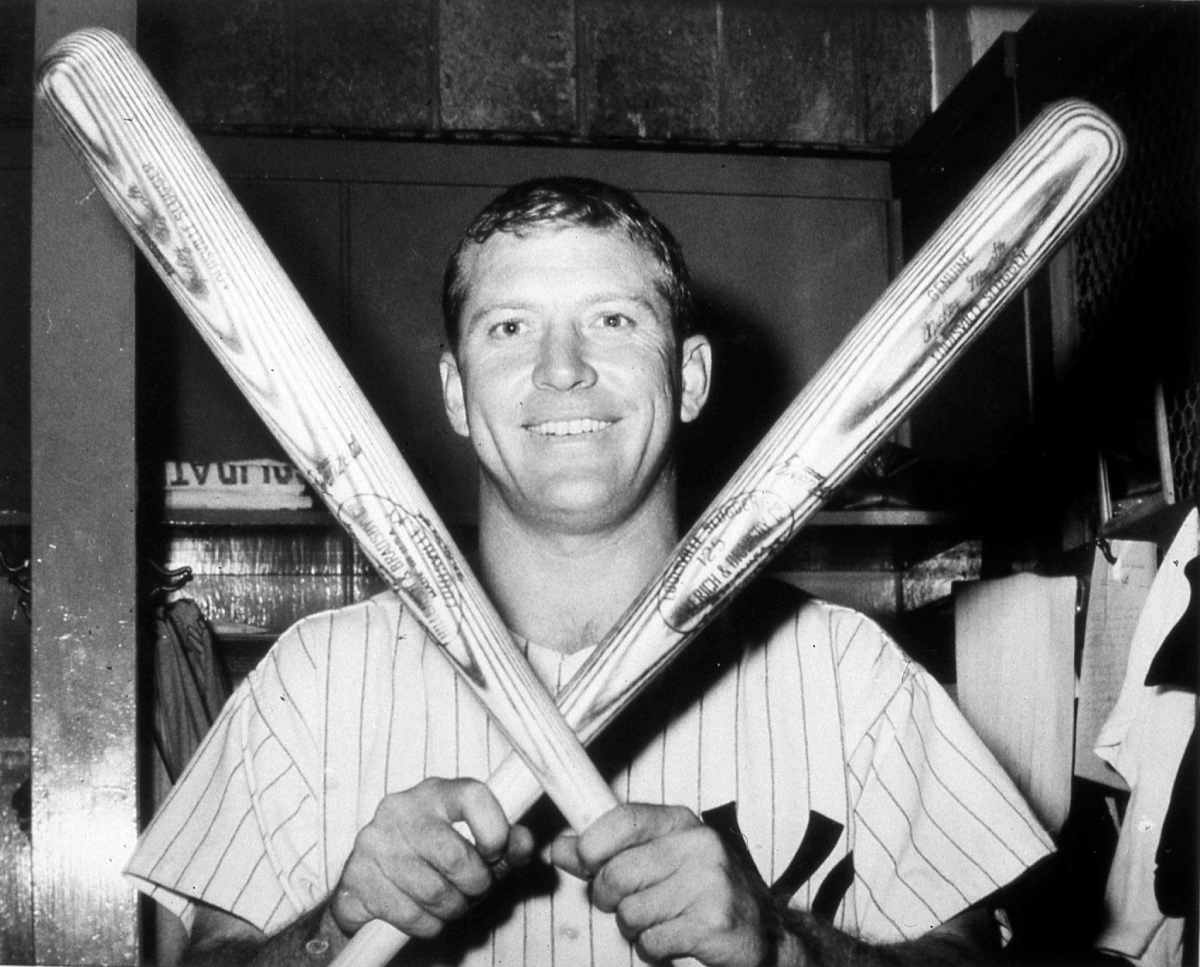
NEW YORK — Mickey Mantle has been gone for more than three decades, but the value attached to his name, image and signature continues to generate enormous money — and now a federal court fight.
The company controlling intellectual property associated with the Yankees legend and a Major League Baseball alumni licensing organization have sued a trading-card company and others over baseball cards they say used Mantle’s identity without authorization.
The plaintiffs are seeking at least $750,000 in damages and an order stopping the alleged unauthorized use.
At the center of the dispute is one of the most recognizable images in baseball collecting: Mantle’s famous 1952 Topps card.
But this fight is about much more than an old piece of cardboard.
Mantle rights holders take dispute to federal court
Mantle I.P. Holdings Ltd. and Major League Alumni Marketing Inc. filed the complaint Sept. 24 in U.S. District Court for the Southern District of New York.
The defendants include Cardsmiths LLC, Toynk Toys LLC and Steven Loney, along with unidentified defendants.
The federal docket lists the case as a trademark action under the Lanham Act.
Mantle I.P. Holdings controls trademarks connected to the Hall of Famer, including “Mickey Mantle,” “The Mick” and Mantle’s signature, according to Sportico’s report on the complaint. It also holds rights associated with his image and likeness.
The plaintiffs allege Cardsmiths sold products using those assets without permission.
No court has ruled on those allegations.
Cardsmiths declined to comment to Sportico, which reported that attorneys for the company are expected to answer the complaint and seek its dismissal.
Iconic Yankees card becomes centerpiece of allegations
The dispute becomes especially notable for Yankees collectors because the complaint points to Cardsmiths products drawing on the appearance of Mantle’s celebrated 1952 Topps card.
That card occupies a unique place in sports memorabilia.
Although Mantle’s actual rookie card was issued by Bowman in 1951, the 1952 Topps card became the defining collectible connected to his career. One high-grade example sold for $12.6 million in 2022, establishing a record for a sports card.
That enormous value also makes anything resembling the original commercially significant.
According to the complaint as described by Sportico, the plaintiffs accuse Cardsmiths of reproducing elements connected to the famous card while using Yankees legend’s name, likeness and signature.
The complaint also alleges the products could leave consumers believing they had been licensed or approved by the entities controlling Mantle’s rights.
That point could become central to the case.
Lawsuit points to collectors asking whether cards authentic
The plaintiffs included social-media exchanges as exhibits in an effort to support their argument that buyers could become confused about what they were purchasing.
Some collectors questioned whether cards were original, reprints or contained an authentic Mantle autograph, according to the complaint.
The plaintiffs contend that confusion damages the value and goodwill attached to the Yankees legend’s trademarks.
Sportico reported that Cardsmiths products containing the Mantle imagery had appeared through major retailers and online marketplaces, including Amazon, eBay, Best Buy, Target and Walmart.
The lawsuit does not mean those retailers are accused of wrongdoing.
Instead, it shows the potential reach of the products the plaintiffs are challenging.
Mantle side wants at least $750,000 and an injunction
The requested relief gives the dispute a financial dimension beyond simply removing cards from circulation.
Mantle I.P. Holdings and Major League Alumni Marketing are seeking at least $750,000 in damages, according to Sportico.
They also want a permanent injunction preventing what they describe as unauthorized use of Mantle’s protected trademarks and identity.
The case has been assigned to U.S. District Judge Vernon S. Broderick.
The federal docket lists no jury demand.
For the plaintiffs, the argument is essentially that Mantle’s identity remains a commercially protected asset and cannot be placed on merchandise simply because he is a historical sports figure.
Cardsmiths could have several responses.
Cardsmiths could raise fair-use and free-speech defenses
The complaint represents only one side of the dispute.
Sportico noted that potential defenses could include First Amendment protections and fair use.
Cardsmiths could argue that its cards constitute creative or transformative works rather than counterfeit versions designed to pass as officially licensed Mantle merchandise.
It could also challenge whether consumers actually believed Mantle I.P. Holdings had endorsed the products.
Those distinctions could matter.
Courts have previously weighed athletes’ publicity and trademark rights against artistic expression and parody in disputes involving trading cards.
Whether Cardsmiths’ treatment of Mantle crosses that legal line has not been decided.
Mantle memorabilia remains a massive business
The lawsuit arrives while the market for Yankees legend’s material remains extraordinarily active.
His cards, photographs, bats, uniforms and autographs continue to command prices rarely matched by memorabilia tied to other retired baseball players.
That enduring demand helps explain why control over Mantle’s name and image matters decades after his death in 1995.
For Yankees fans, the case also creates an unusual collision between baseball history and the modern collectibles business.
Mantle’s 1952 Topps portrait has become almost inseparable from his legacy.
Now a federal judge could eventually have to decide how far another company can go in turning that history into a new commercial product without permission from the people controlling Mantle’s rights.
What do you think? Leave your comment below.