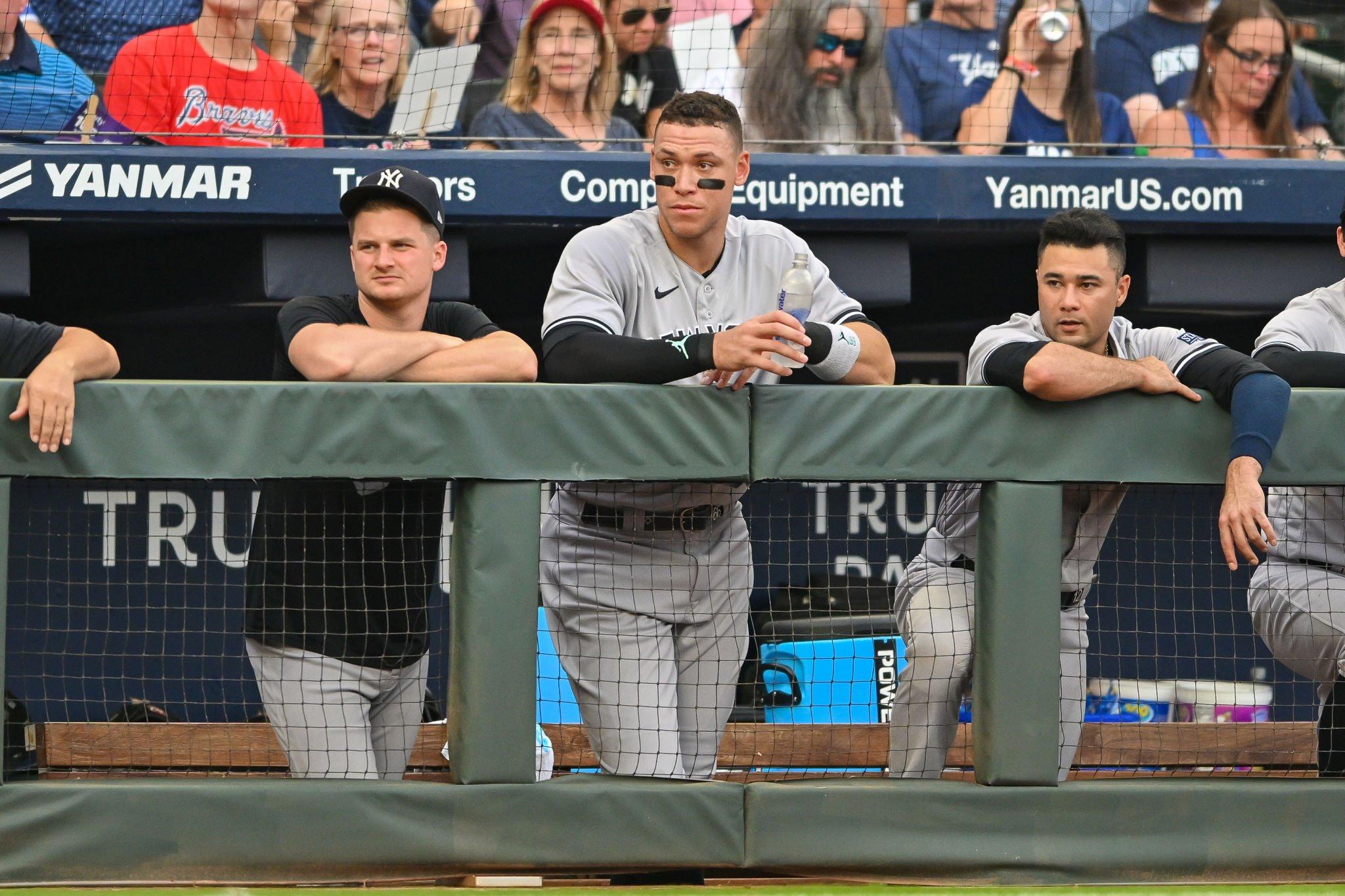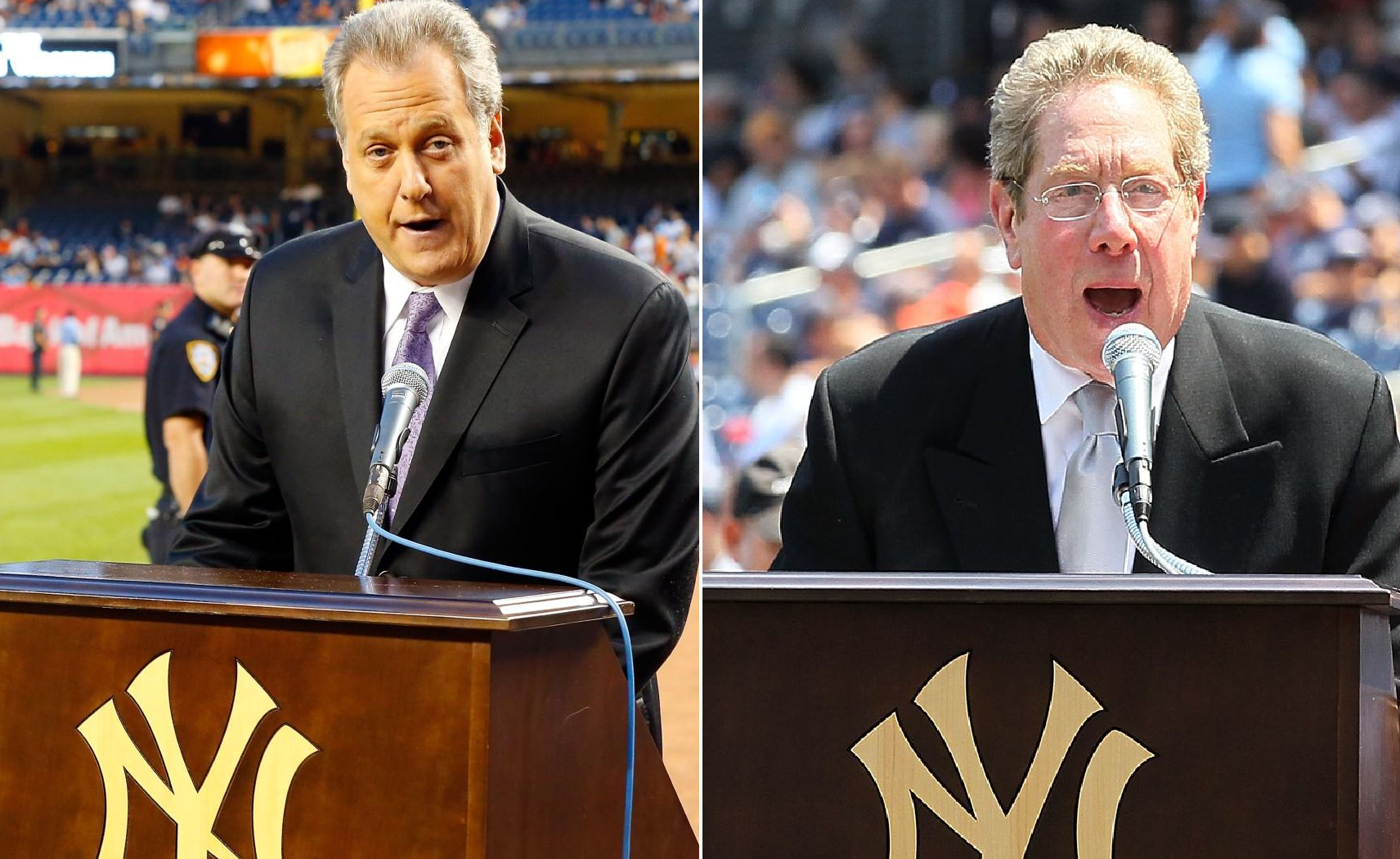
In a broadcasting career spanning decades, few moments have showcased Michael Kay’s passionate defense of baseball quite like his recent exchange on The Michael Kay Show. The veteran Yankees broadcaster found himself embroiled in a heated debate that cut to the heart of how we evaluate modern baseball stars, particularly regarding New York’s premier power hitters Aaron Judge and Pete Alonso.
Numbers don’t lie: The power perspective
The statistical foundation of the debate is compelling. Since 2019, Aaron Judge has amassed 232 home runs to Pete Alonso’s 226, establishing them as two of baseball’s premier power hitters. These numbers, impressive on their own, set the stage for a broader discussion about value, clutch performance, and financial worth in today’s MLB.
Kay’s frustration boiled over when a caller attempted to diminish these achievements, particularly regarding Judge’s postseason performance. His response was characteristically direct: “Please stop! You’re acting like he’s the worst player of all time, you’re being moronic.”
The Regular season reality check: Judge vs. Alonso

In defending Judge, Kay emphasized a crucial point often overlooked in today’s playoff-centric discourse: “There are 162 games other than the postseason. Everybody seems to forget that. If a player and a team don’t have a great season, they won’t get to the postseason.”
This perspective is particularly relevant in 2025, as both New York teams continue to navigate the challenges of competing in baseball’s most demanding market. Kay’s defense of Judge included a reminder of his clutch performances, including a memorable home run off Cleveland’s Emmanuel Clase, while addressing the Game 5 World Series moment that critics often reference.
“In Game 5 of the World Series, all people remember is him dropping the ball. That happens; it probably will never happen again in his career. He also had two walks, a double, and a home run. So everybody needs to take a deep breath,” Kay noted.
The Alonso equation
The discussion took an interesting turn when addressing Pete Alonso‘s situation. Coming off a 2024 season with 34 home runs, Alonso’s free agency has become one of baseball’s most intriguing storylines. Kay forcefully defended Alonso’s clutch credentials, citing a crucial postseason home run against Milwaukee’s Devin Williams that helped propel the Mets to the NLCS.
“You’re saying that Alonso’s not clutch because he only had 34 home runs in the regular season. But you’re conveniently forgetting that the home run-off Devin Williams against the Brewers changes the whole perspective of the season. They don’t get to the NLCS without that home run,” Kay argued.
Business of baseball in 2025
As baseball’s financial landscape continues to evolve, Kay’s analysis of Alonso’s market value provides a fascinating insight into how teams evaluate talent in 2025. “Alonso has the right to aim for the sky, but when it’s not there, you look dumb,” Kay observed. “What I am blaming is the fans that say the Mets should step up and give more because he’s a homegrown Met. Nonsense! You look at the valuation within your organization of the player.”
Kay’s estimate of Alonso’s worth at $25 million annually, contrasted with the Mets’ apparent valuation of $22-23 million, highlights the complex negotiations modern players face. With Alonso reportedly seeking $30 million per year, the gap between player expectations and team valuations remains a crucial factor in free-agency discussions.
Age, market forces, and future considerations

At 30 years old, Alonso’s position in the market reflects broader trends in how teams value first basemen, particularly those entering their thirties. Kay’s suggestion that Alonso might need to consider a lower-value contract with an opt-out clause demonstrates the strategic thinking required in modern free agency.
“His final option could be to settle for a lower value with an opt-out so that he can renegotiate if he has a good season this year,” Kay suggested, highlighting the importance of flexibility in modern contract negotiations.
The historical context
Kay’s comparison of Judge’s situation to Alex Rodriguez‘s career trajectory offers valuable perspective. Rodriguez’s transformation from postseason struggler to playoff hero in 2009 serves as a reminder that narratives can change quickly in baseball. “I would take Judge 100 years out of 100 years and I’ll take my chances with him one day having a great postseason, just like Alex Rodriguez,” Kay emphasized.
Looking forward: The value proposition
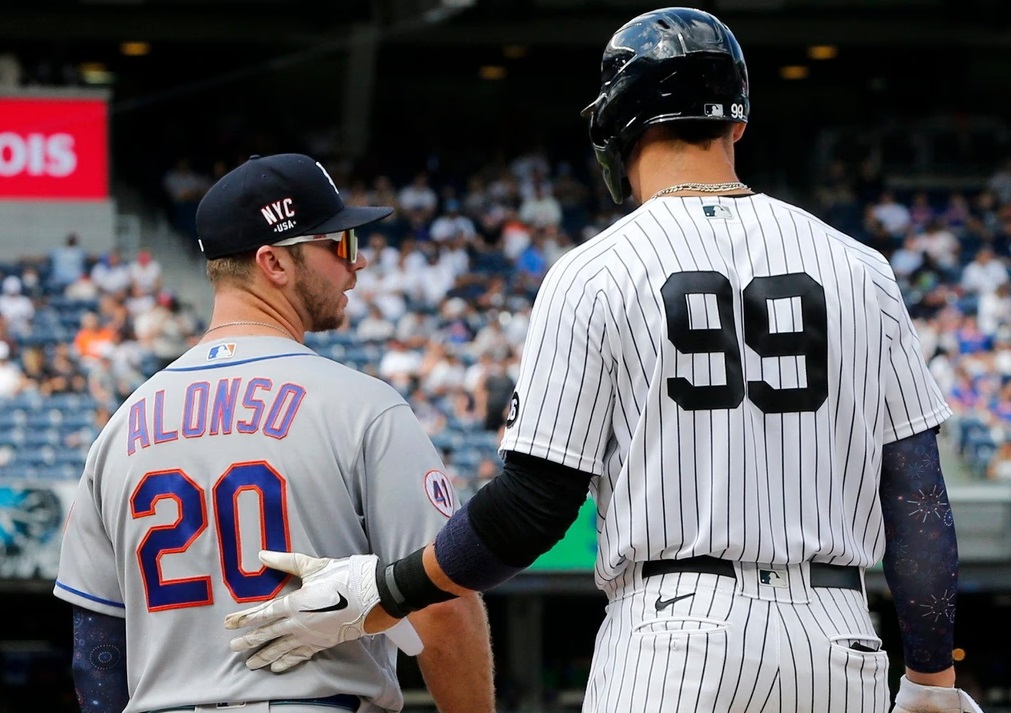
As baseball continues to evolve, the debate over Judge and Alonso’s respective values reflects larger questions about how we evaluate players in the modern era. Their contrasting situations – Judge as the face of the Yankees with a massive contract, Alonso seeking his big payday – represent different stages of the modern player’s career arc.
The comparison between these two sluggers goes beyond simple statistics. It touches on fundamental questions about player development, market dynamics, and the complex relationship between regular-season excellence and postseason performance. Kay’s impassioned defense of both players highlights the nuanced understanding required when evaluating modern baseball stars.
The broader impact
This debate transcends the simple comparison of two power hitters. It speaks to larger questions about how we value players in an era of advanced analytics, massive contracts, and intense media scrutiny. Kay’s willingness to challenge conventional wisdom and defend both players’ contributions demonstrates the complexity of modern baseball analysis.
As the 2025 season unfolds, the legacies of both Judge and Alonso continue to evolve. Their stories serve as compelling examples of how player value is determined in today’s MLB, where statistics, clutch performance, and market forces intersect to shape careers and contracts.
What do you think? Leave your comment below.