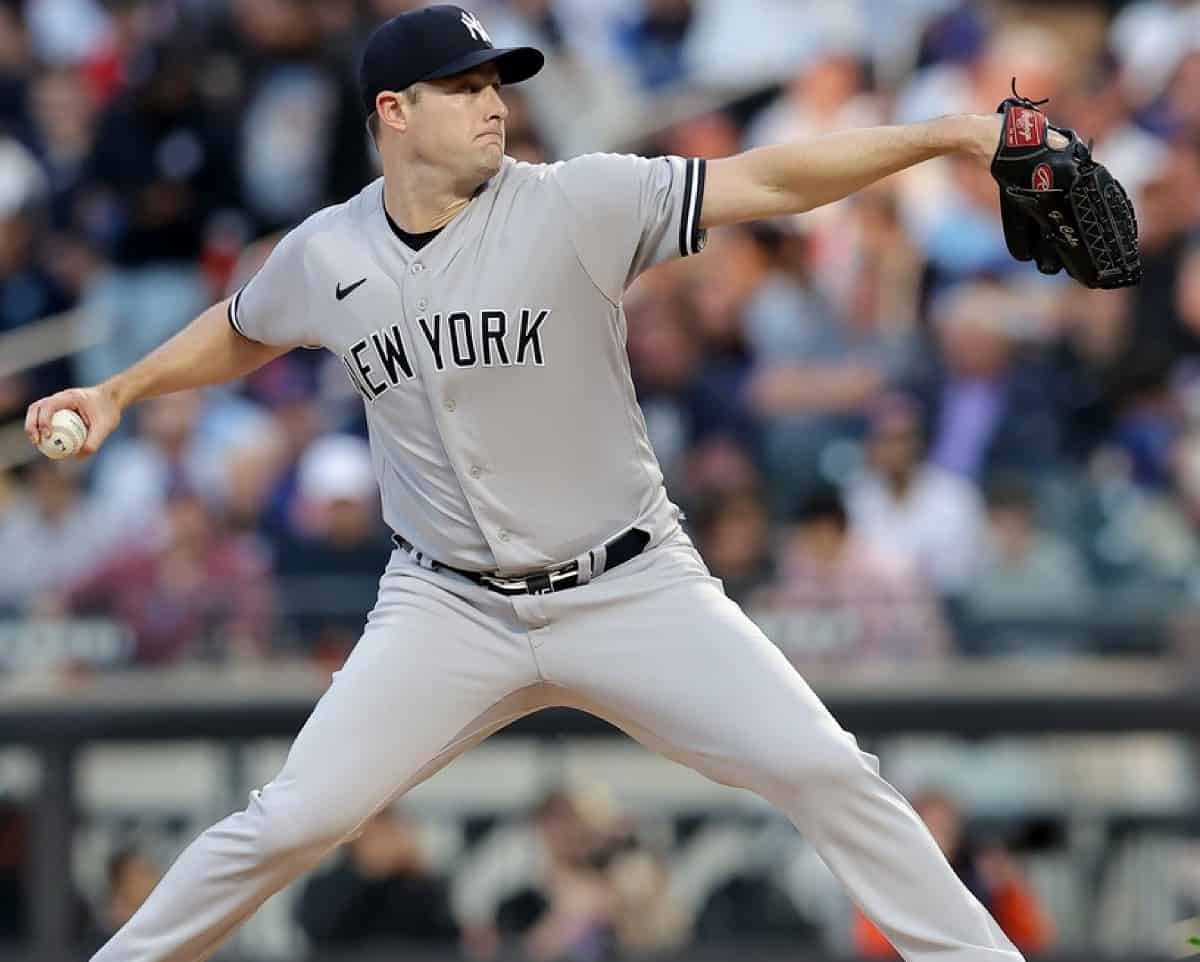
NEW YORK — Trade speculation usually targets a team’s worst contracts, not its best pitchers. So it raised eyebrows when one of the Yankees’ most reliable starters surfaced as a player they might be forced to move. The reason has nothing to do with performance and everything to do with the sport’s uncertain financial future. Carlos Rodon, somewhat improbably, has become a name to watch.
The left-hander has been excellent for the Yankees, which makes the idea of trading him counterintuitive. But a looming change to baseball’s economics could push the team into decisions it would never make otherwise.
A frontline arm few want to lose
Lost in the speculation is just how good Rodon has been for the Yankees. The veteran has quietly turned into one of the more dependable starters in the game.
Aside from a rocky 2023 debut season in pinstripes, the 33-year-old has pitched at a high level, and that has carried into this year after a return from injury. He has shown the same frontline form, giving the Yankees a steady presence behind their other arms. By most measures, he is arguably their second-best starter, the kind of pitcher contenders covet rather than shop.
Why the CBA changes everything
The expected next collective bargaining agreement could introduce salary constraints, and that possibility is reshaping how analysts view rosters across baseball.
If a new CBA forces teams to trim payroll and existing deals are not grandfathered in, the Yankees would have to shed money somewhere. In that scenario, one analyst pinpointed Rodon as the surprising odd man out. The reasoning is about roster construction and the books, not talent. Zachary Rotman of Fansided laid out the thinking, pointing to the money still owed to Rodon.
“The New York Yankees are in an interesting spot,” Rotman wrote. “In an ideal world, they’d find suitors for guys like Ryan McMahon and Giancarlo Stanton who are not on good contracts at all, but there’s a chance they’d look to trade Carlos Rodon instead.”
Rotman was careful to separate the idea from any judgment of Rodon’s ability, framing it purely as a financial and structural call rather than a baseball one.
The money behind the decision
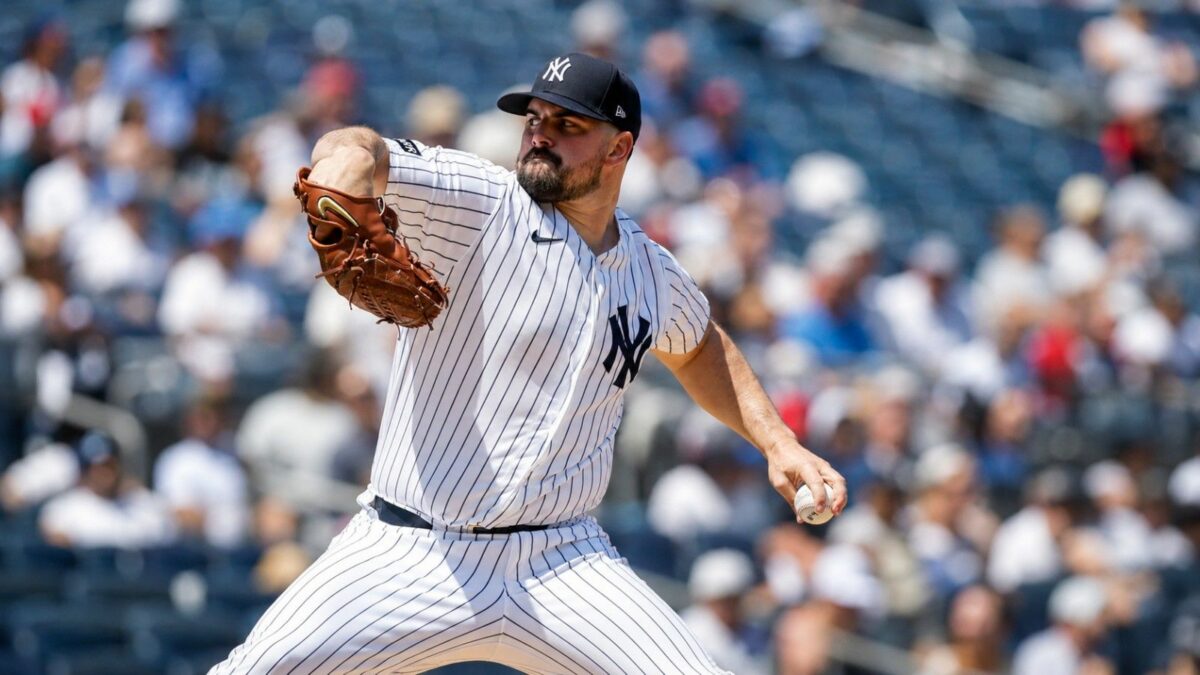
The contract is at the center of it all for the Yankees. Rodon is signed through the next two seasons, with a notable sum still on the books.
He is owed $55.6 million over the remaining two years of his deal, a figure that becomes relevant only if a salary ceiling suddenly forces the Yankees to make cuts. In a vacuum, the Yankees would much rather offload contracts like those of McMahon, who has scuffled at the plate, or Stanton, whose deal and injury history have long been viewed as burdensome. The problem is that finding takers for those contracts is far harder than moving a productive starter like Rodon, whose deal other teams would actually want.
A move that may not make sense
Even with the financial logic laid out, the idea runs into an obvious contradiction for the Yankees. They are a win-now team, and pitching is always at a premium.
Trading away arguably their second-best starter would undercut their core goal of contending for a championship. The Yankees always need pitching, and dealing a frontline arm to satisfy a salary requirement would weaken the very part of the roster that has carried them this season. It is the kind of move that solves a cap problem while creating a much bigger competitive one.
A scenario still far from certain
It is worth stressing that this remains hypothetical for the Yankees. The entire premise hinges on a new CBA that does not yet exist and on terms that have not been finalized.
There is a widespread expectation that existing contracts would be grandfathered in under any new agreement, which would render the whole Rodon question moot. Only if that protection fails to materialize would the Yankees face this kind of dilemma.
For now, the speculation is a window into how front offices and analysts are gaming out baseball’s potential future, with the Yankees as a prime example given their payroll. Rodon is not going anywhere imminently, and the most likely outcome is that he keeps anchoring the rotation.
But the mere fact that one of their best pitchers is being floated as a salary casualty shows just how much uncertainty the next CBA could bring to the Yankees and the rest of the league.
What do you think? Leave your comment below.