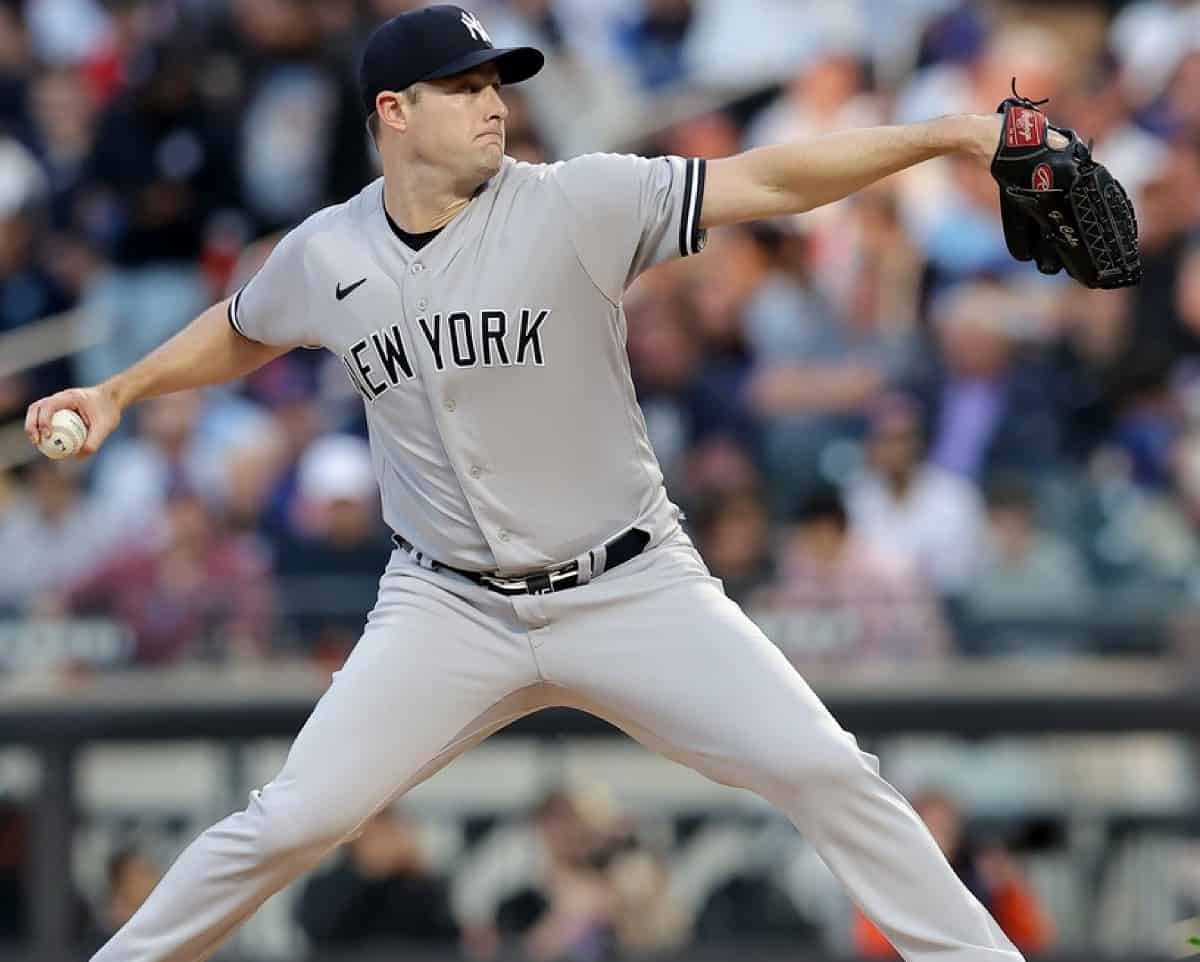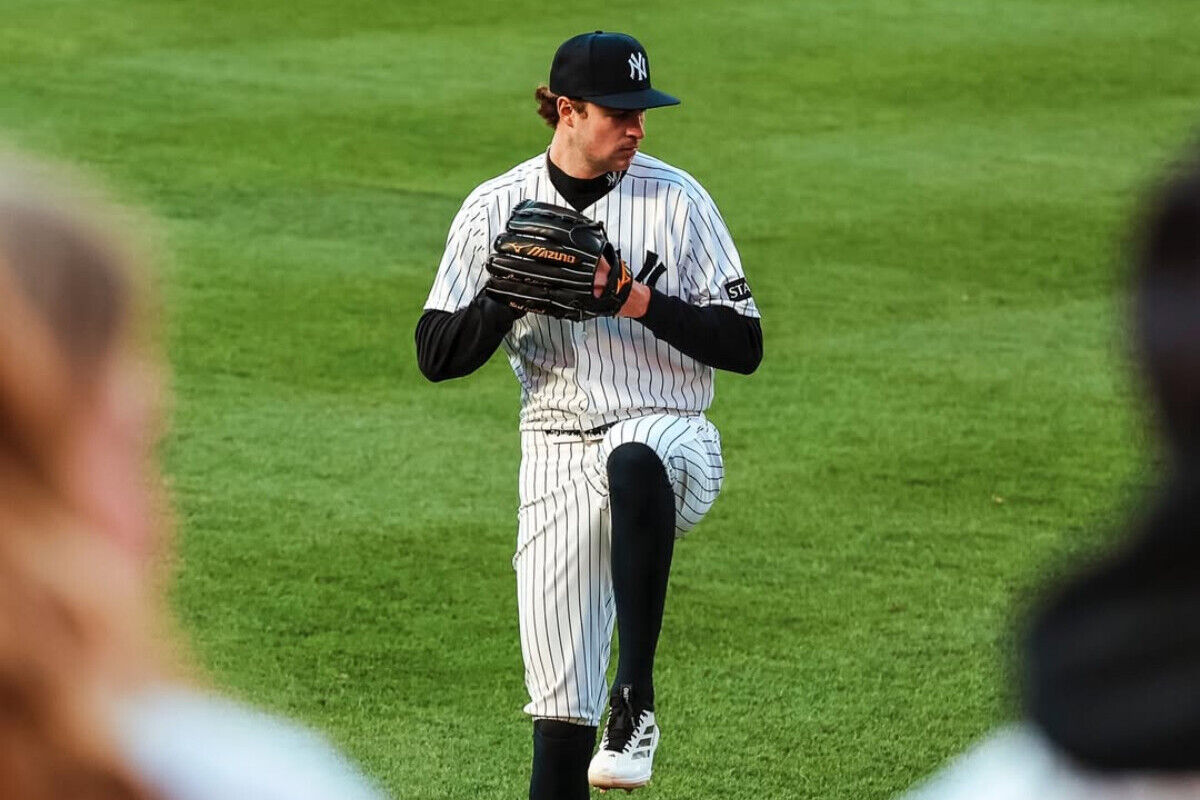
NEW YORK — The rest of baseball keeps chasing the perfect breaking ball. Cam Schlittler decided he did not need one.
The sport spent the last decade teaching pitchers to spin the ball, to bury sliders and sweepers and let the fastball fade into a change of pace. The trend produced strikeouts and sore elbows in equal measure. Schlittler looked at all of it and walked the other way.
A year ago, the Yankees right-hander heard the same critiques of his breaking pitches that every young arm hears. Instead of fixing them, he mostly set them aside and leaned harder into the one thing he already did better than almost anyone.
The result has been one of the quietest great seasons in the American League, built on a philosophy that sounds like a mistake.
Schlittler is throwing fastballs roughly 90% of the time, and it has turned him into a Cy Young contender in his first full season. He leads the American League with a 2.19 ERA across 152 innings, has struck out 31.4% of the hitters he has faced and walked just 5.6%. Among Yankees starters over the past decade, only elite Gerrit Cole and Luis Severino seasons have graded out better.
The approach cuts against everything modern pitching development preaches. It has also made the 25-year-old one of the most valuable pitchers in the sport, and the Yankees’ unlikely anchor down the stretch of a tight postseason race.
One fastball became three, and hitters stopped guessing
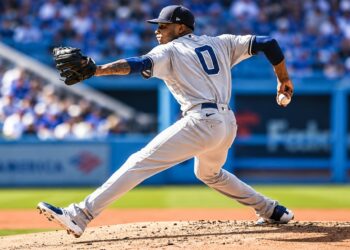
The trick is that Schlittler does not throw one fastball. He throws three. A four-seamer sits at the top of the zone and flirts with triple digits. A cutter bores in on the hands. A sinker runs the other way and drops.
That variety is what makes the heavy fastball diet work. A hitter can know velocity is coming and still be wrong about which way the ball will move. The Yankees essentially handed Schlittler three pitches that all read as the same pitch out of his hand.
It is the same problem hitters face against Garrett Crochet, a comparison that does not get handed out lightly. His three fastballs give him enough distinct movement to survive without leaning on a traditional breaking ball.
His path here was not a prospect fast track. The Yankees took Schlittler in the seventh round of the 2022 draft out of Northeastern, where he was the Coastal Athletic Association’s rookie of the year and a freshman All-American. He climbed slowly, then got his opening in July 2025 when a Clarke Schmidt injury cleared a rotation spot. He seized it, and even won a postseason start against Boston as a rookie.
The analyst who called the strategy ‘unhinged’
The plan is jarring enough that even the analysts praising it reach for blunt language. One statistical breakdown of pitchers exceeding expectations this season framed Schlittler’s choice as the deliberate abandonment of everything he was told to develop, and did not soften it.
“Schlittler noted the feedback on his breaking pitches a year ago. Unlike [Jacob] Misiorowski, he’s abandoned all pretense and is now throwing 90% fastballs. Sounds unhinged. But because he throws three of them, the primary four-seamer plus a cutter and a sinker, hitters are running into the same problem they experience facing Garrett Crochet, not a comp anyone can give lightly.”
The Misiorowski comparison matters. The Brewers flamethrower kept chasing swing-and-miss with premium breaking stuff. Schlittler went the other way and simplified, betting that three fastballs beat two mediocre breaking balls. Five months in, the bet has paid off in a way few saw coming.
The hidden number: Fifth-best Yankees season in a decade, and climbing
Schlittler’s 4.9 fWAR leads all American League pitchers, and it already ranks among the five best Yankees pitching seasons of the last 10 years. The only campaigns ahead of it belong to Severino in 2017 and 2018 and Cole in 2021 and 2023, two pitchers who finished near the top of Cy Young voting.
The rate stats carry him into that company. Schlittler’s 2.19 ERA and 2.58 FIP both top every Yankees season in that group, even the ones with more accumulated value. His 31.4% strikeout rate and 5.6% walk rate would look at home on any ace’s page.
There is still room to climb. Schlittler has averaged about 0.19 fWAR per start this year. With six or seven starts left, that pace points toward a 6.0-fWAR finish, which would leapfrog Severino’s 2017 as the best Yankees pitching season of the last decade. A number that sounded absurd in spring is now within reach.
What Schlittler means for Yankees’ postseason push
The timing could not be sharper for the Yankees. The rotation has spent the season absorbing injuries, and Schlittler has become the arm the club trusts most in a pennant race that has left little margin. He gives the Yankees a genuine front-line starter to run out in October if they get there.
He also sits in the middle of a two-man AL Cy Young race. Schlittler leads the league in ERA and innings. His chief rival, Dylan Cease of the Blue Jays, leads in strikeouts and FIP. The margins are thin, and voters may not settle it until the final week.
That race turns personal this weekend. The Blue Jays visit Yankee Stadium for a three-game series, and the schedule lines up Schlittler and Cease to pitch in the same set. For a Yankees club chasing Tampa Bay in the AL East and holding postseason position, few starts carry more weight.
For now, Schlittler keeps doing the thing the sport spent a decade teaching pitchers not to do, and keeps getting away with it. The fastball usage has not dipped. The results have not slipped. The strategy that sounded reckless in April looks like a blueprint in August.
The Yankees have a Cy Young candidate who barely throws a breaking ball, an AL ERA lead built on pure velocity, and a starter climbing a franchise leaderboard he had no business reaching this fast. Whether he catches Severino’s 2017 will be decided over his final starts, beginning with the pitcher standing in his path this weekend.
What do you think? Leave your comment below.