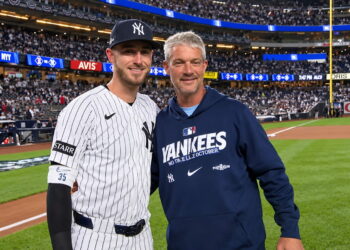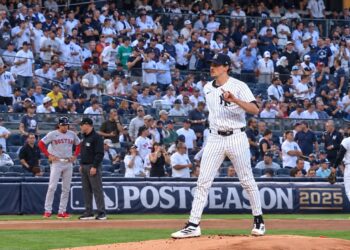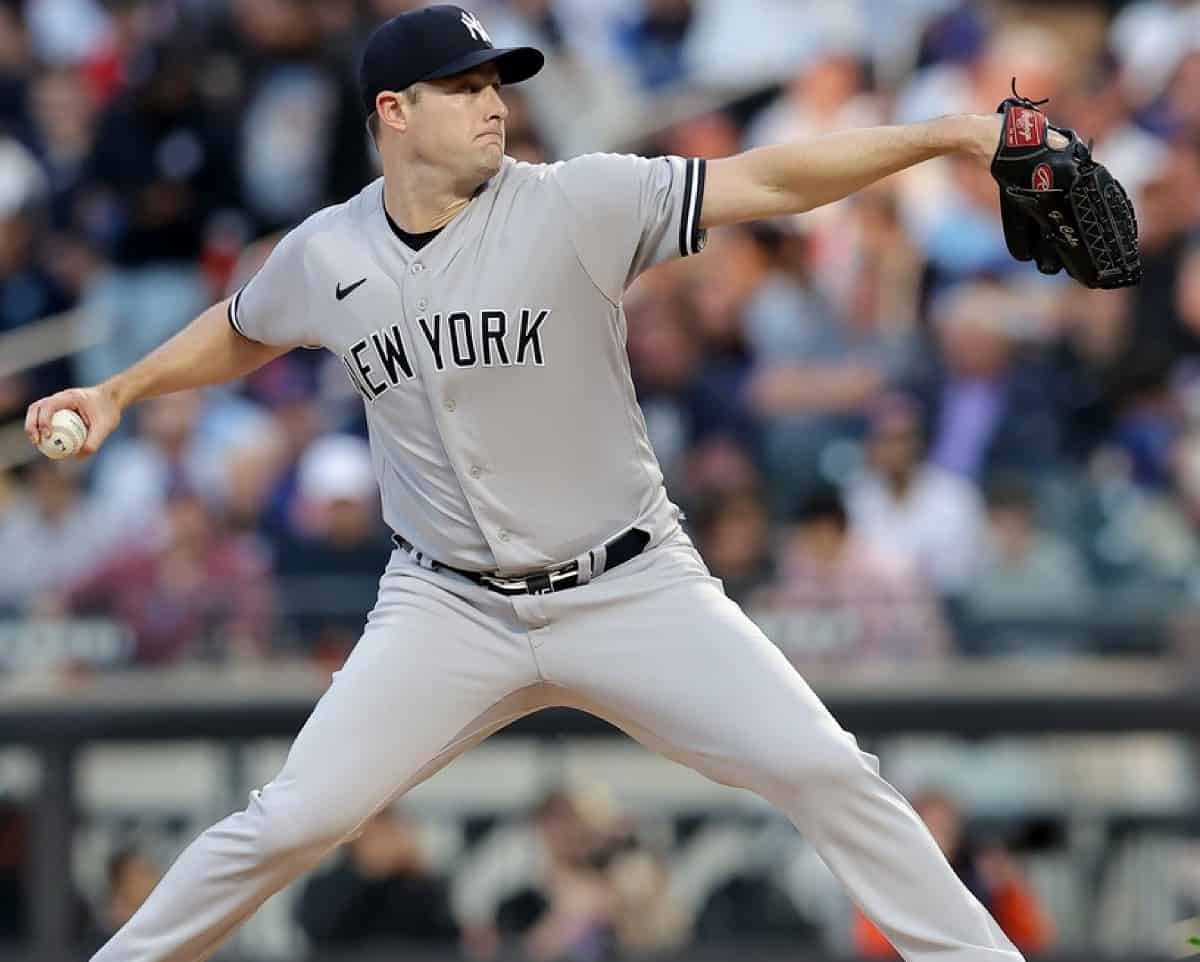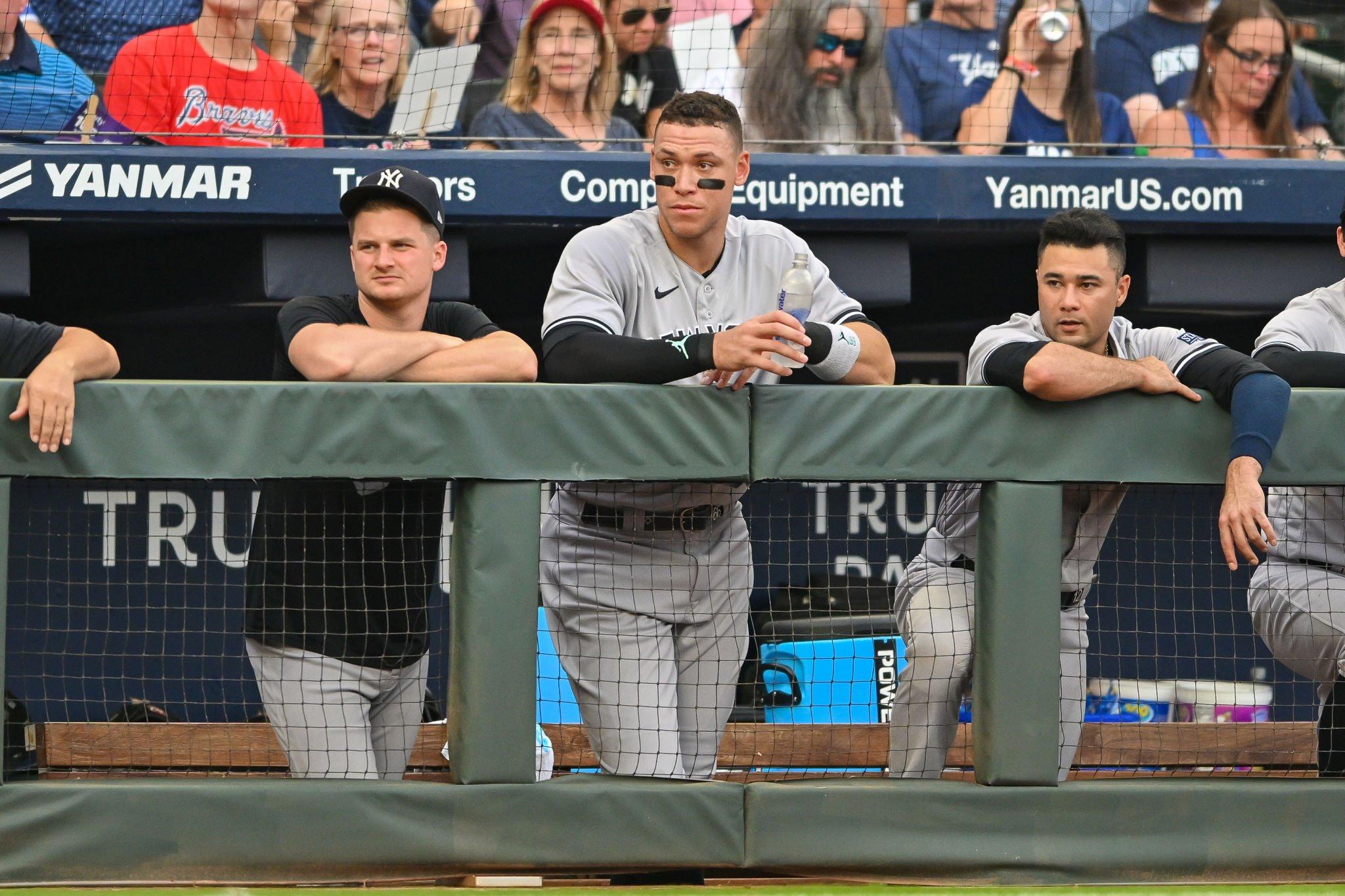
NEW YORK — The Yankees spent two nights bludgeoning Boston, but the most important clue about how Aaron Boone wants this postseason played was buried inside the details of the sweep. New York scored 18 runs, collected 26 hits and never needed a save while eliminating the Red Sox in two games at Yankee Stadium. The obvious story was power. The more revealing one was how many different ways the Yankees created pressure before the biggest swings arrived.
Game 2 made that especially clear. Max Fried beat Sonny Gray in a 9-2 clincher, working six innings of one-run ball before the Yankees pulled away with a six-run sixth. Luis García Jr. homered in the fourth and Cody Bellinger later delivered the decisive three-run shot. Yet the inning that ended Boston’s season had already tilted long before Bellinger’s ball cleared the right-field wall.
The Yankees forced Boston to defend every inch of the field. Spencer Jones turned a strikeout into a baserunner after a challenge overturned the out call at first. George Lombard Jr. followed with a two-strike RBI single. Jazz Chisholm Jr. added another two-strike hit. Trent Grisham dropped down a bunt and beat it out. Austin Wells produced a sacrifice fly, and Ryan McMahon brought home another run with a slow grounder that could not become a double play.
That sequence matters because the Yankees now move from one AL East rival to another. That versatility can matter even more in a short series. Tampa Bay, which won the division at 98-64, built much of its identity around pressure, contact and forcing defensive mistakes. New York will open the AL Division Series on Saturday at Tropicana Field after finishing the regular season with 93 wins and then overwhelming Boston. The Yankees showed against the Red Sox that their lineup can do more than wait for a homer.
Boone identifies Yankees’ extra postseason weapon
The element Boone singled out afterward was the stolen base. Speaking after the sweep, the Yankees manager framed aggressive baserunning as a postseason tool that complements the club’s traditional power identity.
“We played great baseball. We’re the Bronx Bombers, but we’ve used the stolen base a lot. It’s a weapon for us.”
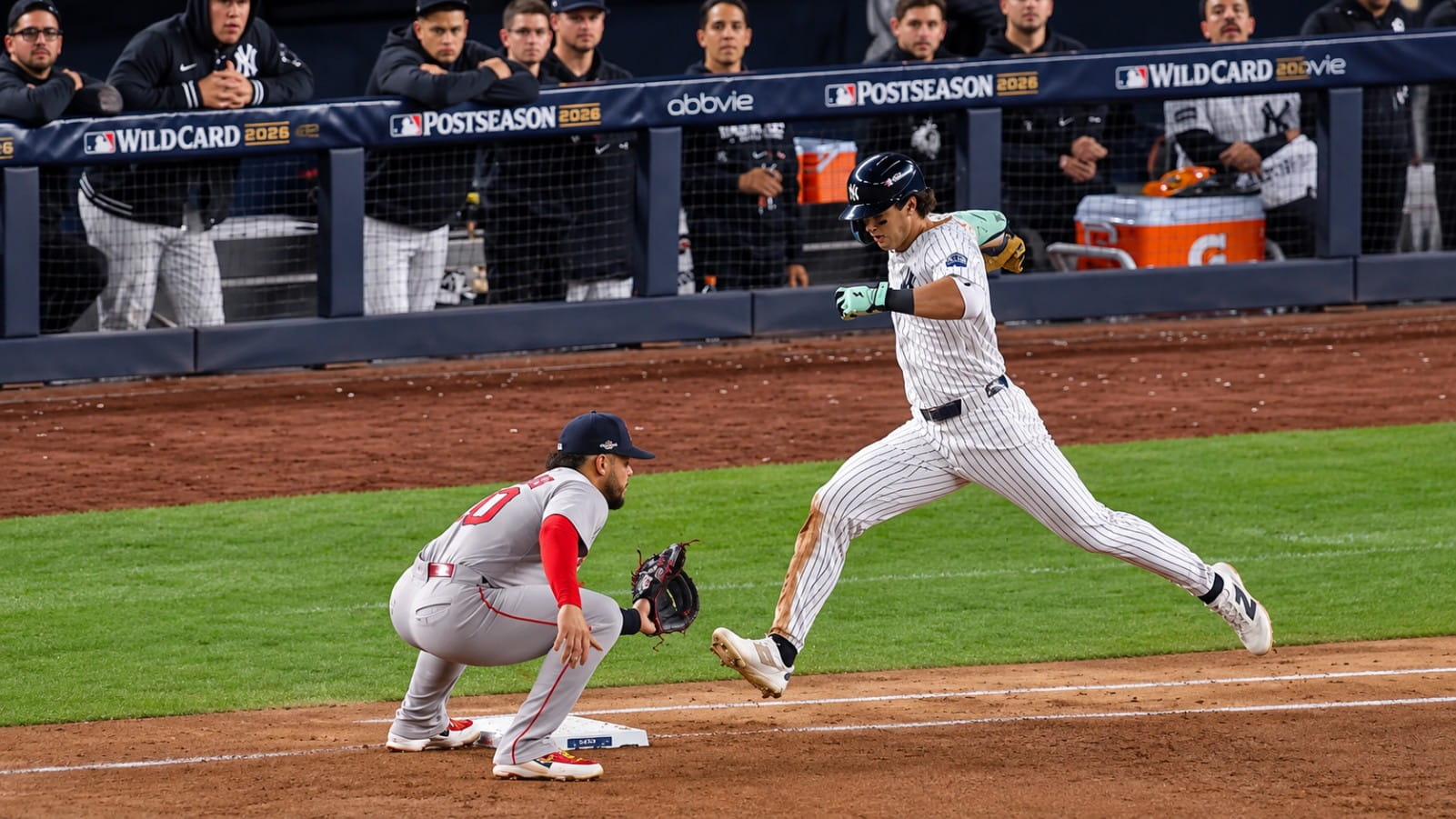
The description was not theoretical. Jones stole second in the sixth inning, then reached third when Adley Rutschman’s throw skipped into center field. He scored on Lombard’s single. In the seventh, the Yankees added three more steals, including a double steal, giving them four in the clincher without being caught.
Yankees speed is closer to Tampa Bay than stereotype suggests
MLB’s final regular-season team statistics show the Yankees stole 153 bases, second in the American League behind Tampa Bay’s 164. New York was caught 49 times, while the Rays were caught 54 times. That works out to a 75.7% success rate for the Yankees and 75.2% for Tampa Bay.
That gap is only 11 steals across an entire season. It makes the coming ALDS more than a matchup between one club known for power and another associated with movement. The Yankees now have evidence that they can challenge Tampa Bay in one of the areas the Rays use to create stress.
New York’s four steals in Game 2 were more than four times the club’s regular-season per-game rate of 0.95. In a short series, that kind of concentrated pressure can change how pitchers hold runners, how catchers call sequences and how middle infielders position themselves. It can also create fastball opportunities for hitters behind the runner.
Boone liked the inning before a home run ended it
Boone’s broader point after Game 2 was that the sixth inning worked because the Yankees stacked winning plays. He highlighted Jones’ hustle, the baserunning, balls put in play and the bunt execution before Bellinger provided the loudest moment.
“I thought we did a lot of good things offensively,” Aaron Boone said, “whether it was obviously a couple big long balls, Spencer legs out a strikeout to start the big inning, the stolen base comes into play, we put some balls in play, a couple of really well-executed bunt situations. I told those guys, we play like that, we have a chance to beat anybody.”
The result was a lineup that produced 14 hits in the clincher, 12 of them singles. The Yankees still hit two home runs, but they did not need every scoring opportunity to begin or end with one. Boston’s bullpen was forced to pitch with runners moving, defenders reacting and outs becoming harder to secure.
A postseason wrinkle arrives before Rays series
The Yankees will not abandon what made them dangerous over 161 regular-season games. MLB’s final numbers credit New York with 223 home runs, among the highest totals in baseball. The point is that Boone now has another lever to pull when October games tighten and one swing is harder to find.
That becomes more relevant against Tampa Bay. The Rays allowed opponents little margin during a 98-win season, and the Yankees went 153-for-202 in stolen-base attempts during the regular season. New York’s willingness to run in the wild-card round suggests Boone is prepared to test pitchers and catchers rather than simply wait for extra-base damage.
The Red Sox saw the prototype. A dropped third strike became a challenge, a challenge became a steal, the steal became an extra 90 feet, and the inning became a six-run avalanche. The Yankees now carry that same pressure game into Tropicana Field, where the next opponent already knows exactly how dangerous that style can be.
What do you think? Leave your comment below.