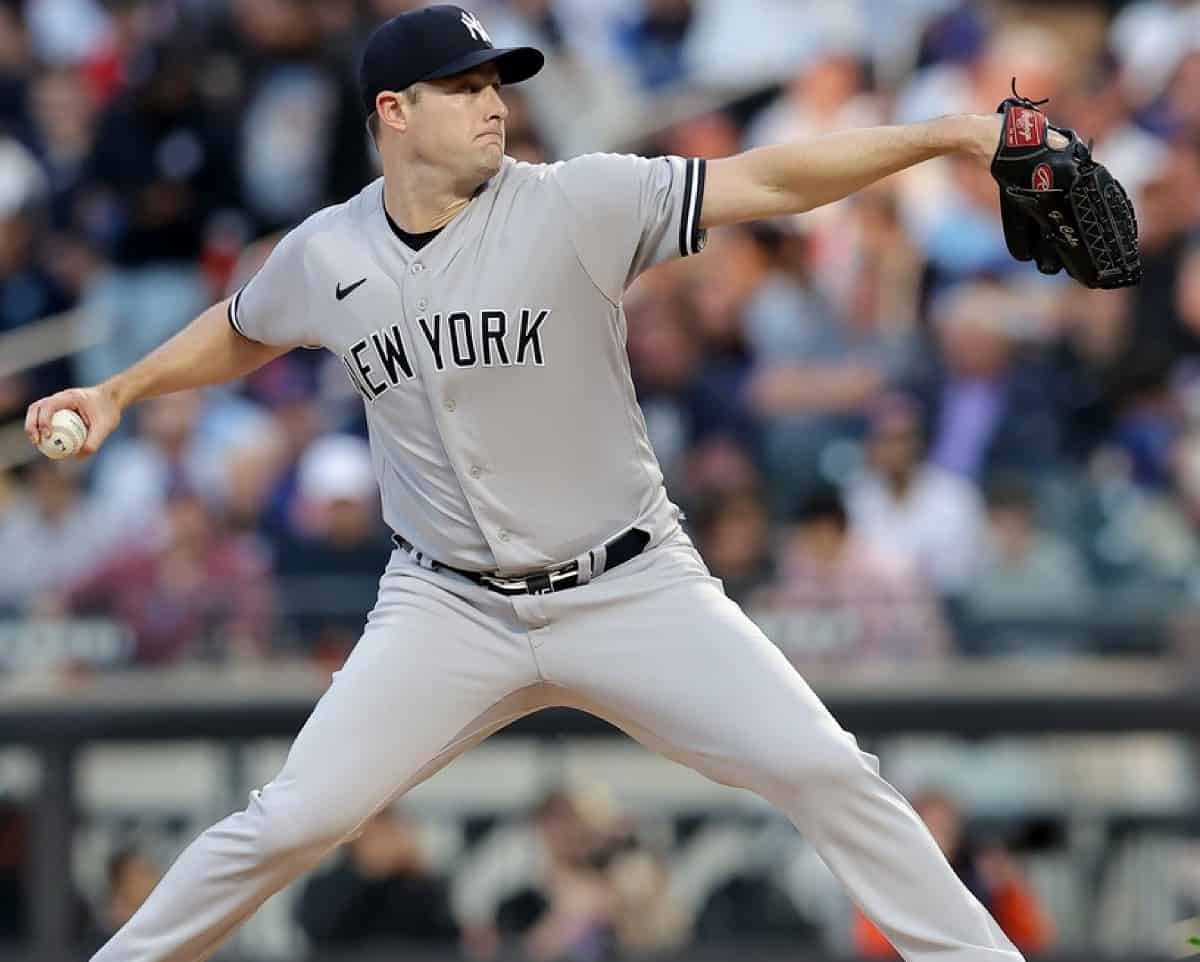
NEW YORK — In late March 2025, the New York Yankees walked onto the field carrying bats that looked different from anything anyone had seen before. The barrel was wide in the middle, tapered toward the tip, fat where a regular bat is thin. Strange-looking lumber.
Then they hit nine home runs in a single game.
The baseball world went sideways. Were these bats legal? Were they cheating? Were the Yankees about to break the home run record every week? The torpedo bat, as it came to be known, went viral almost overnight and touched off a debate that has been simmering across the sport ever since.
Now, for the first time, science has an answer. And it is not exactly what the torpedo bat believers were hoping to hear.
Three researchers, one air cannon and a lot of maple wood
The research team consists of Lloyd Smith, Sports Science Laboratory director at Washington State University; Alan Nathan, professor emeritus at the University of Illinois; and Daniel Russell from Penn State. They call themselves the Three Amigos and have worked together on bat physics for more than two decades. Their findings will be presented at the International Sports Engineering Association conference June 1 through 4 in Pullman, Washington.
For the study, the team built two standard maple bats and two torpedo-shaped maple bats, all matched to the same swing weight. They fired baseballs from an air cannon at stationary bats, then used cameras and sensors to measure exactly how much energy each bat returned to the ball at contact.
The result? Nearly identical.
“It was actually pretty phenomenal how close they were,” said Smith.
How each researcher tackled the problem differently
The three researchers approached the work from different angles. Nathan handled the computational side, running simulations and specifying what the other two should test. Smith ran the physical experiments, firing baseballs at the bats and measuring what happened at impact. Russell focused on the bats’ vibrational behavior using modal analysis.
“I feel like Nathan is the brains of the operation, and I’m the brawn,” Smith told the Daily Illini.
Nathan, now a professor emeritus, has spent decades researching the physics of baseball. His interest in torpedo bats did not fade the way public interest did after the first few weeks of the 2025 season.
“There was a lot of stuff written about this in the first two, three weeks of the season, and then the interest died out, but not my interest,” Nathan said.
The verdict: no power advantage, just a shifted sweet spot
The research found one meaningful difference: the sweet spot on the torpedo bat sits about a half inch closer to the handle than on a traditional design.
The sweet spot is the section of barrel where contact returns the most energy to the ball. The torpedo design removes wood from the low-performing tip and shifts that mass toward the sweet spot. The concept came from Aaron Leanhardt, a former MIT-trained physicist who worked as a Yankees hitting analyst before moving to the Marlins organization.
For hitters who naturally make contact closer in, the shifted sweet spot gives a wider contact zone and could raise batting averages. But on raw distance, Smith says the torpedo does not deliver.
“If you’re comparing both bats at the sweet spot, the ball hitting the torpedo bat is going to be traveling a little bit slower than the standard bat, so it will hit the ball not quite as fast or as far,” Smith said.
The bats feel identical in the hands because they share the same swing weight.
So what explains nine home runs in one game?
That is the uncomfortable question the research raises.
When the Yankees hit nine home runs against the Brewers on March 29, 2025, five players using torpedo bats accounted for all nine of them. It was a franchise record. The reaction was enormous. Competing players complained. Fans debated legality. The bats became the story of the early season.
The new laboratory data suggests the torpedo shape alone does not account for that kind of output. The researchers found that natural wood variability between individual bats may matter more than the torpedo design itself. Wood, even carefully chosen maple, is not a uniform material. Density, stiffness, and vibrational properties vary from tree to tree and log to log. Two torpedo bats cut to identical specifications in the study ended up with different inertial properties, and one of them performed more like a standard bat while the other showed a wider sweet spot. The researchers are still working out why.
The implication is significant: some of what made the Yankees’ nine-homer game so spectacular may have had more to do with which pieces of maple happened to be cut that way than with the torpedo shape itself.

Judge always had doubts, and the numbers backed him up
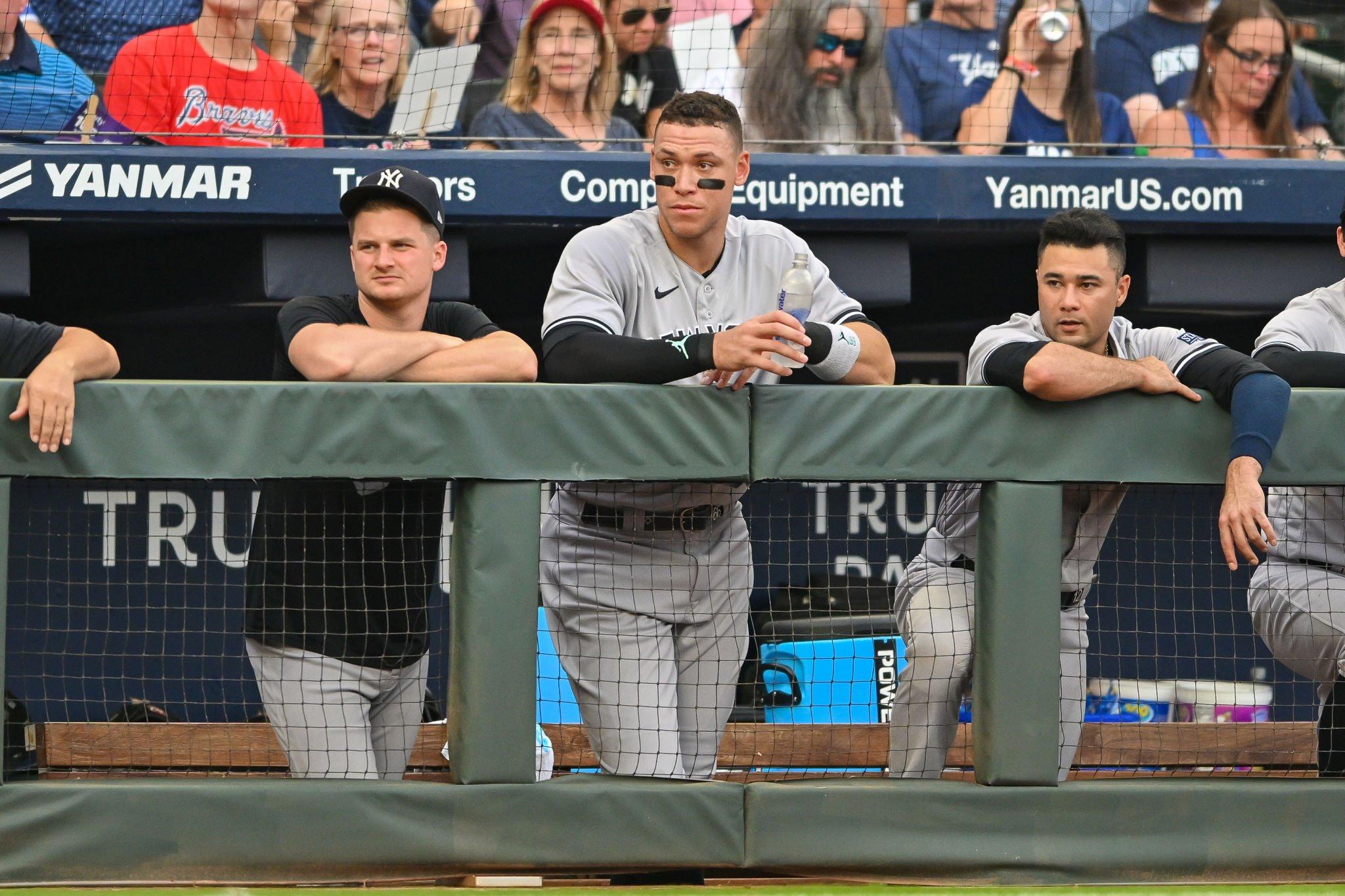
Interestingly, the Yankees’ own captain was skeptical of the torpedo bat from the start. Aaron Judge was one of only three Yankees hitters in that nine-homer game who stuck with a traditional bat. He hit three of his own in the same contest.
When asked about the torpedo bat last May, Judge was unmoved by the hype.
“The past couple of seasons kind of speak for itself,” Judge told ESPN. “Why try to change something?”
Judge hit a then-AL-record 62 home runs in 2022, 58 in a 2024 MVP season and 53 in a 2025 MVP season, all with a traditional bat. He is off to another strong start in 2026, having already homered three times in the first seven games using conventional lumber.
Wood is wood, but the Yankees keep refining anyway
Despite the findings, the Yankees have not walked away from the torpedo. Their analytics staff now customizes bat profiles based on individual swing paths. For contact hitters who naturally hit the ball closer in, the shifted sweet spot is a genuine benefit. Because the torpedo barrel is wider precisely in that zone, those hitters make contact more consistently, which can push batting averages higher even if the ball does not travel any farther.
Smith was not surprised by the overall results. He has studied bats for two decades and watched the same cycle play out before. The debate over ash versus maple bats consumed baseball for years. Before that, there were other supposed breakthroughs. The answer was usually the same.
“Wood is wood,” Smith said. “When it comes to baseball, there’s not a lot you can do with wood. If your goal is to keep the game steady and consistent and not have a lot of change, wood bats are good.”
He added one note that might surprise anyone who tuned out of the torpedo bat story after 2025.
“It was just fun and exciting that there was interest in the wood bat,” Smith said.
The torpedo bat is not going away. For the right hitter with the right swing path, the shifted sweet spot is a meaningful edge. But the nine-homer game by the Yankees launched a thousand headlines? Science says the wood likely mattered as much as the shape.
What is your opinion?