NEW YORK — When the Yankees acquired Jake Bird at the trade deadline, the move barely registered with fans. No headlines. No fanfare. Just a collective shrug from a Bronx faithful hoping for something bigger.
Then Bird struggled. Then he got sent to Triple-A. Then everyone forgot about him. But the Yankees have not forgotten. They believe the 30-year-old sinkerballer could become one of their most important bullpen arms in 2026.
A rocky start in the Bronx

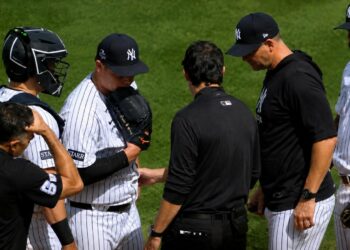
Bird’s debut with the Yankees was a disaster. He allowed seven runs in just two innings across his first three appearances. His introduction to Yankee Stadium included giving up a grand slam to the Marlins’ Kyle Stowers. Then came a walk-off three-run homer to Josh Jung in Texas.
Five days after acquiring him from the Rockies on July 31, the Yankees optioned Bird to Triple-A Scranton/Wilkes-Barre. It looked like a failed experiment. The trade cost them two prospects, Roc Riggio and Ben Shields. What did they get back? A reliever heading to the minors.
The Yankees saw something different. They believed Bird was simply exhausted. He had made 45 appearances for Colorado before the trade. His 55.1 innings ranked seventh among all MLB relievers at that point. The tank was empty.
Why the Yankees remain high on Bird
General manager Brian Cashman did not acquire Bird because of his 4.73 ERA with the Rockies. He looked deeper. The underlying numbers told a different story. Bird’s expected ERA sat at 3.59. His FIP was a healthy 3.45. Those splits suggest a pitcher who suffered from playing half his games at Coors Field.
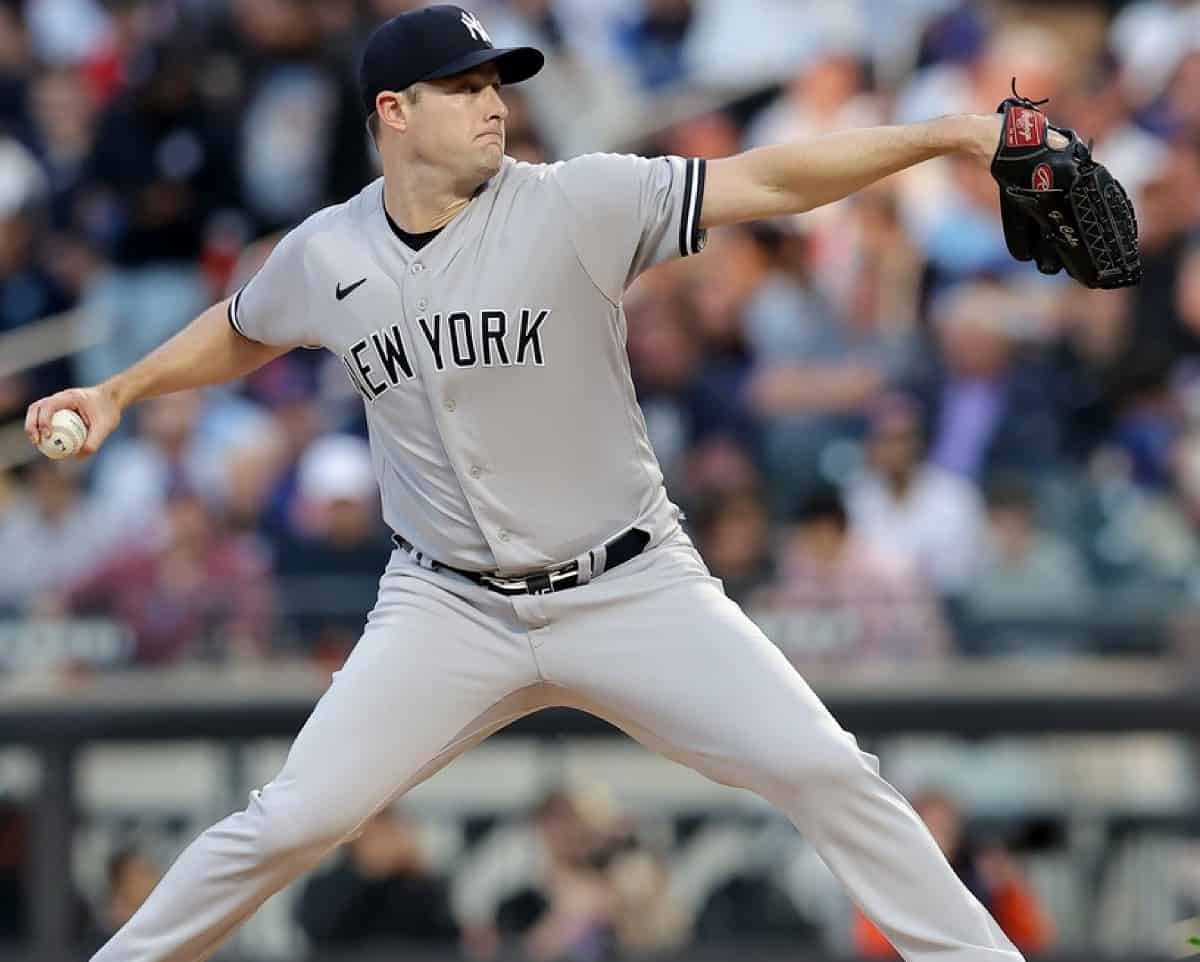
The 30-year-old is a ground ball pitcher with a low-slot, sidearm delivery. His sinker averages 96 mph with significant tailing action. He throws it about 45 percent of the time. When located properly at the bottom of the zone, it induces weak contact and double plays.
Bird also features a sweeper, curveball, slider, and cutter. His 10.5 strikeouts per nine innings showed he could miss bats. The stuff was never the problem. The execution was.
The Yankees have a plan to fix him
The organization believes Bird overused his sweeper in 2025. Opponents hit .257 with a .457 slugging rate against that pitch. It caught too much of the plate. It hung. It got mashed.
The Yankees’ plan for 2026 involves simplifying Bird’s attack. The goal is to prioritize the sinker low in the zone to get ahead in counts and then utilizing his slider more aggressively as a chase pitch off the plate.
By reducing the usage of less effective offerings and focusing on his two best weapons, the Yankees believe they can turn his raw stuff into consistent outs. Bird worked on a cutter in Triple-A late last season. That pitch showed a .188 expected weighted on-base average and 41.2 percent whiff rate against minor league hitters.
Rest and reset should help
The transition from Coors Field to Yankee Stadium is notoriously difficult. Pitchers struggle to adjust. The ball moves differently at sea level than at 5,280 feet. Bird arrived in New York already worn down from a heavy workload.
A full offseason changes everything. Bird will have time to rest his arm. He will have time to work with the Yankees pitching lab on his mechanics and pitch mix. He will have time to get comfortable in his new home.
The demotion to Triple-A was not a punishment. It was a necessary reset. The Yankees wanted their pitching development staff to work with Bird away from the pressure of a pennant race.
The contract situation makes him valuable
Bird remains under team control through 2029. That matters in an era where elite relief pitching costs a premium in free agency. Luke Weaver left for the Mets. Devin Williams is gone. The Yankees need cheap, controllable arms.
If the Yankees can unlock Bird’s potential, they get a high-leverage arm for years without breaking the bank. They already have Camilo Doval and David Bednar under control for 2026. Adding a rested and retooled Bird gives them another option.
FanGraphs projects Bird to produce a sub-4.00 ERA in 2026. That would make him a solid middle-inning option. A bridge to get the ball to the backend arms.
Bird’s background shows resilience

The right-hander was born in Newhall, California, and raised in Valencia. He attended UCLA and led the Pac-12 with a 2.18 ERA as a senior in 2018. He won the All-Pac-12 honors and earned Academic All-America recognition.
“I’m just trying to pitch contact,” Bird said during his college days. “My stuff is pretty heavy, which gets a lot of ground balls. Just let the defense do their thing.”
The Rockies drafted him in the fifth round of the 2018 draft. He made his MLB debut in 2022 and appeared in 70 games for Colorado in 2023. His 84.1 relief innings that year tied for the most among all MLB relievers.
Spring training will tell the story
Bird throws a hefty dose of sinkers and sweepers. He mixes in a cutter, curveball, and four-seam fastball. After finishing last season in the minors, there is no guarantee he breaks camp with the Yankees out of spring training.
But the Yankees clearly believe in him. His 117 Stuff+ rating says his arsenal has above-average quality. His 16.5 percent strikeout minus walk rate is firmly above average. The Yankees just need to get him comfortable in a more controlled environment away from Coors Field.
If a full offseason of rest and a reworked pitch mix can restore his sinker’s bite, Bird could evolve from a trade deadline afterthought into a key bridge option for Aaron Boone. In a bullpen that struggled to a 4.37 ERA last season, the Yankees need every arm they can develop.
Jake Bird might just be the secret weapon nobody saw coming.
What do you think? Leave your comment below.