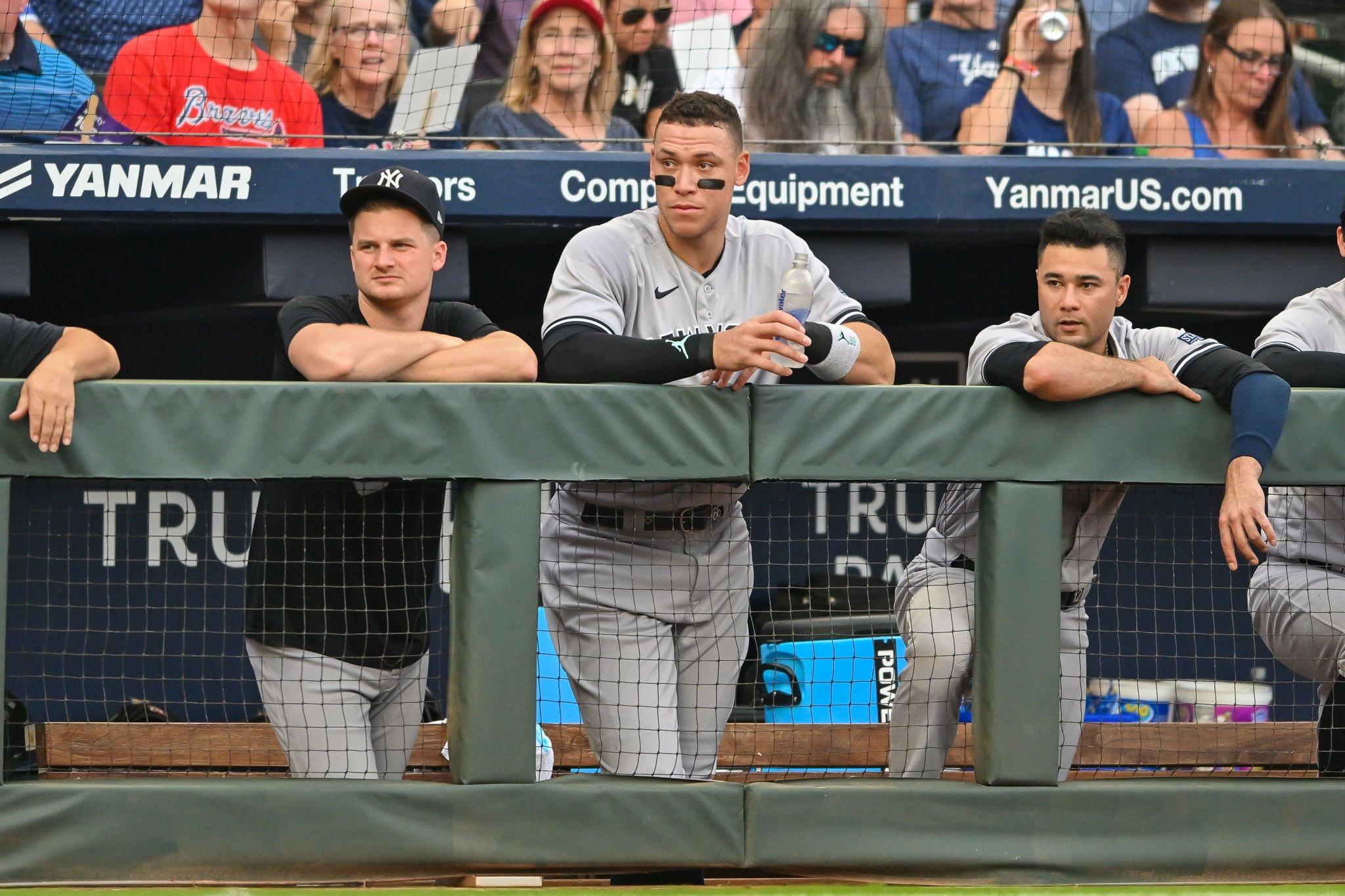
NEW YORK — A ball dropping into shallow center field became an unlikely test of the standards Aaron Boone says govern the Yankees’ clubhouse. Trent Grisham failed to reach Nate Eaton’s hit with enough urgency during the American League Wild Card Series, allowing the Boston runner to stretch it into a double.
The Yankees won the game 9-2 at Yankee Stadium and completed a two-game sweep of the Red Sox. Max Fried kept the moment from becoming costly. Yet the play lingered because it exposed the kind of lapse that can change a tightly contested postseason game.
New York’s comfortable victory over Boston soon gave way to a three-game AL Division Series sweep by Tampa Bay. Four errors in Game 2 against the Rays intensified questions about attention to detail and how the Yankees respond when players fail to execute.
Those questions have followed Boone through repeated postseason disappointments. Former Yankees and fans have criticized a managerial style that seldom includes public reprimands. Boone and the front office insist that correcting mistakes away from cameras produces better results.
The Grisham episode behind accountability debate
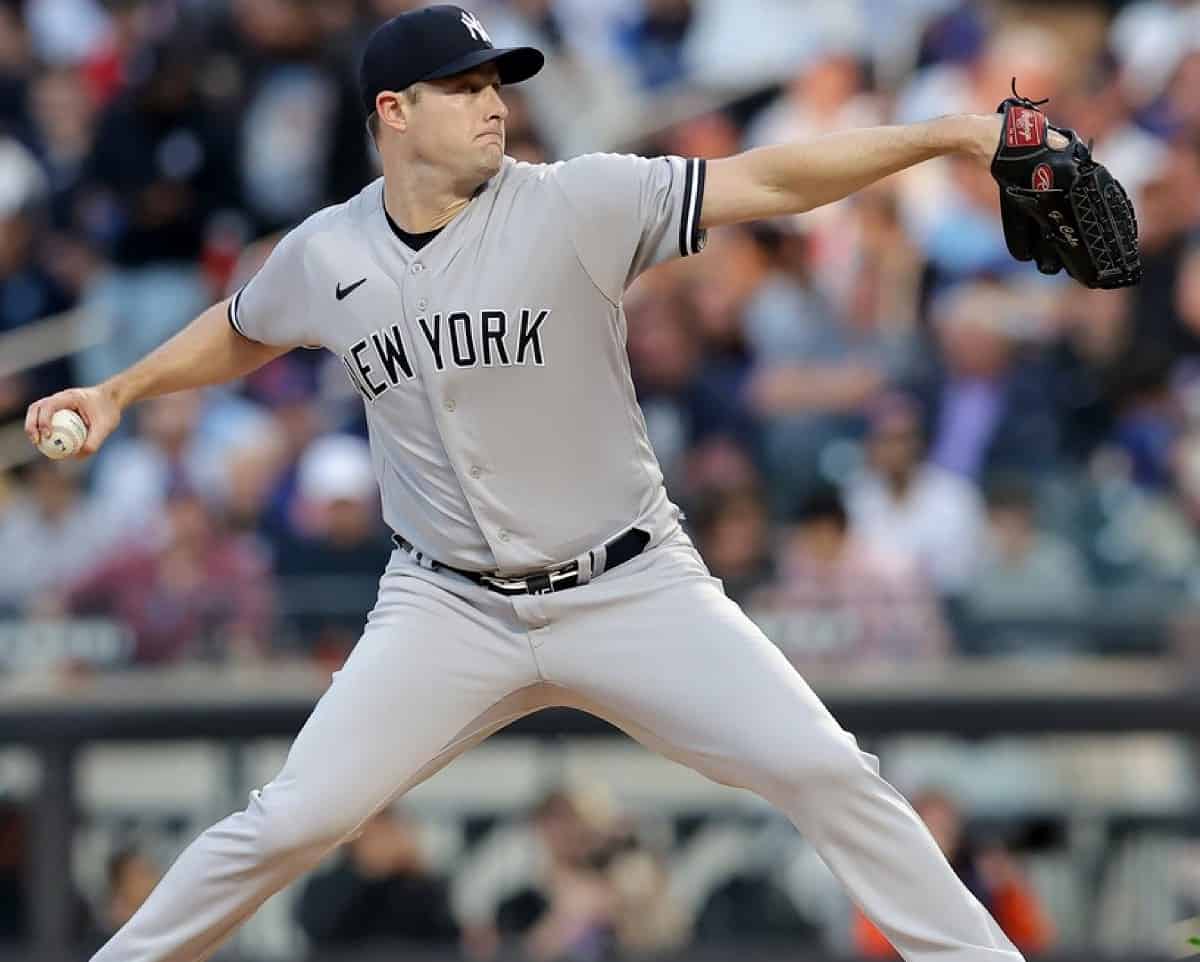
The Grisham play occurred in the third inning of Game 2 against Boston. Eaton turned a shallow hit into an extra base when the center fielder was slow to pursue it. The sequence drew attention to Grisham’s effort, even though the Yankees escaped the inning.
Third base coach Luis Rojas later described how Grisham reacted to the play. When the outfielder reached third base later in the game, Rojas tried to refocus him because the mistake was still troubling him.
“He was kicking himself throughout the game,” Rojas said.
Rojas said the reaction reflected Grisham’s willingness to take responsibility without a public reprimand.
“He knows when he messes up. He’s very responsible about it,” Rojas said.
Boone acknowledged that Grisham needed greater urgency on the play. The manager’s response identified the mistake, while the incident itself continued to serve as a reference point in discussion about the club’s broader standards.
What Boone, Cashman and Steinbrenner say happens inside
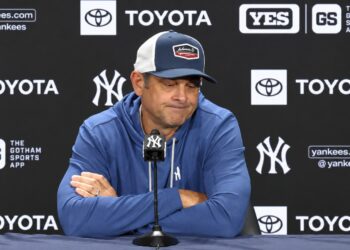
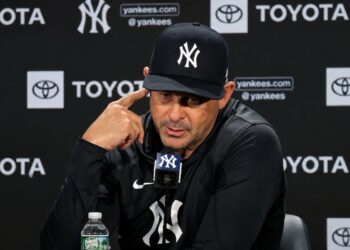
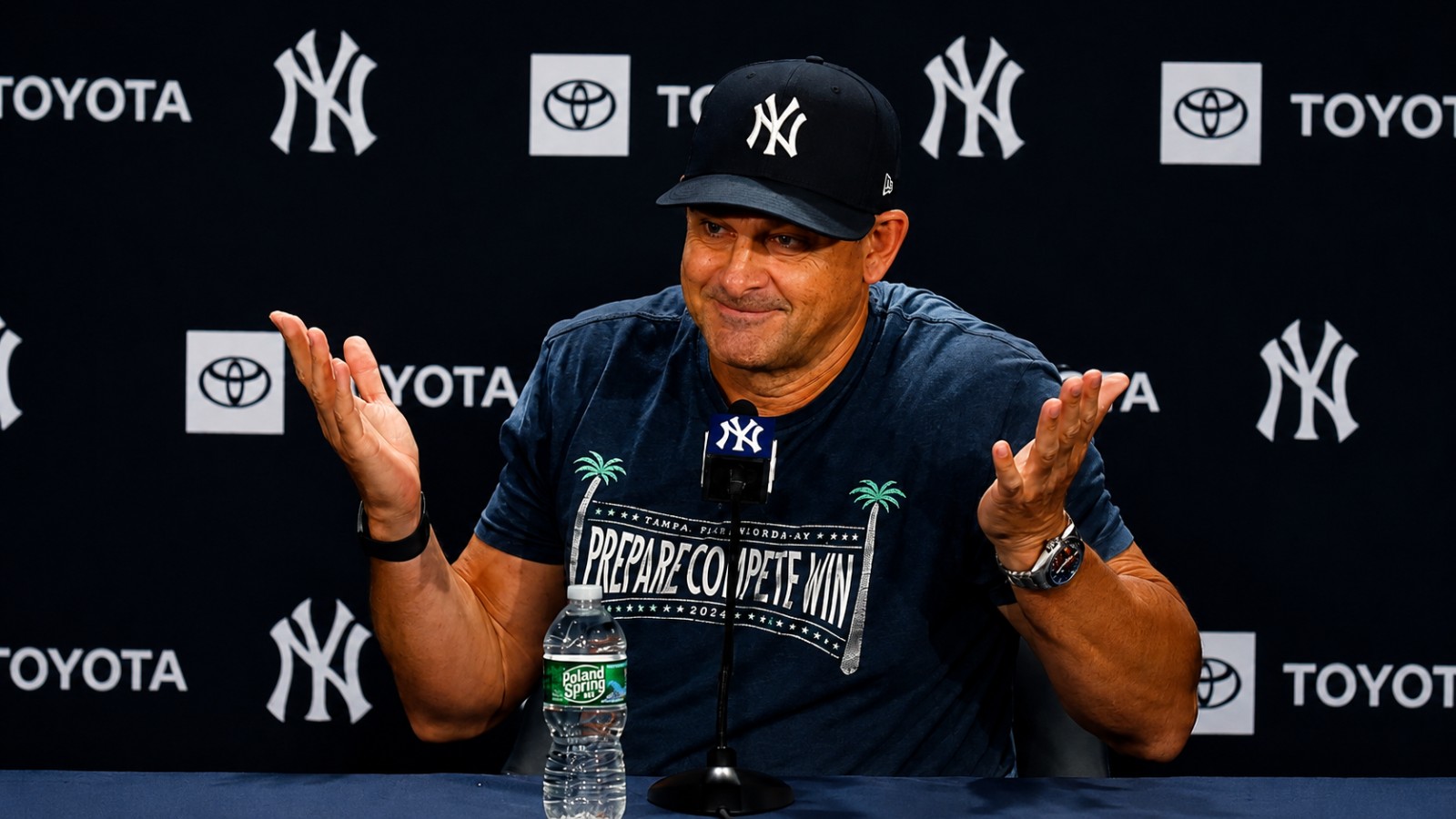
The clearest explanation of the Yankees’ policy came during Wednesday’s end-of-season video interviews. Boone said he addresses individual mistakes directly with players and sometimes raises them with the group. He rejected the idea that leadership requires embarrassing someone before reporters.
Boone framed public denunciation as a response to outside demands rather than an effective method of improvement. His comments placed the emphasis on conversations between players, coaches and club officials.
Cashman backed that approach. He argued that the pressure of playing for the Yankees is already intense and that adding public criticism can make it harder for a struggling player to recover.
The general manager said in a statement about accountability that direct private discussion is preferable to public criticism.
“I think in a more private setting and a more direct setting is the more appropriate way versus a public letting,” Cashman said.
Steinbrenner likewise drew a distinction between his approach and that of his father, George. He said problems should be discussed face to face, whether by the owner, Cashman, Boone or team captain Aaron Judge.
Rojas’ exchange with Grisham illustrates the immediate response the club values. Management’s separate explanations show how the Yankees expect coaches and executives to address mistakes privately and directly.
Difference between recognizing mistakes and preventing them
The Yankees’ postseason offers a useful test of that philosophy. Against Boston, the offense scored 18 runs in two games, giving the club room to survive a mistake such as Grisham’s. Against Tampa Bay, five runs in three games left little margin for additional damage.
The Game 2 defensive collapse against the Rays exposed a different cost of poor execution. New York committed four errors, including three in the first inning. The Yankees lost 5-2 and fell behind 2-0 in the series.
The contrast is significant. Grisham’s play illustrates the difference between identifying a mistake and proving it has been corrected. The Yankees can point to his remorse and the coaches’ private conversations as evidence that their internal system is active. Critics can point to another costly sequence in the following round and question whether that system consistently changes on-field behavior.
The defensive details underscore the concern. Grisham, a two-time Gold Glove winner, was returning from a right hamstring strain when he entered the postseason. He finished the 2026 regular season with a .211 batting average and 18 home runs, then went 2-for-15 across five playoff games. His Game 2 play drew additional attention because physical limitations and insufficient effort can look similar from the stands.
Grisham’s own response, as Rojas described it, suggests the center fielder understood what went wrong. The question for Boone is how that awareness is reinforced throughout a roster when the consequences become much larger than one extra base.
The Yankees also faced repeated execution problems elsewhere in the lineup and on defense. Their offense scored 18 runs in two games against Boston before managing five across three games against Tampa Bay. That swing makes the organization’s distinction between a competitive clubhouse and winning postseason baseball particularly difficult to ignore.
Boone returns with same standard under closer inspection
Boone is set to return for 2027, the final season of his current contract, with Cashman also remaining in charge of baseball operations. Their position on private accountability survived the latest postseason failure unchanged.
That stance leaves a measurable challenge. The Yankees can continue correcting players privately, but their ability to turn those conversations into cleaner defense, sharper baserunning and steadier October performances will determine how the policy is judged.
Grisham’s response to Rojas showed one side of the process. The Yankees’ elimination by Tampa Bay supplied the other: the visible consequences when a talented club cannot consistently execute the fundamentals.
What do you think? Leave your comment below.