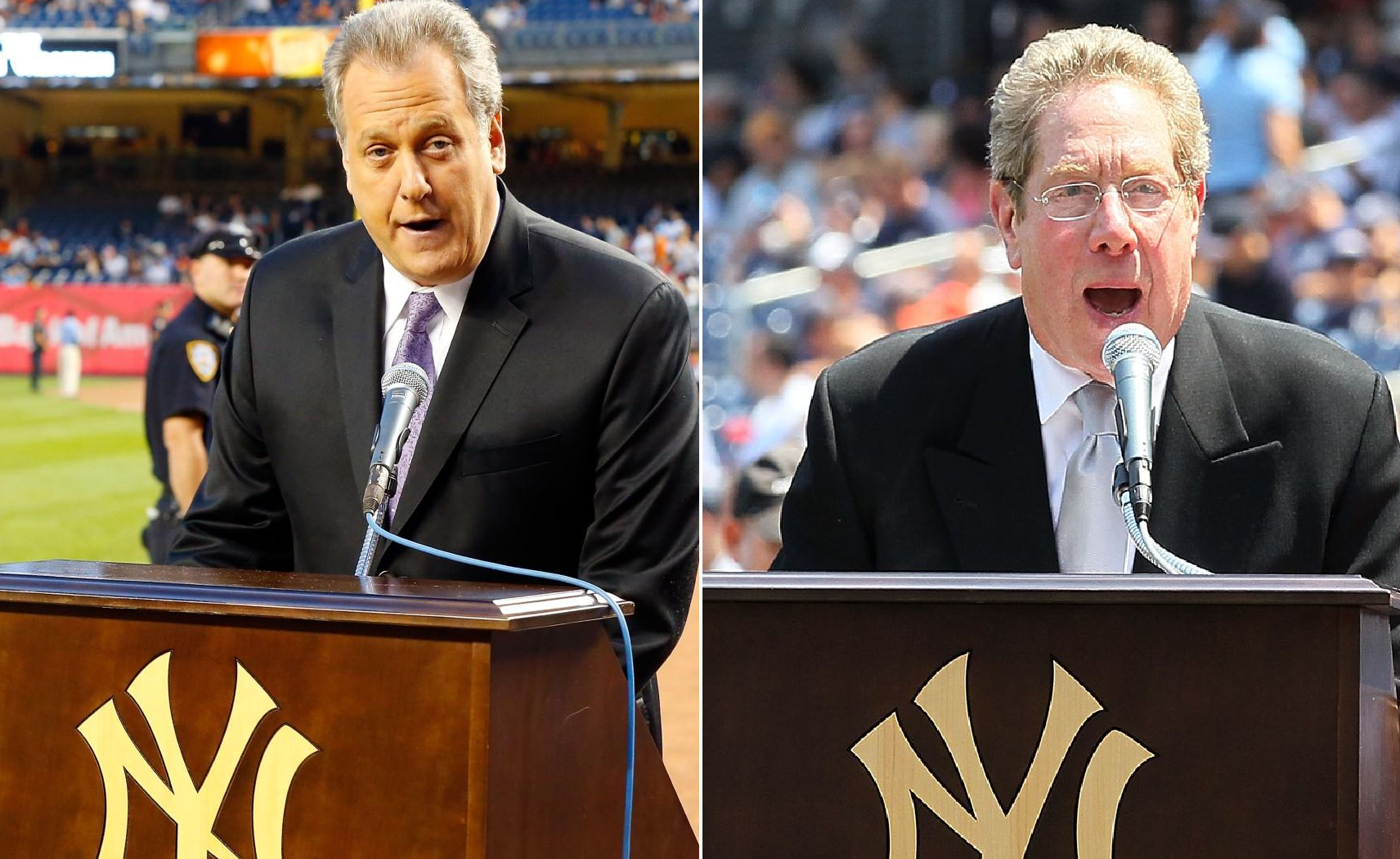
NEW YORK — The New York Yankees’ decision to extend a qualifying offer to Trent Grisham has drawn sharp criticism from longtime broadcaster Michael Kay, who warned that the move could backfire despite its short-term nature.
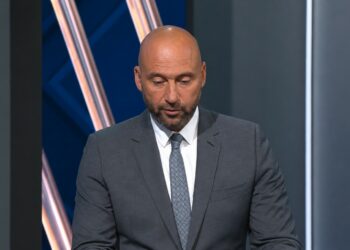
Kay delivered his pointed take during The Michael Kay Show on Friday, challenging the belief that one-year contracts carry little risk. His main concern focused on how the $22.025 million qualifying offer might limit the Yankees’ payroll flexibility in what is shaping up to be one of their most critical offseasons in years.
“Yes, there is,” Kay said when responding to the notion that bad one-year deals don’t exist. “If you’re grossly overpaying for a player, that means that’s money you can’t spend somewhere else. It’s not an unlimited budget.”
The qualifying offer places Grisham in line for a major raise from his $5 million salary in 2024. The 29-year-old outfielder has until 4 p.m. EST on Nov. 18 to decide whether to accept the deal or test the free-agent market.
Kay questions timing with outfield uncertainty
The YES Network broadcaster didn’t hold back in questioning the timing and implications of the Yankees’ decision. His on-air remarks suggested the offer could complicate roster construction, particularly given the Yankees’ left-handed-heavy lineup.
“So there is such a thing as a bad one-year contract if it inhibits you from doing other things for that said year,” Kay said. “I know you’re out from under it in one year, but why would you grossly overpay somebody for one year at the risk of what, to get a fourth-round draft pick? I don’t know.”
Kay’s criticism wasn’t just about the money. He pointed out how the move might ripple across the Yankees’ entire outfield structure if Trent Grisham decides to accept.
“And then if you get Cody Bellinger or Kyle Tucker, then Jasson Dominguez is a non-player, and Spencer Jones is a non-player,” Kay noted. “Maybe you’re going to use them in trades … for Sandy Alcantara? Maybe you make a run at Tarik Skubal? Don’t know what their plan is.”
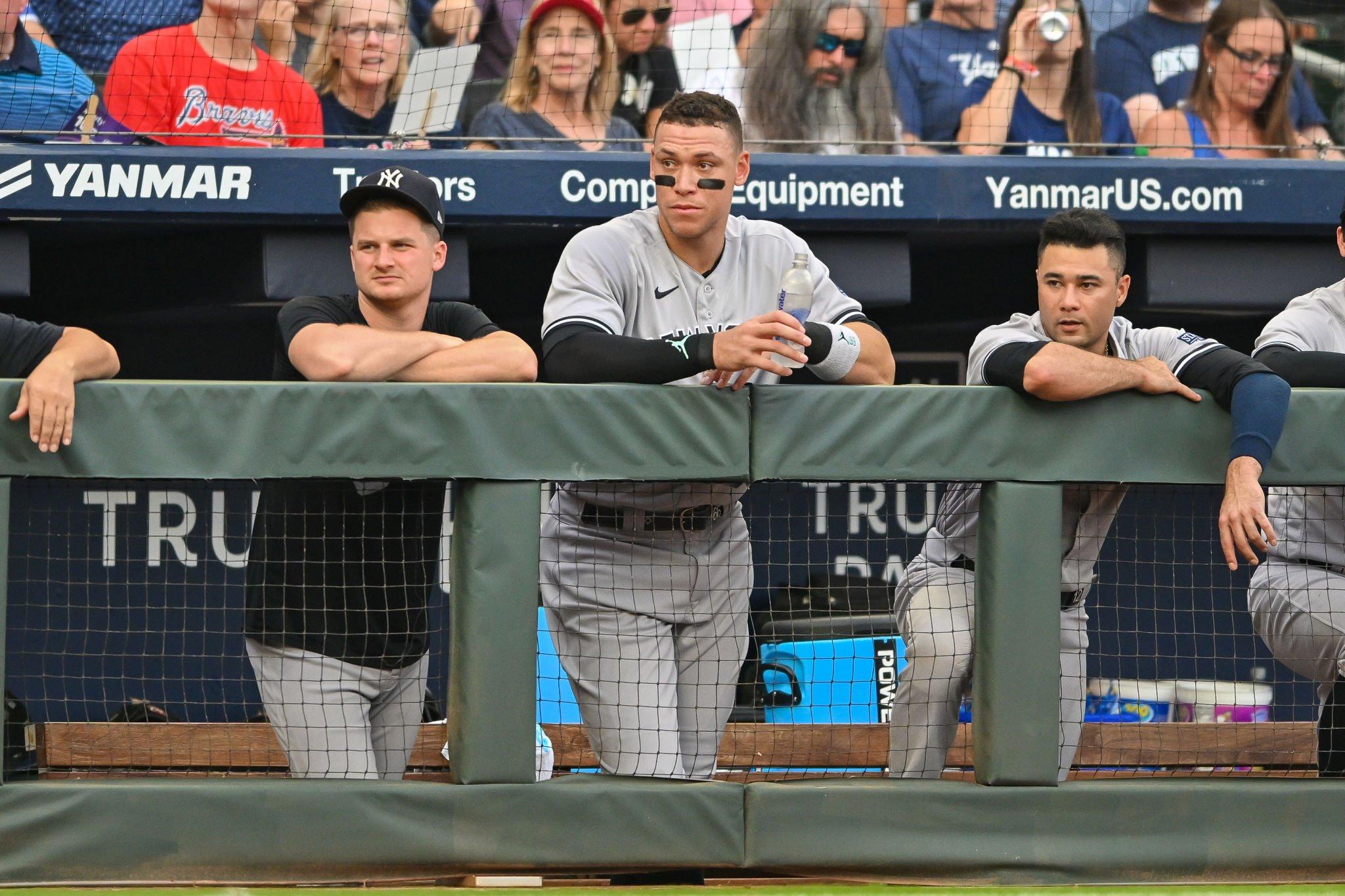
His remarks highlight the challenge the Yankees face in balancing long-term flexibility with short-term competitiveness. The projected 2026 outfield already includes Aaron Judge in right field, Dominguez in center when healthy, and Jones rising through the system. Grisham’s uncertain future now adds another layer to the team’s planning.

Grisham’s breakout season earned the offer
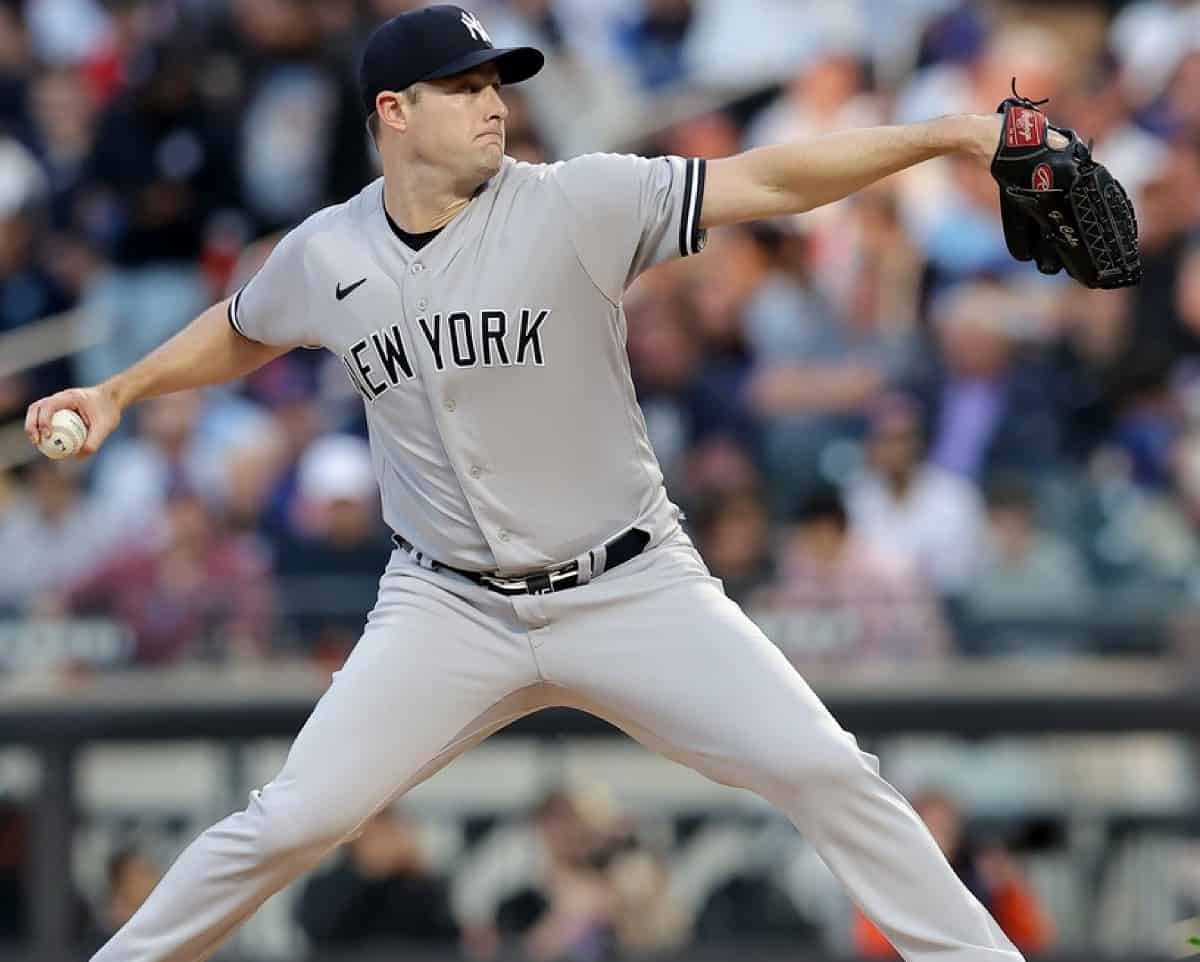
The Yankees’ qualifying offer stems from Grisham’s standout 2025 campaign, which represented a sharp turnaround from his disappointing 2024 debut in pinstripes. After years of inconsistency, he delivered his best offensive season yet.
Grisham played in 143 games and started 124 in center field. He hit .235 with 34 home runs, 74 RBIs, and an .811 OPS, serving primarily as the Yankees’ leadoff hitter. His plate discipline improved significantly, posting a career-high 14.1 percent walk rate that elevated his on-base percentage.
Statcast data supports his offensive jump. According to Baseball Savant, his average exit velocity climbed to 91.1 mph, with a 46.4 percent hard-hit rate and a 14.2 percent barrel rate — all career bests. The improvements showed genuine progress in his contact quality, helping explain his sudden power surge.
However, the sustainability of that production remains in question. Grisham struck out 137 times in 581 plate appearances, maintaining a 23.6 percent strikeout rate. His defensive numbers also slipped below average, a troubling sign for a player once known for elite outfield defense.
Financial implications loom large for Yankees
The Yankees’ decision to extend the $22.025 million qualifying offer was significant. If accepted, Grisham’s salary would nearly quadruple from his 2025 earnings, placing him among the top 20 highest-paid players in Major League Baseball for the 2026 season.
Kay warned that such a figure could limit the Yankees’ financial flexibility during an offseason when owner Hal Steinbrenner has expressed concern about keeping payroll near or above the $300 million threshold.
While the qualifying offer gives the Yankees potential draft compensation if Grisham leaves, it also risks tying up valuable salary space if he stays. Market projections suggest Grisham will decline, with Spotrac estimating his worth at four years for $47.6 million and MLB Trade Rumors projecting around four years for $66 million. Both projections indicate that he might prefer long-term security elsewhere.
Historical trends support that prediction. Since MLB introduced the qualifying offer system in 2012, only 14 of 144 players have accepted one, according to MLB.com’s Andrew Simon.
What happens next for the Yankees
If Grisham declines the offer and signs with another team, the Yankees would receive a compensatory draft pick. The round of that pick depends on the size of his new contract, likely falling between the third and fourth rounds. That scenario would restore spending flexibility for general manager Brian Cashman and his staff to pursue other outfield targets or pitching upgrades.
However, if Grisham accepts the offer, the Yankees will face tough decisions. They would be committing more than $22 million to a player with only one above-average season out of his last four. It would also create an outfield logjam, potentially blocking younger players like Dominguez and Jones from gaining consistent playing time.
Kay’s larger point focused on opportunity cost. Every dollar spent on Grisham is a dollar unavailable for other needs — an especially critical issue for a Yankees roster built around Aaron Judge’s prime years.
“If you are grossly overpaying for a player, that means that’s money you can’t spend somewhere else,” Kay reiterated. His comments underscored a growing sentiment among analysts who believe the Yankees must be more selective in their spending if they hope to stay competitive while staying under luxury tax pressure.
The Yankees’ gamble on Grisham reflects both confidence and risk. The front office clearly believes his 2025 breakout represents real progress rather than a one-year anomaly. Still, Kay’s warning suggests that betting on a repeat could tighten the team’s financial margins just when they need flexibility most.
Grisham has until Nov. 18 to make his decision, giving the Yankees a short window to find out whether their calculated risk turns into a long-term win or another offseason complication.
What do you think? Leave your comment below.