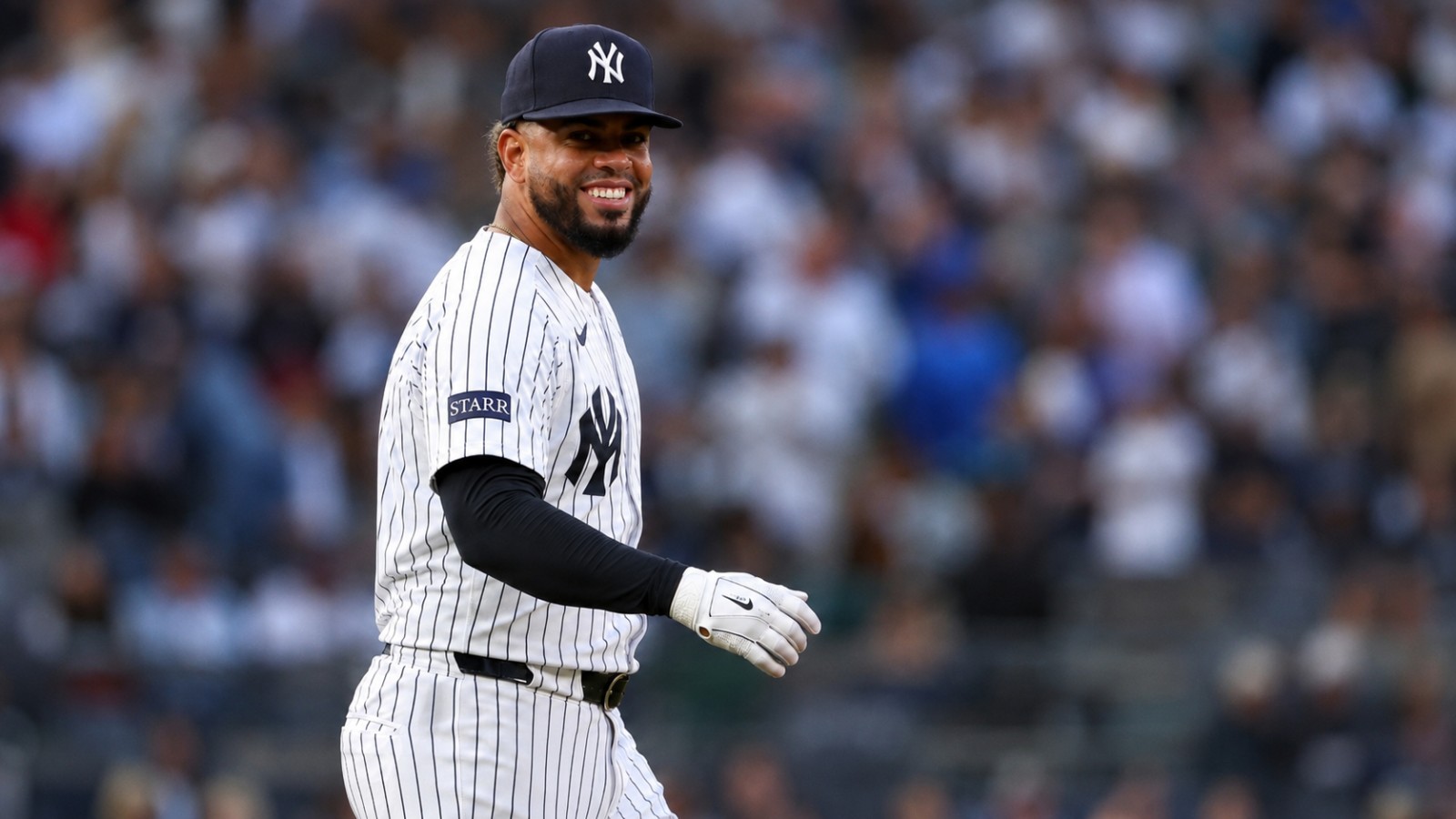
NEW YORK — A player acquired to help solve the Yankees’ offensive problems has become the subject of a surprising offseason disagreement. The club has plenty of reasons to keep Luis García Jr. Yet rival executives see a path to another trade only months after New York paid a four-pitcher price to acquire him.
The tension centers on the crowded right side of the infield. Ben Rice has emerged as a first-base option, Giancarlo Stanton occupies designated-hitter at-bats, and García has not established himself as a dependable second baseman. What appeared to be an immediate upgrade now presents a complicated roster decision.
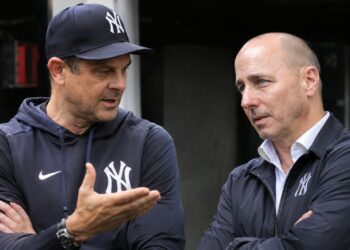
It is a particularly delicate call for general manager Brian Cashman, whose Yankees must strengthen their lineup while rebuilding parts of the pitching staff following another early postseason exit. Trading a productive left-handed hitter could create a fresh offensive hole even if it solves a defensive one.
The disagreement has reached opposing front offices. The question is whether they are correctly reading New York’s intentions or mistaking a roster squeeze for a willingness to move a valuable bat.
MLB clubs see opening, but Yankees push back
Jon Heyman reported that opposing clubs believe the Yankees could trade García if they received the right return. A rival general manager sees both García and Ryan McMahon as players New York might discuss. The team’s response is much stronger: A Yankees source rejected the García assessment and maintained that he is not being traded.
That disagreement leaves a clear distinction between what opposing clubs expect and what the Yankees say they intend. In his Nov. 12 report, Heyman outlined the trade possibility without presenting it as a decision by Cashman. The Yankees source described the suggestion as “BS,” according to Heyman.
Heyman had questioned the fit months earlier. Speaking on the Aug. 4 episode of “The Show” after the Yankees acquired García and Heliot Ramos, he assessed whether the two additions addressed New York’s needs.
“You know, to me, they don’t really fit. I don’t really get what they did,” Heyman said.
He also expressed doubts about García’s fit with the Yankees despite recognizing his hitting ability. That criticism now provides context for rival clubs’ belief that the team could revisit the trade.
“I don’t get that for them at all. I really don’t,” Heyman said.
García, 26, arrived from Washington on Aug. 2 in exchange for right-handers Jake Bird, Yovanny Cruz, Jack Cebert and Ben Grable. The Yankees traded two ranked prospects along with two other pitchers to add power to an injury-hit offense.
Moving him this winter would invite a second evaluation of that same transaction. New York would have to decide whether another club’s package offers more value than keeping the player it acquired at considerable cost.
Thirty home runs have not resolved the position problem
García completed the 2026 regular season batting .277 with 30 home runs, 92 RBIs and an .830 OPS across 147 games. His production was more modest after joining the Yankees: .264 with seven homers, 16 RBIs and a .736 OPS in 43 games.
That split is significant. His full-season power makes him an attractive trade asset, but the Yankees received less of that impact during his final two months. The front office must weigh his established offensive ceiling against the narrower role available in its projected lineup.
He spent 2026 at first base, a position that does not resolve New York’s crowded alignment. His earlier second-base experience with the Nationals provides an alternative, but questions about his range and reliability there remain central to the debate.
Anthony Volpe is another potential second-base option following his return from Triple-A and experimentation away from shortstop. The Yankees cannot settle the position merely by moving names on a lineup card. Run prevention must also factor into the choice.
Costly trade could leave Yankees paying twice for the same need
One overlooked issue is the prospect cost of reversing course. The Yankees already surrendered four pitchers to get García. A second deal would need to return enough immediate major league value to justify parting with his bat, rather than simply recouping an assortment of prospects.
García is under club control through 2027. That gives another team a season of control, but also puts a limit on what the Yankees can demand compared with a young slugger signed for several additional years.
The García question arrives alongside uncertainty at third base, where Ryan McMahon also has been discussed in trade speculation. The Yankees need to sort out the infield without sacrificing the offensive depth that Aaron Judge has urged the club to add in pursuit of a championship.
Trade García and risk another offensive hole. Keep him and face a difficult positional decision.
What do you think? Leave your comment below.