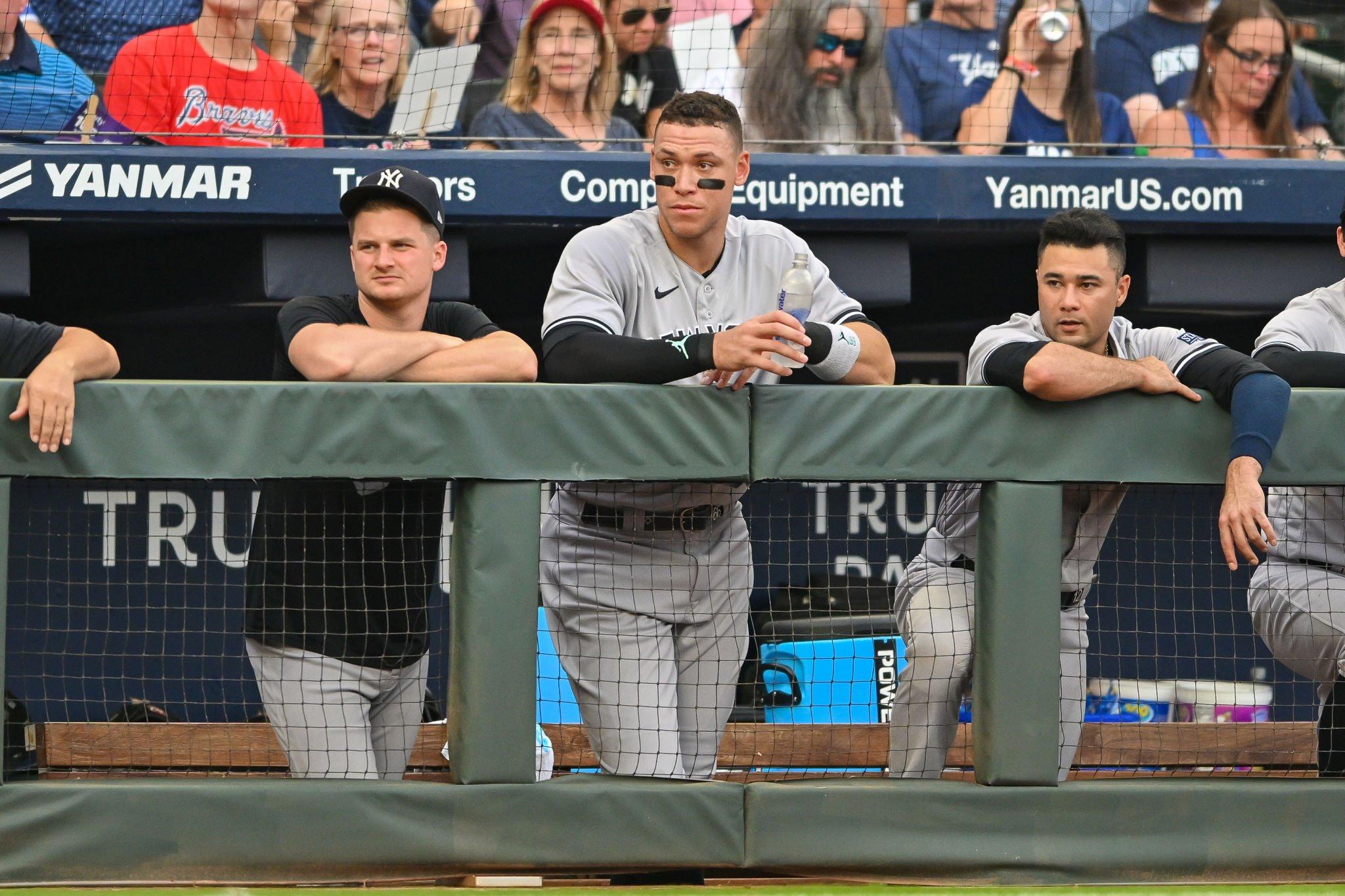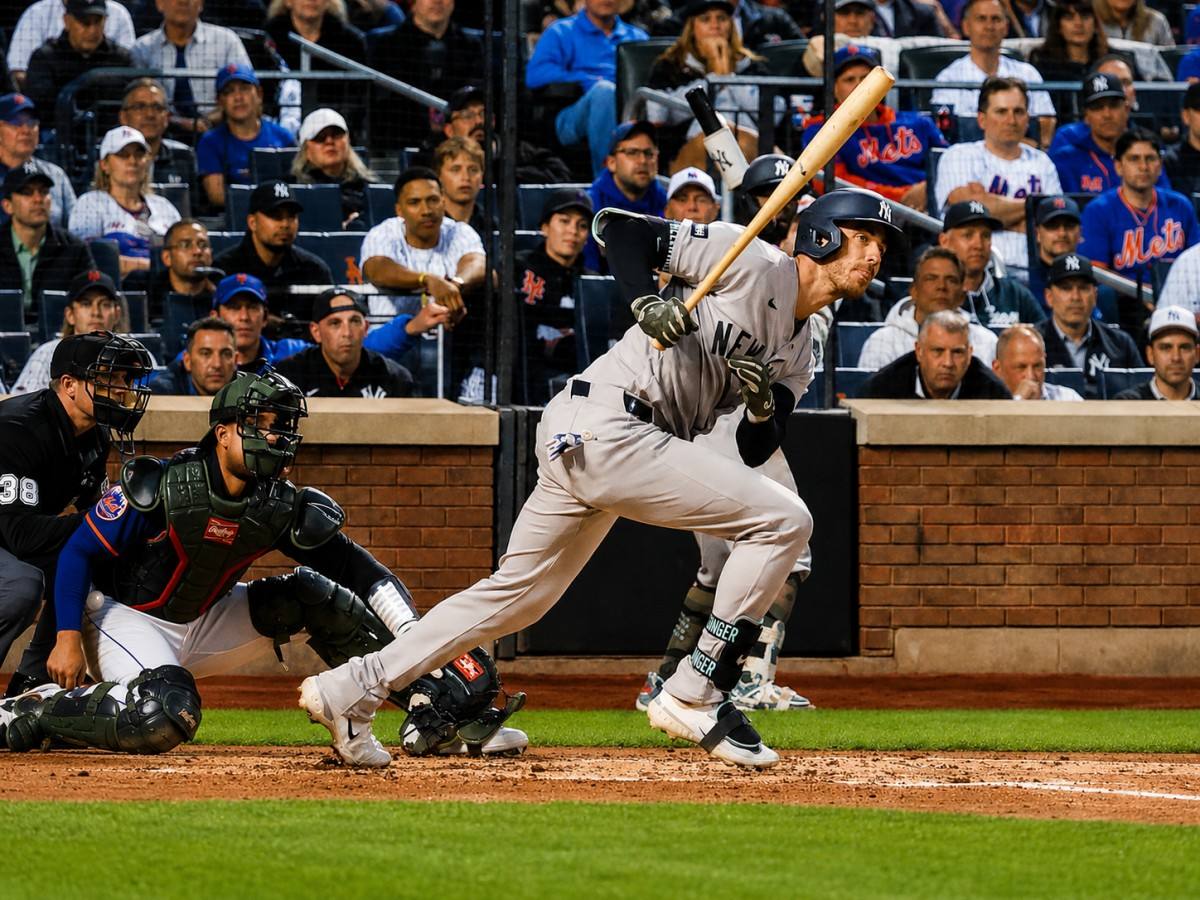
NEW YORK — Cody Bellinger‘s left-handed swing is ideal for Yankee Stadium. He has the early-season production there to prove it.
The problem is what happens when the Yankees leave the Bronx.
Entering Friday’s Subway Series opener at Citi Field, Bellinger was hitting .377 with 16 extra-base hits and a 1.259 OPS at home. On the road, he was hitting .188 with two extra-base hits and a .516 OPS. That is not a split. That is two different hitters wearing the same Yankees uniform.
A gap that has grown wider in 2026
All five of Bellinger’s home runs have gone to right field at Yankee Stadium, where the short porch rewards left-handed pull hitters. His pull rate sits at 44.8 percent, his highest since 2022 and slightly above his 2025 rate of 42.4 percent.
Away from the Bronx, pitchers attack him differently. They keep the ball away, take the pull side off the table and force him to beat them going the other way. The results this season show how well that strategy has worked.
Entering Friday, Bellinger had gone 2-for-20 with five walks across the first six Yankees road games. He was in a 0-for-10 stretch.
The split is not entirely new. Last season Bellinger hit .302 with a .909 OPS at Yankee Stadium and .241 with a .715 OPS on the road. But in 2026 the gap has widened considerably, and it has become the most visible question attached to a player signed to a five-year, $162.5 million Yankees contract.
Yankees strategy: Boone confident the split will shrink
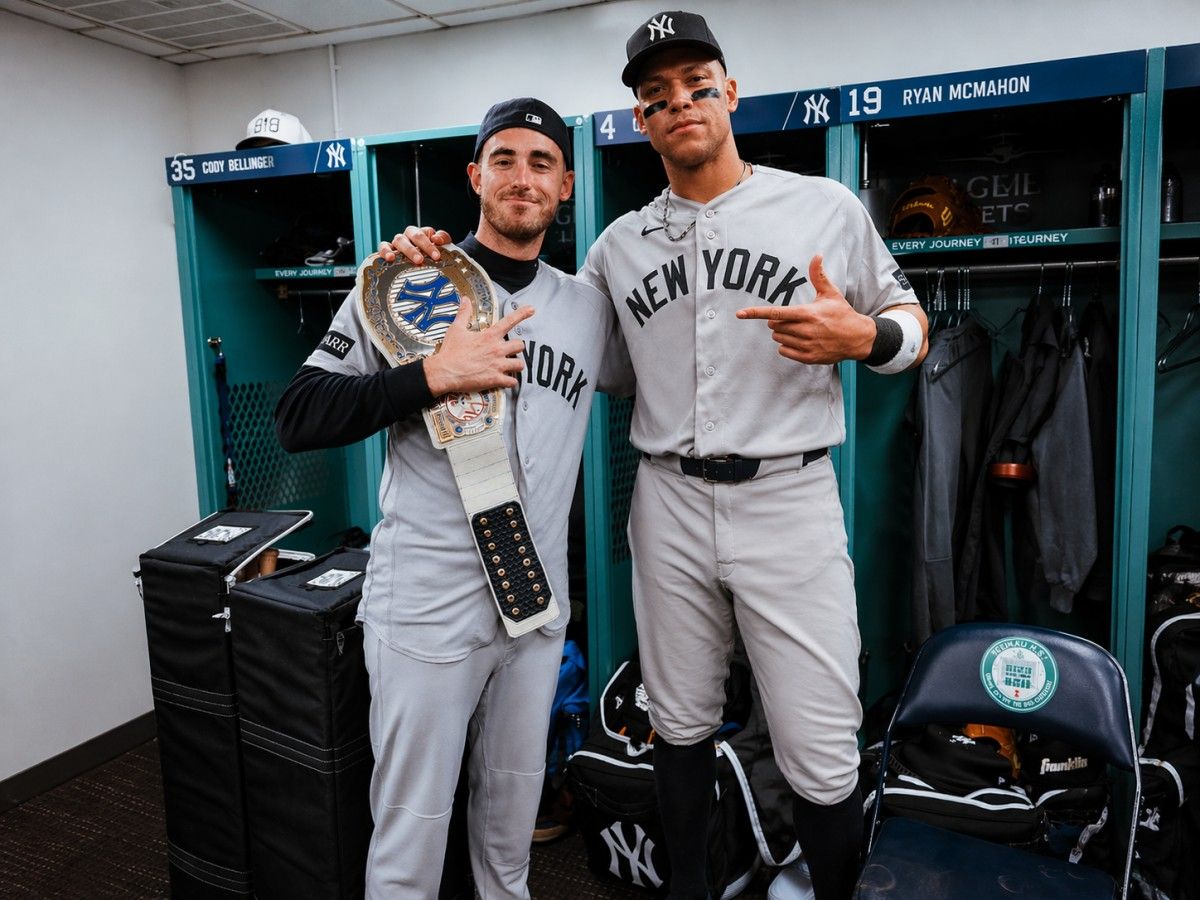
Before Friday’s game, Yankees manager Aaron Boone was asked directly whether the home and road divide was something he tracked closely. His answer was measured and clear. He did not dismiss the gap. He simply refused to believe it would stay this way.
“Do I pay attention to it? He’s gonna be in the lineup every day,” Boone said. “Look, part of it is [that] he is cut out for our ballpark. One of the reasons we went and got him was we feel like he’s set up for Yankee Stadium. But that said, I would expect these things to balance itself out a little bit with how good of a player Belli is.”
Boone also addressed Bellinger’s at-bat quality during the cold road stretch, making a distinction between results and underlying process.
“Even on this trip, I feel like he looks very similar,” Boone said. “I feel like he’s having a lot of good at-bats still. He just hasn’t really gotten rewarded.”
That is a meaningful read from a manager who watches every Bellinger at-bat. The Yankees need both versions of Bellinger, not just the one that appears at Yankee Stadium.
Boone made one more point when asked about long-term expectations.
“I would expect, year in and year out, that he’d probably be a little better at home,” Boone said. “Because he’s cut out for our yard.”
The plate discipline change behind the split
There is a layer beneath the surface numbers that the Yankees find encouraging. Bellinger has cut down on his chases in 2026. His Chase Rate in 2025 was 30.1 percent, ranking in the 36th percentile. In 2026 it has dropped. He is letting more bad pitches go and walking more often.
The unusual part: the discipline has not cost him power. His 90th percentile exit velocity is up nearly 2 mph and his average exit velocity has risen by more than a full mph. The Yankees are seeing harder contact from Bellinger than a year ago, with better pitch selection to go with it.
Chase rate begins to stabilize around 35 to 40 games into a season. Bellinger’s 2026 discipline numbers are holding. If a projected 10 percent walk rate materializes, he could reach a 130-135 wRC+, a meaningful step up from 2025.
Friday’s double: a road result the Yankees needed
Bellinger delivered a small but important answer to the question on Friday.
With two outs and the game scoreless in the third inning, he stepped in against Mets starter Clay Holmes, who entered the game with a 1.86 ERA. Bellinger worked the count to 1-2. Holmes threw a curveball below the zone. Bellinger went down and got it, lining it into right field. Ben Rice scored from second. Yankees 1-0.
Jazz Chisholm followed with a two-run double. Yankees 3-0. Bellinger’s two-strike hit started the rally.
He also ran down a 353-foot fly ball off the bat of Mets rookie Carson Benge in the third inning. Statcast gave Benge’s drive a .400 expected batting average. Bellinger caught it.
He finished 1-for-5. Not a breakout night. But one hit on a two-strike curveball on the road, in a key spot, is exactly the kind of at-bat Boone has been pointing to.
What the Yankees signed Bellinger to do
Bellinger arrived at the Yankees via a 2024 trade from the Chicago Cubs after Juan Soto left for the Mets. In 2025 he hit .272 with 29 home runs, an .813 OPS and roughly 5 WAR. The Yankees signed him to a five-year deal this offseason knowing the split existed. They bet his game would travel.
If the road average climbs from .188 toward his career norm, the Yankees lineup becomes significantly harder to pitch around on a nine-game road trip. Boone expects the gap to narrow. Friday at Citi Field was the first small sign that it might.
What do you think?