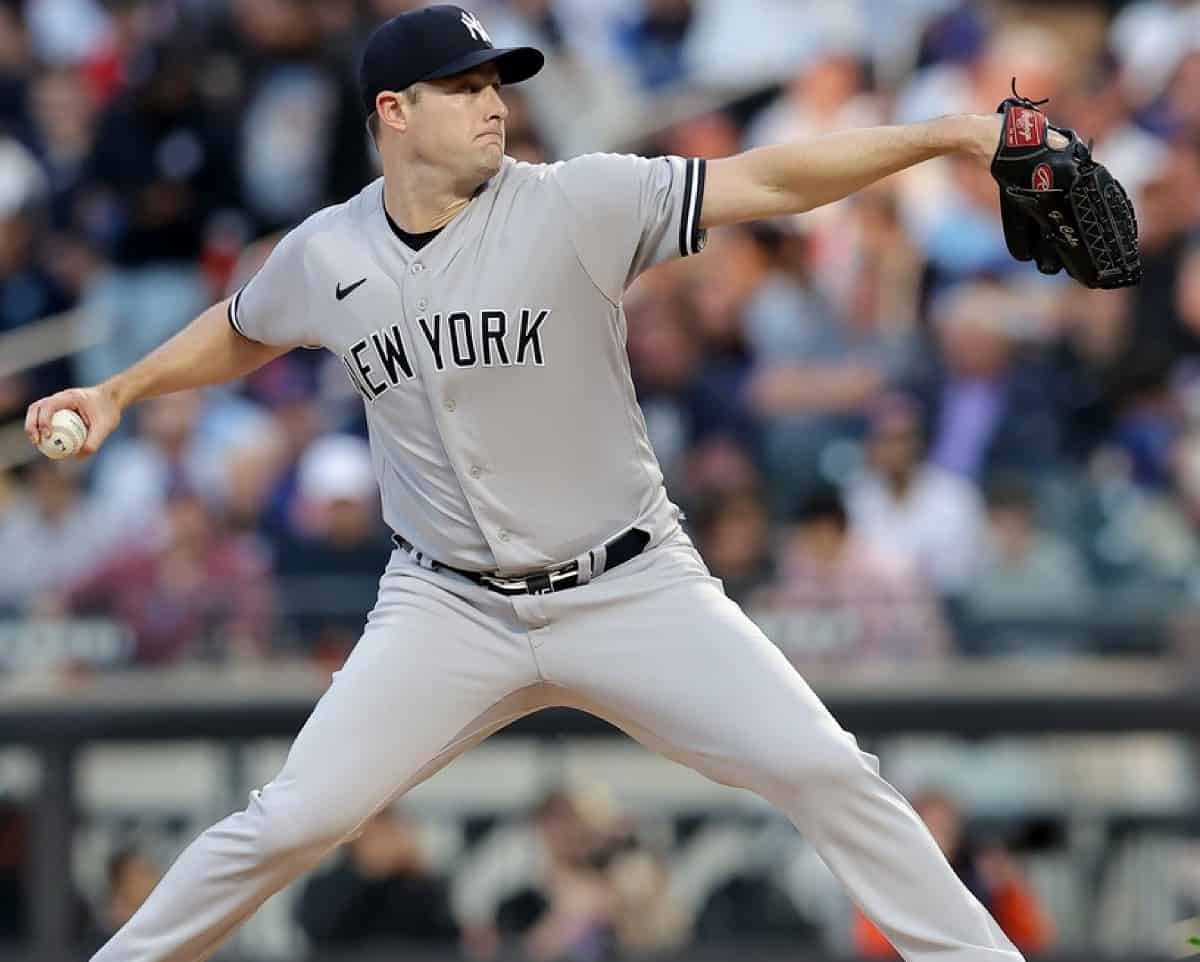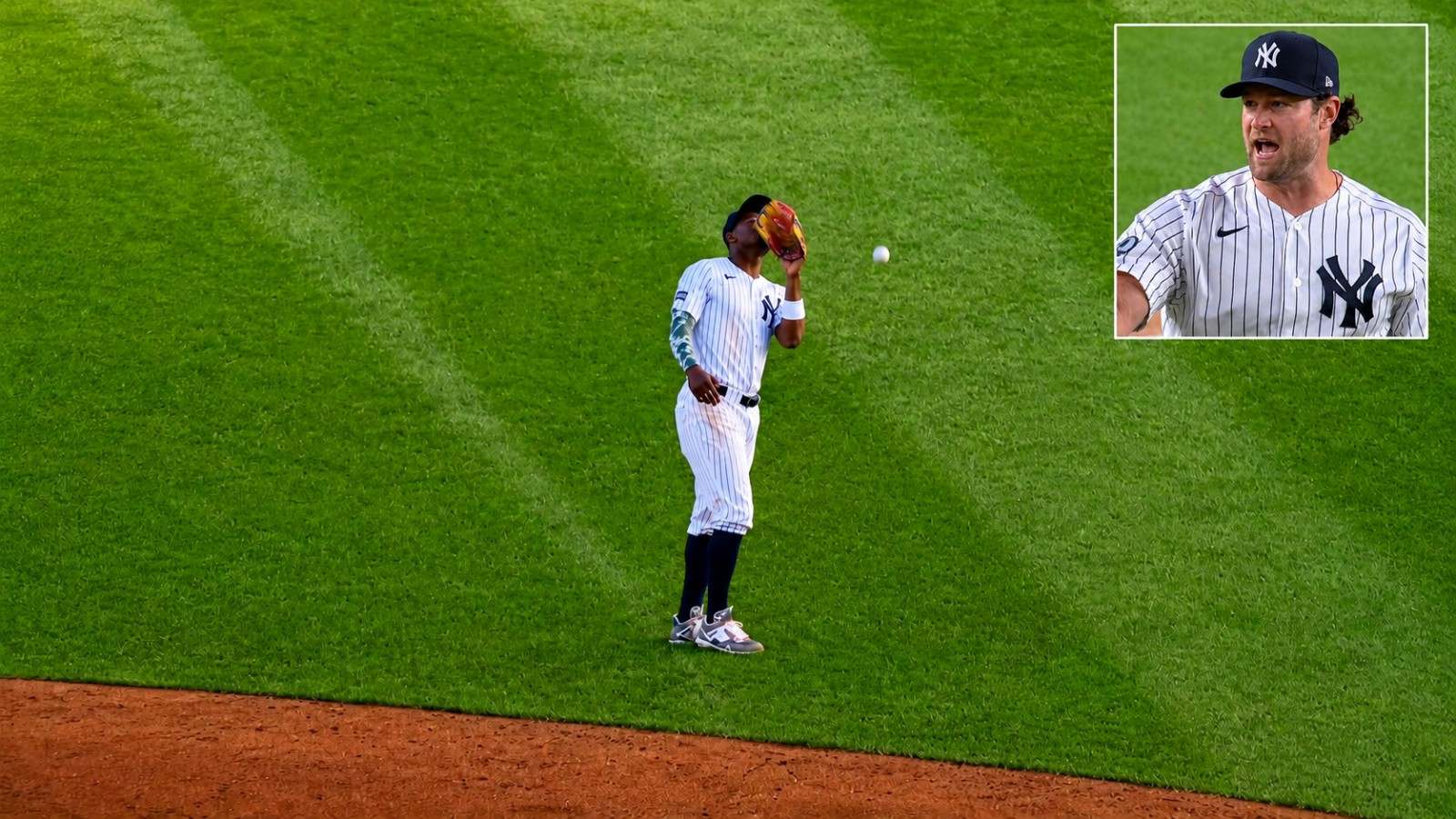
NEW YORK — A pitcher almost never wants to see a pop-up hit the grass. On Friday night, Gerrit Cole watched one drop in front of his second baseman and grinned.
The play looked like a mistake at first glance. It was anything but. Jazz Chisholm Jr. let the ball fall on purpose. The reason behind it turned a routine fly into one of the smartest plays of the Yankees’ night.
Cole was in the middle of a brilliant return from Tommy John surgery. He needed every out he could get against the league-best Rays. What Chisholm did next protected his pitcher in a way most fans rarely notice.
The setup behind Cole’s biggest grin
The moment came in the fifth inning at Yankee Stadium. Cole had cruised through the early frames in his first start since the 2024 World Series. Then Cedric Mullins poked a one-out single to put a runner on against the Yankees ace.
Mullins is one of the fastest players in the game. With him on first, the Yankees faced a speed problem on the bases. Catcher Nick Fortes stepped in for the Rays with a chance to keep the inning alive.
Fortes lifted a soft pop-up toward second base. On most nights, that ball gets caught for an easy out. Chisholm camped under it, then did something that made the crowd pause.
He let it fall to the grass on purpose. The decision looked strange in real time. The payoff showed up a heartbeat later, and it was pure baseball chess by the Yankees infielder.
Why Chisholm let the pop-up drop on purpose
Here is the heart of the play that helped the Yankees. There was no infield fly rule in effect. That rule only applies with runners on first and second, or with the bases loaded, and fewer than two outs.
With only Mullins on first, the rule did not protect the runner. So Jazz Chisholm had a choice that a caught ball would have erased. By letting it drop, he opened the door to a smarter out for the Yankees.
The reason the rule exists is to stop this exact trap with more runners aboard. Umpires call an automatic out so a fielder cannot bait runners into a cheap double play. With just one man on, though, the Yankees were free to use it.
Mullins had to hold near first base on the pop-up. He could not risk getting doubled off if the ball was caught. That hesitation is exactly what Chisholm was counting on.
Once the ball hit the ground, Chisholm scooped it and forced Mullins at second. The speedy runner never had a chance to beat the throw. The slower Fortes was left standing on first instead.
The math is what makes the move so clever. Either way, the inning ends with two outs and one runner aboard. Chisholm simply made sure the Yankees were left dealing with the slower man, not the burner.
The risk on a play like this is small. The fielder only loses out if the runner reads the drop early or the ball takes a bad bounce. Neither happened, which made it close to foolproof for the Yankees.
Plays like this almost never appear on a scorecard. They require a rare overlap of game conditions to even be worth trying. When the stars align for the Yankees, the trick can feel like a stroke of genius.
Chisholm flips a play that once burned him
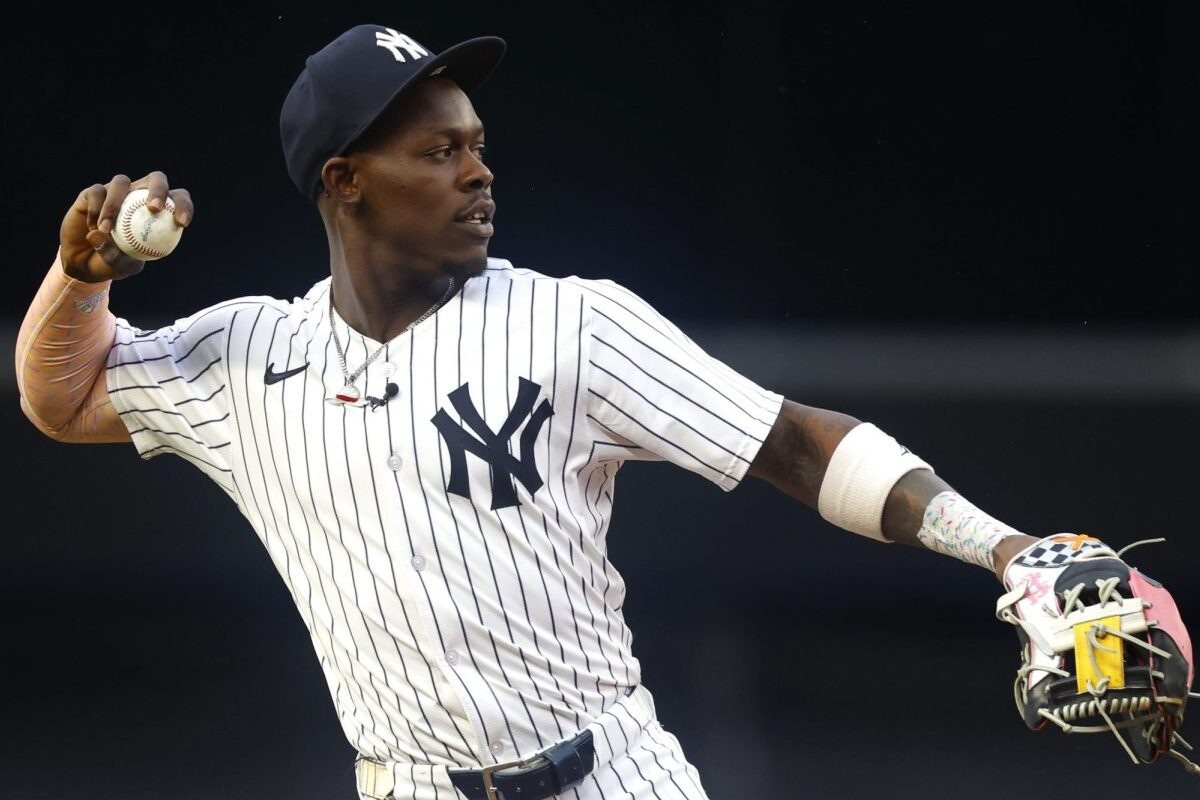
There is a layer to this story that makes it even sweeter. Chisholm was once the victim of the same kind of play. The Yankees star learned this lesson the hard way last summer.
In August 2025, Chisholm was doubled off first base against the Marlins. He had drifted off the bag because he thought Miami’s Xavier Edwards would let a pop-up drop. Edwards faked the move, then caught it and threw behind him.
Chisholm explained his thinking afterward to reporters.
“Just trying to be aggressive,” Chisholm said. “I saw something that I thought they were going to do.”
That night cost the Yankees an out and drew a stern reaction from the dugout. Nine months later, Chisholm sat on the other side of the trick. This time, he was the one springing the trap for the Yankees.
A heads-up play in Cole’s long-awaited return
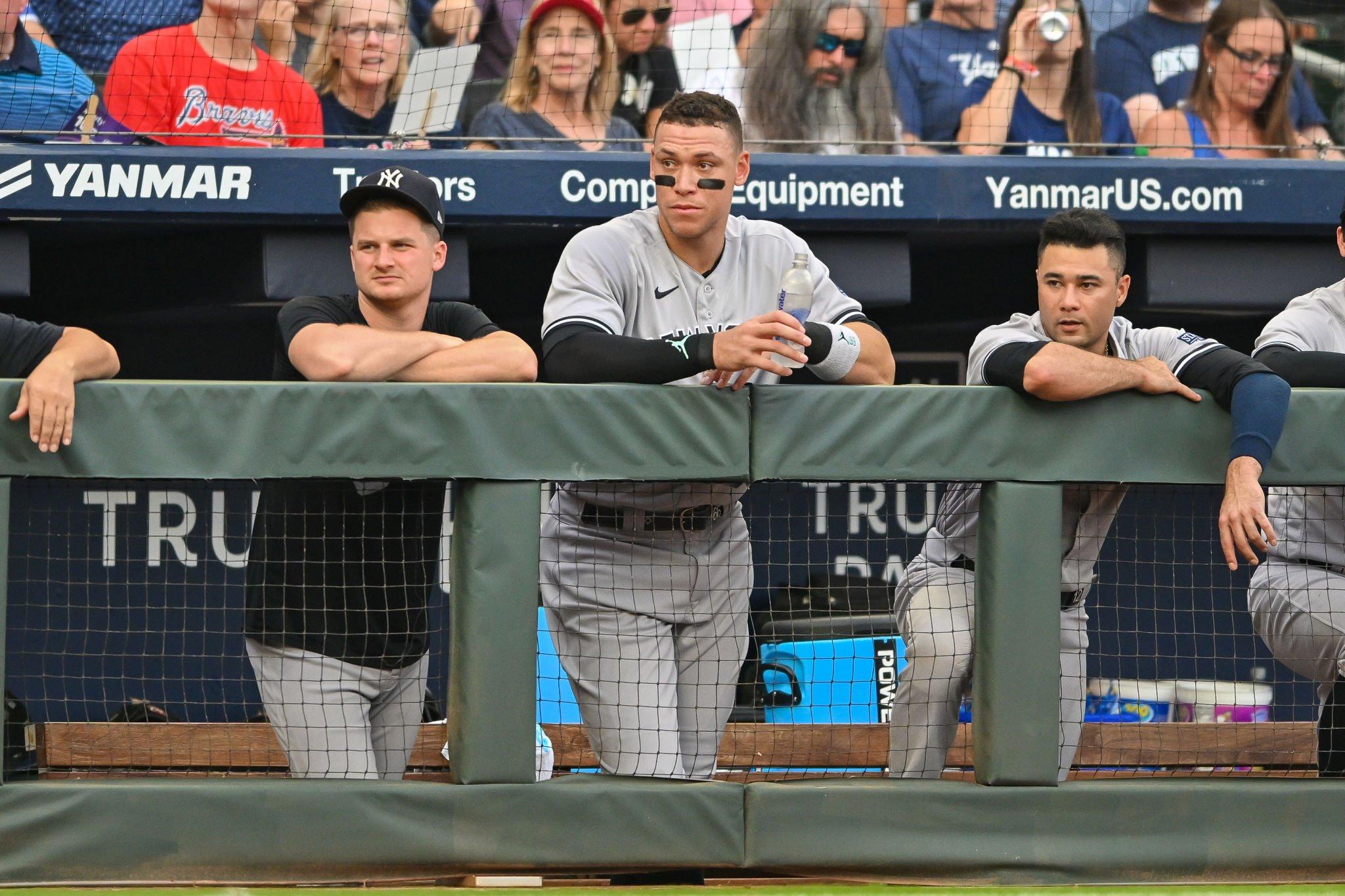
The drop fit a night full of strong Yankees defense behind their ace. Aaron Judge had already saved Cole with a diving catch in right field in the second inning. The glovework kept the right-hander’s pitch count low.
Cole needed only four pitches to get through the fourth inning. The quick frames and clean plays let him breeze through six scoreless innings. He allowed just two hits and walked three before exiting after 72 pitches.
The veteran clearly appreciated the help from his Yankees second baseman. Cole was making his first big-league appearance in 569 days. Every saved out carried extra weight in such a tight, high-pressure game.
Cole described the comeback as surreal after the game.
“It was almost like a second debut,” Cole said. “It was nice to get back in the fire.”
The Yankees could not finish the job, falling 4-2 as the bullpen faltered late. Even so, Chisholm’s heads-up drop stood out as a bright spot. It was the kind of subtle, winning baseball the Yankees have preached all season.
For Cole, the play was one more reason to smile on a special night. His stuff looked sharp, his defense was crisp, and a clever teammate had his back. The Yankees will hope that brand of smart baseball travels well the rest of the way.
What do you think?