NEW YORK — A four-to-six-week timeline sounds simple. The label attached to Cody Bellinger’s injury tells a more complicated story about how long, and how uncertain, the road back can be.
The Yankees placed Bellinger on the 10-day injured list on July 26 with a strained left hamstring. He felt a grab in the muscle while running out a double against the Phillies the night before, finished the inning, then walked gingerly off the field.
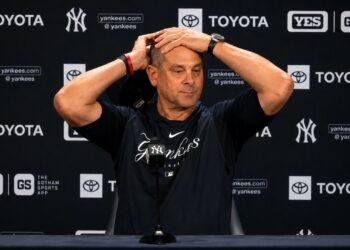
An MRI in New York the next day put a number on it. Yankees manager Aaron Boone announced a Grade 2 strain and an expected absence of four to six weeks, ruling out one of the few healthy, productive bats in a battered lineup.
The grade is the key word forBellinger injury. It sits between a minor tweak and a full tear, and it carries real meaning about the kind of recovery ahead.
It also invites a comparison many fans reached for, one that does not line up as neatly as it seems.
What a Grade 2 strain actually means
The hamstring is a group of three muscles along the back of the thigh that power running, hip extension and knee bend. That is why a strain there hits an athlete’s most explosive movements the hardest.
In standard clinical grading, a strain runs from Grade 1, a mild pull, to Grade 3, a complete tear. A Grade 2 lands in the middle: a moderate, partial tear with meaningful loss of strength and function, often with swelling and sometimes bruising. That is a real injury, not a day-to-day tightness issue, and not a rupture, and it explains why the Yankees set a multi-week window.
The number, though, only says so much. Modern sports-medicine thinking treats hamstring recovery as a function of both severity and structure, and the public record on Bellinger does not specify which of the three muscles is involved, whether any tendon is affected, or where along the muscle the tear sits. Those details, not the grade alone, most refine a prognosis, and none of them have been disclosed.
The timeline reflects that uncertainty. Team estimates come as windows rather than exact dates because imaging cannot pin down a precise return, and because progress hinges on how the muscle responds to loading, sprinting and change-of-direction work before the Yankees clear him.
Why the Stanton comparison needs a caveat
Many fans immediately thought of Giancarlo Stanton, and the instinct is understandable, but it needs a correction. Stanton’s current absence, dating to April 24, is a calf strain, not a hamstring. The fair comparison is his documented left hamstring strain from June 2024.
That 2024 injury offers a useful contrast because its full course is on the record. Stanton hurt the hamstring running the bases against Atlanta, and after imaging the Yankees described the strain as mild. He received a platelet-rich plasma injection, was initially expected to miss about four weeks, and the Yankees activated him on July 29, a layoff of roughly five weeks.
The severity language is the crux of the comparison. Bellinger’s injury is publicly graded and MRI-confirmed as moderate. Stanton’s 2024 strain was publicly framed as mild, without a confirmed grade. On the public evidence, Bellinger’s current case is the more severe of the two, even though both happened while running the bases and both landed in a similar early window.
There is one more wrinkle in Stanton’s file. He had also missed 43 games in 2023 with a left hamstring strain that ESPN reported as Grade 2, though the club never confirmed that grade. That history of recurrence is a factor Bellinger’s record does not currently carry, and prior hamstring injury is one of the strongest predictors of a future one.
Why ‘four to six weeks’ is not a guarantee
Older grade-based data pegged a Grade 2 strain at roughly a month of rehabilitation, which lines up with the Yankees’ window. But newer consensus leans on individualized timelines driven by pain response, strength symmetry, flexibility and sprint tolerance rather than the grade alone.
The harder truth is that being cleared is not the same as being fully restored. One study found that most players judged recovered from a hamstring injury still showed a measurable strength deficit at return, and other work has flagged lingering shortfalls in explosive power. For Bellinger, that raises questions beyond the calendar: whether the acceleration, baserunning and outfield range the Yankees rely on come all the way back.
Re-injury risk is why late-stage rehab matters most. Studies of elite sport put hamstring re-injury rates in the range of 15 to 20 percent, with many recurrences in the first two months back, and broader reviews suggest nearly a third can recur within a year. Those figures are not baseball-specific, but they explain why the Yankees and other clubs stay cautious with full-speed running.
None of this is cause for panic. It is the reason the Yankees will let the muscle heal fully before pushing Bellinger toward game speed, and why the four-to-six-week estimate is a guide rather than a promise.
What it means for a thin Yankees lineup
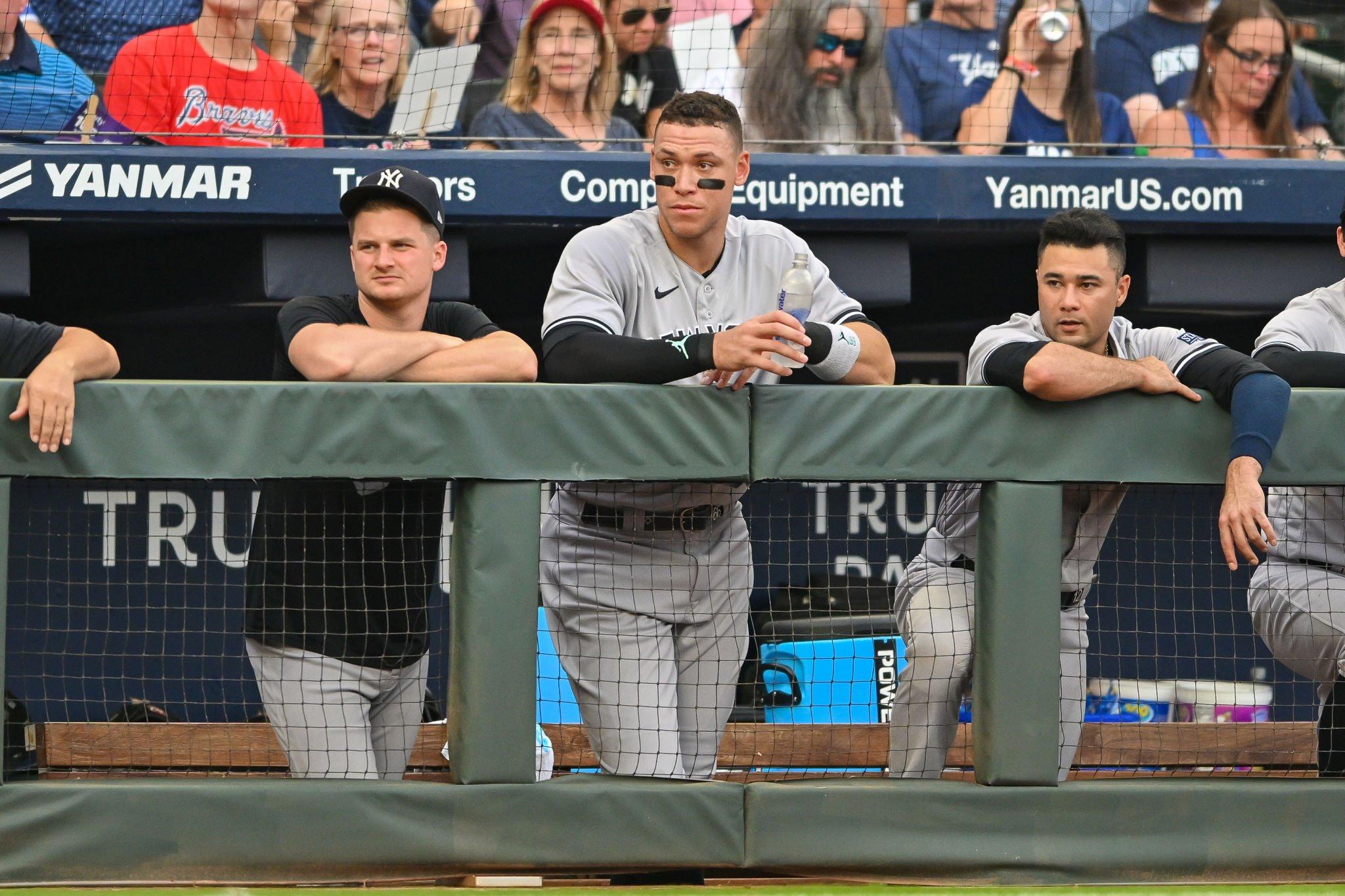
The timing is brutal. Bellinger, hitting .259 with 11 homers, 53 RBIs and elite left-field defense, was one of the few steady producers left with Aaron Judge sidelined by a fractured rib and Stanton still out with the calf. Boone framed the loss plainly.
“We’ve had some tough injuries to some really important people,” Boone said. “That is part of it. The season waits for no one.”
The absence sharpens the Yankees‘ deadline math. Already hunting for a catcher and bullpen help, the club now has a clearer need for an outfield bat, with the Aug. 3 deadline days away. Prospect Spencer Jones is expected to see significant time in left in the interim.
For now, the most honest description of Bellinger’s status is the simplest one: an MRI-confirmed Grade 2 left hamstring strain, a four-to-six-week estimate, and a return that will hinge on the details the Yankees have not yet made public.
What do you think? Leave your comment below.