BRONX, N.Y. — The New York Yankees revealed Friday they are currently involved in trade conversations centered on second baseman Jazz Chisholm Jr., though general manager Brian Cashman declined to eliminate the possibility of Chisholm staying with the team for 2026. This development arrives during a winter meetings stretch characterized by modest roster additions and mounting expectations for the Yankees’ leadership to strengthen a squad that qualified for the 2025 playoffs but could not advance beyond the ALDS.
The Yankees are currently addressing roster gaps at several positions while managing payroll limitations. The organization is “listening” to proposals for Chisholm, according to sources. Chisholm, who has become a fan favorite and one of the club’s most exciting players, produced one of the most thrilling seasons in recent Yankees memory during 2025.
Cashman open to options for Chisholm

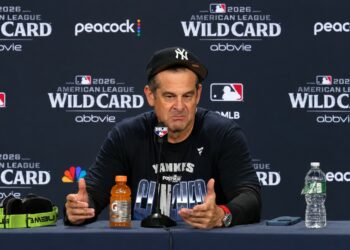
Cashman confirmed the organization has fielded inquiries from competing teams about Chisholm but stressed the Yankees are carefully considering their alternatives rather than pursuing transactions simply to generate activity.
“Chisholm is somebody who I think is currently part of the solution, someone who has made us better by getting him two deadlines ago,” Cashman said, affirming the 27-year-old’s value. “He’s above average. He’s an All-Star second baseman. Great defense. Steals bags. Power. All that stuff. So he’s been a good get.”
Cashman’s statements indicate a comprehensive assessment of the infield configuration and lineup structure as the Yankees examine methods to balance offensive production and defensive reliability. The front office has taken steps to investigate potential improvements at multiple positions, including shortstop and third base, influenced partially by Anthony Volpe’s offseason shoulder surgery and persistent concerns about infield depth.
Chisholm’s 2025 impact and trade value
Chisholm’s 2025 performance belongs in Yankees history. He joined an exclusive group as just the third player in franchise history to achieve the 30-30 milestone, concluding the season with 31 home runs and 31 stolen bases while posting a .242/.332/.481 slash line across 130 games.
This exceptional achievement combined elite speed with significant power and established Chisholm as one of the most athletic contributors in the batting order. His dual threat ability with both the long ball and on the base paths played a central role in numerous Yankees highlight moments throughout the campaign.
However, Chisholm’s October showing proved inconsistent. During the ALDS against the Toronto Blue Jays, he managed just 4 hits in 22 at-bats and made a critical error in Game 4 that helped lead to the Yankees’ postseason exit.
Front office strategy under scrutiny
Speculation about Chisholm’s future has grown more intense as the Yankees address organizational requirements and navigate a relatively quiet winter meetings period. New York started the offseason with obvious needs to upgrade its starting rotation, bullpen, and lineup construction, yet significant transactions have been limited.
The club’s roster approach underscores the challenge between keeping a core group of proven performers and seeking improvements via trades or free agency. The Yankees are also making the re-signing of outfielder Cody Bellinger a priority, as the free agent delivered a productive season and remains a primary objective.
Yankees supporters have extensively discussed whether dealing Chisholm might help achieve superior overall balance, particularly on the right side of the infield and throughout the lineup. Some observers contend that trading a 30-30 contributor could help acquire a premium offensive weapon or strengthen defense. Others view such a move as creating an unnecessary gap.
Market interest and rival team dynamics
Reports indicate the Yankees have received communications from other MLB organizations regarding Chisholm’s potential availability, with certain clubs viewing his blend of youth and output as a valuable asset. The second base market this winter shows considerable activity, with multiple teams investigating options for elite talent at the position.
The extent of those inquiries remains uncertain. Cashman’s public comments indicate the Yankees are not hurrying toward a resolution, despite increasing attention from around the league.
Chisholm’s contract status and future

Chisholm approaches 2026 in the final season of his contract before reaching free agency, a circumstance that may shape the Yankees’ decision-making process. No extension agreement exists between the organization and player as of early December, and Cashman has not yet initiated formal discussions with his representatives about a multi-year arrangement.
This situation introduces another dimension to the trade conversation. Extending Chisholm would secure a foundational piece for years ahead, while trading him could deliver resources to address wider roster requirements.
Fan reaction and clubhouse focus
Within Yankee Stadium’s community and supporter base, responses vary from enthusiasm about Chisholm’s competitive spirit to apprehension about potentially losing a significant contributor. The energetic style he displays on the field has made him popular with many fans, rendering any trade choice emotionally significant.
Amid the speculation, the Yankees clubhouse maintains its concentration on preparing for 2026. Players and coaching staff have openly restated their dedication to returning with improved performance next season, with Chisholm continuing as part of that conversation regardless of whether he remains or gets moved in a transaction.
What’s next for the Yankees
As the winter meetings continue, the Yankees will keep assessing trade proposals and potential free agent acquisitions. The franchise’s strategy seems to emphasize adaptability and strategic value instead of attention-grabbing transactions.
Should a deal involving Chisholm materialize, it will probably connect closely to how the Yankees can enhance their lineup composition and strengthen their pitching resources without compromising long-term competitive ability.
What do you think? Leave your comment below.