New York — The New York Yankees are out to boost their injury-hit rotation before the July 31 trade deadline. One of the names doing rounds as ideal solution to the Yankees’ rotation crisis is Arizona Diamondbacks starter Merrill Kelly. A playoff-tested veteran performing at an elite level on an affordable contract, he can immediately upgrade their depleted starting staff without requiring premium prospect capital.
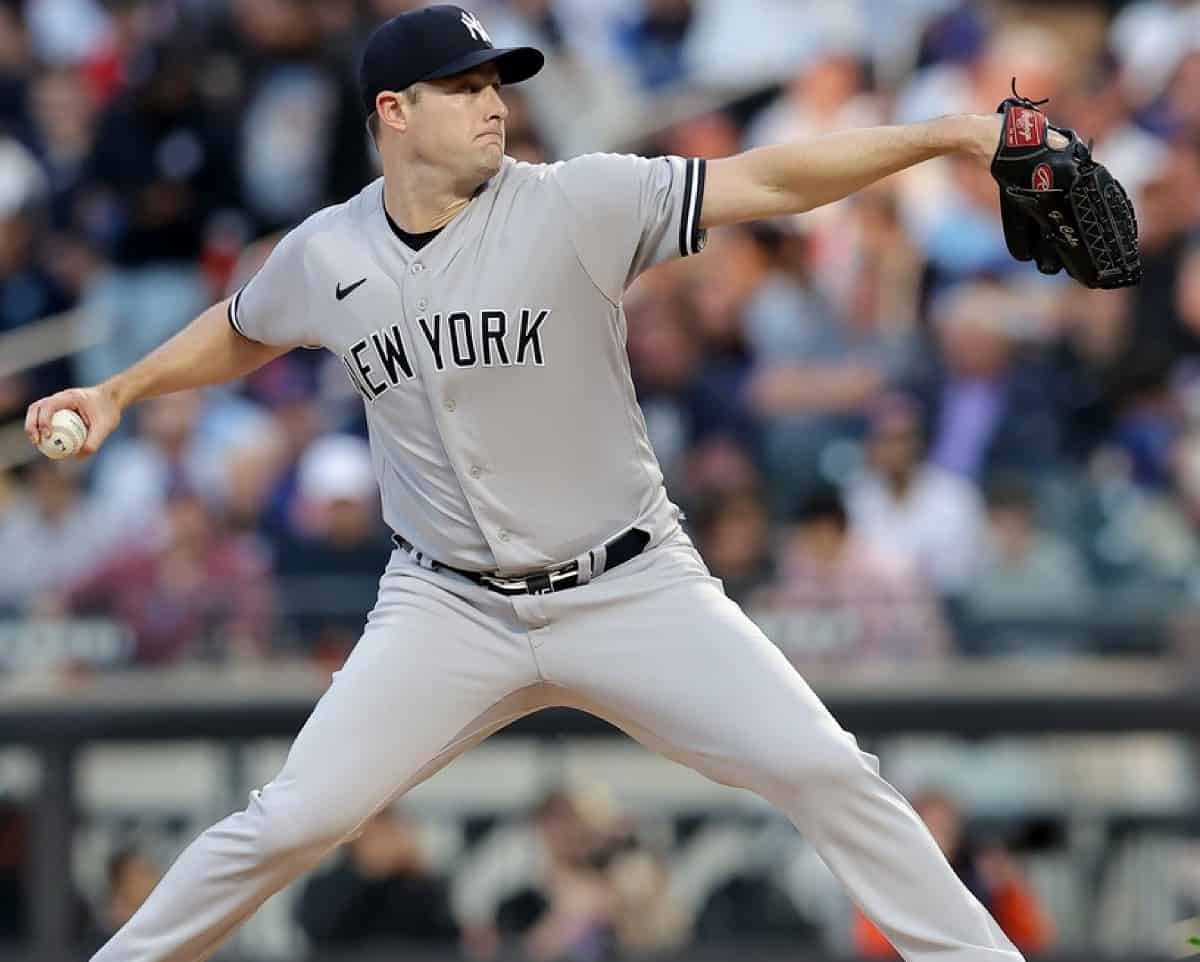
With devastating injuries to Gerrit Cole (Tommy John surgery), Clarke Schmidt (Tommy John surgery), and Luis Gil (lat strain), the Yankees desperately need reliable starting pitching for their playoff push. Kelly delivers exactly what they need at exactly the right price.

Strong 2025 performance masks concerning trends
Kelly is having an excellent 2025 season, posting a 9-5 record with a 3.32 ERA and 1.057 WHIP across 21 starts. His 118 strikeouts in 122 innings demonstrate continued effectiveness, while his 3.58 K/BB ratio shows strong command and control. The 36-year-old veteran has been remarkably consistent, giving up one or fewer runs in 10 of his 21 starts and holding opponents to four or fewer runs in all but one outing.
However, advanced metrics reveal potential regression risks for the Yankees. Kelly’s xERA of 3.99 suggests he’s outperforming expected results, while his hard-hit rate has increased to 45.8% – well above his career average of 40.1%. His average fastball velocity has declined to 91.8 mph, and he’s allowing more barrels (9.2% rate) than in previous seasons. These trends indicate age-related decline may be emerging.
Recent health concerns add another layer of complexity. Kelly dealt with right calf discomfort in July 2025, though he’s since been cleared to pitch. More concerning is his pattern of injuries over recent seasons, including a significant shoulder strain in 2024 that cost him three months. For a pitcher entering his age-37 season, durability questions are legitimate.
Financial arithmetic strongly favors the deal
Despite luxury tax implications, Kelly represents exceptional value for the Yankees. His $7 million salary would cost approximately $12.6 million total after luxury tax penalties, since the Yankees are currently $68.2 million over the threshold and paying maximum penalty rates of 110% on additional salary.

This seems expensive until considering market context. Similar pitchers command $15-20 million annually in free agency, making Kelly’s effective cost reasonable for his production level. Spotrac calculates his market value at $17.3 million per year, meaning the Yankees would acquire him at roughly half his theoretical worth even after tax penalties.
The Yankees’ financial capacity supports this expenditure. With approximately $679 million in annual revenue – second-highest in MLB – their current below-$300 million payroll represents just 45% of revenue, a historically sustainable ratio. The organization has demonstrated willingness to exceed luxury tax thresholds when targeting championship windows, paying tax bills 15 consecutive years from 2003-2017.
Kelly’s rental status provides additional financial protection. The Yankees avoid long-term risk while addressing an immediate need, with the option to re-sign him in free agency if the partnership succeeds.
Yankees rotation crisis demands immediate solution
The Yankees’ starting staff has been decimated by injuries. Three members of their projected World Series rotation are currently unavailable: Gerrit Cole won’t return from Tommy John surgery until mid-2026, Clarke Schmidt is out until 2027 after his own Tommy John procedure in July, and Luis Gil remains sidelined with a lat strain.
This leaves the Yankees relying on Max Fried, Carlos Rodon, Marcus Stroman, Will Warren (4.70 ERA), and rookie Cam Schlittler (who made his MLB debut July 9). General Manager Brian Cashman has been unusually direct about their needs, stating he’s “definitely looking to acquire a starting pitcher” and will “go to town” at the deadline.
Kelly would slot perfectly as a reliable #3 starter behind Fried and Rodon, providing veteran leadership and postseason experience the rotation lacks. His six-pitch mix allows him to remain effective despite diminished velocity, while his track record of eating innings (180+ in four seasons since 2019) addresses the Yankees’ durability concerns.
Most importantly, Kelly proved himself in October. During Arizona’s 2023 World Series run, he posted a 2.25 ERA across 24 innings in four starts, demonstrating he won’t be overwhelmed by playoff pressure – exactly what the Yankees need for their championship aspirations.
Trade market dynamics favor Yankees acquisition

Multiple sources confirm the Yankees have legitimate interest in Kelly, with scouts regularly attending Diamondbacks games to evaluate both Kelly and teammate Zac Gallen. The Athletic’s Brendan Kuty made a “bold prediction” that the Yankees will specifically acquire Kelly, calling it a “tremendous win for Brian Cashman.”
Arizona appears destined to sell. At 50-51 and 5.5 games behind the NL Wild Card, multiple executives believe the Diamondbacks have “no choice but to sell” according to USA Today’s Bob Nightengale. The organization wants young pitching in return, but Kelly’s age (36) and rental status should limit the asking price compared to more premium targets.
Kelly presents advantages over alternative options. Teammate Zac Gallen is struggling with a 5.40 ERA compared to Kelly’s 3.34, while other available starters like Pittsburgh’s Mitch Keller would cost significantly more both in prospect capital and salary commitment. The starting pitcher market is “shaping up to be very expensive” with more buyers than quality sellers, making Kelly’s reasonable cost structure attractive.
The Yankees possess sufficient trade assets to complete a deal. While their farm system ranks 24th by MLB Pipeline, they can offer mid-level prospects like Brock Selvidge or Everson Pereira without touching untouchable Spencer Jones or George Lombard Jr. Kelly’s rental status should make him available for secondary prospects rather than premium talent.
Conclusion: Low-risk, high-reward acquisition
Merrill Kelly represents the rare trade target who addresses multiple Yankees needs simultaneously. He provides immediate rotation stability, playoff experience, and financial flexibility while requiring minimal prospect capital. His strong 2025 performance outweighs age-related concerns for a rental acquisition, particularly given the Yankees’ urgent rotation needs and championship window.
The convergence of factors – Yankees’ stated aggressive approach, Arizona’s likely seller status, Kelly’s affordable contract, and his playoff readiness – makes this one of the more logical deadline matches. For a Yankees team currently four games behind Toronto in the AL East, acquiring Kelly could prove the difference between playoff contention and October disappointment.
The Yankees should prioritize Kelly above other rotation targets. He offers the perfect balance of performance, cost, and risk for their immediate needs while preserving prospect capital for additional deadline moves. This is exactly the type of veteran acquisition successful teams make when competing for championships.
What do you think?