NEW YORK — April 10, 1968 was not a day built for Yankees baseball. Six days earlier, Dr. Martin Luther King Jr. had been shot and killed on a Memphis hotel balcony. American cities were still burning. Fifty thousand federal troops had been deployed to restore order across the country. Thirty-nine people were dead.
Sport had stood down out of respect. Every scheduled Opening Day game in the American League had been postponed. When baseball finally returned on April 10, the day after Dr. King’s funeral, it returned to a nation still raw with grief.
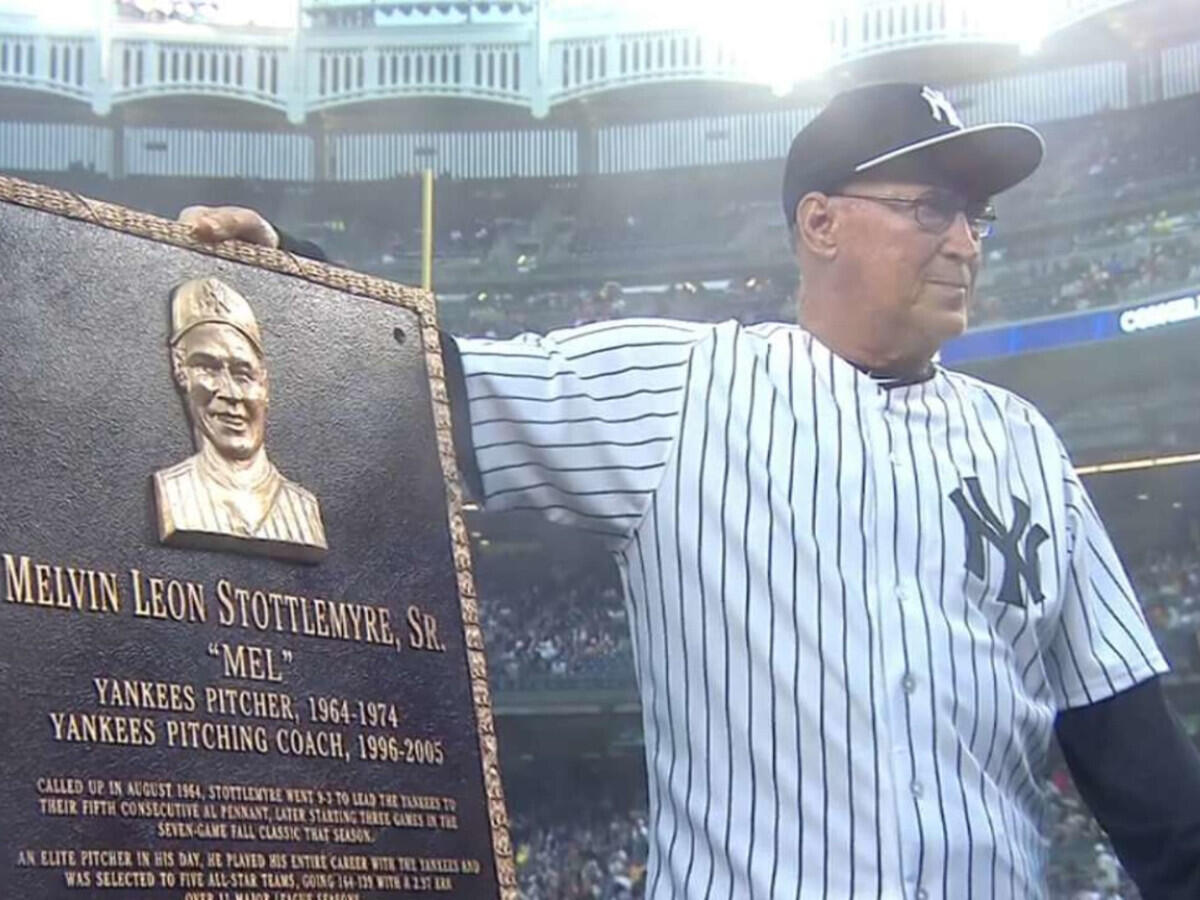
Into that moment walked Mel Stottlemyre. And what he did that afternoon at Yankee Stadium has not been forgotten.
A season opener unlike any other
The Yankees had finished 72-90 the previous year. They were a club in rebuilding mode, young and unproven at the plate. Manager Ralph Houk had been direct about the team’s state heading into camp. “The strength of our club is the pitching staff,” he told the New York Daily News in February. He added that hitting was the club’s greatest weakness.
Houk was right on both counts.
The crowd that showed up to Yankee Stadium on April 10 numbered 15,744. It included Claire Ruth, the 67-year-old widow of Babe Ruth. Metropolitan Opera baritone Robert Merrill sang the national anthem. A plaque was presented to Mickey Mantle honoring his 500th career home run, hit the previous May. And for the ceremonial first pitch, the Yankees chose not a politician or a retired ballplayer but an 80-year-old Pulitzer Prize-winning poet named Marianne Moore, a devoted baseball fan.
After catching Moore’s toss from the stands, young Yankees catcher Frank Fernandez leaned over the railing and kissed her on the cheek. Leonard Koppett of the New York Times called it a Yankee Stadium first. Fernandez later said simply: “I did it on the spur of the moment.”
Stottlemyre takes the mound
When the actual baseball started, it was Mel Stottlemyre on the mound for New York. He was 26 years old, a two-time All-Star, and the Yankees’ undisputed staff leader. The California Angels were the opponent. Their starter, left-hander George Brunet, had led the American League in losses the previous season with 19.
The contrast in the two pitchers’ fortunes that day proved stark.
Stottlemyre stumbled slightly in the first inning when rookie third baseman Mike Ferraro threw wildly to first base on a routine grounder. But Fernandez threw out the base runner trying to steal, and Stottlemyre settled in. After allowing a two-out single to Don Mincher in the first, he retired 18 consecutive batters. Eighteen. The sequence covered more than five innings of dominant, methodical work. Five strikeouts. Six grounders. Seven fly balls. Not a baserunner.
The only run that mattered
The game’s lone score came in the second inning. With two out, the bases empty, and two strikes already in the count, Brunet threw a high-and-inside fastball to Fernandez. The catcher, just six days shy of his 25th birthday, pulled it into the left-field bleachers for a home run. His second of his career.
“I thought it was gone,” Fernandez said afterward. “But when I saw Whitey waving at me to run, I wondered where it had gone. How sweet it was to see the ball in the seats.”
The reference to Whitey was Ford, Stottlemyre’s old teammate and now the Yankees’ first base coach, stationed down the line to make sure Fernandez did not miss a bag in his excitement. The home run stood as the only score of the afternoon. One run. One hit. One shutout.
Nine innings, 95 pitches, a piece of baseball history
There was one sticky moment in the eighth inning. Stottlemyre stepped off the mound between pitches to moisten his fingers. First base umpire Al Salerno, enforcing a new rule aimed at eliminating the spitball, ruled that Stottlemyre had not reached the infield grass before wetting his hand and awarded pinch hitter Jay Johnstone an automatic ball. Houk protested the game on the spot. Stottlemyre threw two pitches out of the zone before gathering himself and retiring Johnstone and the next batter as well.
In the ninth, with two out and runners on second and third, Stottlemyre retired cleanup hitter Chuck Hinton on a grounder to short. Game over. Final score: 1-0.
The outing ran 1 hour and 43 minutes. Stottlemyre used 95 pitches, counting the automatic ball. He allowed four hits and struck out six. He walked no one.
The victory made Stottlemyre the first pitcher in Yankees franchise history to throw back-to-back Opening Day shutouts. He had done the same to Washington the previous April. According to SABR’s research, no pitcher across the 1961-to-2025 period who threw at least 200 innings against a single team surrendered home runs at a lower rate than Stottlemyre did against the Angels, allowing just three homers over 218 innings lifetime.
“He’s the best pitcher in the major leagues,” Brunet said of Stottlemyre after the game.
Houk, satisfied, reportedly just purred. Newsday’s Steve Jacobson captured the afternoon in a single line: “Opening day was a kiss to build a dream on.”
The season that followed
The 1968 season validated Houk’s preseason assessment. The Yankees finished 83-79 and fifth in the American League. Their team batting average was .214, the lowest in the majors. But Stottlemyre was extraordinary across the full year, finishing with a career-high 21 victories, six shutouts, a 2.45 ERA, and his third All-Star selection.
Fernandez, the unlikely hero of Opening Day, lost significant playing time to Army Reserve obligations and managed just a .170 average for the season. Brunet went 13-17 for the Angels and became the last American League pitcher through 2025 to lead the league in losses two years running.
The day itself, of course, carried a weight that no box score could hold. Baseball had returned to a nation still working through something enormous. On a cold afternoon in the Bronx, Stottlemyre threw 95 pitches, allowed four hits, and gave New York exactly one thing to celebrate. Fifty-eight years later, the game still stands as one of the cleanest, quietest, most quietly significant performances in franchise history.
What do you think? Leave your comment below.