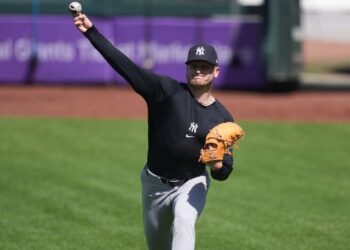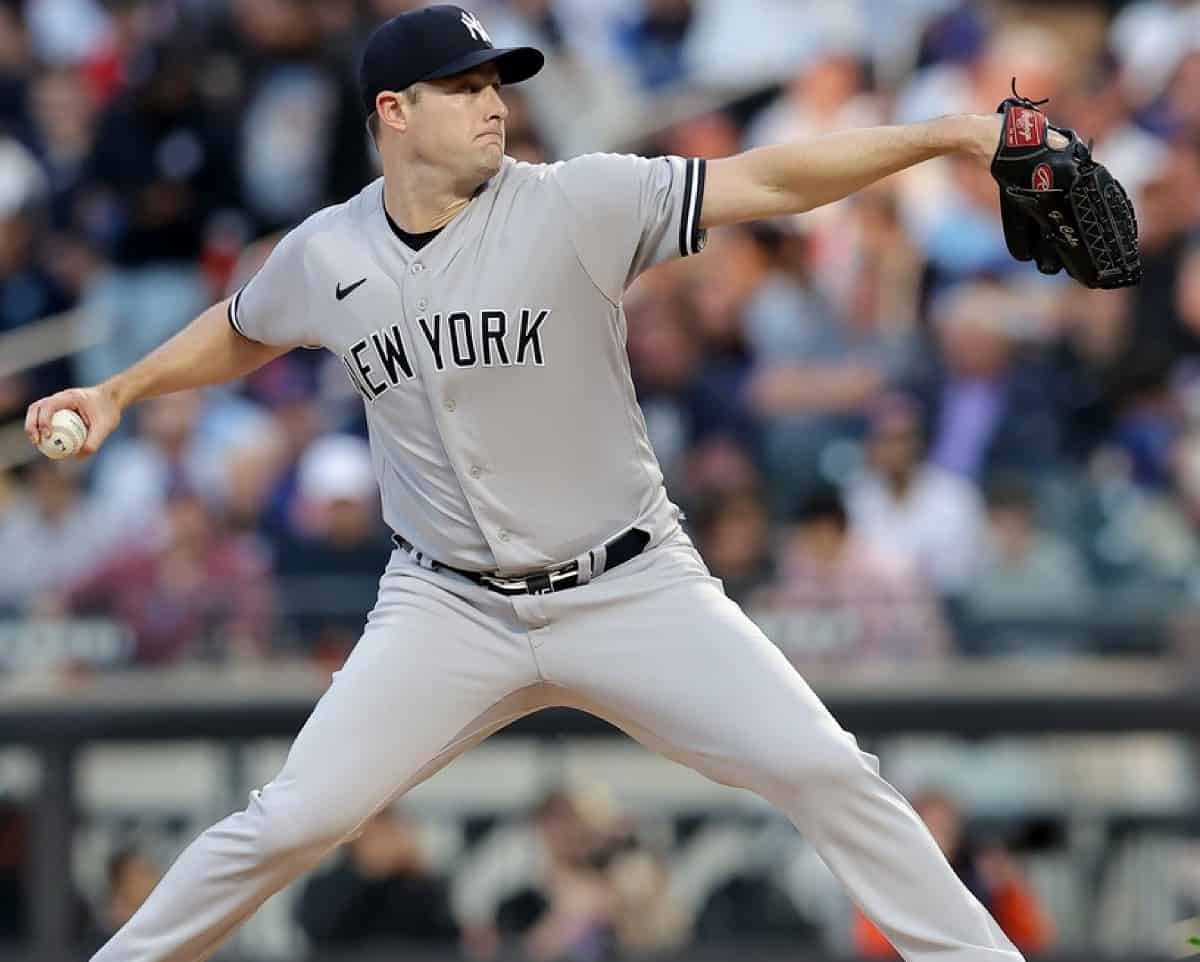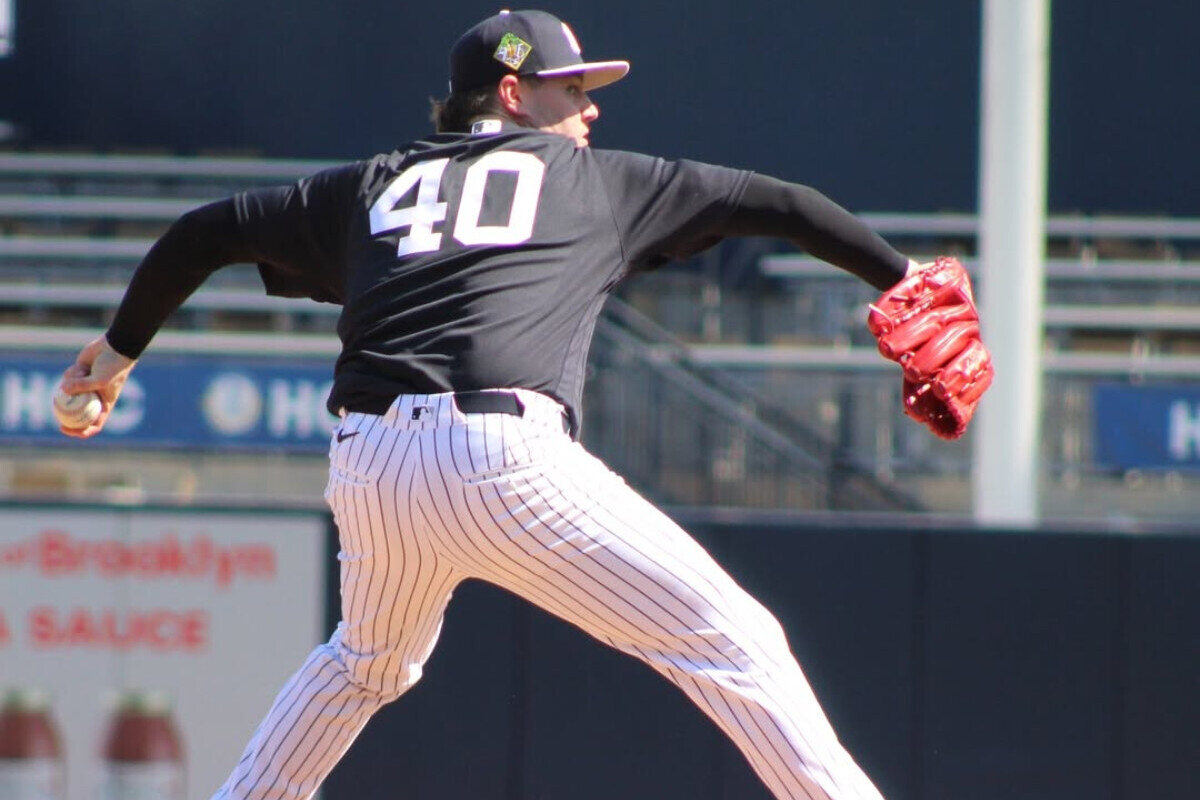
TAMPA, Fla. — The surface numbers are brutal. Ryan Weathers finished Grapefruit League play with an 11.68 ERA across four starts for the Yankees. Opponents batted .359 against him. He allowed three home runs in just 12.1 innings. His final outing, a seven-run disaster against the Blue Jays in Dunedin, was the kind of start that sends fans scrambling to the trade deadline wish list before the season even begins.
And yet, the Yankees are not panicking. Not even close.
Manager Aaron Boone confirmed Thursday that Weathers will be in the Yankees’ starting rotation when the season opens March 25 in San Francisco against the Giants.
“He’s healthy and the stuff is in line with where it needs to be,” Boone said, per MLB.com’s Bryan Hoch. “I don’t put a lot of stock in numbers in spring.”
The numbers behind the numbers
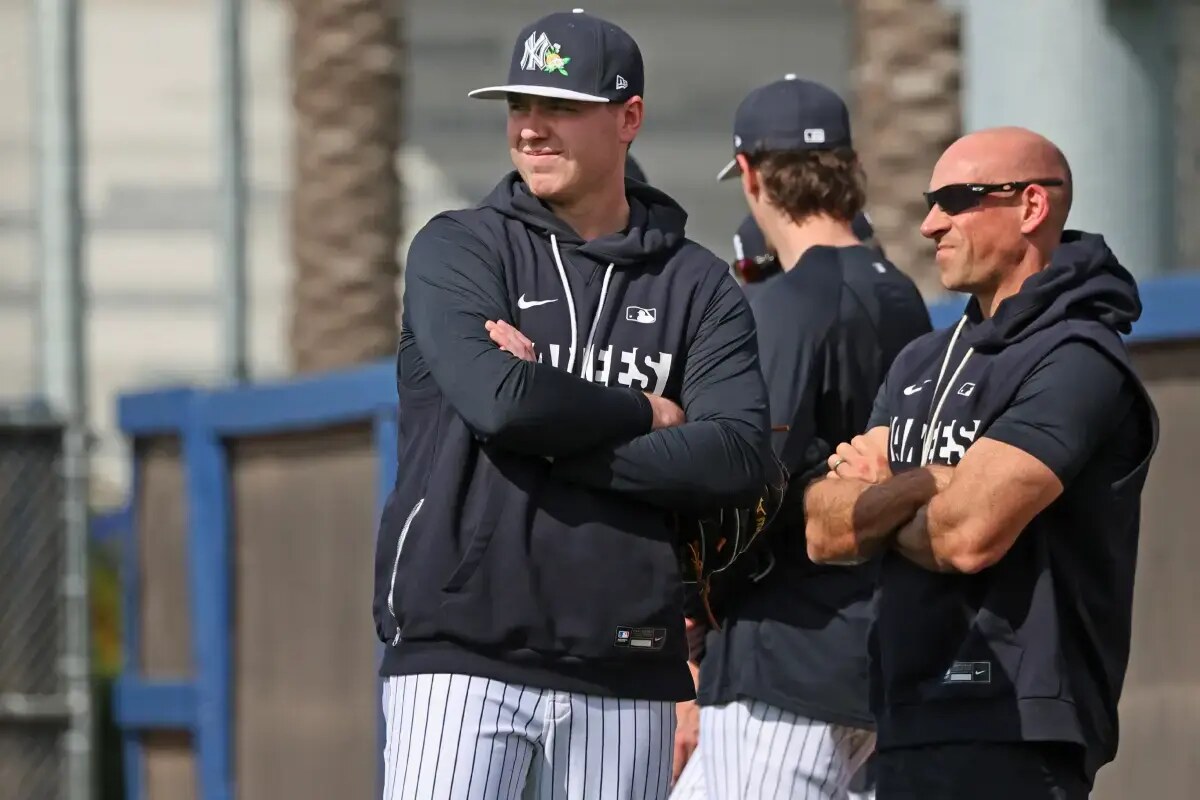
Boone’s confidence is not blind faith. There is real data behind it, and it paints a picture of Weathers’ spring that looks nothing like an 11.68 ERA.
An analysis into the advanced metrics could see the Yankees left-hander as one who has been far better than his traditional stats suggest. Start with the luck indicators. Weathers posted a .525 batting average on balls in play this spring. The MLB average in 2025 was .289. That gap alone accounts for a massive chunk of the damage done against him.
It gets more extreme from there. His batting average allowed on negative-angle batted balls, meaning grounders and low line drives, was .611 this spring. The league average in 2025 was .172. His home run to fly ball rate sat at 33.3 percent, nearly triple the MLB average of 11.9 percent. Those are the kinds of numbers that scream bad luck in a small sample, not a pitcher who is getting hit hard.
What the Yankees are actually seeing
Here is why the Yankees are comfortable handing Weathers a rotation spot despite the ugly ERA. The underlying quality indicators are strong. His barrel rate allowed sits at just 7.1 percent, meaning hitters are not squaring him up consistently. The high exit velocities opponents have posted against him are mostly coming on ground balls, and he has generated a 60 percent ground ball rate this spring.
Most importantly for the Yankees, Weathers has maintained elite swing-and-miss stuff. His whiff rate is 32.5 percent with a 21.8 percent strikeout-minus-walk rate. Those are the kinds of numbers that translate to regular season success regardless of what happens with balls finding holes in March.
The Yankees also like the improvements they have seen in two specific pitches. His sinker has added more depth and has been generating soft ground ball contact throughout Yankees camp. His bullet slider has gained additional downward movement. Both developments are exactly what the club was hoping to see when it acquired Weathers from the Miami Marlins this offseason for four prospects.
Weathers acknowledged earlier in camp that he has been working on adjustments rather than chasing results.
“We’re going to get into it more in the coming days, but it’s probably more of a usage adjustment, especially against left-handed batters,” Weathers said. “I don’t feel like I’m utilizing my two-seamer as much, where it could open up the zone a little bit for my four-seamer and my sweeper.”
Why the Yankees can afford to be patient
Weathers’ rotation spot was never truly in jeopardy. He has a guaranteed roster position and is under team control through 2028. The Yankees did not trade four prospects for a pitcher they planned to yank after a handful of spring starts.
The bigger picture for the Yankees rotation also helps explain the patience. Max Fried is locked in as the Opening Day starter. Cam Schlittler and Will Warren have pitched well this spring and are set for spots behind Fried. Weathers projects as the fourth starter, with Luis Gil competing for the fifth slot. Gerrit Cole and Carlos Rodon are both expected to return from injuries as the season progresses, giving the Yankees reinforcements that most clubs can only dream about.
When Cole and Rodon are back, the Yankees will have more arms than rotation spots. That kind of depth makes a rough spring from Weathers far easier to absorb. The club is not asking him to carry the staff alone. They are asking him to hold down a spot until the cavalry arrives.
Spring training ERA is one of the least predictive stats in baseball. Small samples, pitchers working on new pitches, and randomness in ball-in-play outcomes all conspire to produce numbers that have little connection to what happens in April and beyond. The Yankees know this. The advanced data tells them Weathers’ stuff is playing. The ERA says otherwise, but the Yankees are betting on the stuff.
What do you think? Leave your comment below.