NEW YORK — The New York Yankees delivered a telling message about their organizational direction Tuesday night, and it wasn’t found in their 10-3 victory over Seattle.
Manager Aaron Boone’s pregame confirmation that DJ LeMahieu has transitioned to “a bat off the bench” represents more than a simple roster adjustment. The move signals a potential conclusion to one of the most debatable careers in recent Yankees history. However, this came at a time when he is actually waking up offensively.
With Jazz Chisholm Jr. permanently returning to second base, LeMahieu’s path back to regular playing time has effectively vanished. The 36-year-old veteran now faces an uncertain future in pinstripes.
Veteran star becomes bench bat
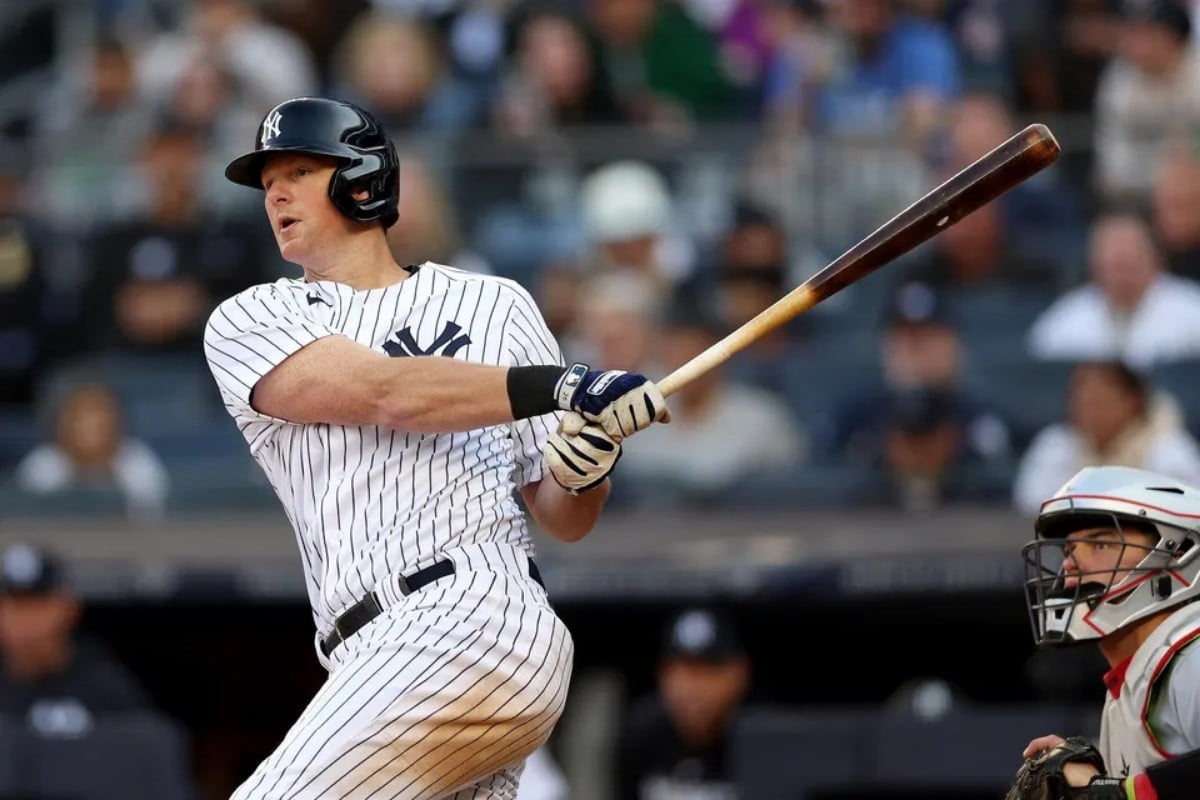
LeMahieu’s transformation from everyday cornerstone to reserve player stems from declining defensive capabilities rather than offensive struggles. Since June 1, he’s maintained a solid .310 batting average while posting a respectable .338 OBP for the season.
His .266 overall average ranks adequately among Yankees regulars, but those numbers can’t overcome his defensive limitations. LeMahieu’s range and mobility have deteriorated significantly, particularly at third base.
“I think physically, it’s a challenge for him right now,” Boone said when asked directly about LeMahieu’s chances to return to third. “So, right now, no plans of doing that.”
The Yankees have instead turned to Oswald Peraza at third base. Despite Peraza’s offensive struggles (.154 average, .487 OPS), his defensive reliability has earned Boone’s confidence.
“Wherever you put him on the diamond, the defense has been phenomenal,” Boone said about Peraza, acknowledging he’s “been a struggle offensively.”
The Yankees’ shunted him out to make room for Chisholm at second, as his defense at third continues to bleed them. Age remains on his side too.
Chisholm’s shift to natural position creates domino effect

The catalyst for LeMahieu’s displacement came through Chisholm’s return to second base. The dynamic infielder spent most of his Yankees tenure playing third base after arriving from Miami last summer.
Jazz Chisholm’s defensive struggles at the hot corner became obvious recently, committing throwing errors in three of four games. His shoulder injury further complicated matters before he recently regained full health.
“Take advantage of his athleticism” became Boone’s primary reason for the positional switch. Chisholm embraced the change with characteristic confidence.
“Elite defender. Elite slugging. Fast. Great defense. I don’t know what else to tell you. Sounds like a complete player to me,” Chisholm said.
His performance on Tuesday validated that confidence. Chisholm contributed an RBI double and made a crucial defensive play in the seventh inning.
Limited options for veteran infielder
With Chisholm established at second base and no plans for LeMahieu at third, the veteran’s opportunities have essentially evaporated. Boone described LeMahieu’s situation as “fluid” but acknowledged their conversation about the change “was not great, necessarily.”
LeMahieu’s struggles trace back to spring training when he strained his left calf in his first Grapefruit League appearance. His limited mobility since returning in mid-May has prevented him from handling third base effectively.
Boone’s recent comments confirm this defensive limitation won’t improve. The uncomfortable reality becomes clear: if LeMahieu can’t play third and no longer starts at second, his future role remains minimal.
Contract situation complicates LeMahieu’s future
LeMahieu’s departure isn’t financially simple for the Yankees. His remaining contract obligations include his current season’s balance plus a guaranteed $15 million for 2026, totaling approximately $22 million in commitments.
The 37-year-old’s trade value has virtually disappeared. Releasing him would force owner Hal Steinbrenner to absorb significant guaranteed money, something he’s historically avoided.
This financial reality likely keeps LeMahieu as a veteran bench presence for now. However, with the July 31 trade deadline approaching and the team pursuing infield help, including reported interest in Colorado’s Ryan McMahon, his roster security has weakened.
The Yankees have signed Jeimer Candelario and Nicky Lopez to minor-league contracts while developing Andrew Velazquez and Jorbit Vivas in the system. These moves represent insurance rather than star power, but they signal organizational direction.
Once consistent, he faces career crossroads
LeMahieu never sought attention or fanfare throughout his Yankees tenure. For five seasons, he provided unwavering reliability as a Gold Glover and veteran leader who bridged generations.
His 2019 and 2020 campaigns established him as arguably the team’s most valuable player. He guided younger teammates while maintaining elite performance standards.
Now he observes from the dugout while others occupy his former positions. This transition differs from his previous injury battles because it appears permanent rather than temporary.
Boone avoided using definitive language about LeMahieu’s future. Instead, he emphasized Chisholm’s upside and athleticism. The implication remained unmistakable.
The Yankees won’t designate LeMahieu for assignment immediately. He retains some value in specific matchups and late-game situations. But without defensive contributions, his pinstripes tenure may not extend much longer.
If this represents LeMahieu’s ending, it defies expectations. He was supposed to age gracefully into a utility leadership role, serving as a bridge between Yankees’ eras.
Instead, his decline — accelerated by injuries and roster evolution — may conclude his chapter sooner than anyone anticipated. The transition from franchise cornerstone to bench player rarely reverses direction.
What do you think? Leave your comment below.