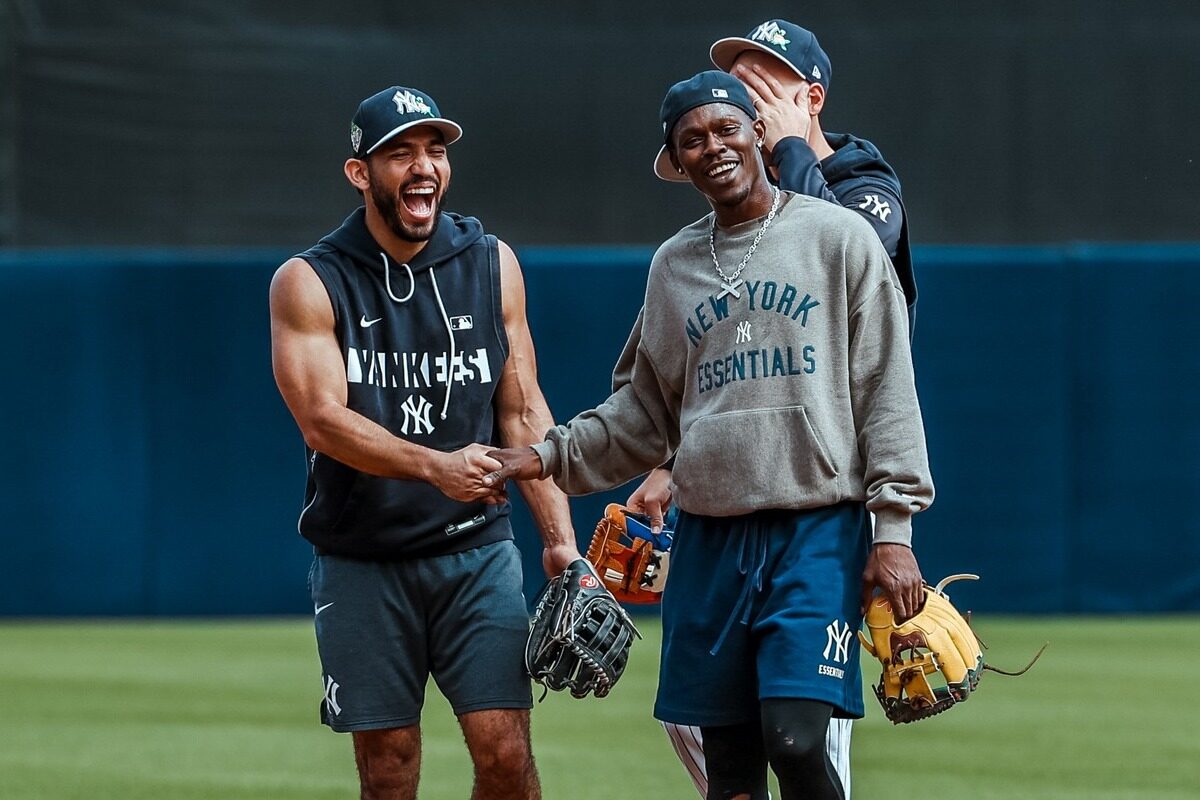
NEW YORK — He has not delivered the breakout April his critics demanded. His contract talks with the Yankees front office remain unresolved. His ABS challenge record borders on embarrassing. But somewhere between a slow April and the first signs of warmth in May, Jazz Chisholm has started to hit.
The question for the Yankees is whether the production will stay once the noise around him gets louder. It is the defining subplot of the Yankees’ 2026 season.
A slow start that tested patience
Through the first week of April, Chisholm was hitting .170 with zero home runs and minimal production at the plate. The Yankees were winning anyway, propped up by Ben Rice’s historic start and a dominant Yankees pitching staff. Chisholm was a quiet problem no one needed to solve in a hurry.
He blamed the cold weather during his early struggles. That explanation drew skepticism at the time. But over the past two weeks, as temperatures climbed and the calendar pushed toward May, something shifted. Over his last 15 days, Chisholm has batted .267 with a .377 on-base percentage and a .422 slugging mark. The majority of his home runs and RBIs for the season have come in that stretch.
His season-long line through 27 games still reflects the difficult start. He is hitting .216 with a .303 on-base percentage, a .330 slugging percentage, two home runs and nine RBIs. His 81 wRC+ puts him 19 percent below the average major league hitter. In a contract year, those numbers carry weight far beyond the standings.
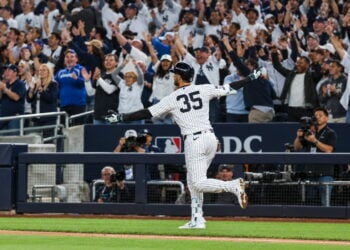
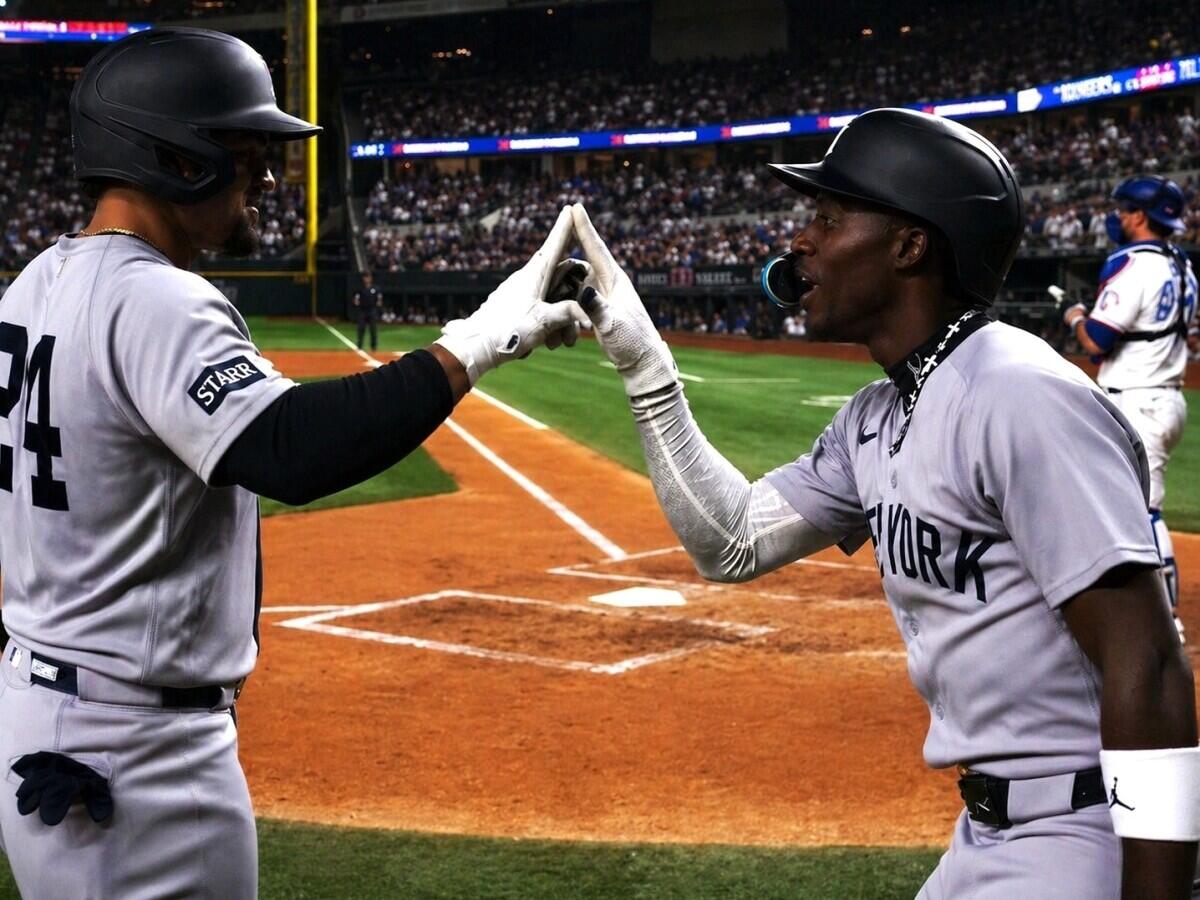
After his first home run against the Astros on Friday, Chisholm homered against the Rangers in 4-2 win Monday.
Chisholm fines himself double over ABS missteps
The on-field turnaround has come with a side story that is harder to dismiss. Chisholm has been one of the worst hitters in baseball at using the ABS challenge system this season. Through late April, he was 1-for-7 on challenges. Two of those failed challenges stand out for the wrong reasons.
In a win over the Houston Astros earlier this month, Chisholm challenged a third strike from pitcher Bryan Abreu. The ABS system showed the pitch was in the lower-middle of the strike zone. Chisholm acted surprised. His teammates were less forgiving. The Yankees had already put in place a clubhouse policy fining players $500 for poor challenges. Chisholm held himself to a higher standard.
He announced he would fine himself $1,000. The moment illustrated something real about Chisholm: he holds himself accountable in his own way, even when the situation is of his own making. Reserve catcher J.C. Escarra, who has gone 3-for-4 on ABS challenges himself, offered a direct assessment of why some challenges go wrong.
“If it’s a whole ball in the zone, you should know it’s a strike,” said J.C. Escarra.
Manager Aaron Boone has had firm conversations with Yankees shortstop Jose Caballero about similar ABS problems. Caballero has failed five of 10 challenges this season. Boone has also raised the possibility that Yankees players with consistently poor judgment on challenges could lose the right to dispute calls.
The gambler’s $1.98 million and Chisholm’s reaction
This is where the story takes an unlikely turn. Chisholm hit his second home run of the season on a Friday night against the Astros. That swing completed a six-player home run parlay for a Florida man who had placed a $30.11 bet on Hard Rock Bet. The parlay paid 65,761-to-1 odds. The winner walked away with $1.98 million, the longest-odds, seven-figure parlay payout in Hard Rock Bet history.
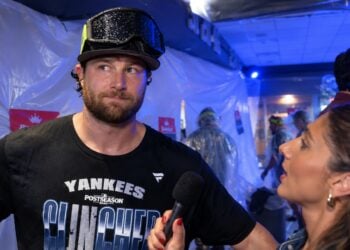
When told about the winning bet the next morning, Chisholm reacted the way only Chisholm can. He laughed. He asked if he would get a cut. Then he turned it into something more generous.
“Am I getting a cut? I’ll take just 5 percent for my Foundation because he’s probably a regular guy. I think that’s fair!,” Jazz Chisholm told.
He then added that he was happy for the winner and hoped the money would help his family. The exchange captured what makes Chisholm so watchable. He is equal parts frustrating and magnetic. He is the Yankees player who fines himself double for a bad call challenge and jokes about charity cuts on a stranger’s lottery-ticket win. The Yankees have never had anyone quite like him.
Contract pressure mounting in a defining year
Behind the humor and the distractions sits a harder conversation. This is a contract year for Chisholm. He posted 30-plus home runs and 30-plus stolen bases in 2025, his first full season in pinstripes. He is reported to want $35 million annually on his next deal.
The Yankees, under general manager Brian Cashman, have shown no urgency to extend him. Cashman allowed Gleyber Torres to leave after years of productive service in pinstripes. The Yankees’ organizational posture has historically been to let contract talks play out after the season. Chisholm is aware of how this script usually ends in New York.
His defense remains elite regardless of what the bat is doing. He has four outs above average at second base this season, with range and instincts that put him among the better defenders at his position in the American League. Even in his worst Yankees offensive stretches, the team gets full value from his glove.
But defense alone will not command $35 million a year. Chisholm needs the bat to speak loudly enough to force the Yankees into a conversation they seem comfortable delaying. His recent two-week surge offers encouragement. Whether it represents a true turnaround or a brief uptick in a difficult season remains the central question surrounding one of the team’s most polarizing figures.
The Yankees are winning. Chisholm is finally contributing. The contract talks are quiet. And somewhere in Florida, a man has $1.98 million he did not expect. In the middle of all of it stands Jazz Chisholm, still the most unpredictable storyline on the Yankees roster in 2026.
What do you think? How much should he get in his next contract?