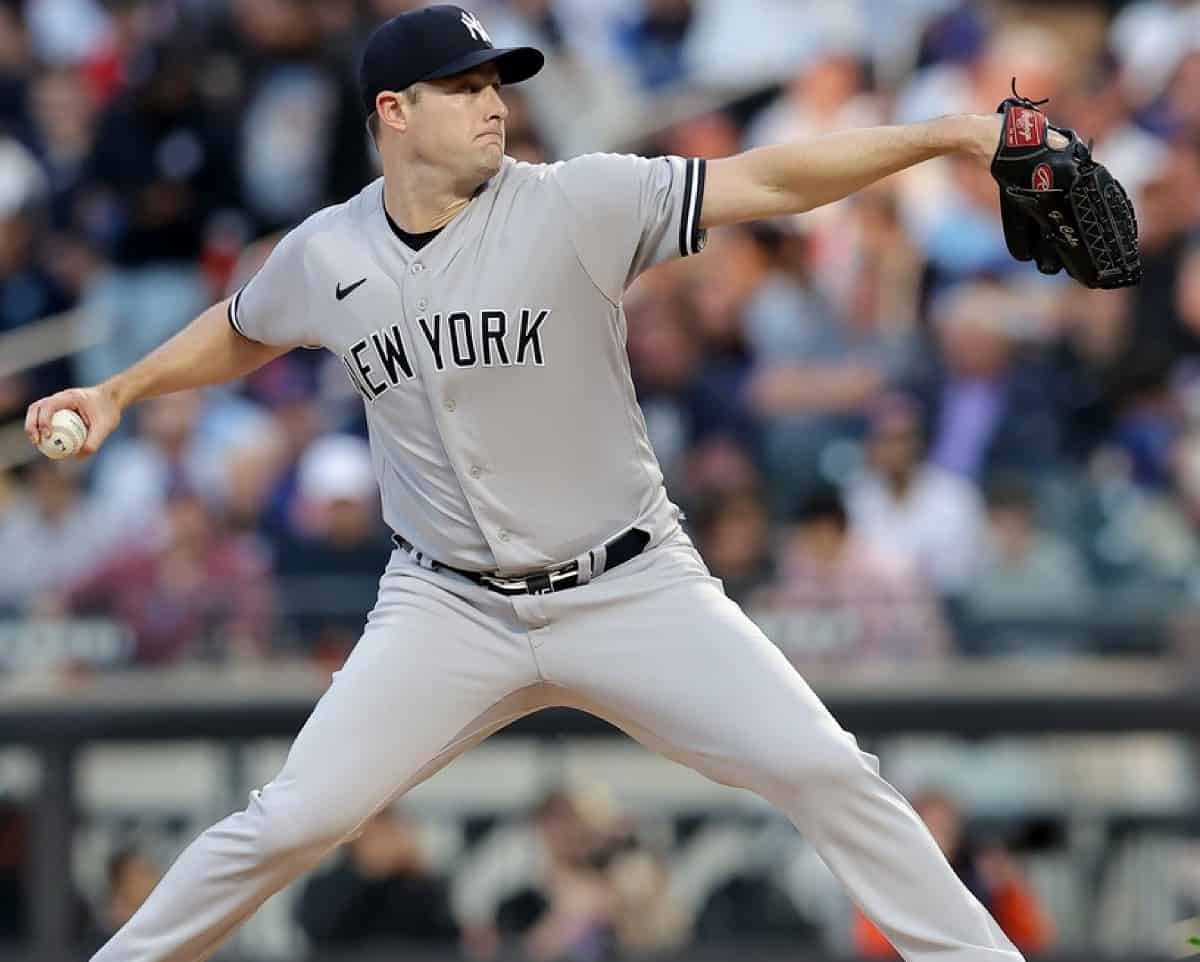
Imagine in a packed Citi Field during a heated Yankees–Mets game, the tension erupts. A Yankees pitcher nearly hit Mets slugger Pete Alonso, who charges the mound. The infield clears out, but only Alonso and the pitcher square off one-on-one.
The two combatants exchange blows while the crowd roars. Fans chant and media crews capture every second of the sanctioned fight. In this vignette, Alonso lands a decisive punch, staggering the pitcher. By the hockey-style rule, the wounded pitcher is ejected and Alonso remains on first base. The bench erupts in celebration; even the scoreboard waits as the fight dominates the highlight reel.
This scenario shows how a 1-v-1 baseball fight could play out on the field, altering the drama and atmosphere of a game, if MLB grants Alonso his latest wish.
In a recent interview, Mets first baseman Pete Alonso reignited debate around on-field violence by suggesting that Major League Baseball should adopt “hockey-style” rules for fighting — allowing players to brawl one-on-one without automatic ejections.
“If there is one rule I could change, I don’t think people should get ejected after charging the mound and fighting. I think it should be hockey style,” Alonso told on Tuesday. “The benches stay put. No suspensions. No team-wide chaos.”
While MLB has not signaled any intent to entertain the idea, the proposal has sparked reaction across the league — especially among New York Yankees insiders, fans, and analysts. The Yankees, a franchise deeply associated with professionalism and tradition, find themselves at the center of a conversation that could radically alter the culture of the game.
What the fight rule could mean for the Yankees
Size and physical presence could become a strategic asset
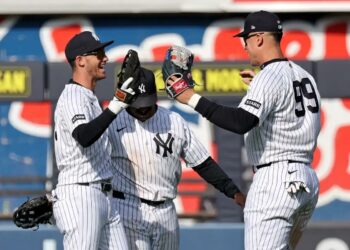
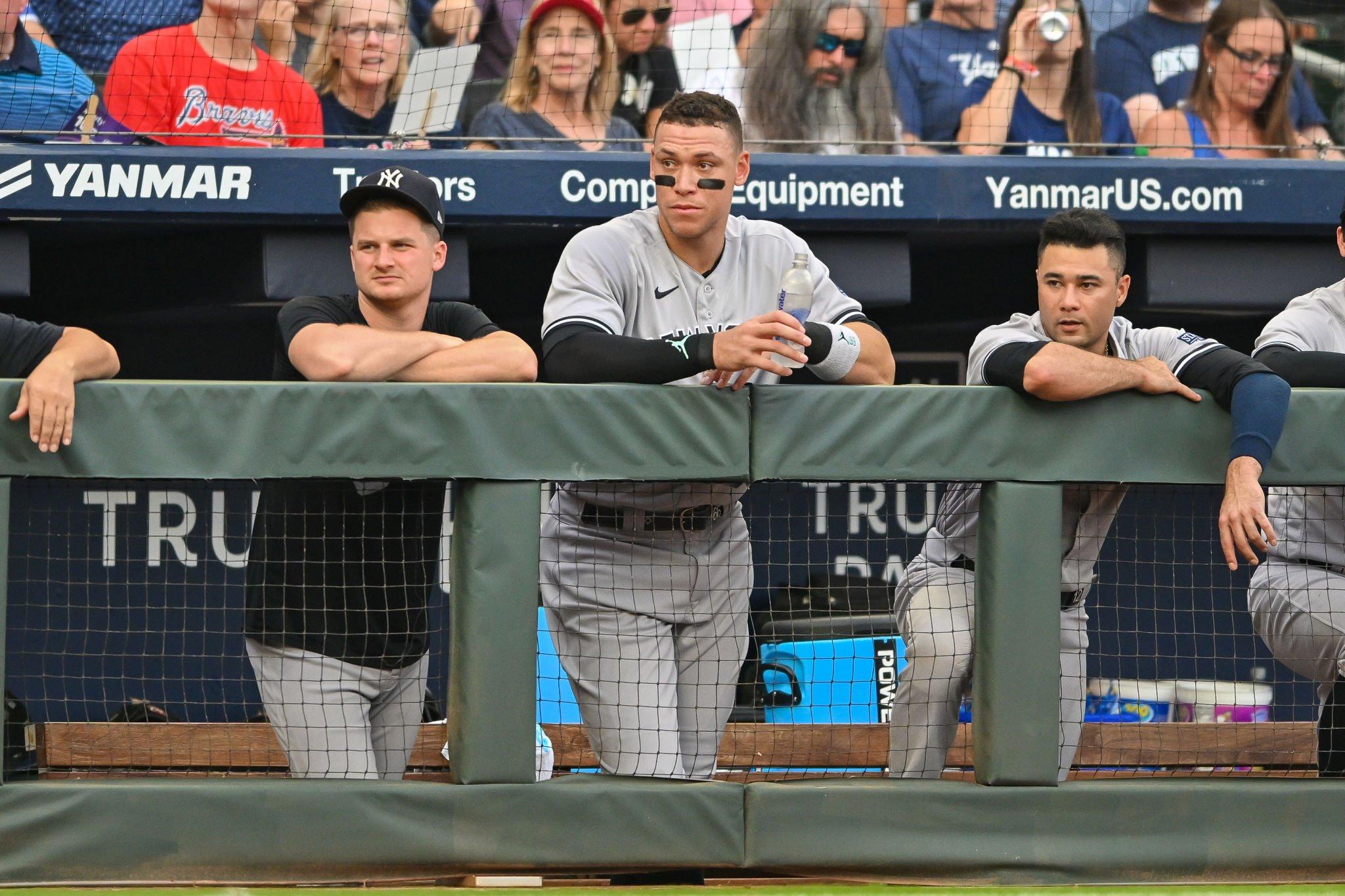
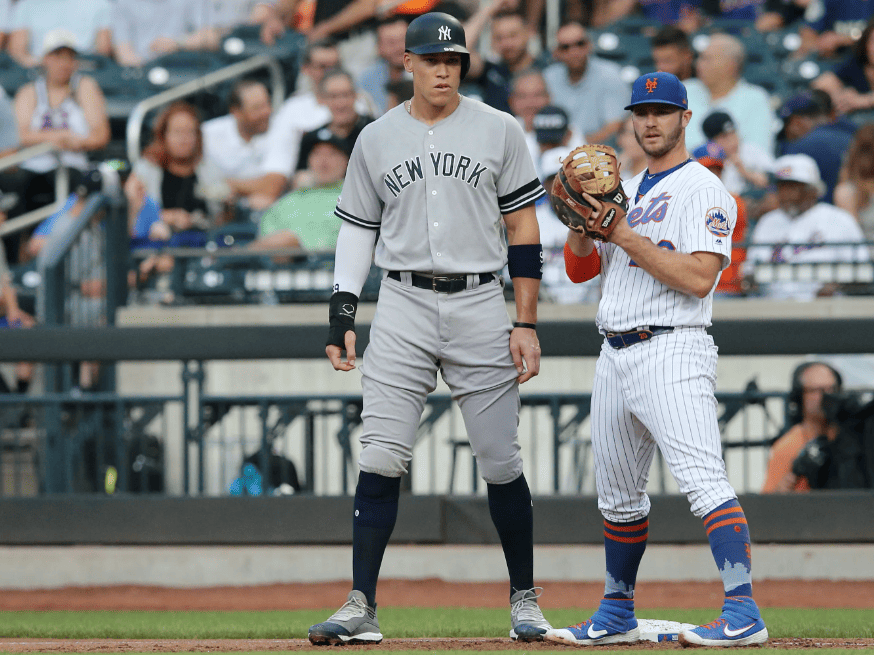
Few teams would benefit more physically from such a rule than the Yankees. With sluggers like Aaron Judge (6’7”, 282 lbs) and Giancarlo Stanton (6’6”, 245 lbs) on the roster, New York boasts two of the most physically imposing players in the league. Under a hockey-style model, their stature could act as a deterrent against inside pitches and bench provocations. Every time there is a confrontation, the Yankees will get a single.
“Let’s be honest,” said a former Yankees strength coach. “If you’re a pitcher deciding whether to throw inside on Judge — knowing he might be allowed to charge you without automatic ejection — you might think twice.”
Managerial strategy would shift
Current Yankees manager Aaron Boone, a former player himself, would face a drastically different decision-making landscape. Managing bullpens, bench roles, and even pregame matchups could involve weighing players’ physicality, fight history, and discipline.
The team will need to game-plan not just around at-bats but around potential confrontations. They can’t afford to lose their No. 2 starter in the fourth inning because he got into a sanctioned brawl with a DH.
Medical and insurance implications loom large
The Yankees — whose payroll routinely tops the league — have seen firsthand how much a single injury can cost a season. Given Stanton’s injury history and Judge’s pivotal role in the lineup, allowing fights could be a major risk to health and investment.
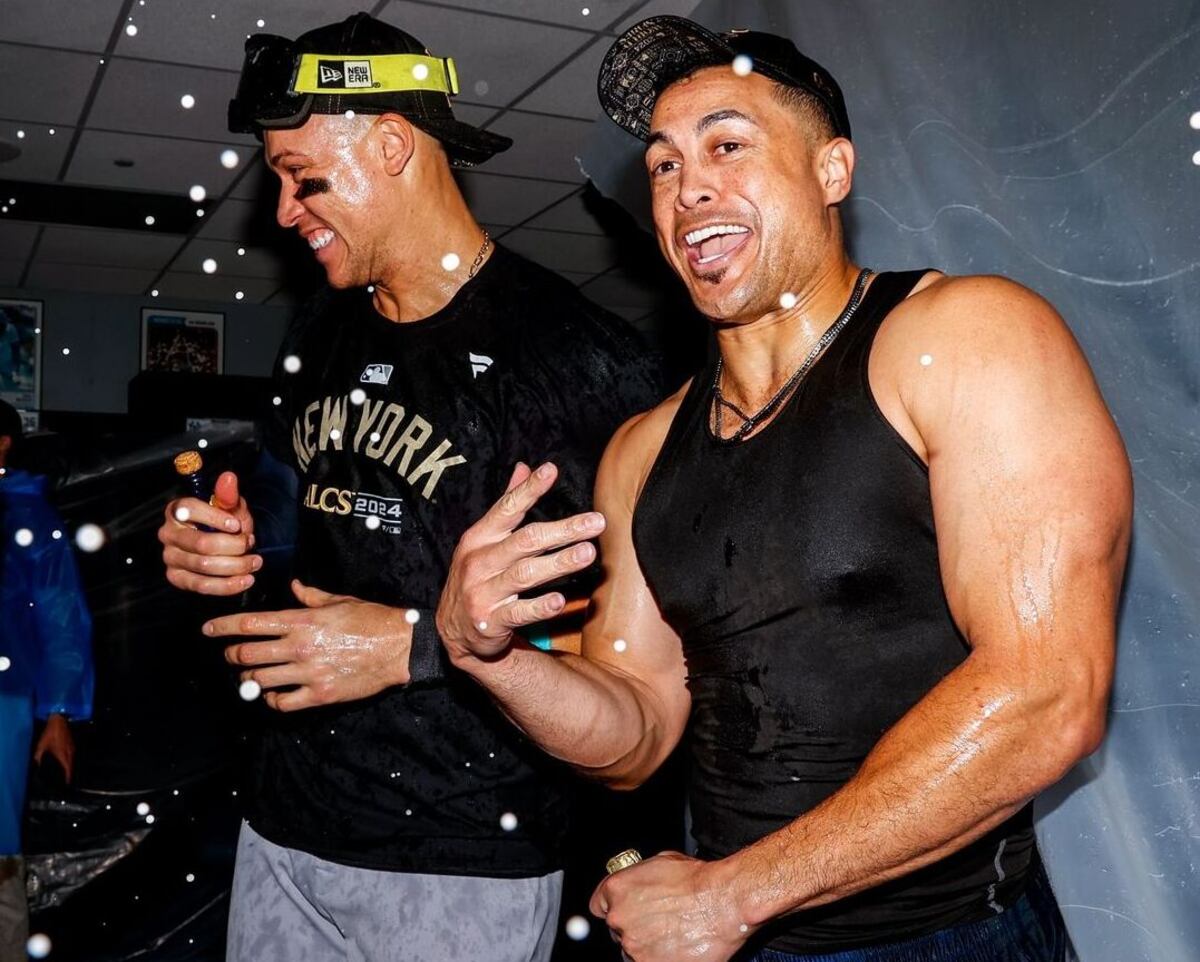
“This is a billion-dollar enterprise,” one Yankees front-office executive said anonymously. “Are we really going to normalize bare-knuckle punches between $300 million players?”
Yankee tradition at odds with violence
From Babe Ruth to Derek Jeter, the Yankees have long cultivated an image of excellence, professionalism, and restraint. Even when tensions have flared — such as the 2003 ALCS fight between Pedro Martinez and Don Zimmer — the organization has typically emphasized control and discipline.
“Fighting has never been the Yankees’ brand,” said writes sports historian Claire Berlinger. “They’re not about showboating or spectacle. That’s part of their mystique.”
Would Yankees fans embrace it?
Yet a new generation of fans, including many on social media, have expressed enthusiasm for the idea of regulated, one-on-one confrontations. Clips of Alonso’s comments have gone viral, with many fans calling for a “new edge” in the game.
Yankee fan opinion is split. Some point to Judge and Stanton as untapped enforcers who could “finally fight back” against inside pitches, while others fear that any move toward violence would tarnish the franchise’s legacy. Even an injury to wrist or face can put stars out of play for weeks.
Sponsors might balk but not 100%
The Yankees’ partnerships — with brands like Nike, Gatorade, and Mastercard — are built on a clean, aspirational image. Regular on-field fights could complicate that message. They might not love seeing their billboard star throwing hands. A viral knockout could go either way: iconic or controversial.
League-wide impact could be far reaching
If MLB were to change its stance on fighting, it would require extensive negotiation with the players’ union and insurers. Contracts might need to include clauses about fight-related injuries, and collective bargaining would almost certainly include language about when and how players are allowed to engage in physical altercations.
Possible rule changes
- One-on-one fights allowed: Charging the mound no longer means automatic ejection, instead allowing hockey-style one-on-one fights between hitter and pitcher only.
- No bench-clearing: Dugouts must stay clear with no teammates joining the brawl to prevent serious injuries from mass confrontations.
- Option to yield: A charged player can opt out by taking a knee, immediately ending the incident without consequences.
- Loser ejected, winner stays: The defeated player is removed from the game while the winner remains, inverting current MLB ejection rules.
- Penalty consistency: Unlike hockey where both fighters serve penalties, only the baseball fight loser would leave the game.
Player safety at risk
Unlike hockey, baseball players are not clad with much protective padding. To top it is protective gear disparity, with batters losing helmet protection and pitchers having no head protection during mound fights. Sanctioned fisticuffs would dramatically increase concussion risk since current bench brawls rarely involve punches or serious head contact.
Studies link repeated fighting to serious health problems including ALS and other neurodegenerative diseases seen in NHL players. Legal fights would cause broken bones, facial injuries, lacerations, broken metacarpals, and facial fractures beyond head trauma.
MLB would see a new class of self-inflicted harm with many players missing games due to brawl injuries.
The Bronx response
While Alonso’s proposal may appeal to certain fans and players, the New York Yankees appear unlikely to support such a drastic change. Between health risks, cultural identity, financial exposure, and brand integrity, the idea of legalized fighting in baseball — especially in pinstripes — remains highly contentious.
Still, should such a rule ever move forward, the Yankees would be uniquely positioned: not just to compete physically, but to shape the narrative of what it means to be both powerful and poised in the face of confrontation.
What do you think?