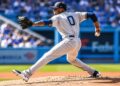
2025 Yankees season overview
| Final Standing | AL Wild Card (won Wild Card Series; eliminated in ALDS) |
| Regular Season Record | 94-68 |
| Postseason Record | 3-4 (WC 2-1, ALDS 1-3) |
| Divisional Rank | 2nd, AL East |
| ALDS Record and Opponent | Lost 1-3 vs Toronto Blue Jays |
| AL Rank | T-1st best record in AL (94-68); seeded as Wild Card due to tiebreak |
| Manager | Aaron Boone |
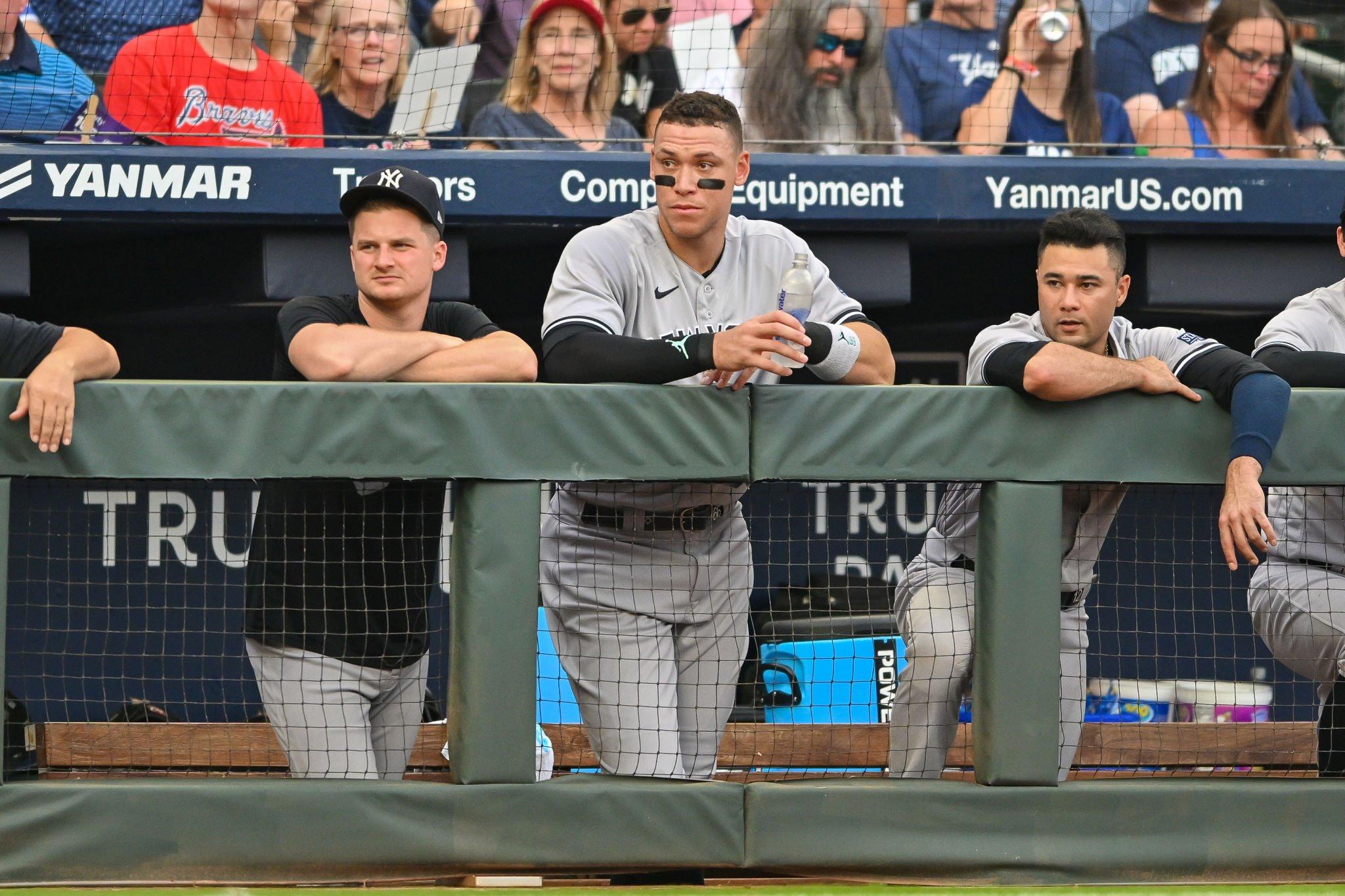
| Captain | Aaron Judge |
| Top Batter | Aaron Judge (AL batting title, .331 AVG) |
| Top Pitcher | Max Fried (19-5, 2.86 ERA) |
| Home Attendance | 3,392,659 total; 42,408 average |
The Yankees entered 2025 as reigning American League champions and moved aggressively to strengthen their roster following a World Series defeat in 2024. Major offseason acquisitions included inking ace left-hander Max Fried to an eight-year, $218 million contract and bringing in former MVP Paul Goldschmidt on a one-year, $12.5 million deal to take over at first base for the departed Anthony Rizzo.
New York also swung a trade for All-Star closer Devin Williams from Milwaukee, sending lefty Nestor Cortes Jr. in return, and landed former NL MVP Cody Bellinger from the Cubs to bolster the outfield. The Yankees reshuffled their catching situation by dealing Jose Trevino to Cincinnati for reliever Fernando Cruz and catcher Alex Jackson, and they locked up key young players including Jazz Chisholm Jr., Jonathan Loaisiga, and Trent Grisham on one-year contracts to avoid arbitration.
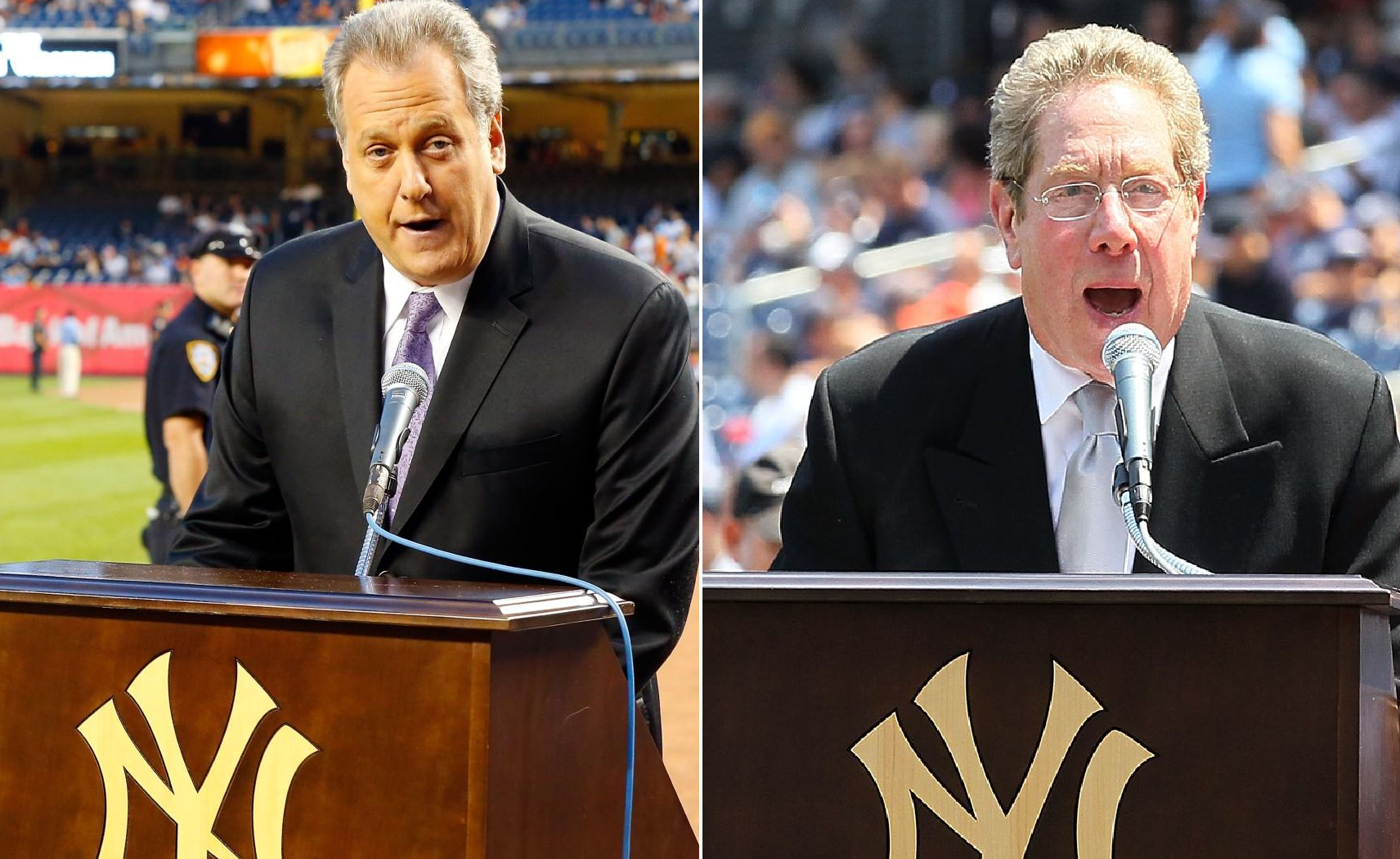
Off the diamond, notable changes took place as well. Longtime radio voice John Sterling stepped aside, with Dave Sims hired to handle Yankees play-by-play duties on WFAN starting in 2025. Managing partner Hal Steinbrenner also implemented a historic policy change, relaxing the Yankees’ strict facial hair policy to permit well-groomed beards for the first time since the 1970s.
The coaching staff welcomed new faces too: former MLB manager Brad Ausmus came aboard as bench coach and James Rowson took over as hitting coach, bringing fresh leadership to Aaron Boone’s staff following the departures of Carlos Mendoza and Sean Casey from the previous year. With these offseason adjustments, the Yankees positioned themselves for another championship pursuit, adding star talent and roster depth to an already formidable core.
Yankees’ 2025 regular season
The Yankees’ 2025 regular season proved to be a rollercoaster of hot streaks, slumps, and late-season surges. Below is a month-by-month breakdown of their campaign, spotlighting key series, performance trends, and significant injuries that shaped the season.
March/April (18-13 record)
New York opened the season on March 27 and enjoyed a solid April, finishing the first month and a half with an 18-13 record. The offense made an immediate statement on March 29, when the Yankees clubbed a franchise-record 9 home runs in a single contest, a feat they would incredibly duplicate later in the year. Reigning AL MVP Aaron Judge came out scorching hot, batting over .400 in April and delivering multiple game-winning hits.
Newcomer Paul Goldschmidt adjusted quickly to New York; by mid-April he was batting .348 with a .397 OBP as the leadoff hitter, providing consistent production albeit with modest power early on. On the mound, Max Fried immediately filled the ace role vacated by Gerrit Cole, who had a Tommy John surgery in March. Fried started the year 5-0 by the end of April, anchoring a rotation that also featured Carlos Rodon and promising youngster Will Warren. The strong start propelled the Yankees to first place, and by the end of April they led the AL East by a few games over Toronto and Boston.
One dark cloud in the early going was the absence of slugger Giancarlo Stanton due to lingering elbow issues. Stanton, the reigning ALCS MVP, was shut down in spring training for severe tendon problems in both elbows and began the year on the 60-day injured list. He would not make his season debut until mid-June, after missing the first 70 games of the season.
In his absence, the Yankees rotated the DH spot and relied on Jasson Dominguez and others to fill the power void. Despite that loss, the team’s depth and Judge’s torrid hitting helped the Yankees finish April in a strong position.
May (17-9 record)
The Yankees caught fire in May, posting a 17-9 record and extending their division lead. By May 28, New York sat seven games ahead atop the AL East. The lineup was buoyed by a resurgent Jazz Chisholm Jr., who provided speed and pop from the infield.
Chisholm’s impact was felt particularly after he missed a couple weeks on the injured list in late May. Upon returning, he sparked the offense with a blend of power and aggressiveness on the basepaths. Meanwhile, Trent Grisham emerged as a surprise power source, slugging several clutch home runs. He would end the year with 34 homers, far surpassing expectations.
Pitching remained a strength. Carlos Rodon and Max Fried formed a dominant lefty duo, each finishing May with ERAs in the low-3.00s and racking up quality starts. Fried in particular was staking a claim as the AL’s best pitcher. By the All-Star break, he was 11-2 with a 2.27 ERA and often served as the Yankees’ stopper, going 9-1 in games following a team loss.
The bullpen, however, showed some cracks in May. Newly acquired closer Devin Williams converted saves but struggled with consistency, and his ERA hovered around 5.00 through the first two months. Setup man Luke Weaver and lefty Tim Hill provided stability, each finishing with a sub-3.65 ERA in 60-plus appearances, but there were growing calls for bullpen reinforcements as the summer approached.
June (13-14 record)
June proved to be the Yankees’ roughest month, as they went 13-14 and saw their division lead evaporate. The slide began in early June when the offense cooled off and the pitching staff endured key setbacks.
However, the team collectively slumped in June. The Yankees endured multiple losing streaks and a few agonizing late-inning losses as the bullpen faltered. Devin Williams blew several save opportunities and eventually ceded the closer role to veteran David Bednar, whom the Yankees would acquire at the trade deadline.
The low point came at month’s end in a showdown with the surging Blue Jays. Starting June 30, New York visited Toronto for a four-game series and got swept in four games at Rogers Centre. The Blue Jays exposed the Yankees’ pitching by scoring 5-plus runs in each game, cutting into the Yankees’ division lead. By July 1, the Yankees and Jays were virtually tied for first, a stunning reversal from New York’s comfortable lead a month earlier.
Despite the losing month, Judge continued to hit at an MVP pace, leading MLB in average and OPS into July, and Chisholm Jr. returned from his late-May injury with a vengeance. In 29 games after reactivation, Jazz hit .308 with 8 homers and 21 RBIs in June. His spark, along with the steady contributions of Bellinger and Goldschmidt, kept the Yankees from falling too far behind.
July (12-13 record)
July was a month of transition for the Yankees. They limped into the All-Star break at 55-43 and went 12-13 in July overall, ceding first place in the AL East to Toronto via percentage points. Aaron Judge, Max Fried, and Jazz Chisholm Jr. represented the Yankees at the All-Star Game on July 15, with Judge voted the AL’s starting right fielder and leading all players in votes.
Manager Aaron Boone served as AL skipper for the Midsummer Classic by virtue of winning the pennant in 2024. Fried was acknowledged as a candidate to start the All-Star Game thanks to his stellar first half, and Chisholm earned his second career All-Star nod by slashing .245/.341/.500 with 15 HR and 10 SB in the first half. The break provided a brief respite from what had been a frustrating early July.
The Yankees started the month by losing 7 of 10, including another series loss in Toronto. In a July 21-23 rematch in Toronto, New York dropped two of three games, officially falling behind the Blue Jays in the standings.
Recognizing the need for reinforcements, General Manager Brian Cashman orchestrated a flurry of midseason moves around the July 31 trade deadline. The Yankees aggressively traded prospects to bolster the bullpen and add depth. In late July, they acquired hard-throwing closer David Bednar from the Pirates and electric reliever Camilo Doval from the Giants, addressing two major needs in the late innings.
They also picked up infielder Ryan McMahon from Colorado to play third base, veteran shortstop Amed Rosario from Washington, fourth outfielder Austin Slater from the White Sox, and utility infielder Jose Caballero from Tampa Bay. To make these upgrades, New York parted with several prospects and young players. Former top prospect Oswald Peraza was sent to the Angels in a three-team trade after hitting just .152 in 71 games for New York. Outfield prospect Everson Pereira was dealt to Tampa, and pitching prospects like Roc Riggio, Trystan Vrieling, and others were included in various swaps. These aggressive moves signaled a win-now approach despite the team’s uneven first half. The new acquisitions paid almost immediate dividends as the calendar turned to August.
A season-ending injury to Clarke Schmidt forced the Yankees to call rookie Cam Schlittler for debut on July 9. The 24-year-old call-up pitched to a 2.96 ERA in 14 starts and filled Cole’s void admirably.
August (16-12 record)
With their retooled roster, the Yankees went 16-12 in August and began to regain momentum in the playoff race. Giancarlo Stanton finally returned to action on June 16 and gradually found his stride in August, providing a major boost to the lineup. After missing over two months, Stanton’s timing improved and he launched multiple long home runs in August, finishing the season with 24 homers in just 77 games and a .594 slugging percentage. His presence lengthened a lineup that was already one of the league’s best.
In fact, the Yankees’ power hitting reached historic levels in mid-August. On August 19, the team tied its own franchise record by clobbering 9 home runs in a game, and the very next day they combined for 14 homers across a two-game span, tying the all-time MLB record for a two-game stretch. The barrage of home runs helped New York sweep that series and underscored their identity as a slugging club. By season’s end, the Yankees amassed 274 home runs as a team, the most in the American League and a new franchise record, earning them the AL Team Silver Slugger Award as the league’s top offense.
On the mound, the impact of the Yankees’ trade deadline moves became apparent. David Bednar immediately assumed closing duties and was lights-out in pinstripes. He recorded 10 saves with a pristine 2.19 ERA in 22 appearances for New York down the stretch. Bednar’s steady hand at the end of games solidified a bullpen that had been a weakness in early summer.
Fellow newcomer Camilo Doval had some ups and downs with a 4.82 ERA in 22 games, but his presence, along with reliable holdovers like Tim Hill and Luke Weaver, gave Boone multiple late-inning options. The rotation also benefitted from an unlikely source.
Luis Gil, last year’s AL Rookie of the Year, returned from injury and delivered clutch performances in August and September. Gil went 4-1 with a 3.32 ERA in 11 starts, often picking up wins in spot-start situations. With Rodon (who would finish 18-9) and Fried (19-5) continuing to pitch like co-aces, the Yankees began firing on all cylinders again. By the end of August, New York had closed the gap in the AL East, pulling nearly even with Toronto and sitting comfortably in a Wild Card position.
September (18-7 record)
The Yankees saved their best for last, posting a red-hot 18-7 record in September to charge into the postseason. The final month featured clutch performances, dramatic games, and a furious battle for the division crown. On September 23, New York clinched a playoff berth, their 8th postseason appearance in the last 9 years, by defeating Toronto at Yankee Stadium. This ensured at least a Wild Card spot for the Bronx Bombers.
The division race, however, came down to the final weekend. The Yankees and Blue Jays were neck-and-neck through late September, and New York’s strong finish included taking two of three from Toronto in a pivotal series at Yankee Stadium from Sept 5-7. In that series, rookie Cam Schlittler outdueled Toronto’s Max Scherzer with 7 innings of one-run ball on Sept 6, and Max Fried won the rubber game on Sept 7, briefly pulling the Yankees into a tie for first.
Ultimately, the Yankees finished 94-68, the exact same record as in 2024. Toronto also finished 94-68, and by virtue of head-to-head tiebreaker (Toronto won the season series 8-5), the Blue Jays clinched the AL East title on the final day of the season. The Yankees settled for a Wild Card berth as the top wild card team in the AL. It was a bitter pill to tie for the best record in the league yet be relegated to Wild Card status, but New York could still take pride in their remarkable turnaround.
September saw Aaron Judge put an exclamation point on his MVP-caliber season. Judge won the AL batting title with a .331 average and slugged 53 home runs, carrying an offense that scored the second-most runs in the AL. Complementing him, Cody Bellinger (29 HR, 98 RBI) and Jazz Chisholm Jr. (31 HR, 31 SB) each had milestone seasons, with Chisholm becoming the first Yankee second baseman to join the 30-30 club. The Yankees outscored opponents by wide margins in September with a plus-45 run differential for the month and entered October with significant momentum and a fully healthy lineup for the first time all year.
Final standings
The AL East proved to be a two-team race to the wire. The Yankees ended the regular season with a 94-68 record, tied with the Toronto Blue Jays for the best in the division and league but officially placing 2nd in the AL East via tiebreak. Both clubs finished with a .580 winning percentage, a full 5 games ahead of the third-place Red Sox.
| AL East | W | L | Pct. | GB | Home | Road |
| Toronto Blue Jays | 94 | 68 | .580 | — | 54-27 | 40-41 |
| New York Yankees | 94 | 68 | .580 | — | 50-31 | 44-37 |
| Boston Red Sox | 89 | 73 | .549 | 5 | 48-33 | 41-40 |
| Tampa Bay Rays | 77 | 85 | .475 | 17 | 41-40 | 36-45 |
| Baltimore Orioles | 75 | 87 | .463 | 19 | 39-42 | 36-45 |
In the American League Wild Card race, the Yankees comfortably secured the No. 4 seed as the top Wild Card. Their 94 wins were seven games better than the next Wild Card team. The rival Boston Red Sox (89-73) claimed the second Wild Card, and the Detroit Tigers (87-75) edged out Houston for the third and final spot via tiebreak. As the Wild Card No. 1, New York drew the No. 5 seed Red Sox in the newly formatted Wild Card Series, renewing the historic Yankees-Red Sox rivalry on the postseason stage.
Postseason
Wild Card Series (vs. Boston Red Sox)
As the fourth seed, the Yankees hosted the Boston Red Sox in a best-of-three Wild Card Series at Yankee Stadium. This marked the sixth ever postseason meeting between the two bitter rivals. The series opened on September 30 in front of a raucous Bronx crowd, but Game 1 did not go according to plan for New York. Boston’s pitchers silenced the Yankee bats, and the Red Sox took the opener 3-1.
Yankees’ Luke Weaver yielded an early two-run homer and the offense mustered only a solo shot from Anthony Volpe. Boston closer Aroldis Chapman, a familiar face in the Bronx, closed the door for the save, putting New York on the brink in the short series.
In Game 2 on October 1, the Yankees faced elimination and responded in a thriller. Ace Max Fried started and battled through six innings, but the game was knotted 3-3 in the late innings. In the bottom of the 8th, Aaron Judge delivered in MVP style with a go-ahead RBI double off reliever Garrett Whitlock. Closer David Bednar then shut the door in the 9th, sealing a 4-3 victory for New York. Reliever Devin Williams earned the win in relief, his first as a Yankee. The narrow victory evened the series at one game apiece.
Game 3 on October 2 saw the Yankees turn to rookie right-hander Cam Schlittler, and he rewarded their faith with the pitching performance of the series. Schlittler tossed five scoreless innings, flummoxing Boston’s lineup with his slider, while the Yankees offense gave him early support. Giancarlo Stanton’s first-inning RBI single set the tone, and Cody Bellinger launched a two-run homer in the 5th to pad the lead.
New York’s bullpen consisting of Hill, Loaisiga, and Bednar kept Boston off the board, completing a 4-0 shutout to win the series. Schlittler earned the win, his first postseason victory, and Bednar notched the series-clinching save. In the three-game set, Judge was kept in the park with no home runs but hit .417, and Bellinger led the team with 4 RBIs. The Yankees’ resilience shone through as they rallied from losing Game 1 to take the series 2-1, advancing to the ALDS.
American League Division Series (vs. Toronto Blue Jays)
In the ALDS, the Yankees faced the top-seeded Toronto Blue Jays, setting up a showdown between division rivals that had battled to a draw in the regular season. The best-of-five series began on October 4 at Rogers Centre in Toronto. The start was nightmarish for New York. Game 1 saw Toronto rout the Yankees 10-1. Yankees starter Luis Gil struggled and was knocked out early, while Jays ace Kevin Gausman struck out 10 over seven dominant innings. New York’s lone run came on a solo homer by Jazz Chisholm Jr., but otherwise the offense was stifled.
Game 2 on Oct 5 brought more misery for the Yankees, as Toronto’s bats stayed hot. The Blue Jays slugged their way to a 13-7 victory in a high-scoring affair. Former Yankee Brandon Belt, now with Toronto, hit a grand slam that proved back-breaking. New York did show some fight. Aaron Judge homered twice in the game, and the Yankees actually held a 6-5 lead in the 5th inning before the bullpen collapsed, highlighted by a six-run Toronto seventh. The loss put New York in a 0-2 series hole as the matchup shifted to the Bronx.
Back home for Game 3 on Oct 7, the Yankees avoided the sweep with a gritty performance. With their season on the line, Carlos Rodon delivered 6 strong innings and the offense finally solved Toronto’s pitching, as New York won 9-6. Anthony Volpe’s three-run homer in the 2nd inning ignited the Yankee Stadium crowd. Later, Judge added a solo blast and Ben Rice, the rookie catcher/DH who had 26 HR in the regular season, ripped a two-run double. Though the Blue Jays made it a one-run game in the 8th, David Bednar slammed the door for a four-out save. The victory cut the series deficit to 2-1 and forced a Game 4.
Game 4 on Oct 8, however, ended the Yankees’ season. In a tense elimination game, the Yankees’ bats went cold at the wrong time, falling 5-2 to Toronto. Toronto’s veteran lefty Genesis Dominguez, a midseason pickup for the Jays, held New York to just two runs over five innings. The Yankees had chances. They loaded the bases in the 6th but managed only one run on a sacrifice fly. In the 9th inning, down 5-2, Judge came to the plate as the tying run but struck out against closer Trevor Hoffman, Toronto’s shutdown reliever.
The Blue Jays won the ALDS 3 games to 1, ending the Yankees’ quest for a 28th World Series title. Despite the disappointment, Aaron Judge was a standout in the series, batting .412 with 3 home runs. Ultimately, the Yankees were undone by Toronto’s powerful offense, which averaged 7 runs per game in the series, and the absence of Gerrit Cole and a true No. 3 starter in the rotation. Toronto would go on to advance to the ALCS, while New York headed into the offseason contemplating what tweaks were needed to get over the hump in 2026.
2025 New York Yankees roster
Pitchers (26): David Bednar, Clayton Beeter, Jake Bird, Paul Blackburn, JT Brubaker, Carlos Carrasco, Fernando Cruz, Yerry De Los Santos, Camilo Doval, Scott Effross, Max Fried, Rico Garcia, Luis Gil, Geoff Hartlieb, Brent Headrick, Tim Hill, Mark Leiter Jr., Jonathan Loaisiga, Tyler Matzek, Adam Ottavino, Carlos Rodon, Jayvien Sandridge, Cam Schlittler, Clarke Schmidt, Marcus Stroman, Will Warren, Luke Weaver, Devin Williams, Allan Winans, Ryan Yarbrough.
Catchers (2): J.C. Escarra, Austin Wells.
Infielders (12): Jose Caballero, Oswaldo Cabrera, Jazz Chisholm Jr., Paul Goldschmidt, DJ LeMahieu, Ryan McMahon, Oswald Peraza, Pablo Reyes, Ben Rice, Amed Rosario, Jorbit Vivas, Anthony Volpe.
Outfielders (6): Cody Bellinger, Jasson Dominguez, Trent Grisham, Aaron Judge, Austin Slater, Giancarlo Stanton.
Manager: Aaron Boone; Bench Coach: Brad Ausmus; Hitting Coach: James Rowson; Pitching Coach: Matt Blake. Captain: Aaron Judge.
This roster saw a blend of championship-tested veterans and young talent. Notably, Aaron Judge served as team captain, continuing since 2023, leading the outfield alongside rookie Jasson Dominguez and Gold Glover Cody Bellinger. The infield combined youth and experience, with sophomore shortstop Anthony Volpe playing in 153 games and veteran DJ LeMahieu contributing in a utility role. Midseason acquisitions like Ryan McMahon, Amed Rosario, and Jose Caballero provided depth during the pennant race.
On the pitching side, despite losing Gerrit Cole, the rotation remained formidable behind Max Fried and Carlos Rodon, complemented by youngsters Will Warren, Luis Gil, and spot starters Cam Schlittler and Clarke Schmidt. The bullpen evolved significantly, ending the year with David Bednar closing and setup duties handled by Tim Hill, Luke Weaver, and others in a deep relief corps. Overall, the roster’s mix of power, speed, and pitching depth was evident in their strong finish and postseason appearance.
2025 New York Yankees player stats
The following highlights key statistical performances for the Yankees’ primary contributors in 2025. All stats are for the regular season.
Batting (Key players)
| Player | G | AB | R | H | 2B | HR | RBI | SB | BB | AVG | SLG |
| Aaron Judge | 152 | 541 | 137 | 179 | 30 | 53 | 114 | 12 | 124 | .331 | .688 |
| Cody Bellinger | 152 | 588 | 89 | 160 | 25 | 29 | 98 | 13 | 57 | .272 | .480 |
| Anthony Volpe | 153 | 539 | 65 | 114 | 32 | 19 | 72 | 18 | 43 | .212 | .391 |
| Trent Grisham | 143 | 494 | 87 | 116 | 9 | 34 | 74 | 3 | 82 | .235 | .464 |
| Paul Goldschmidt | 145 | 489 | 76 | 134 | 31 | 10 | 45 | 5 | 36 | .274 | .403 |
| Ben Rice | 138 | 467 | 74 | 119 | 28 | 26 | 65 | 3 | 50 | .255 | .499 |
| Jazz Chisholm Jr. | 130 | 462 | 75 | 112 | 15 | 31 | 80 | 31 | 58 | .242 | .481 |
| Austin Wells | 126 | 401 | 51 | 88 | 22 | 21 | 71 | 5 | 30 | .219 | .436 |
| Jasson Dominguez | 123 | 381 | 58 | 98 | 18 | 10 | 47 | 23 | 41 | .257 | .388 |
| Giancarlo Stanton | 77 | 249 | 36 | 68 | 8 | 24 | 66 | 0 | 29 | .273 | .594 |
Team Totals: 849 R, 820 RBI, 274 HR, 134 SB, .251 batting average, .455 slugging
Key notes from these offensive stats: Aaron Judge led the team in nearly every category, winning the AL batting title (.331) and home run crown (53). He set a Yankees franchise record with a 1.145 OPS and drew 124 walks, often being pitched around. Cody Bellinger had a strong all-around season, driving in 98 runs and playing Gold Glove-caliber defense in the outfield. Jazz Chisholm Jr. provided a unique power-speed blend, hitting 31 homers and stealing 31 bases for his first 30-30 season, which earned him a Silver Slugger at second base. Rookie DH Ben Rice slugged .499 with 26 homers, emerging as a surprise contributor in the middle of the order. The lineup’s depth is evident with seven players hitting 19 or more home runs. Even with a low average, Anthony Volpe swiped 18 bags and played stellar shortstop in his sophomore year, and Giancarlo Stanton, despite missing half the season, still launched 24 homers and posted a .594 SLG, often batting behind Judge for protection. This balanced attack with six players having 70-plus RBI made the 2025 Yankees one of the most feared offensive teams in baseball.
Pitching (Key players)
| Pitcher | W-L | ERA | G | GS | SV | IP | SO | WHIP |
| Carlos Rodon | 18-9 | 3.09 | 33 | 33 | 0 | 195.1 | 203 | 1.05 |
| Max Fried | 19-5 | 2.86 | 32 | 32 | 0 | 195.1 | 189 | 1.10 |
| Will Warren | 9-8 | 4.44 | 33 | 33 | 0 | 162.1 | 171 | 1.37 |
| Luis Gil | 4-1 | 3.32 | 11 | 11 | 0 | 57.0 | 41 | 1.40 |
| David Bednar | 4-0 | 2.19 | 22 | 0 | 10 | 24.2 | 35 | 0.93 |
| Devin Williams | 4-6 | 4.79 | 67 | 0 | 18 | 62.0 | 90 | 1.13 |
| Tim Hill | 4-4 | 3.09 | 70 | 0 | 0 | 67.0 | 37 | 1.10 |
| Luke Weaver | 4-4 | 3.62 | 64 | 0 | 8 | 64.2 | 72 | 1.02 |
Team Totals: 94-68, 3.91 ERA, 43 saves, 1,439.2 IP, 1,440 SO, 1.29 WHIP
Notable from the pitching stats: Max Fried and Carlos Rodon were a formidable 1-2 punch, each approaching 200 innings and winning 18-plus games with ERAs around 3.00. Fried’s 2.86 ERA led the team and would rank among league leaders, and he allowed two or fewer earned runs in 15 of his 32 starts. Rodon rebounded from an injury-marred 2024 to post a team-high 203 strikeouts. Rookie starter Will Warren was a stable presence, taking every turn in the rotation and logging 162 IP, though with middling results. The loss of Gerrit Cole was partly mitigated by Luis Gil’s late-season contribution and Cam Schlittler stepping up with a 2.96 ERA in 14 starts when called upon.
The bullpen underwent a season-long transformation. David Bednar, acquired July 30, became the closer and was dominant, recording a 0.93 WHIP and 10 saves in just two months of work. He stabilized the 9th inning after Devin Williams’ early struggles. Devin Williams led the team with 18 saves prior to Bednar’s arrival, and while Williams’ 90 strikeouts in 62 IP showcase his swing-and-miss stuff, his 4.79 ERA reflected inconsistency. Tim Hill, a lefty workhorse, appeared in 70 games with a 3.09 ERA as an unsung hero bridging to the late innings. Luke Weaver proved valuable as a multi-inning reliever and occasional closer with 8 saves, posting a solid 1.02 WHIP over 64.2 innings. Other midseason additions like Camilo Doval with a 4.82 ERA in 22 games and Fernando Cruz with a 3.56 ERA in 49 games provided depth. In summary, the Yankees’ pitching was spearheaded by two ace-level starters and a dramatically improved bullpen by season’s end, finishing with a respectable team ERA just under 4.00. This balance helped the club overcome key injuries and perform as a top-5 pitching staff in the AL.
Awards and honors
Several Yankees earned significant accolades for their performances in 2025:
Aaron Judge – AL Most Valuable Player (MVP): Judge won his third AL MVP Award and second in a row, edging out Seattle’s Cal Raleigh in a close vote. He led the AL in batting average (.331), on-base percentage, runs (137), walks, and placed second in home runs (53) and OPS (1.145). Judge also earned his first AL batting title and his fifth Silver Slugger Award as an outfielder. Additionally, he received the AL Hank Aaron Award for the league’s best hitter for the third time and was named to the All-MLB First Team for 2025.
Jazz Chisholm Jr. – AL Silver Slugger (2B): Chisholm won the Silver Slugger at second base, his first career Silver Slugger, after a 31-homer, 31-steal campaign. He became the first Yankees second baseman ever to win a Silver Slugger. Notably, Jazz was also a finalist for the AL Comeback Player of the Year and was an All-Star in 2025.
Max Fried – AL Gold Glove (Pitcher): Fried earned the AL Gold Glove Award for pitchers, his fourth career Gold Glove and first as a Yankee. He led all MLB pitchers with plus-10 Defensive Runs Saved, showcasing excellent fielding off the mound. Fried was also named to the All-MLB First Team alongside Judge, recognizing him as one of the two best starting pitchers in baseball that year. He finished 3rd in AL Cy Young voting behind winner Tarik Skubal, highlighting his impact after moving to New York.
Cody Bellinger – All-MLB Second Team: Bellinger’s rebound season with 29 HR, 98 RBI, and .835 OPS earned him a spot on the All-MLB Second Team outfield. His contributions on both offense and defense were crucial to the Yankees’ success. While he did not win a Gold Glove this year, he was a finalist for AL center field Gold Glove and provided Gold Glove-caliber play in left field, leading AL left fielders in Outs Above Average, tied with Steven Kwan.
All-Stars: The Yankees had three All-Star selections in 2025. Aaron Judge was the AL’s leading vote-getter and a starting outfielder at the All-Star Game. Max Fried was selected for his third All-Star nod, and Jazz Chisholm Jr. was named an AL reserve for his second All-Star. Manager Aaron Boone and his coaching staff managed the AL team.
Team Silver Slugger Award: For the second time in franchise history, the Yankees won the AL Team Silver Slugger Award as the best overall offensive team. This honor reflected New York’s league-leading home run total (274) and potent lineup from top to bottom. The Yankees led the AL in runs scored and slugging, underlining their offensive dominance.
League Leaders: Aaron Judge led the American League in several categories including AVG, OBP, OPS, runs, and walks. He also finished second in HR (53) and was top five in RBIs (114). Max Fried’s 19 wins tied for the AL lead, and his 2.86 ERA was second-best in the league. David Bednar’s 10 saves with New York pushed his season total to 32 including Pittsburgh, and his 1.86 ERA combined led all AL relievers with at least 50 IP. As a team, the Yankees led MLB in home runs (274) and were second in runs, only a few behind the Dodgers.
All told, 2025 was a year of individual brilliance for the Bronx Bombers. Judge further cemented his legacy with another MVP, Fried added hardware with his pitching and fielding prowess, and young stars like Chisholm got their due. These honors underscore both the star power and depth that propelled the Yankees to a 94-win season.
Notable transactions
The Yankees’ roster activity in 2025 was marked by bold acquisitions and some difficult departures. Below is a summary of the major transactions and roster moves that defined the year:
Offseason Acquisitions:
Max Fried (SP): Signed as a free agent to an 8-year, $218 million contract on Dec 10, 2024, instantly becoming the co-ace of the staff.
Devin Williams (RP): Acquired via trade from the Milwaukee Brewers on Dec 13, 2024. Yankees sent LHP Nestor Cortes Jr., INF prospect Caleb Durbin, and cash to Milwaukee in exchange for Williams, who brought All-Star closing experience to New York.
Cody Bellinger (OF/1B): Acquired via trade from the Chicago Cubs on Dec 17, 2024. The Yankees sent minor league pitcher Cody Poteet and cash considerations to Chicago. Bellinger filled a need in the outfield and first base, and the Cubs absorbed part of his salary.
Paul Goldschmidt (1B): Signed as a free agent on Dec 30, 2024 to a one-year, $12.5 million deal. Brought in to replace Anthony Rizzo, who departed in free agency, Goldschmidt added veteran leadership and on-base skills.
Trent Grisham (OF): Re-signed on Nov 22, 2024 to a one-year, $5 million contract. Grisham had been acquired late in 2024; this deal avoided arbitration and kept his Gold Glove defense in pinstripes.
Jonathan Loaisiga (RP): Re-signed on Dec 11, 2024 to a one-year deal with 2026 option. A key bullpen arm, Lasagna was retained as he returned from elbow surgery.
Jazz Chisholm Jr. (INF): Re-signed on Jan 9, 2025 to a one-year, $5.85 million deal, avoiding arbitration. Chisholm had been a mid-2024 trade acquisition and was kept as the starting second baseman.
Other Offseason Moves: The Yankees made several depth pickups including RHP Michael Arias from Cubs for cash, RHP Allan Winans via waiver claim from Atlanta, RHP Roansy Contreras via waiver claim, LHP Brent Headrick via waiver claim, and LHP Ryan Yarbrough signed to a 1-year, $2M deal on Mar 24, 2025. The team also traded away minor pieces like OF Taylor Trammell, dealt to Houston for cash on Nov 4, 2024, and sent backup C Carlos Narvaez to Boston for a pitching prospect on Dec 11.
Notable Departures: Longtime first baseman Anthony Rizzo became a free agent after 2024 and was not re-signed, paving the way for Goldschmidt’s signing. Lefty Nestor Cortes Jr., fan-favorite Nasty Nestor, was traded in the Devin Williams deal. Starting catcher Jose Trevino was dealt to the Reds on Dec 20, 2024 in exchange for reliever Fernando Cruz and C Alex Jackson, signaling a transition to young catchers like Austin Wells behind the plate. Utility man Oswaldo Cabrera and OF Everson Pereira were part of package deals at the deadline. Also, the Yankees saw the retirement of veteran infielder Josh Donaldson and did not bring back pitcher Frankie Montas.
In-Season Trades (Midseason/Deadline):
The Yankees were one of the most active teams at the July 31 trade deadline, executing a series of moves between July 25-30, 2025:
Ryan McMahon (3B): Acquired July 25 from the Colorado Rockies for pitching prospects Griffin Herring and Josh Grosz. McMahon took over as the primary third baseman, bringing lefty power and solid glove work.
Amed Rosario (INF): Acquired July 26 from the Washington Nationals for RHP Clayton Beeter and OF prospect Browyn Martinez. Rosario provided middle-infield depth and a contact bat, though he played only 16 games due to a late-season hamstring injury.
Austin Slater (OF): Acquired July 28 from the Chicago White Sox for pitching prospect Gage Ziehl. Slater served as a right-handed bench outfielder and pinch-hitter down the stretch.
Carlos Carrasco (SP): Traded away on July 28 to Atlanta for cash/PTBNL. Carrasco had been a veteran depth starter with 8 games and 5.91 ERA; this move cleared a roster spot as younger arms took his role.
David Bednar (RP): Acquired July 30 from the Pittsburgh Pirates. The Yankees sent three prospects including C Rafael Flores, C Edgleen Perez, and OF Brian Sanchez to Pittsburgh for Bednar, who immediately became the closer. This was a marquee move that paid off handsomely.
Jake Bird (RP): Acquired July 30 from the Rockies in a separate swap. Cost was INF prospect Roc Riggio and LHP Ben Shields. Bird added middle relief depth though he struggled in limited time.
Oswald Peraza (INF): Traded July 30 to the Los Angeles Angels in a deal for pitching prospect Wilberson De Pena and international bonus pool money. Peraza, once a top prospect, was hitting .152 and became expendable after Volpe solidified shortstop.
Jose Caballero (UTL INF): Acquired July 30 from Tampa Bay for OF Everson Pereira and PTBNL. Caballero’s scrappy play and versatility at 2B/SS were useful in September; he also brought speed with 15 SB in limited action.
Camilo Doval (RP): Acquired July 30 from the San Francisco Giants. The Yankees gave up C Jesus Rodriguez and prospects including INF Parks Harber, RHP Trystan Vrieling, and RHP Carlos De La Rosa for Doval’s high-octane arm. He recorded 1 save and 22 Ks in 18.2 IP for NY but struggled with control, posting a 4.82 ERA.
These moves transformed the Yankees’ bullpen and bench. The front office’s aggressive approach was widely praised, as New York addressed nearly every weakness in one deadline sweep.
Aaron Judge — the Yankees star performer
Aaron Judge produced one of the most dominant offensive seasons of his career in 2025. Over 152 games, Judge slashed .331/.457/.688 while amassing 179 hits, 53 home runs, 114 RBIs and 137 runs scored. His .331 batting average topped all of MLB, earning him the American League batting title, and his 1.144 OPS also ranked first in the league. His 53 home runs were among the top totals in the majors, and he drew 124 walks, including a record 36 intentional walks — the most in AL history. These contributions helped him secure his third AL Most Valuable Player award, further solidifying his standing among the sport’s elite.
Among the highlights, he surpassed Joe DiMaggio on the Yankees’ all-time home run list, launching a 468-foot shot at Fenway Park in September to climb into fourth place in franchise history. Judge also joined an elite class of hitters with four seasons of 50+ home runs, joining Babe Ruth, Mark McGwire and Sammy Sosa — cementing his place among baseball’s power legends.
Judge won the 2025 AL MVP award.
Trent Grisham — the Yankees surprise
Trent Grisham enjoyed a resurgent 2025 campaign with the New York Yankees, emerging as a surprisingly productive middle-order bat and a key contributor in the everyday lineup. In 143 games, Grisham hit .235/.348/.464 with 34 home runs and 74 RBIs, producing an .811 OPS that marked a significant improvement over his previous seasons. His 34 homers tied him for 15th in MLB, showcasing a blend of power and durability that gave New York a potent left-handed presence in the heart of the order. Additionally, Grisham scored 87 runs and collected 116 hits, providing consistent run creation throughout the season.
He became the first player in MLB history since Mickey Mantle (1958) to hit 15 or more home runs in a 50-game span without recording any other extra-base hits.
In summary, the Yankees’ 2025 transactions reflected a team unafraid to make big moves. From the splashy signing of Max Fried to the midseason bullpen overhaul bringing in Bednar and Doval, the front office gave Manager Aaron Boone a roster capable of contending. These moves, combined with the emergence of young stars, kept the Yankees in the championship hunt and set the stage for continued success moving forward.
How do you rate the Yankees’ 2025 season?