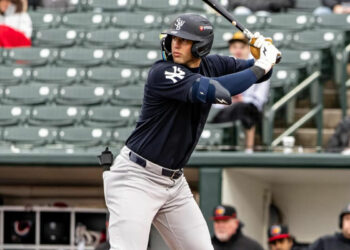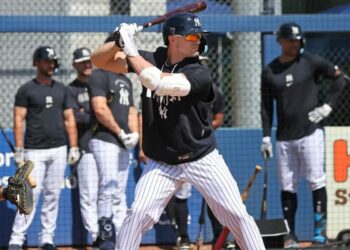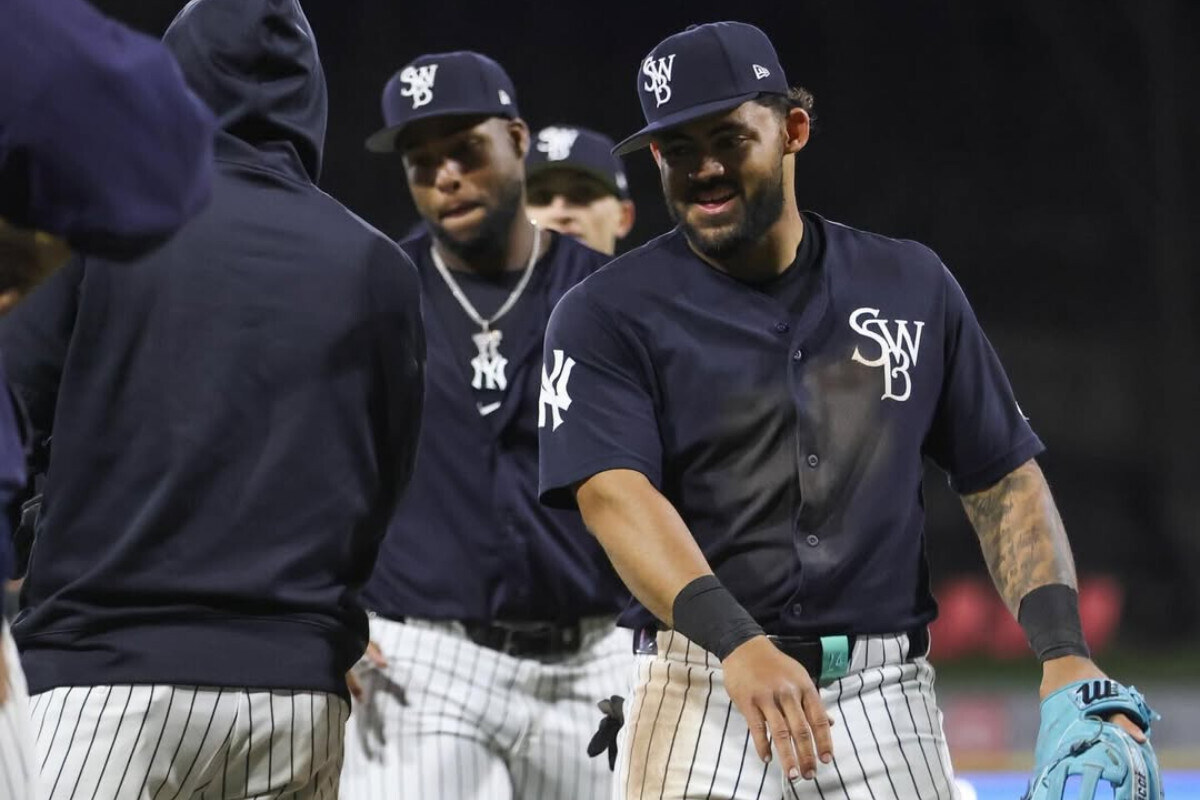
NEW YORK — When the Yankees sent Jasson Dominguez to Triple-A before the season, the move came with a reasonable explanation. The roster was set. The outfield was full. There was no everyday spot for him in the Bronx.
Two weeks into the season, that explanation is getting harder to defend.
The Yankees have lost five straight games, averaged 2.6 runs per game during that stretch, and watched Randal Grichuk go 0-for-10 with zero walks and zero times on base. Meanwhile, Dominguez is hitting .354 at Triple-A Scranton/Wilkes-Barre with two home runs and a 166 wRC+, meaning he has produced 66 percent above what an average Triple-A hitter delivers. The math is starting to do the arguing for him.
What Grichuk was supposed to provide
The Yankees signed Grichuk during spring training as a right-handed bat capable of punishing left-handed pitching. His value was always conditional: get him into favorable matchups and he can contribute. Put him into close games against quality relievers and the limitations become visible quickly.
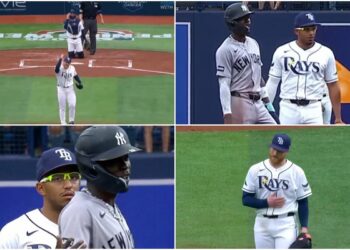
So far the Yankees have seen the second version exclusively. Through 15 games and 10 at-bats, Grichuk, who pushed Dominguez down, has not reached base once. In one of the most damaging moments of the team’s recent slide, manager Aaron Boone left him in for a ninth-inning at-bat against the Rays with two runners on and the Yankees needing a hit. Grichuk swung at the first pitch and popped out to center field to end the game.
Boone was asked about the decision not to pinch-hit for Grichuk in that spot, with Paul Goldschmidt available on the bench. His answer acknowledged the question had merit but stopped short of a clear explanation.
“Fair. Definitely could have, should have, whatever,” Boone said. “But definitely some consideration.”
He also acknowledged Grichuk’s struggles without using them as the reason for the call.
“Just felt like it was a good spot for [Grichuk] too,” Boone said. “But fair question.”
Dominguez’s Triple-A numbers are impossible to overlook
While the big-league lineup has struggled to produce, Dominguez has been one of the more productive hitters at Triple-A through the early part of the season. Through 13 games with Scranton, he is hitting .354/.475/.521 with two home runs and 8 RBIs. Dominguez’s exit velocity averages 90.2 mph and his slugging percentage is .521, per MiLB. Those are not the numbers of a player going through a hot streak on bad pitching. They reflect genuine, repeatable contact quality.
His strikeout rate this season is around 12 percent and walk rate is about 14 percent. Dominguez has always had a good eye, and that discipline has carried over from the spring into the regular season at Scranton. The underlying metrics support what the surface numbers show.
Dominguez also did damage in spring training before the roster was set. While the Yankees’ primary players were competing in the World Baseball Classic, he went 13-for-40 with two doubles, three home runs, three stolen bases, and 10 RBIs during exhibition play.
Boone’s reasoning for the demotion and its limits
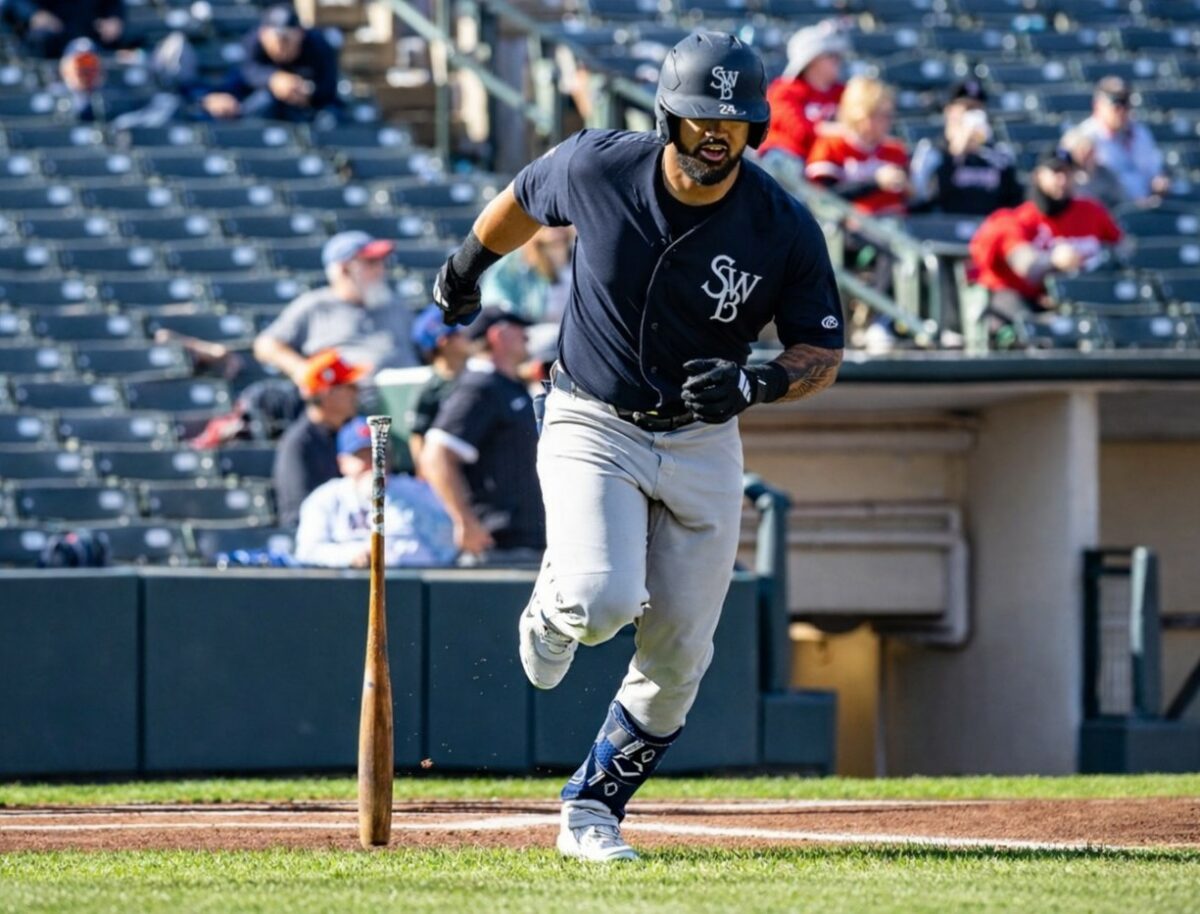
When Boone sent Dominguez down at the end of camp, he framed the decision around playing time and development rather than performance. He made clear that he had no concerns about how Dominguez had handled the situation, acknowledging the unfair position of being a top prospect with nowhere to play on a contending Yankees roster. He was straightforward about why the minor leagues were the right option at the time.
“One of the things I told him is that I’m proud of him,” Boone said. “He walked into this camp with all kinds of conversation around him. It didn’t affect anything in the way he carried himself, day in, day out, the way he worked. You want him playing regularly, and that’s ultimately what it comes down to.”
That rationale held for the first week of the season, when the Yankees were winning and the bench decisions felt minor. It becomes harder to sustain when the team is losing close games and the player who made the roster over Dominguez keeps producing nothing.
Defense remains the legitimate question
The Yankees’ reluctance to call Dominguez up is not purely about protecting a service-time clock. There are genuine concerns about his defense in left field. His reads off the bat and his routes have been inconsistent throughout his time in the organization. The Yankees know that putting him in the outfield every day at the major league level carries real risk on balls in play.
Those concerns are real. But they do not explain keeping a player on the active roster who is going 0-for-10 with no walks. A player who cannot contribute at the plate stops being a bench option and starts being an automatic out. Grichuk’s profile makes him useful in narrow circumstances. Dominguez’s profile, based on what he is doing in Scranton right now, suggests he can contribute in a much broader range of situations.
Fellow prospect George Lombard Jr. is also off to a strong start in the minors, but Dominguez’s existing big-league experience makes him the more natural call-up candidate in the near term. The Yankees promoted him during the 2023 and 2024 seasons, and he knows the clubhouse and the routine.
A decision point approaching for the Yankees
The Yankees open a seven-game homestand Monday against the Los Angeles Angels. If Grichuk continues to produce nothing, the organization will face a clear choice: carry a bench player who has not contributed in any situation this season, or bring up Dominguez, who is punishing Triple-A pitching and whose metrics suggest the results are legitimate.
Boone has options. The phone call to Scranton is short. What is getting longer is the list of close losses where the bench did not deliver.
What do you think about Dominguez replacing Grichuk? Leave your comment below.