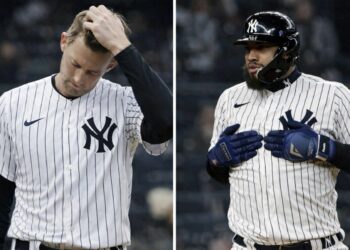
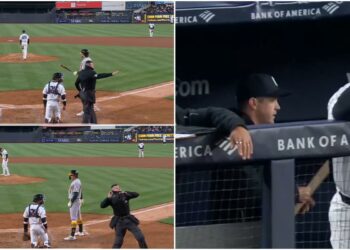
NEW YORK — There were 153 pitches left to be thrown on Wednesday night at Yankee Stadium. The Yankees led 2-0. Both Yankees ABS challenges were intact. And then Matt Blake was gone.
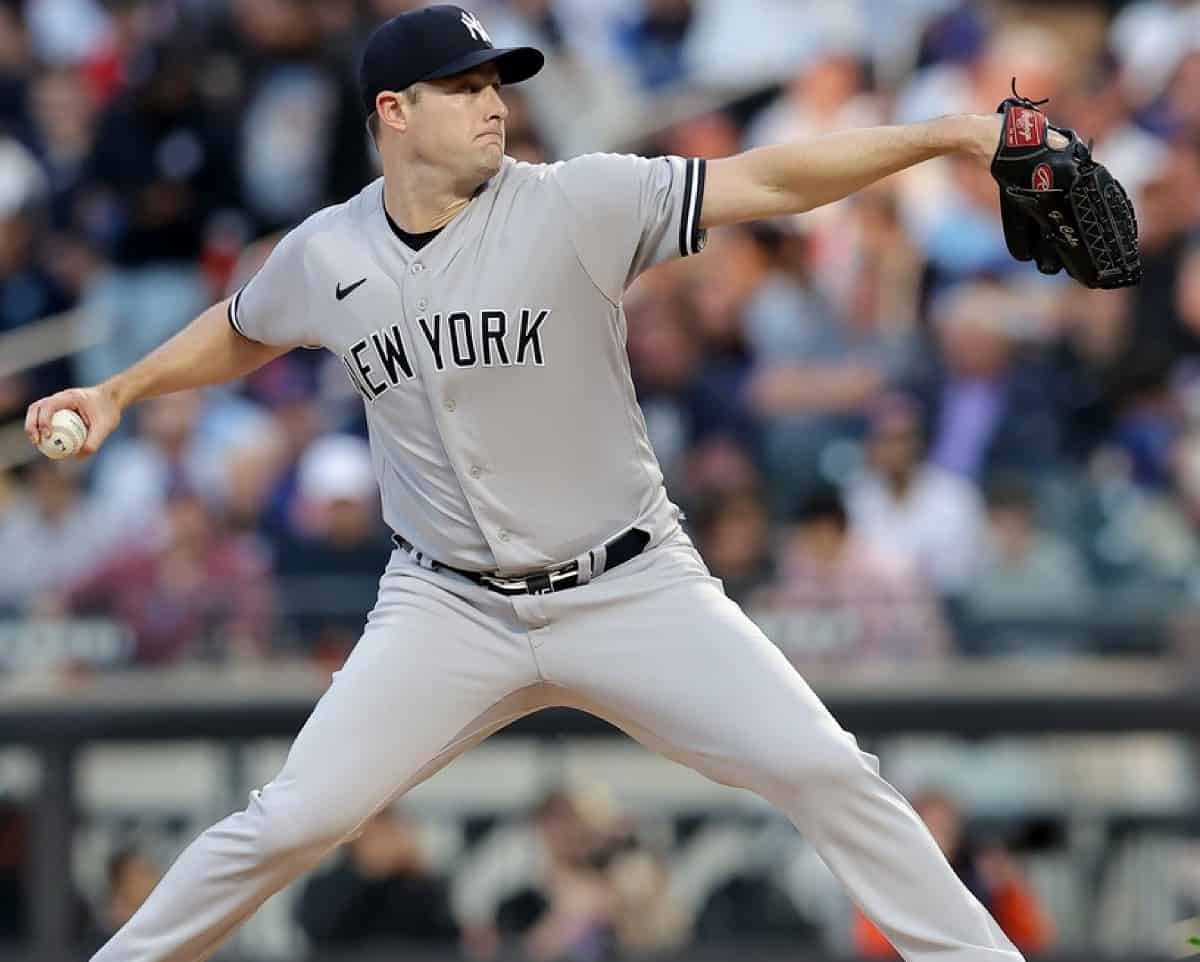
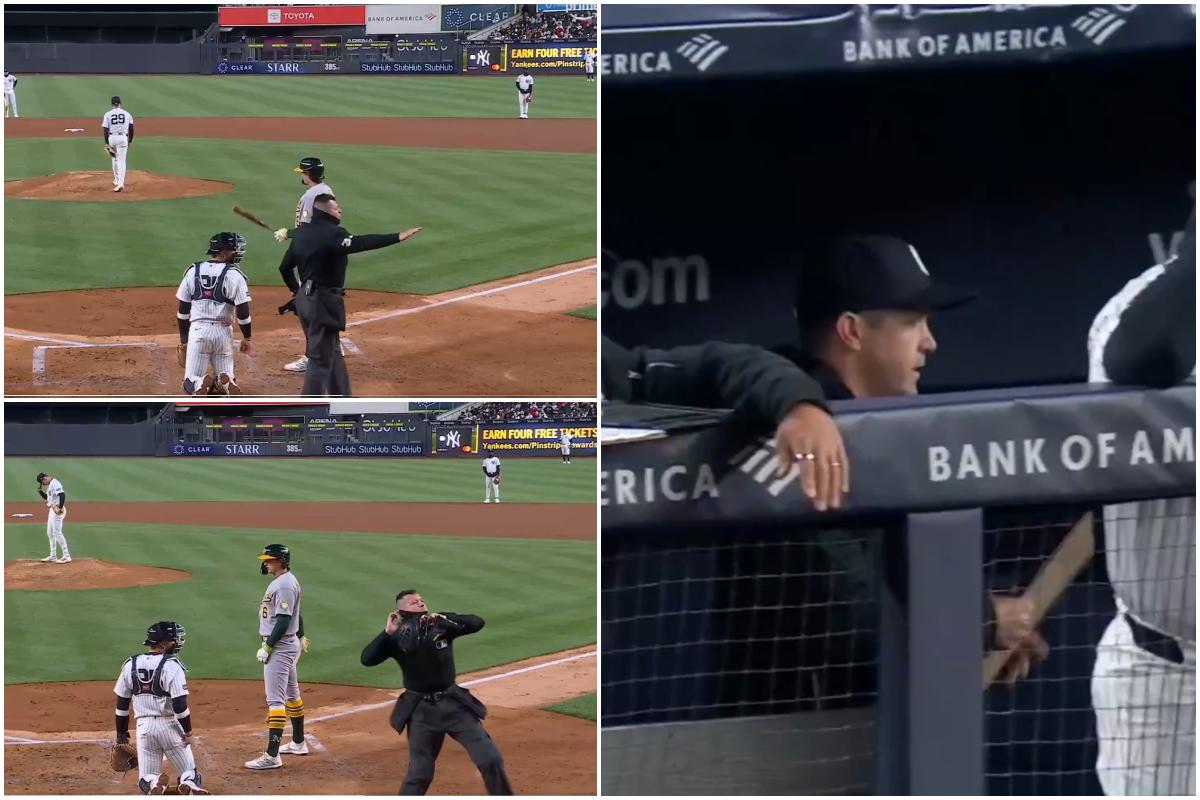
Plate umpire Carlos Torres ejected the Yankees pitching coach in the third inning for arguing ball and strike calls from the dugout. The specific trigger was a Will Warren fastball to Nick Kurtz that Torres called a ball, just inside, pushing the count to 2-0. Blake reacted loudly enough that Torres had heard enough.
It was Blake’s seventh ejection since joining the Yankees for the 2020 season. The Yankees went on to lose 3-2 when David Bednar gave up the go-ahead run in the ninth.
The question the ejection raised is one that will define a recurring debate throughout the 2026 season: In a year when MLB introduced the ABS challenge system specifically to reduce these confrontations, was Torres right to pull the trigger on Blake so quickly? Or was Blake right to be frustrated?
The answer, with the facts laid out, depends almost entirely on which principle you value more.
The case that Torres was right

The rule on this is unambiguous. Under Major League Baseball regulations, arguing ball and strike calls is prohibited for everyone. Players, managers, coaches. Dugout or field. It does not matter where you are standing. A coach yelling about pitch location from the bench is a violation.
Torres called a fastball a ball. Matt Blake disagreed loudly enough from the dugout to prompt the ejection. There was no grey area in the procedural sense. Blake was doing exactly what the rules forbid.
The deeper point is what the ABS system was built to address. MLB introduced the challenge system in 2026 for a specific reason: to give teams a legitimate, technology-backed mechanism to contest ball and strike calls without verbal confrontations. The data from the ABS debut has shown umpires are getting most calls right, with the closest pitches generating the most challenges. Torres’ call on the Warren fastball was described as just inside. That is a close call. It may have been wrong. But the remedy in 2026 is not a coaching staff member shouting from the dugout. The remedy is a challenge.
The Yankees had both of their ABS challenges remaining. Warren could have challenged. The catcher could have challenged. The batter could have challenged. The ABS system exists precisely for this moment. None of those options were used before Blake chose to make noise from the bench.
If umpires allow coaches to argue freely without consequence because a system exists to correct calls, the credibility of both the umpire and the new technology erodes. Torres was enforcing the rule as written, and the Yankees paid the price. That is what umpires are employed to do.
The case that Torres was wrong
Here is the part that complicates a clean verdict for Torres: the Yankees had both challenges remaining, the game was in only the third inning, and losing a coach in that situation carries real cost for a pitching staff trying to work through six more innings.
Blake has been with the Yankees since 2020. He has seven ejections across six seasons. That history suggests he is not a coach who argues frivolously. He has earned the reputation of someone who engages with umpires when he believes a pattern of calls is affecting his pitchers’ ability to execute a game plan.
There is also a reasonable argument that the ABS system, while excellent in principle, changes the emotional math of these situations. When a pitcher works to a 2-0 count on what he believes was a strike, the frustration is immediate and involuntary. Blake’s reaction was coming from the same instinctive professional response that has driven pitching coaches to the dugout rail for 150 years of baseball. The system has been in use for only 11 games. Asking dugouts to completely suppress that response in the third inning of a close game in early April is asking for a behavioral change that will take time.
There is also the timing question. A 2-0 count on a potential borderline fastball, with the Yankees leading 2-0, represents a meaningful inflection point for Will Warren’s rhythm and for the pitcher’s pitch count trajectory. If Blake’s read was that Torres was squeezing the zone, ejecting the man responsible for monitoring that all night removed a key set of informed eyes from the dugout.
The other dimension worth examining: if the pitch was genuinely inside as Torres called it, why didn’t the Yankees immediately challenge? The ABS challenge system requires the batter, pitcher or catcher to tap their cap within roughly two seconds. In real time, with Warren possibly unsure himself, that window can pass before the right call is made. It is not as simple as the rulebook suggests when adrenaline and game pace are factors.
What the ABS system was designed to prevent
Major League Baseball introduced the ABS challenge system in 2026 with one primary goal for Yankees and all teams alike: to reduce the frequency of arguments over ball and strike calls, which accounted for over 60 percent of all on-field disputes in the two seasons prior to implementation.
Under the system, only the batter, pitcher or catcher can challenge, and only immediately after the call. They cannot look to the dugout for help. Protests from the bench remain prohibited. Umpires retain the explicit right to deny a challenge if they believe it was aided or influenced by someone in the dugout.
This structure was deliberate. MLB wanted the technology to remove confrontation, and the Yankees are now the most visible test case for that intent from the equation, not to supplement it. Every dugout argument that ends in an ejection while challenges remain unused is, in the league’s framework, a failure of the system’s intent.
That framing supports Torres. But it also raises a harder question the league will need to answer as the season progresses: Is ejecting Yankees coaches for habitual behavior that long predates the ABS system the right way to enforce a cultural transition that is still in its opening weeks?
The facts of what was lost
Regardless of who was right in the moment, the outcome mattered. Blake’s presence in the Yankees dugout guides Will Warren through difficult innings. Warren allowed two runs in 4.2 innings for the Yankees on five hits and three walks. He is not a finished product. He needed the guidance.
Torres ejected Blake in the third inning. The Yankees lost in the ninth. There is no direct causal line between those two events. But the Yankees bullpen went on to pitch four scoreless innings before Bednar cracked. Whether Blake’s absence influenced how those arms were managed is a question nobody can answer.
What can be answered is this: the rule says dugouts cannot argue balls and strikes. The ABS system was built to make that rule feel reasonable in practice. On Wednesday, a Yankees pitching coach reacted to a pitch the way pitching coaches have reacted for generations, and he paid the price the rulebook demands. Whether that price was fair depends entirely on whether you think the law of the game should bend for the pace of cultural change, or hold firm so the change arrives faster.
Both positions are defensible. Neither is obviously wrong. That is the conversation Wednesday’s ejection started, and it will not be the last time this season it needs to be had.
What do you think? Leave your comment below.